brandsmarketssearch
Global Generative Engine Optimization: How AI Search Differs Across International Markets
Cross-border e-commerce is projected to reach $1.3 trillion by 2026—yet most global brands are completely invisible in non-English AI search results. Here's what international GEO actually requires, and why the window to act is closing faster than most marketers realize.
14 min read
# Global Generative Engine Optimization: How AI Search Differs Across International Markets

*Cross-border e-commerce is projected to reach $1.3 trillion by 2026—yet most global brands are completely invisible in non-English AI search results. The brands that act now will capture markets before competitive saturation hits. Here's what international GEO actually requires, and why the window to move is closing.*

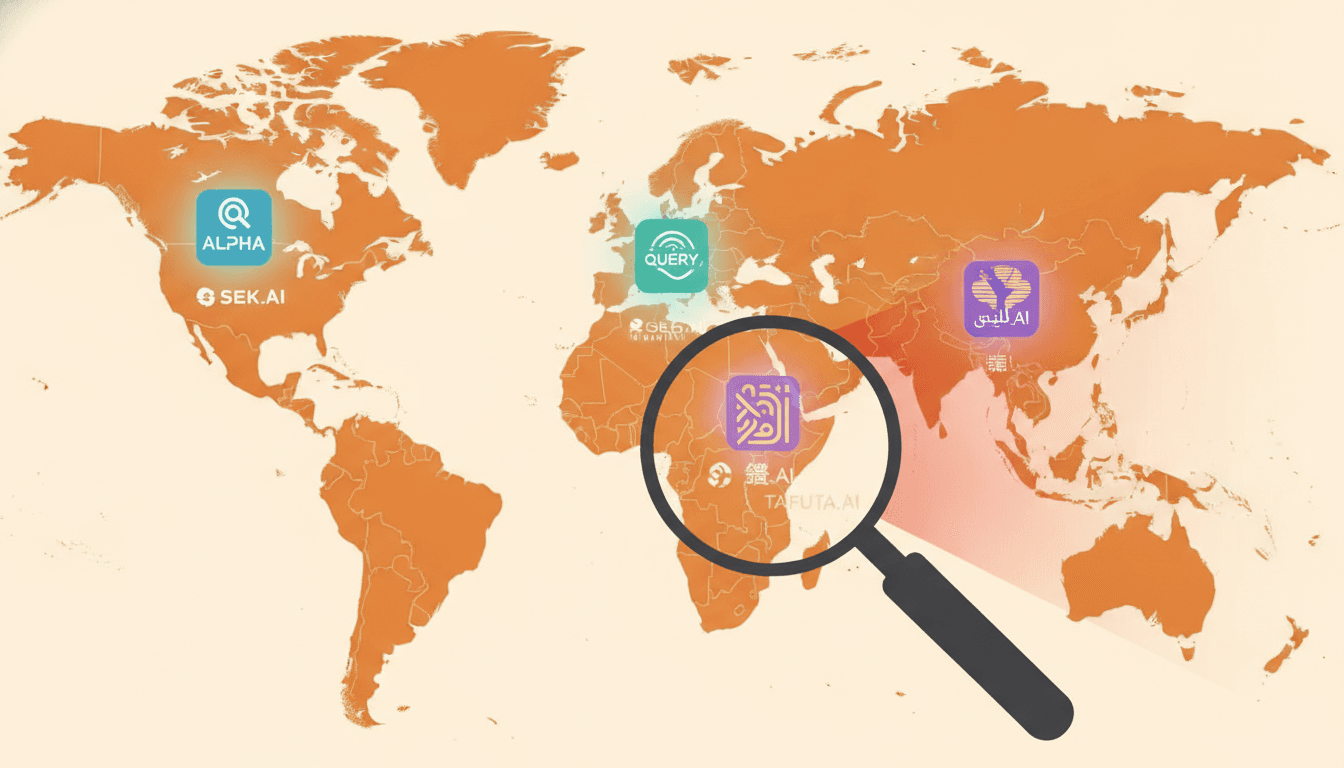
[IMG: World map with AI platform logos overlaid on different regions, showing fragmented global AI search ecosystem]

ChatGPT optimization strategies work effectively in the US market. However, in Tokyo, competitors are optimizing for Yahoo! AI, while in São Paulo, they target local models that most Western brands have never encountered. Meanwhile, $1.3 trillion in cross-border e-commerce is projected by 2026, with AI-assisted discovery influencing 40% of international purchases—yet most brands remain completely invisible in non-English AI search results.

This represents the global GEO divide, creating both a crisis and an opportunity.

The competitive gap is stark: [68% of global consumers](https://www.salesforce.com/resources/research-reports/state-of-the-connected-customer/) who use AI search tools prefer to interact in their native language, yet only 23% of e-commerce brands have developed language-specific AI optimization strategies. For brands with international ambitions, this is not a future problem. It is a present-tense competitive crisis—and a first-mover opportunity that won't last long.


---


## The Fragmented Global AI Search Landscape: Six Regional Ecosystems You Need to Know

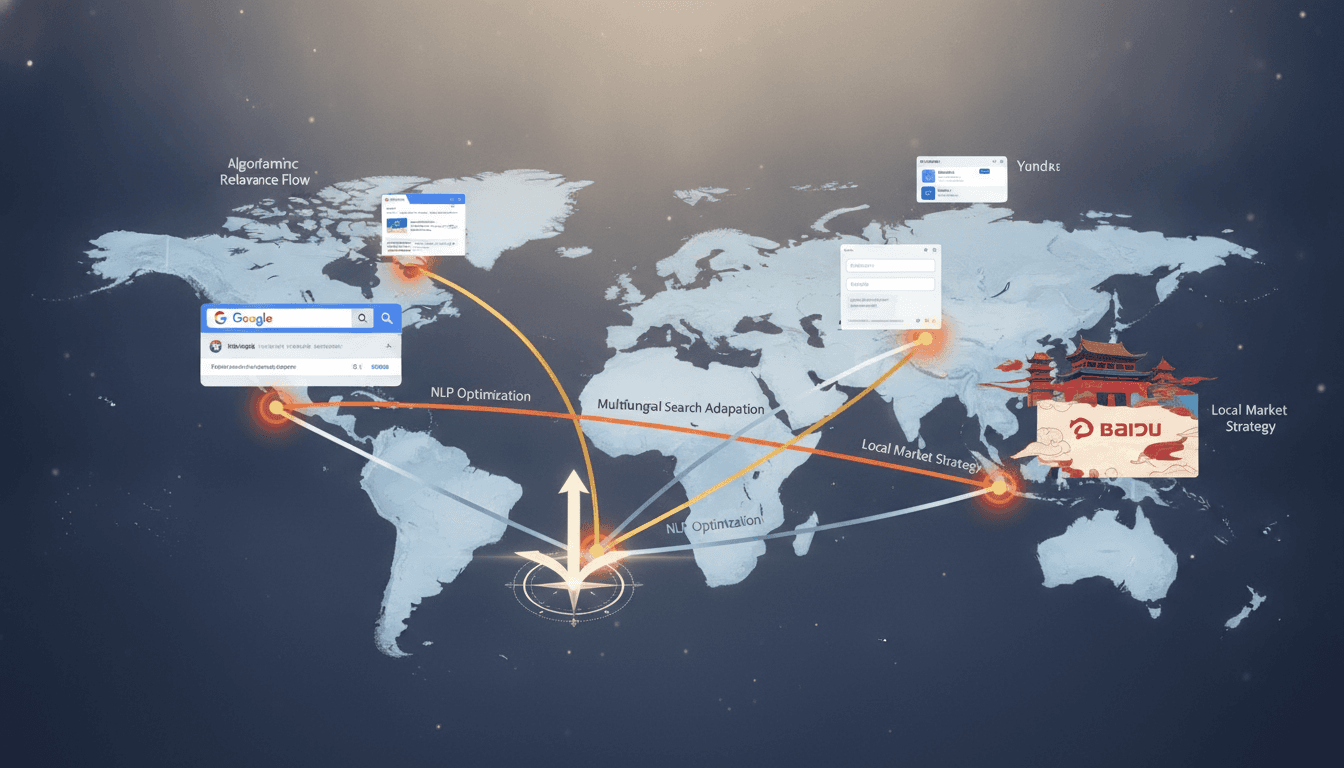
AI search is not a single, unified technology. It comprises at least six distinct regional ecosystems, each with different dominant platforms, training data sources, and optimization requirements. Brands that treat global GEO as a scaled-up version of their US strategy will find themselves systematically invisible in the markets they are trying to reach.

**Western markets**—the US, EU, UK, and Australia—are broadly served by ChatGPT, Perplexity, and Google Gemini. However, dominance assumptions within this cluster are frequently incorrect. [Perplexity AI dominates AI search usage in at least 12 countries](https://www.similarweb.com/), including India, Canada, Australia, and several Western European markets, while ChatGPT leads primarily in the United States, United Kingdom, and Latin America.

This fragmentation means optimization strategies must vary by market, not by region. A single regional approach fails to account for platform-specific user preferences and behavior patterns.

**China** operates a completely separate AI search ecosystem. Baidu's ERNIE Bot, Alibaba's Qwen, and ByteDance's Doubao collectively handle the vast majority of Chinese AI-assisted search queries. Western GEO strategies are not just suboptimal in China—they are irrelevant.

The training data, content policies, and user behavior patterns are fundamentally different from Western markets. Brands cannot apply global playbooks to the Chinese market without substantial localization.

**Russia** relies on YandexGPT, which powers AI-assisted search for approximately 100 million Russian-speaking internet users. **South Korea** runs on Naver Cue:, which launched in 2023 and commands the country's dominant search environment. **Japan** presents a unique case where Yahoo! Japan AI and LINE AI integrations compete with ChatGPT, with Japanese consumers showing strong preference for AI tools integrated into messaging platforms they already trust.

**Emerging markets**—India, Brazil, Southeast Asia, and the Middle East—are still forming their AI search preferences. This is precisely where the highest-ROI opportunity exists for early movers. Brazil and Mexico represent the fastest-growing AI search markets in Latin America, with ChatGPT usage growing over 200% year-over-year in 2024, yet Portuguese and Spanish-language AI optimization remains largely underdeveloped.

Eli Schwartz, author of *Product-Led SEO* and international growth advisor, explains the underlying dynamic: *"The same product query asked in English versus Mandarin versus Arabic can surface entirely different brand recommendations—not because the products are different, but because the underlying training data, the web sources the model trusts, and the local market signals differ fundamentally."*

One critical operational constraint shapes every international GEO strategy: [OpenAI's most advanced features are restricted, delayed, or unavailable in 34 distinct markets](https://platform.openai.com/docs/supported-countries) as of 2025. ChatGPT-centric strategies simply do not translate to those regions—and most brands have no idea which markets they are missing.


---


## Why US GEO Strategy Won't Work Globally: The English-Language Training Data Problem

The structural problem with exporting a US GEO strategy is embedded in the training data itself. [92% of the training data used by the world's largest AI language models is in English](https://hai.stanford.edu/research/ai-index-report), despite English speakers representing only about 17% of the global internet user base. This creates a measurable bias toward English-language content in AI recommendations—even when those recommendations are being served to non-English speakers.

AI models exhibit measurable language bias in product recommendations, favoring brands with stronger English-language digital footprints even when serving non-English queries. Local brands in non-English markets are actively disadvantaged by this dynamic. Western brands that fail to build native-language authority face the same penalty.

Here's where the opportunity emerges: brands that published localized, language-native content saw an average [47% improvement in AI search citation frequency](https://www.brightedge.com/) in non-English markets compared to brands relying on translated English content, according to a 2024 analysis by BrightEdge. The gap between consumer preference and brand capability represents the competitive opportunity available right now.

Machine translation of English content does not close this gap. AI models are trained on native-language web ecosystems and can detect translated content, deprioritizing it in favor of genuinely local sources. Aleyda Solis, International SEO Consultant and Founder of Orainti, is direct on this point: *"The brands that will win in AI search globally are not the ones who translate their English content—they're the ones who build authority in each language and market independently. AI models learn from local web ecosystems, and if you're not part of that ecosystem natively, you won't be recommended to native speakers."*

Multilingual training data imbalances compound this further. English-language content receives up to 3x more AI citation frequency than equivalent content in lower-resource languages like Arabic, Hindi, or Swahili. Native-language content strategy is not a nice-to-have for international brands—it is the foundational requirement for sustainable visibility.


---


## Regional Platform Dominance: Which AI Engines Actually Matter in Target Markets

[IMG: Regional AI platform comparison chart showing dominant platforms by country/region with market share indicators]

Market-specific AI platform auditing must precede any GEO strategy. Assuming US platform dominance applies globally is one of the most expensive errors an international brand can make. The following breakdown reflects current market reality:

- **Western markets:** ChatGPT (OpenAI), Perplexity (real-time web search), Google Gemini (search integration), Anthropic Claude (enterprise)
- **China:** ERNIE (Baidu), Qwen (Alibaba), Doubao (ByteDance)—completely separate ecosystem with distinct training data and content policies
- **Russia:** YandexGPT—dominant and deeply integrated with the Yandex search ecosystem
- **South Korea:** Naver Cue:—local-first, integrated with the Naver search ecosystem that commands over 60% of the country's search market
- **Japan:** Yahoo! Japan AI and LINE AI—messaging-first, local-first design priorities
- **Emerging markets:** Multiple competing platforms with rapidly shifting user adoption, creating first-mover opportunity for brands willing to invest early

The multi-platform imperative is backed by clear data. Brands that appeared in AI search results across [three or more regional AI platforms generated 3.5x more international referral traffic](https://www.semrush.com/) than brands visible on only one platform, according to a Semrush AI Traffic and Visibility Study. Single-platform visibility represents a single point of failure in international markets.

Andy Crestodina, Co-Founder and CMO of Orbit Media Studios, frames the strategic stakes clearly: *"We're entering an era where AI search visibility in Germany, Japan, and Brazil will be as strategically important as Google ranking—and the playbook is completely different for each. Brands that treat international GEO as an afterthought will find themselves invisible to the fastest-growing consumer segments on earth."*


---


## Real-Time Web Search vs. Static Training Data: Optimizing for Platform Architecture Differences

Not all AI search engines work the same way—and the architectural differences have direct implications for content strategy. Understanding how each platform retrieves and evaluates content is essential for calibrating optimization efforts by market.

**Perplexity AI** uses real-time web search through its Pro Search feature, conducting live web research before generating answers. In markets where Perplexity dominates, content freshness and crawlability are critical ranking factors. Brands with recently updated, well-structured content are disproportionately favored compared to markets where static training data drives recommendations.

**ChatGPT** relies primarily on static training data with a knowledge cutoff, making historical content strength and established digital authority more important than publishing frequency. In ChatGPT-dominant markets, deep, authoritative content builds outperform frequent lightweight updates. **Claude** prioritizes long-form, nuanced content with strong sourcing and citation clarity—a different optimization target again.

**Chinese AI models**—ERNIE, Qwen, and Doubao—emphasize content alignment with platform-specific policies and user intent patterns shaped by Chinese web behavior. Local AI tools across all regions tend to prioritize content from local news sources, local review sites, and regional influencers, creating citation patterns that differ fundamentally from global platform behavior.

Here's how this translates to operational planning: brands need platform-specific content calendars. Real-time platforms like Perplexity require daily or weekly content updates to maintain visibility. Static-data platforms like ChatGPT reward sustained, deep content investment over time.

Optimizing for one architecture while ignoring the other is a guaranteed visibility gap in markets where both platforms compete. For example, a brand might publish weekly updates for Perplexity visibility while simultaneously building comprehensive resource guides for ChatGPT authority.


---


## Regulatory Constraints That Shape GEO Strategy by Market

[IMG: World map highlighting regulatory zones with EU, China, Brazil, and India marked with distinct compliance requirement indicators]

Regulatory environments are not just legal considerations—they actively change how AI models evaluate and recommend content. Brands that ignore the regulatory dimension of international GEO will encounter both compliance risk and unexpected visibility failures.

The **EU AI Act**, which began phased enforcement in 2024-2025, imposes transparency requirements on AI search systems that alter how generative engines surface product recommendations in European markets. Compliance with these requirements shapes the content evaluation criteria that EU-facing AI tools apply. Brands with strong AI visibility in EU markets face increased regulatory scrutiny, making compliance a genuine competitive advantage rather than merely a cost center.

**China's AI governance framework** is the most restrictive of any major market. It requires content moderation partnerships, restricts cross-border data flows, and limits the types of content AI tools can surface. A separate, China-specific GEO strategy is not optional for brands targeting Chinese consumers—it is mandatory.

The Western GEO playbook does not translate, legally or technically. Brands attempting to apply global strategies to China will encounter both compliance violations and systematic visibility failures.

**Brazil and India** are developing AI regulations that will affect how AI tools recommend products and services in those high-growth markets. For brands investing in these emerging markets now, building compliance into the GEO strategy from the start is significantly less costly than retrofitting it later. Regulatory risk increases with AI visibility—brands that establish early authority in regulated markets must ensure that authority is built on compliant foundations.


---


## Building Local Digital Authority: The Four-Layer International GEO Framework

Sustainable international GEO authority is not built through a single tactic. It requires four distinct layers of investment, each addressing a different dimension of how regional AI tools evaluate and recommend content.

**Layer 1: Market-Specific AI Platform Auditing**

Brands should identify which AI tools target customers actually use in each market—not assumed, actually audited. The next step involves determining platform market share, ranking factors, and content evaluation criteria before any content investment begins. This prevents wasted effort on platforms that don't matter in target regions.

**Layer 2: Native-Language Content Authority Building**

Original, locally relevant content must be created in target languages. This means native-speaker creation, not machine translation. It also means building relationships with local media outlets, bloggers, and influencers who are already part of the regional web ecosystem that local AI tools trust.

Quality of localization directly correlates with AI visibility. Brands that invest in authentic local content see measurably higher citation rates than those relying on translated materials.

**Layer 3: Local Trust Signal Acquisition**

Brands should gather reviews, citations, and partnerships from local sources. Building presence in regional review aggregators and local business directories is essential. Local trust signals—not global brand reputation—are what regional AI tools use to evaluate recommendation worthiness.

These signals carry disproportionate weight in emerging markets. For example, a local review on a Brazilian e-commerce platform carries more weight with Brazilian AI tools than global brand mentions.

**Layer 4: Technical Optimization for Regional AI Architectures**

Structured data, metadata, and technical signals must be calibrated to each platform's evaluation criteria. This includes crawlability for real-time platforms like Perplexity, content depth for static-data platforms like ChatGPT, and platform-policy alignment for Chinese AI tools. Technical optimization without the other three layers is insufficient.

Each layer requires different resources and timelines, but all four are necessary for sustainable authority. Purna Virji, Principal Consultant at LinkedIn, identifies the timing imperative clearly: *"For e-commerce brands, the AI search opportunity in markets like India, Southeast Asia, and Latin America is enormous precisely because so few Western brands have invested in genuine localization for AI visibility. The bar to be recommended by AI in these markets is lower today than it will ever be again."*

Emerging markets represent the highest-ROI opportunity precisely because competitive density is still low. Brands that build local authority across all four layers now will have a structural advantage that compounds over time as competitive saturation increases.


---


## The International GEO Opportunity: Why Now Is the Time to Invest

[IMG: Growth chart showing cross-border e-commerce trajectory to $1.3 trillion by 2026 with AI-influenced purchase percentage overlay]

The market opportunity is not abstract. [Global cross-border e-commerce is projected to reach $1.3 trillion by 2026](https://www.statista.com/), with AI-assisted product discovery expected to influence over 40% of international purchase decisions. For brands with international revenue ambitions, AI search visibility in target markets is no longer a marketing experiment—it is a revenue-critical infrastructure investment.

The competitive gap is equally concrete. Most global brands have zero GEO strategy in non-English markets. Brands that appear in regional AI search results—on three or more platforms—generate 3.5x more international referral traffic than those with single-platform visibility. The first-mover advantage in non-English AI search is real, measurable, and time-limited.

Looking ahead, the window to establish authority in emerging markets is narrowing as awareness of GEO grows among sophisticated international marketers. Brands that invest in India, Brazil, Southeast Asia, and the Middle East now will have a 2-3 year head start before competitive saturation reaches those markets. The brands that capture AI search authority in these regions in 2025 will hold structural advantages that are difficult and expensive for later entrants to overcome.


---


## Practical Next Steps: Auditing International GEO Readiness

International GEO does not require optimizing every market simultaneously. It requires a structured, phased approach that prioritizes markets by opportunity and builds genuine authority in each. Here's how to begin:

1. **Map target markets and identify dominant AI tools.** Audit user behavior data rather than assuming US platform dominance applies globally.

2. **Audit current visibility in regional AI platforms.** Search brand names, products, and key terms in each target market's dominant AI tools to establish a baseline.

3. **Identify content gaps in native languages.** Which markets have zero or minimal native-language content presence? This reveals the biggest opportunities.

4. **Assess local trust signals in each market.** Evaluate reviews, citations, local partnerships, and regional media mentions to understand current authority baseline.

5. **Prioritize markets by opportunity.** Weight market size, growth rate, competitive density, and regulatory environment to identify highest-ROI entry points.

6. **Build a phased international GEO roadmap.** Sequential market entry allows for learning and optimization before scaling investment across additional regions.

7. **Partner with local experts.** Native speakers, local SEO specialists, regional content creators, and local influencers are essential. They are already embedded in the web ecosystems that regional AI tools trust.

The brands that move fastest on international GEO in 2025 will have the strongest competitive moat by 2026. The data is unambiguous: $1.3 trillion in cross-border e-commerce, 40% AI-influenced purchase decisions, and competitive density in non-English AI search that remains historically low. The opportunity is present-tense. The question is whether brands will act before their competitors do.


---


## Ready to Audit International GEO Readiness?

A 30-minute consultation with global GEO specialists can help brands map target markets, assess current visibility across regional AI platforms, and build a phased optimization roadmap tailored to highest-priority regions. This assessment helps brands capture market share in emerging AI search markets before competitive saturation hits.
H
Hexagon Team
Published July 19, 2026