Getting Started with GEO: Essential Steps for New E-Commerce Brands to Appear in AI Recommendations
As AI-powered shopping and search engines reshape how consumers discover products, new e-commerce brands face a visibility crisis. Learn how Generative Engine Optimization (GEO) can boost your brand’s inclusion in AI recommendations, driving up to 20% more organic traffic in just three months.
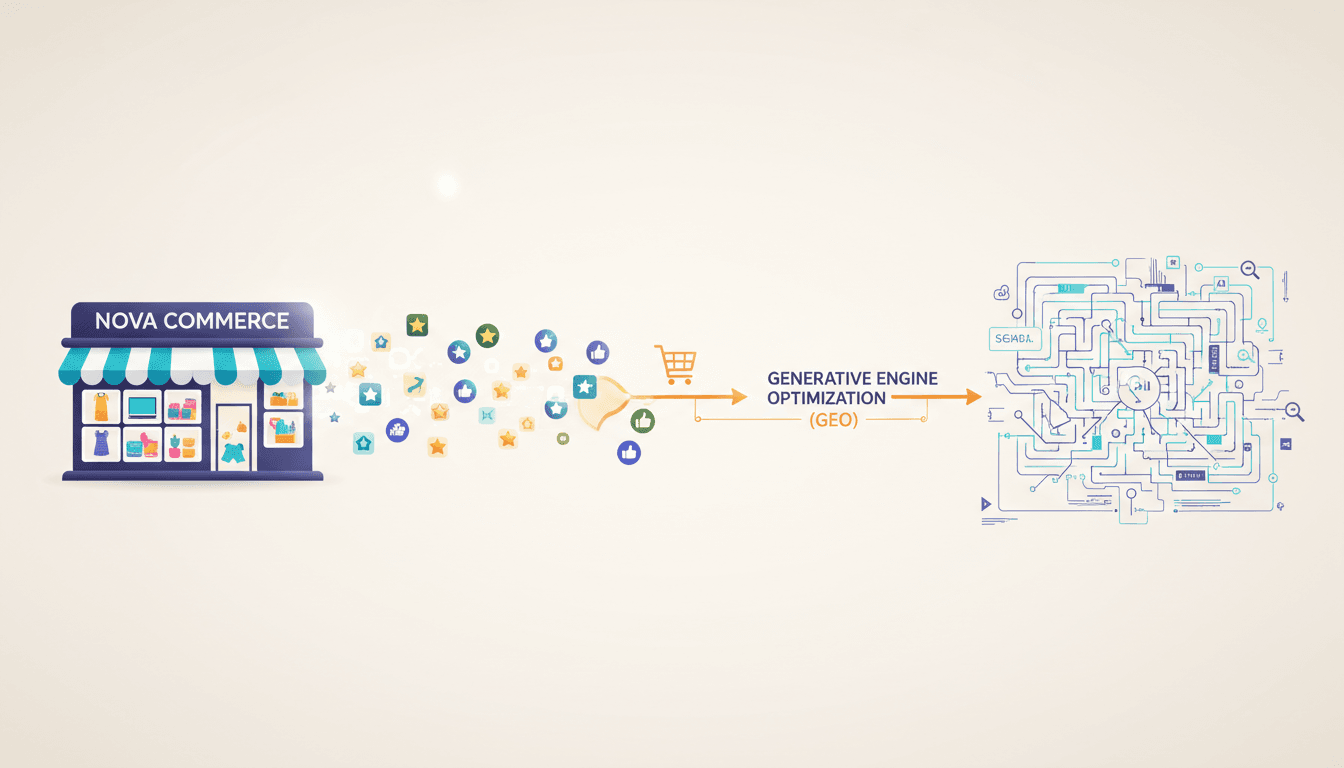
Getting Started with GEO: Essential Steps for New E-Commerce Brands to Appear in AI Recommendations
As AI-powered shopping and search engines revolutionize how consumers discover products, new e-commerce brands face a pressing visibility challenge. Discover how Generative Engine Optimization (GEO) can elevate your brand’s presence in AI recommendations, driving up to 20% more organic traffic within just three months.
[IMG: Abstract illustration of AI-powered shopping and product recommendations]
The rise of AI-powered shopping and search engines is transforming online product discovery. For new e-commerce brands, this shift presents a critical hurdle: how to ensure your products appear in AI-driven recommendations. Without adopting Generative Engine Optimization (GEO), your offerings risk being overlooked by an ever-growing segment of shoppers relying on AI assistants. This guide outlines the essential GEO steps for beginners, empowering your brand to capture AI-generated traffic and boost sales—backed by data demonstrating a 20% traffic increase within three months for those who implement GEO effectively.
Ready to amplify your e-commerce brand’s AI search visibility? Book a free 30-minute GEO strategy session with Hexagon’s experts today!
Understanding GEO: The Foundation of AI Search Visibility
[IMG: Diagram highlighting the process of GEO for e-commerce sites]
Generative Engine Optimization, or GEO, is the strategic approach to preparing e-commerce content and data so that AI-driven search engines and shopping assistants can easily discover and recommend your products. In today’s era of generative AI, platforms like ChatGPT, Perplexity, and Claude are becoming primary gateways for online shopping. These engines rely heavily on structured, machine-readable data to accurately surface relevant products to users.
Emily Taylor, Head of AI Partnerships at Shopify, emphasizes, “Generative Engine Optimization is emerging as the new frontier for e-commerce brands seeking visibility in the age of AI-driven recommendations. Without structured data and fresh, relevant content, brands risk being invisible in these new channels.”
Here’s how GEO is reshaping the e-commerce landscape:
- AI search engines interpret product data differently than traditional search engines. They prioritize structured data formats such as schema.org and JSON-LD, which ensure precise indexing and display.
- 90% of AI search engines require structured data for accurate product indexing (OpenAI Developer Documentation), making GEO a vital investment for emerging brands.
- 67% of e-commerce founders plan to invest in GEO-related tools and structured data in 2025 (Shopify Plus Insights), highlighting the growing importance of AI-driven discoverability.
For instance, AI assistants increasingly pull recommendations from public e-commerce data integrated via structured feeds. If your product data isn’t GEO-ready, your brand may be excluded from these rapidly expanding channels—no matter how strong your traditional SEO efforts are.
Looking forward, e-commerce brands that embrace GEO as a foundational strategy will consistently outperform those relying solely on conventional optimization. AI-powered recommendations are poised to become the dominant path to purchase, making early adoption essential.
Setting Up Foundational Technical Elements for GEO Success
[IMG: Screenshot of schema.org code applied to a product page]
A solid technical foundation is crucial for GEO success. AI search engines and recommendation systems depend on structured data, sitemaps, and canonical tags to efficiently crawl, understand, and index your products.
Here’s how to establish a robust technical base:
- Implement structured product data using schema.org and JSON-LD. This allows AI engines to interpret key product attributes such as price, availability, brand, and reviews.
- Maintain XML sitemaps to facilitate accurate product discovery. Sitemaps guide AI crawlers to your latest listings and categories, ensuring comprehensive indexing.
- Use canonical tags to prevent duplicate content issues. Canonicalization consolidates product indexing, which is essential for appearing in AI-driven recommendations.
David Xu, Director of Product at Perplexity AI, notes, “AI search engines are rapidly evolving to favor brands that provide comprehensive, machine-readable product data. Early GEO adoption is already separating leaders from laggards in e-commerce.”
The benefits are clear:
- Brands with up-to-date structured data experience 30% higher inclusion rates in AI-generated shopping guides (Data & Society Research Institute).
- Over 90% of AI-driven search and recommendation engines require structured product data such as schema.org or JSON-LD for accurate indexing (OpenAI Developer Documentation).
- Core technical SEO elements like sitemap.xml and canonical tags remain critical for AI search visibility (Moz SEO Fundamentals).
For example, brands that consistently update their XML sitemaps and product schema see their products appear more rapidly and frequently in AI-generated shopping lists and recommendations.
As AI search platforms continue advancing, these technical fundamentals will become increasingly indispensable for data quality and accuracy.
Preparing Comprehensive, Up-to-Date Product Feeds and Real-Time Inventory
[IMG: Example of a detailed product feed spreadsheet with attributes highlighted]
A detailed, real-time product feed forms the lifeblood of effective GEO. AI search engines and recommendation systems rely heavily on the accuracy and completeness of your data feeds to recommend the right products to the right shoppers at the right time.
To optimize your product feeds for AI-driven discovery, focus on:
- Developing detailed product feeds that include all relevant attributes—price, availability, variants, images, specifications, and more. The more granular your data, the better AI engines can match your products to nuanced shopper queries.
- Incorporating real-time inventory updates to ensure AI engines recommend only in-stock items. Outdated feeds result in poor shopper experiences and risk damaging brand reputation.
- Ensuring your feeds are structured and updated regularly to meet the evolving requirements of AI search engines.
Samira Patel, AI Commerce Lead at Gartner, observes, “The brands that win in AI-driven commerce treat their product feeds and content updates as living assets, not static resources.”
The impact is measurable:
- Brands typically see a 20% increase in AI-generated traffic within three months after optimizing their feeds (Hexagon Internal Benchmarking Report).
- Content freshness and real-time inventory updates are critical ranking factors for generative AI recommendation engines (Perplexity AI Product Team Insights).
For example, an apparel brand that synchronizes inventory and updates product attributes daily is far more likely to be featured in AI-powered “best picks” and real-time shopping guides than competitors relying on static, outdated feeds.
Moving forward, maintaining dynamic, detailed, and current product feeds will be essential to sustaining high visibility in AI recommendations.
Creating Content Assets Optimized for AI Recommendations
[IMG: Product page with detailed description, FAQ, and customer reviews highlighted]
Content serves as the vital link between your brand and AI-powered recommendation engines. Well-crafted, relevant content not only educates shoppers but also signals trust and authority to AI systems.
To align your content with GEO best practices, consider the following:
- Write detailed product descriptions that address common buyer questions, including sizing, materials, use cases, and care instructions. This helps AI engines generate accurate, context-aware recommendations.
- Develop FAQs and customer review sections to enrich product pages with conversational, authentic content. These elements act as trust signals for both AI algorithms and human shoppers.
- Use natural language and a conversational tone to align with how modern generative AI understands content. Avoid jargon, focusing instead on clarity and relevance.
Alex Kim, CEO of Hexagon, highlights, “Structured data is the foundation for inclusion in AI recommendations. The faster brands make their feeds GEO-ready, the sooner they’ll see results.”
For example, a product page featuring a helpful FAQ about return policies alongside customer-generated reviews is better positioned to appear in AI-driven shopping assistants that summarize key product benefits and address shopper concerns.
Looking ahead, brands investing in fresh, comprehensive content will consistently outperform those with minimal or outdated product pages in AI-powered shopping experiences.
Leveraging GEO Onboarding Tools to Accelerate Implementation
[IMG: Dashboard screenshot of Hexagon’s GEO onboarding platform]
Implementing GEO from the ground up can be complex, especially for new e-commerce brands. Thankfully, onboarding tools like Hexagon streamline the process, significantly reducing setup time and technical challenges.
Here’s how GEO onboarding platforms speed your journey to AI search visibility:
- Automate data structuring and schema implementation. Hexagon’s platform guides you through mapping your product catalog to industry-standard schemas, ensuring AI engines accurately interpret your listings.
- Simplify XML sitemap and feed management, enabling continuous updates without manual effort.
- Provide ongoing monitoring and alerts so you can resolve data issues before they impact AI-driven recommendations.
According to Hexagon Client Case Studies, “Onboarding solutions like Hexagon reduce technical setup time for new e-commerce brands by up to 50%.”
For example, a brand using Hexagon’s tools can launch a GEO-ready product catalog in days rather than weeks, gaining a crucial early advantage in AI-driven channels.
Ready to amplify your e-commerce brand’s AI search visibility? Book a free 30-minute GEO strategy session with Hexagon’s experts today!
As AI search platforms evolve, onboarding tools will become increasingly vital for keeping brands competitive and visible.
Monitoring, Analyzing, and Evolving Your GEO Strategy
[IMG: Analytics dashboard showing AI-driven traffic trends and product recommendations]
GEO isn’t a one-and-done project; it demands ongoing attention. Regular monitoring, analysis, and adaptation are key to maintaining and growing your share of AI-generated traffic.
To keep your GEO strategy effective:
- Track AI-driven traffic and product recommendation performance using analytics tools that segment traffic by source and highlight inclusion in AI-generated shopping guides.
- Leverage data insights to refine your structured data, content, and product feeds. Identify top-performing products and optimize those falling behind.
- Stay informed about emerging GEO best practices as AI search evolves. Follow thought leaders, attend webinars, and review updates from major AI platforms to keep your approach current.
The Data & Society Research Institute reports, “Brands that proactively monitor and update their structured data see 30% higher inclusion rates in AI-generated shopping guides.”
For example, a brand tracking which product attributes most influence AI recommendations can prioritize updates to those fields, staying ahead as algorithms shift.
Looking forward, the most successful brands will treat GEO as a living part of their digital strategy—constantly measuring, learning, and improving.
Conclusion: The Path to AI-Powered E-Commerce Growth
GEO is no longer optional for e-commerce brands aiming to capture the next wave of online shoppers. As AI-powered search and recommendations become the standard, brands must build structured data foundations, maintain real-time product feeds, and create content assets that resonate with both AI engines and human buyers.
To get started:
- Prioritize structured data using schema.org and JSON-LD.
- Maintain XML sitemaps and canonical tags for technical SEO.
- Optimize product feeds and inventory updates for real-time accuracy.
- Develop comprehensive descriptions, FAQs, and customer reviews.
- Leverage onboarding tools like Hexagon for rapid implementation.
- Monitor, analyze, and evolve your GEO strategy for sustained success.
David Xu, Director of Product at Perplexity AI, sums it up: “AI search engines are rapidly evolving to favor brands that provide comprehensive, machine-readable product data. Early GEO adoption is already separating leaders from laggards in e-commerce.”
Ready to amplify your e-commerce brand’s AI search visibility? Book a free 30-minute GEO strategy session with Hexagon’s experts today!
[IMG: E-commerce team celebrating improved AI-driven traffic results]
Stay ahead of the curve and turn AI-powered search engines into your brand’s most valuable discovery channel. Invest in GEO today and secure your place in the future of e-commerce.
Hexagon Team
Published April 8, 2026