Generative Engine Optimization (GEO) for Food & Beverage Brands: A Tactical Research Guide
AI-powered food and beverage recommendations are set to reshape e-commerce, with demand projected to grow by 40% annually through 2027. Discover how food and beverage brands can master Generative Engine Optimization (GEO) to enhance AI visibility, secure more recommendations, and drive sales with this comprehensive tactical research guide.
Generative Engine Optimization (GEO) for Food & Beverage Brands: A Tactical Research Guide
AI-powered food and beverage recommendations are revolutionizing e-commerce, with demand expected to surge by 40% annually through 2027. Learn how food and beverage brands can master Generative Engine Optimization (GEO) to boost AI visibility, secure more recommendations, and drive sales with this in-depth tactical research guide.
The rapid rise of AI-powered food and beverage recommendations—projected to grow by 40% annually through 2027—presents a pivotal moment for brands. To thrive, food and beverage companies must master Generative Engine Optimization (GEO), the strategy that ensures their products shine in AI search and recommendation engines. This guide unveils tactical GEO approaches—from optimizing AI product feeds to enriching metadata—that empower your brand to capture more AI-driven recommendations and accelerate sales in a fiercely competitive e-commerce landscape.
Ready to boost your food and beverage brand’s AI visibility and sales with proven GEO strategies? Book a free 30-minute consultation with Hexagon today.
Understanding AI Search and Recommendations in the Food & Beverage Industry
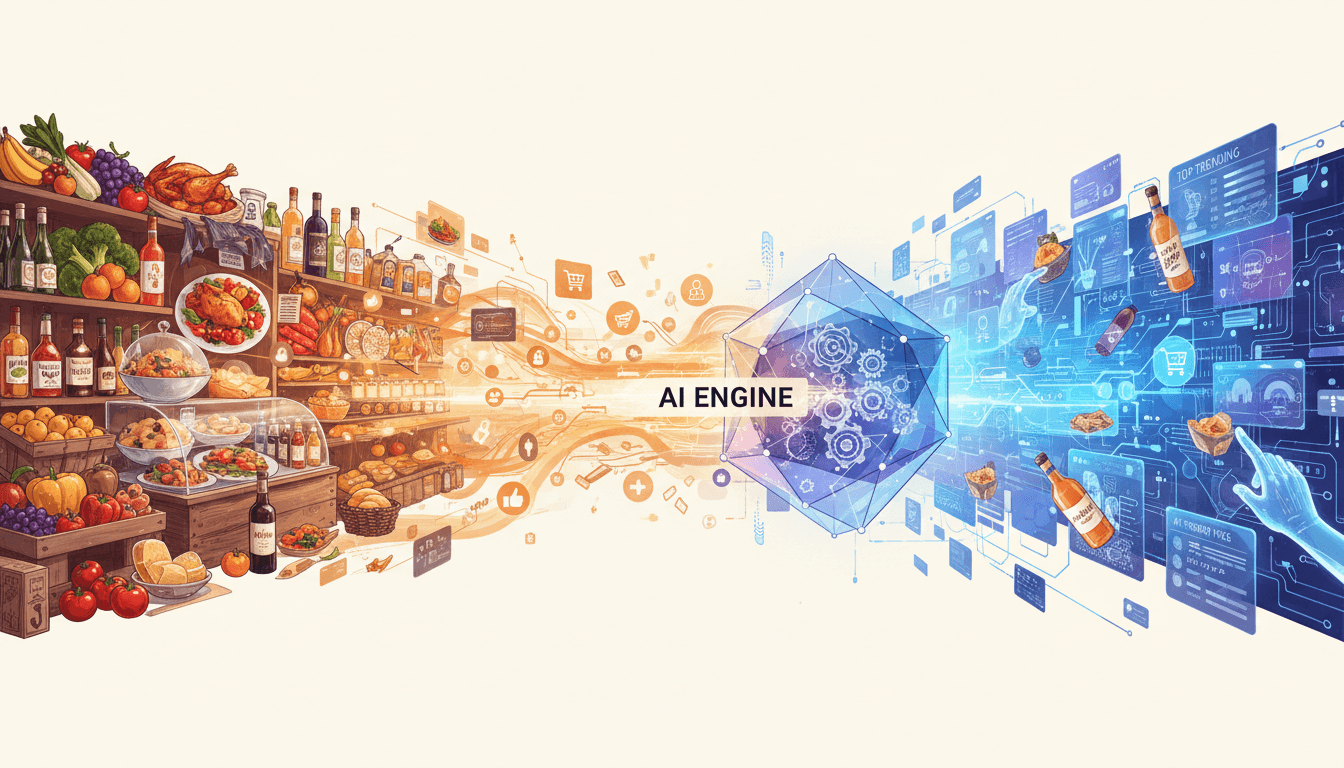
The food and beverage sector is leading the charge in the AI revolution transforming digital commerce. Cutting-edge AI search engines and virtual assistants—such as ChatGPT and Perplexity—have become central to product discovery. These tools employ natural language processing (NLP) and generative AI to deliver personalized, context-aware recommendations tailored to individual consumers.
NLP enables AI to interpret detailed queries like “best gluten-free pasta” or “vegan snacks under 150 calories.” Generative AI then synthesizes product details, customer reviews, and contextual signals to propose the most relevant choices. As Emily Chen, VP of Digital Strategy at Instacart, explains, “Generative search is reshaping how consumers find and buy food online—brands that optimize for AI visibility will lead the next era of commerce.”
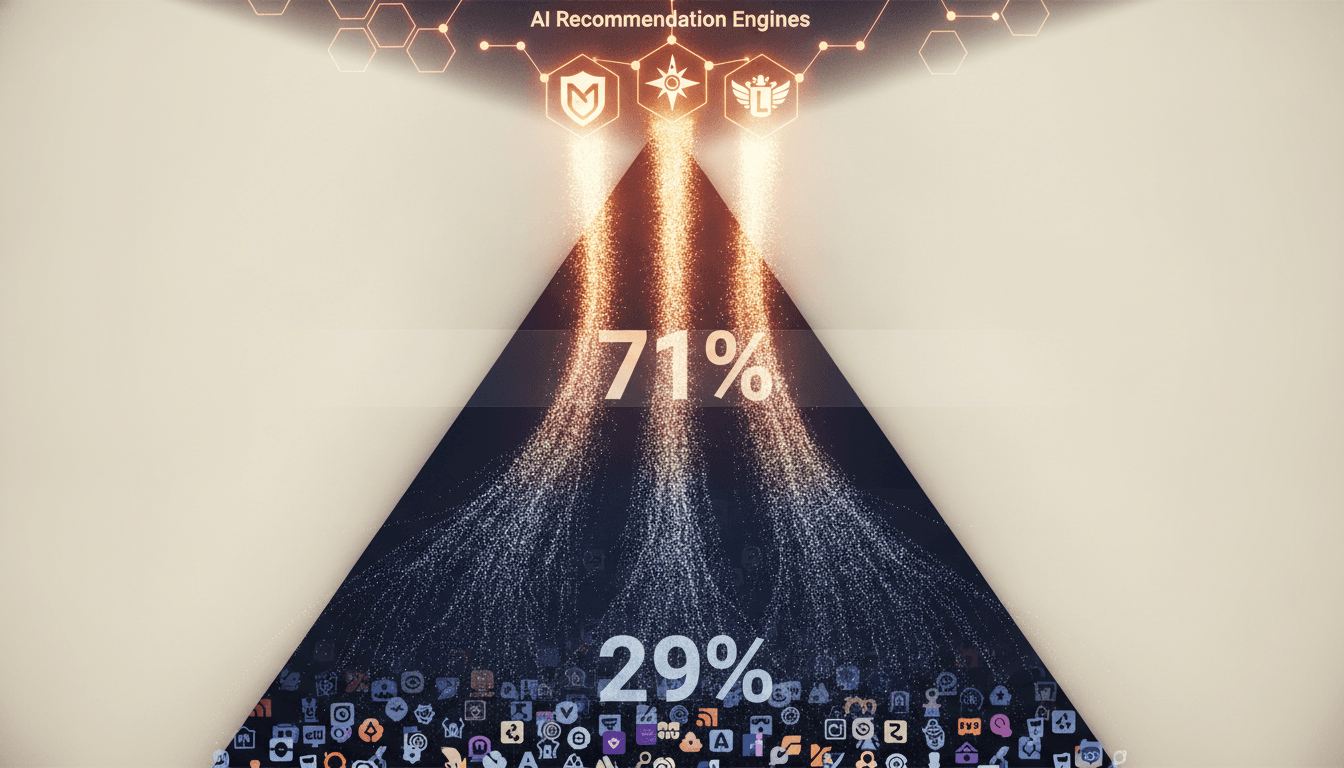
The impact is staggering. Recent research shows that over 70% of online grocery shoppers rely on AI-powered recommendations when making purchasing decisions (McKinsey & Company). Food and beverage ranks among the top three e-commerce categories benefiting most from AI-driven recommendations (Insider Intelligence). Brands that prioritize GEO stand to capture this rapidly expanding traffic.
- 40% projected annual growth in demand for AI-powered food and beverage recommendations through 2027 (Statista).
- 70% of online grocery shoppers influenced by AI-powered recommendations (McKinsey & Company).
- AI search engines increasingly depend on structured product data and enriched metadata to generate recommendations (OpenAI Developer Documentation).
For food and beverage brands, the question is no longer if AI will transform search—but how to ensure your products are prominently recommended, discovered, and purchased in this new digital era.
[IMG: Illustration of an AI-powered virtual assistant recommending food and beverage products to a shopper]
The Importance of Product Feed Optimization for GEO in Food & Beverage
Product feed optimization forms the foundation of successful GEO. AI search engines and virtual assistants rely on rich, accurate, and well-structured product data to understand and recommend food and beverage items effectively. Brands neglecting feed optimization risk being overlooked amid the intensifying competition in generative search.
A fully optimized product feed contains detailed metadata such as nutrition facts, ingredient lists, allergen warnings, and high-quality images. These data points provide AI models with the essential context needed to align products with consumer preferences and dietary restrictions. Andrew Ng, founder of DeepLearning.AI, highlights, “Structured product data isn’t just for SEO anymore. It’s now the backbone of how AI assistants understand, compare, and recommend food and beverage products.”
Research from Hexagon reveals that brands with fully optimized product feeds are over 50% more likely to appear in AI-generated recommendations than those with incomplete feeds (Hexagon GEO Insights Report). Furthermore, including allergy, dietary, and sustainability metadata can boost AI recommendation rates by up to 40% (NielsenIQ). This is critical for food and beverage brands, where consumer trust and personalization rely heavily on transparency and accuracy.
Key metadata and enriched content elements unique to food and beverage include:
- Nutrition facts and ingredient lists
- Allergen information (gluten, nuts, dairy, etc.)
- Dietary labels (vegan, keto, organic)
- High-quality product images and packaging visuals
- Sustainability claims (organic, non-GMO, carbon-neutral)
Brands investing in comprehensive feed optimization gain significant competitive advantages. AI-driven platforms penalize missing or outdated information, which reduces visibility in search results (Google Search Central Blog). Conversely, robust feeds not only improve AI recommendation likelihood but also foster consumer trust, loyalty, and higher conversion rates.
[IMG: Side-by-side comparison of an optimized vs. incomplete product feed for a food item]
Key Product Feed Elements to Maximize AI Visibility and Recommendations
Success in GEO hinges on prioritizing the specific data elements that AI engines value most. Below is how each component enhances AI visibility and recommendation potential:
-
Detailed Nutrition Facts
Providing precise nutritional information allows AI to match products with health-conscious consumers and specific dietary needs. Brands should include calories, macronutrients, vitamins, and serving sizes in machine-readable formats. -
Comprehensive Ingredient Lists
Clear, structured ingredient lists enable AI to filter products for particular diets, allergies, and preferences. This supports user queries like “nut-free snacks” while building consumer confidence. -
Allergen Information
Explicitly listing common allergens (e.g., peanuts, soy, gluten) is vital for regulatory compliance and capturing AI recommendations targeting restricted diets. Brands supplying this data see significant boosts in trust and engagement. -
High-Quality Images
Visual content enhances storytelling and is favored by AI when generating recommendations. Multiple images showcasing packaging, nutrition labels, and serving suggestions enrich product profiles. -
Sustainability Claims
As consumers increasingly prioritize sustainability, including claims like “organic,” “locally sourced,” or “carbon neutral” can influence AI’s selection process and attract eco-conscious shoppers. -
Schema Markup and Standardized Data Formats
Structuring product data with recognized schemas (e.g., Schema.org/Product) ensures compatibility with AI platforms and improves discoverability. Standardized formats such as JSON-LD facilitate seamless ingestion and interpretation by generative engines.
By implementing these feed elements, brands not only enhance their AI search engine ranking but also offer consumers a richer, more informative shopping experience—leading to higher conversion rates and stronger brand loyalty.
[IMG: Annotated product feed highlighting nutrition facts, ingredient list, allergens, and sustainability badges]
Best Practices and Common Pitfalls in GEO for Food & Beverage Brands
Optimizing for GEO demands ongoing attention and strategic focus. Avoiding common pitfalls is essential to maintain AI visibility and recommendation potential. Here’s how to stay ahead:
-
Avoid Missing, Outdated, or Unstructured Data
Incomplete or inconsistent product information leads to penalties by generative engines, lowering recommendation rankings (Google Search Central Blog). Outdated feeds cause inaccurate suggestions, undermining consumer trust and compliance. -
Maintain Feed Accuracy and Freshness
Regularly update product details, prices, availability, and metadata to ensure AI models reference the most current information. This is especially important in the fast-evolving food and beverage sector, where product launches and reformulations are frequent. -
Leverage Automation and AI Tools
Employ advanced feed management platforms and AI-powered automation to streamline processes, minimize manual errors, and free resources for strategic initiatives. Tools that monitor feed health, validate data, and automate updates are crucial for maintaining high GEO performance.
Top brands, for example, use automated scripts to detect missing allergen labels or outdated images, reducing the risk of AI misinterpretation. David Marcus, Head of Product at Perplexity AI, states, “AI-driven recommendations are only as good as the data they’re fed. For food and beverage, this means rich, up-to-date product information and metadata are essential.”
By following these best practices and proactively addressing feed challenges, brands can sustain a competitive edge in the AI-powered recommendation ecosystem.
[IMG: Workflow diagram illustrating automated product feed validation and enrichment process]
Measuring GEO Success: KPIs and Case Studies in Food & Beverage
Effective GEO strategies are measurable. Brands need to track key performance indicators (KPIs) to evaluate their optimization efforts and guide future tactics. Here’s how leading food and beverage brands measure GEO success:
-
AI Recommendation Rates
Monitor how frequently products appear in AI-powered search results, virtual assistant suggestions, and generative shopping lists. Higher rates signal successful feed optimization and increased visibility. -
Click-Through Rates (CTR) and Conversion Lifts
Track the percentage of AI-generated recommendations that lead to product views, cart additions, and purchases. Improvements in GEO should correspond with rising CTR and conversion rates. -
Sales Lift
Quantify overall sales growth attributable to GEO initiatives. For instance, top food and beverage brands report a 25% sales lift after implementing GEO strategies, fueled by increased organic traffic from AI search and assistants (Hexagon Client Case Studies). -
Industry Benchmarking
Compare your metrics to industry standards using data from NielsenIQ, eMarketer, and internal benchmarks to contextualize performance and set achievable goals.
For example, after a comprehensive GEO overhaul, a leading direct-to-consumer snack brand boosted its AI recommendation rate by 60%, translating into a 25% sales increase within just three months. This case highlights the transformative power of optimizing product feeds and metadata for generative engines.
[IMG: KPI dashboard showing AI recommendation rates, CTR, and sales lift for an F&B brand]
Emerging Trends: AI Personalization, Voice Search, and Generative Shopping Experiences
The future of AI-powered commerce in food and beverage hinges on three disruptive trends: hyper-personalization, voice search, and generative shopping experiences.
-
AI Personalization
Generative engines now customize food and beverage recommendations based on user preferences, dietary restrictions, and even mood or occasion. For instance, AI can suggest “high-protein breakfast ideas for busy mornings” or “wine pairings for vegan dinners,” fostering deeper engagement and satisfaction. -
Voice Search
The growing adoption of smart speakers and voice assistants means consumers increasingly use conversational queries to find F&B products. Optimizing product data for natural language and voice-friendly formats is becoming a critical GEO requirement. -
Generative Shopping Experiences
Platforms like Perplexity and ChatGPT pioneer generative shopping, where users receive curated, AI-generated shopping lists and meal plans. Brands that supply rich, contextual product data are more likely to feature prominently in these dynamic, interactive shopping journeys.
To keep pace, GEO strategies must evolve—ensuring product feeds are not only comprehensive but also adaptable to emerging discovery and engagement modes.
[IMG: Visual collage showing AI-powered personalization, voice search, and generative shopping workflows]
Actionable Steps for DTC Food & Beverage Brands to Implement GEO Today
Launching a successful GEO strategy begins with concrete, actionable steps. Here’s how direct-to-consumer (DTC) food and beverage brands can start:
-
Audit and Enrich Existing Product Feeds
Conduct a thorough audit of your current product data for completeness, accuracy, and relevance. Enrich feeds by adding comprehensive metadata—nutrition facts, ingredients, allergens, dietary labels, and sustainability claims. -
Implement Structured Data and AI-Friendly Formats
Apply schema markup (e.g., Schema.org/Product) and standardized formats like JSON-LD to ensure seamless compatibility with AI search engines and virtual assistants. -
Leverage AI Tools and Automation
Adopt AI-powered feed management solutions to automate data enrichment, validation, and updates. Automating routine feed maintenance allows your team to focus on higher-level optimization and strategy. -
Monitor GEO KPIs and Adapt Strategies
Establish dashboards to track AI recommendation rates, CTR, conversion lifts, and sales impact. Regularly analyze performance data and refine your GEO tactics to seize emerging opportunities and overcome challenges.
Leading food and beverage brands have reported a 25% sales lift after following these steps, demonstrating the clear ROI of proactive GEO management (Hexagon Client Case Studies).
Ready to boost your food and beverage brand’s AI visibility and sales with proven GEO strategies? Book a free 30-minute consultation with Hexagon today.
[IMG: Step-by-step checklist for implementing GEO in a DTC food and beverage brand]
Conclusion
Generative Engine Optimization is swiftly becoming an essential pillar of digital marketing for food and beverage brands. As Sarah Patel, Director of AI Strategy at NielsenIQ, warns, “Food brands that don’t invest in generative engine optimization risk being invisible to the fastest-growing source of e-commerce traffic.” By prioritizing product feed optimization, enriching metadata, and continuously measuring performance, brands can secure their place in the AI-powered discovery journey.
Looking ahead, those who adapt quickly—leveraging automation, personalization, and emerging AI trends—will gain lasting competitive advantages. The era of AI-powered food and beverage commerce is here. The question remains: will your brand lead the way or be left behind?
Take the first step toward GEO excellence. Book your free 30-minute consultation with Hexagon and transform your AI visibility, recommendations, and sales today.
[IMG: Inspirational image of a food and beverage e-commerce team celebrating GEO-driven growth]
Hexagon Team
Published March 14, 2026