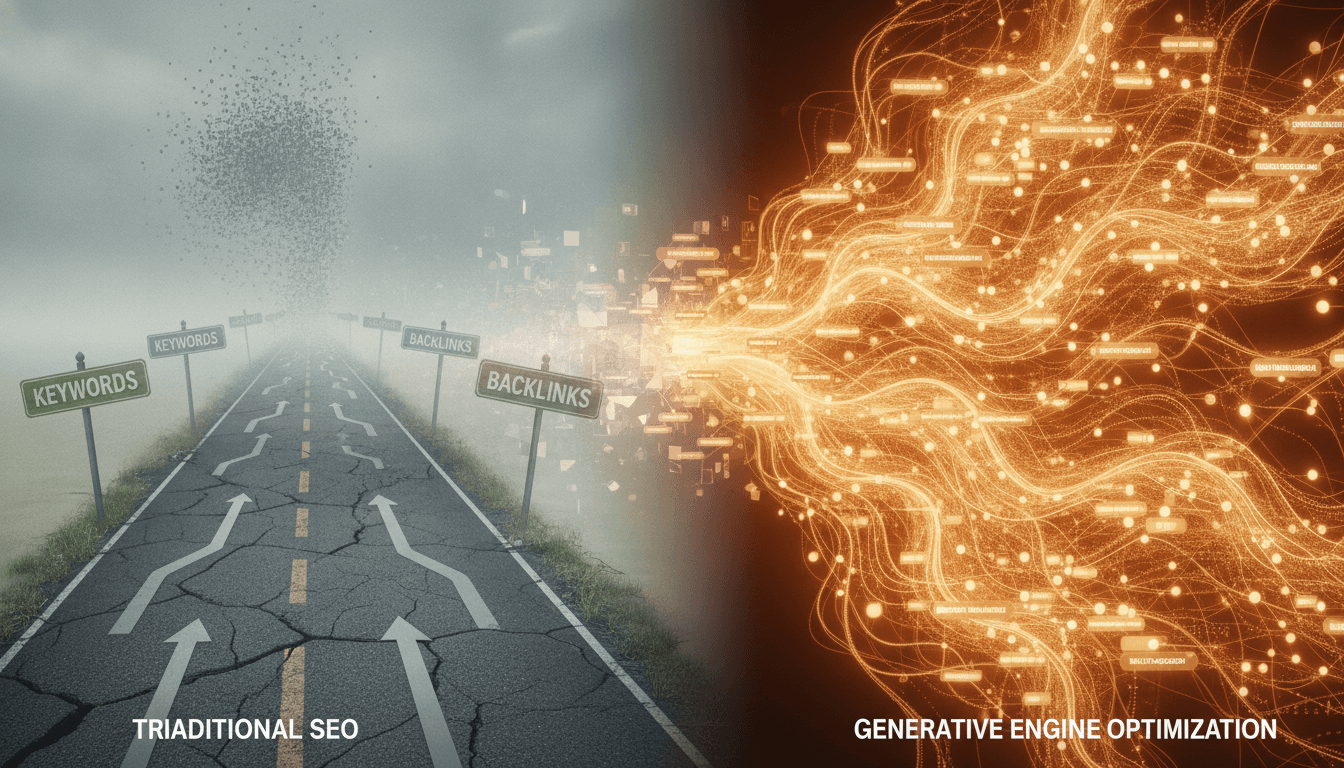
Generative Engine Optimization (GEO) 101: Preparing Your E-Commerce Brand for the AI Search Revolution
AI-powered search is reshaping how consumers shop and discover products online. Learn why Generative Engine Optimization (GEO) is the new must-have for e-commerce brands and how to future-proof your business for the age of AI-driven discovery.
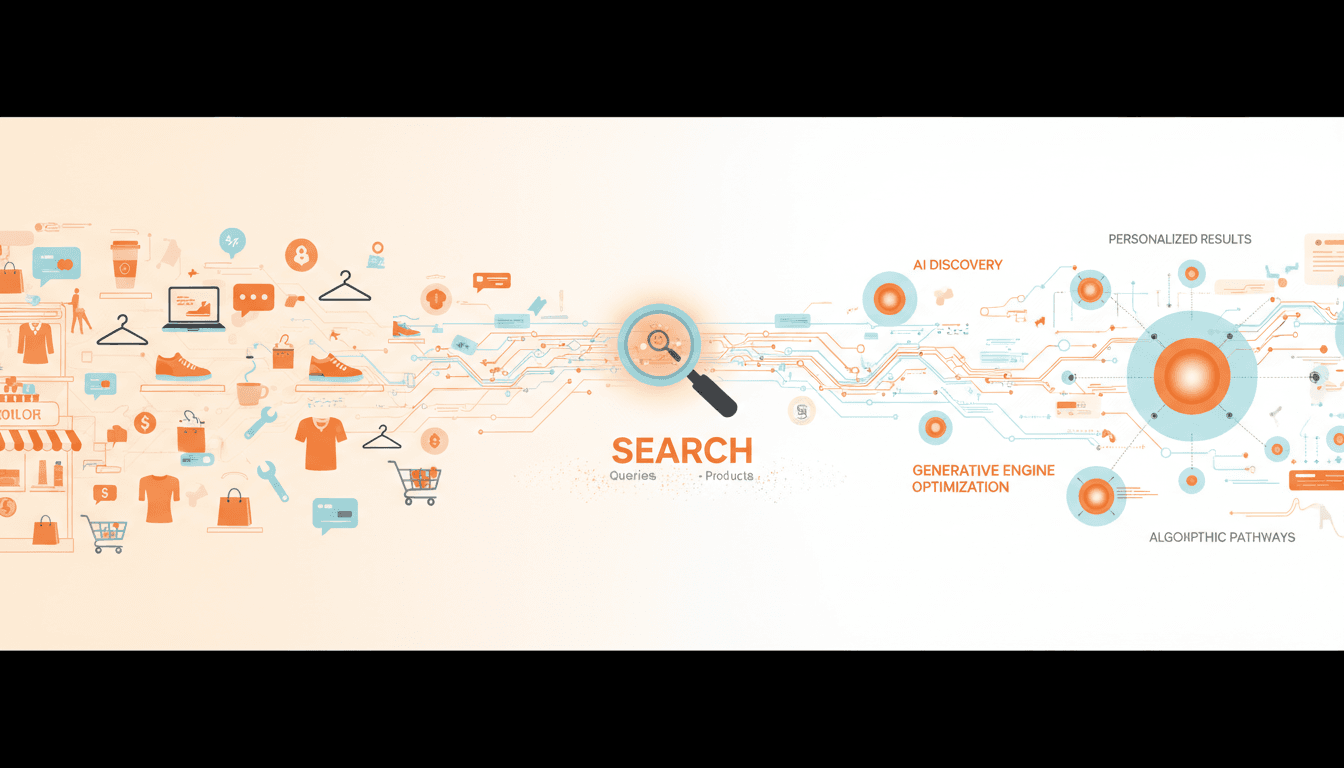
Generative Engine Optimization (GEO) 101: Preparing Your E-Commerce Brand for the AI Search Revolution
AI-powered search is revolutionizing how consumers shop and discover products online. Discover why Generative Engine Optimization (GEO) is becoming essential for e-commerce brands and learn how to future-proof your business in this age of AI-driven discovery.
[IMG: Futuristic AI-powered shopping assistant helping a user browse e-commerce products]
The AI search revolution is fundamentally reshaping the way consumers find and purchase products online. For e-commerce brands, relying solely on traditional SEO tactics is no longer sufficient. Enter Generative Engine Optimization (GEO)—a cutting-edge approach designed to ensure your products get noticed by AI-powered shopping assistants and recommendation engines. In this comprehensive guide, we’ll explore what GEO entails, why it’s crucial, and how your brand can position itself to thrive amid this swiftly evolving landscape.
Ready to future-proof your e-commerce brand with Generative Engine Optimization? Book a free 30-minute strategy session with our AI marketing experts today: https://calendly.com/ramon-joinhexagon/30min
What is Generative Engine Optimization (GEO)?
Generative Engine Optimization (GEO) involves optimizing your digital content so that generative AI engines—such as ChatGPT, Perplexity, and Google’s SGE—can accurately interpret, recommend, and surface your products to consumers. Unlike traditional SEO, which emphasizes keyword placement and backlink strategies, GEO centers on natural language, structured data, and superior content quality.
Generative AI search engines interpret user intent through context-rich, conversational queries rather than isolated keywords. As Gartner’s 2024 report on AI in Search explains, these platforms “move beyond traditional keyword matching” to prioritize context and meaning. This shift means GEO requires brands to:
- Craft product descriptions and content that directly respond to natural language queries.
- Structure data meticulously so AI can grasp the full context and attributes of your products.
- Continuously update information to maintain accuracy and relevance.
Here’s how GEO distinguishes itself from classic SEO:
- SEO: Focuses on ranking for specific keywords, optimizing meta tags, and building backlinks.
- GEO: Prioritizes natural language, conversational content, and structured product data tailored for AI interpretation.
Despite its rising importance, 65% of e-commerce brands are not yet optimized for AI search results (Forrester E-commerce AI Readiness Survey, 2024). Ignoring GEO risks your brand becoming invisible in the next wave of digital commerce. As Rand Fishkin, Co-founder of SparkToro, emphasizes:
“GEO is the new SEO. As generative AI becomes the default search interface for consumers, brands must rethink how they present and structure their product information.”
[IMG: Diagram comparing SEO and GEO processes with AI assistant interaction]
Why Should E-Commerce Brands Care About AI Search?
The surge of AI-powered shopping assistants is rewriting the rules of product discovery. AI search engines and virtual assistants like ChatGPT, Perplexity, and Google’s SGE now guide consumers seamlessly through their buying journeys, offering highly personalized recommendations in real time.
For instance, over 30% of U.S. smartphones now come equipped with integrated AI-powered shopping assistants (Statista, 2024). These advanced tools interpret complex, conversational queries such as “Find me a cruelty-free moisturizer under $30 with at least a 4-star rating” and promptly deliver targeted product suggestions.
Here’s how AI is reshaping the e-commerce landscape:
- Faster, more relevant product discovery: AI assistants analyze user preferences, context, and reviews to recommend products that truly fit.
- Shifting consumer behavior: Shoppers increasingly depend on AI for research, price comparisons, and final purchase decisions.
- Competitive edge: Brands adopting GEO early are experiencing enhanced visibility and sales growth.
This transformation is accelerating rapidly. According to McKinsey Digital, over 50% of all online purchases will be influenced by AI search by 2027 (McKinsey Digital, 2024). As Satya Nadella, CEO of Microsoft, states:
“The future of online shopping will be shaped by AI assistants that understand customer intent and surface the most relevant products—brands that optimize for generative search will have a strong competitive advantage.”
How Does GEO Impact E-Commerce Visibility and Sales?
GEO substantially boosts a brand’s visibility within AI-driven search and recommendation platforms. For brands optimized with GEO, product discovery becomes not only quicker but also more precise—allowing consumers to find exactly what they want without unnecessary friction.
Brands implementing GEO strategies report their products being discovered 20% faster within AI shopping assistants compared to those not optimized (Hexagon Internal Data, 2024). This accelerated discovery streamlines the path to purchase, minimizes drop-off, and increases user engagement.
The effect on conversion rates is equally impressive. In industries such as fashion and beauty, early GEO adopters have seen up to a 15% increase in conversion rates from AI-assisted shopping channels (Shopify Plus, Ecommerce Trends Report, 2024). Here’s why GEO drives these results:
- Greater visibility in AI recommendation feeds: GEO-optimized products appear more frequently and prominently.
- Higher conversion rates: More relevant product suggestions translate to stronger purchase intent and fewer bounces.
- Distinct brand differentiation: GEO helps brands stand out in an increasingly crowded digital marketplace.
“AI-driven search engines reward brands that provide comprehensive, trustworthy, and up-to-date product data. The shift to GEO is already underway.” — Lily Ray, Senior Director, SEO at Amsive Digital
[IMG: E-commerce dashboard showing uplift in traffic and conversions from AI search]
Getting Started with GEO: Actionable Basics for E-Commerce Brands
Shifting from traditional SEO to GEO demands both a change in mindset and practical tactics. Below are foundational steps e-commerce brands can take to build a robust Generative Engine Optimization strategy:
1. Optimize Product Content for Natural Language and AI Understanding
- Rewrite product descriptions to directly answer full-sentence, conversational queries.
- Clearly include key product attributes (e.g., “vegan leather crossbody bag”) and benefits.
- Incorporate FAQs and how-to guides to address common customer questions thoroughly.
2. Use Structured Data Markup
- Implement schema.org markup to detail product information, pricing, reviews, and availability explicitly for AI engines.
- Keep data current, accurate, and complete to reduce AI misinformation or hallucinations.
- Mark up rich media like images and videos to enhance AI’s content parsing capabilities.
3. Enrich Content with Customer Reviews and Third-Party Endorsements
- Integrate authentic user reviews prominently on all product pages.
- Highlight awards, expert endorsements, and media mentions to boost credibility.
- Use review snippets within structured data to strengthen trust signals.
4. Update Product Information Regularly
- Frequently review and refresh product details, pricing, and inventory status.
- Remove outdated content to maintain trustworthiness and relevance.
- Monitor customer feedback and questions to identify and fill content gaps.
5. Track Performance and Iterate
- Utilize analytics tools to monitor AI search visibility and product performance metrics.
- Experiment with different content formats and data structures to discover what resonates best with AI engines.
- Stay informed on evolving AI search trends to continuously refine your optimization efforts.
Brands that optimize for conversational search queries and provide comprehensive structured data are already witnessing significant visibility gains within AI-driven shopping feeds. As Alex Schultz, CMO of Meta, warns:
“Brands ignoring GEO are at risk of being invisible in the next wave of digital commerce. Early movers are already seeing tangible ROI.”
Ready to future-proof your e-commerce brand with Generative Engine Optimization? Book a free 30-minute strategy session with our AI marketing experts today: https://calendly.com/ramon-joinhexagon/30min
[IMG: Step-by-step illustration of GEO optimization process on an e-commerce site]
Leveraging Reviews and Third-Party Content for Better AI Search Performance
User-generated content is a powerful asset for GEO success. AI-powered search engines favor authentic, diverse, and up-to-date content when assessing product relevance and trustworthiness.
Customer reviews, testimonials, and third-party endorsements enrich your product data and enhance your brand’s trust signals. According to BrightLocal’s Local Business AI Optimization Survey, “Product reviews and user-generated content can significantly enhance a brand’s visibility in generative AI search results.”
To maximize the benefits of reviews and third-party content:
- Encourage reviews post-purchase: Use email follow-ups, loyalty programs, or incentives to boost review volume.
- Showcase high-quality reviews: Feature detailed, recent, and verified reviews prominently on product pages and within structured data.
- Leverage third-party endorsements: Promote awards, media coverage, and expert recommendations to build credibility and consumer trust.
Looking forward, brands that actively cultivate and highlight authentic user feedback will enjoy a measurable advantage in AI-driven search results. This strategy not only improves AI rankings but also reinforces consumer confidence and boosts conversion rates.
[IMG: Collage of authentic customer reviews and testimonials on e-commerce products]
Monitoring, Maintaining, and Updating Your GEO Strategy
GEO is an ongoing commitment rather than a one-time project. The accuracy and freshness of your product data critically influence your discoverability in AI-powered search engines.
To sustain a strong GEO foundation, brands should:
- Keep all product information factual and current: Outdated or inaccurate details can erode trust and hurt algorithmic rankings.
- Leverage analytics: Continuously track visibility, click-through rates, and conversions from AI shopping channels.
- Adapt based on trends: Stay alert to AI algorithm updates and shifts in consumer search behavior to refine your content strategy accordingly.
For example, Google Search Central advises that generative engines prioritize structured, factual, and up-to-date product information to improve recommendation accuracy (Google Search Central, 2024). Brands that consistently monitor and update their GEO strategies are best positioned to maintain visibility and relevance.
The Future of GEO: How AI Search Will Shape E-Commerce by 2027
Looking ahead, AI search is poised to dominate the e-commerce arena. By 2027, over 50% of all online purchase decisions will be influenced by AI-powered search and recommendation engines (McKinsey Digital, 2024). As generative AI becomes the default interface for online discovery, GEO will evolve from a competitive advantage into a fundamental requirement.
Here’s what the future holds for e-commerce:
- AI assistants as primary shopping companions: Consumers will increasingly trust AI to research, compare, and recommend products.
- Natural language as the new search currency: Conversational queries will replace the traditional keyword-driven searches.
- GEO as a core marketing competency: Brands will need dedicated GEO strategies and expertise to stay competitive.
As Rand Fishkin puts it,
“GEO is the new SEO. As generative AI becomes the default search interface for consumers, brands must rethink how they present and structure their product information.”
Brands investing in GEO now will secure long-term leadership and market share as AI search reaches mainstream adoption.
[IMG: Chart projecting AI search influence on online purchases through 2027]
First Steps for DTC Founders: A Practical GEO Checklist
For direct-to-consumer (DTC) founders and e-commerce leaders, embarking on the GEO journey begins with clear, actionable steps. Use this practical checklist to get started:
- Audit your current product content: Identify gaps in natural language use, contextual clarity, and structured data implementation.
- Implement structured data markup: Apply schema.org to clearly define product attributes, pricing, and reviews.
- Gather and showcase reviews: Encourage new customer reviews, highlight the most compelling ones, and ensure they are visible and accessible.
- Update your content regularly: Maintain current and accurate product information, images, and descriptions.
- Monitor AI search performance: Use analytics tools to track visibility, click-through rates, and conversions from AI-driven channels.
Recommended tools and resources:
- Google Search Console for insights on structured data and search performance
- Schema Markup Validator to verify correct implementation of product data
- Review management platforms like Yotpo or Trustpilot to collect and display user feedback
Keep in mind, 65% of e-commerce brands are not yet optimized for AI search results (Forrester E-commerce AI Readiness Survey, 2024). Taking early action can position your brand ahead of the competition and unlock new growth opportunities.
Ready to future-proof your e-commerce brand with Generative Engine Optimization? Book a free 30-minute strategy session with our AI marketing experts today: https://calendly.com/ramon-joinhexagon/30min
[IMG: GEO checklist infographic for DTC founders]
Conclusion
AI-powered search is fundamentally transforming the e-commerce landscape, making it essential for brands to rethink their digital strategies. Generative Engine Optimization provides the roadmap to enhanced visibility, consumer trust, and higher conversions in this new era. With over 50% of online purchases expected to be influenced by AI search by 2027, the time to act is now.
Brands embracing GEO will not only protect their discoverability but also gain a sustainable advantage over competitors slower to adapt. From optimizing product content with natural language to leveraging the power of reviews and structured data, the steps outlined here will prepare your brand for the AI search revolution.
Ready to future-proof your e-commerce brand with Generative Engine Optimization? Book a free 30-minute strategy session with our AI marketing experts today: https://calendly.com/ramon-joinhexagon/30min
[IMG: Confident e-commerce founder reviewing GEO strategy on a laptop, surrounded by AI icons]
Hexagon Team
Published April 7, 2026