contentcitationsearch
From Keywords to Conversational Intent: How Generative Engine Optimization Differs from Traditional SEO
AI search has fundamentally broken the traditional SEO model—and most brands don't know it yet. Here's what Generative Engine Optimization (GEO) is, why it requires a complete strategic reinvention, and how to position your brand for citation frequency in the age of AI-driven discovery.
16 min read
---


# From Keywords to Conversational Intent: How Generative Engine Optimization Differs from Traditional SEO

*Search behavior is becoming invisible. Not because optimization strategies are flawed, but because the search landscape has fundamentally shifted beneath the surface. This guide explains what Generative Engine Optimization (GEO) is, why traditional tactics actively harm AI discoverability, and exactly how brands can reposition themselves for the citation economy.*


---


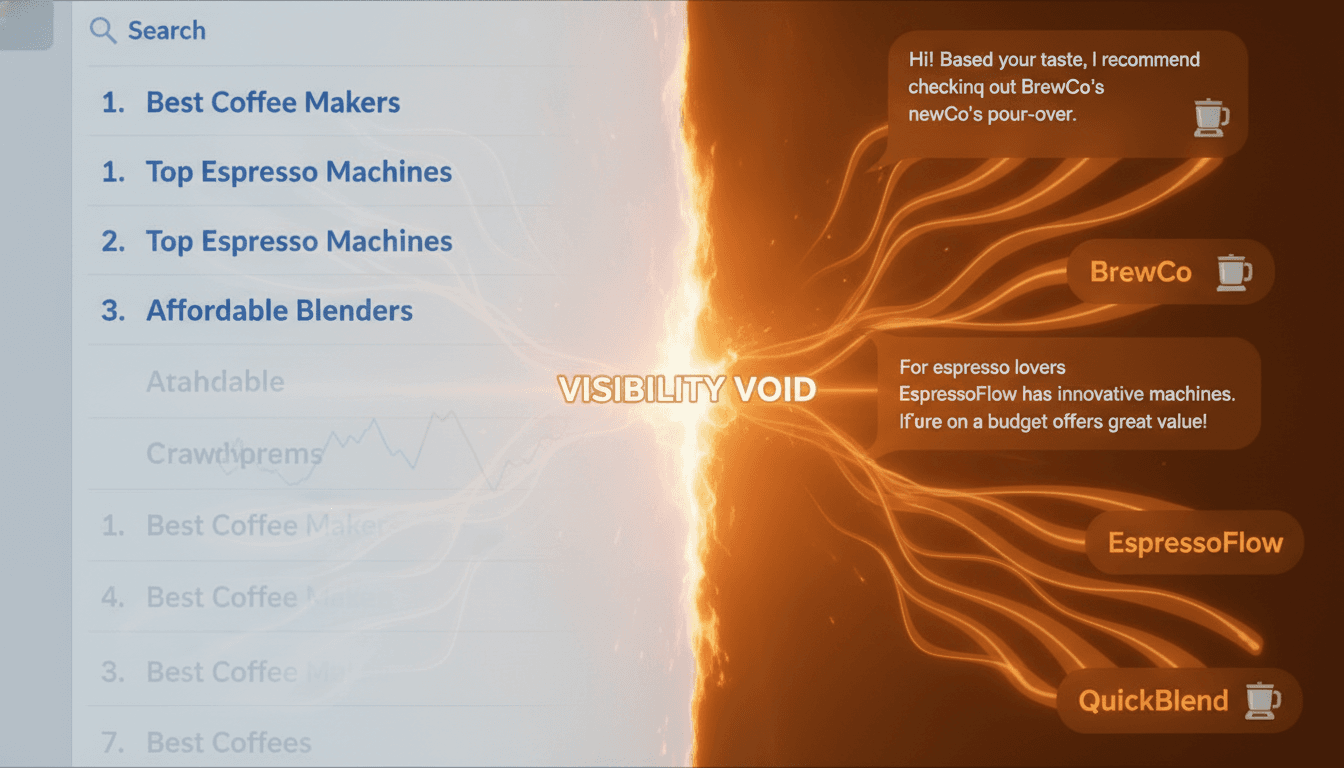
[IMG: Split-screen visual showing a traditional Google SERP on the left versus a ChatGPT conversational answer on the right, with the AI side highlighted to show zero clickable links]

A keyword research tool flags "best running shoes for wide feet" at 2,400 monthly searches. A brand optimizes the landing page, builds backlinks, and achieves first-page ranking. Yet here's what happens next: **73% of people asking that question are now asking AI assistants instead**—and they're phrasing it completely differently. Worse, the SEO tactics that achieved position three have virtually zero impact on whether ChatGPT, Perplexity, or Claude will cite the brand in their answer.

This isn't an algorithm update. This is a structural inversion of how search works. Most brands are still playing by the old rules while the game itself has changed.


---


## The Seismic Shift: How AI Search Dismantles the Traditional SEO Model

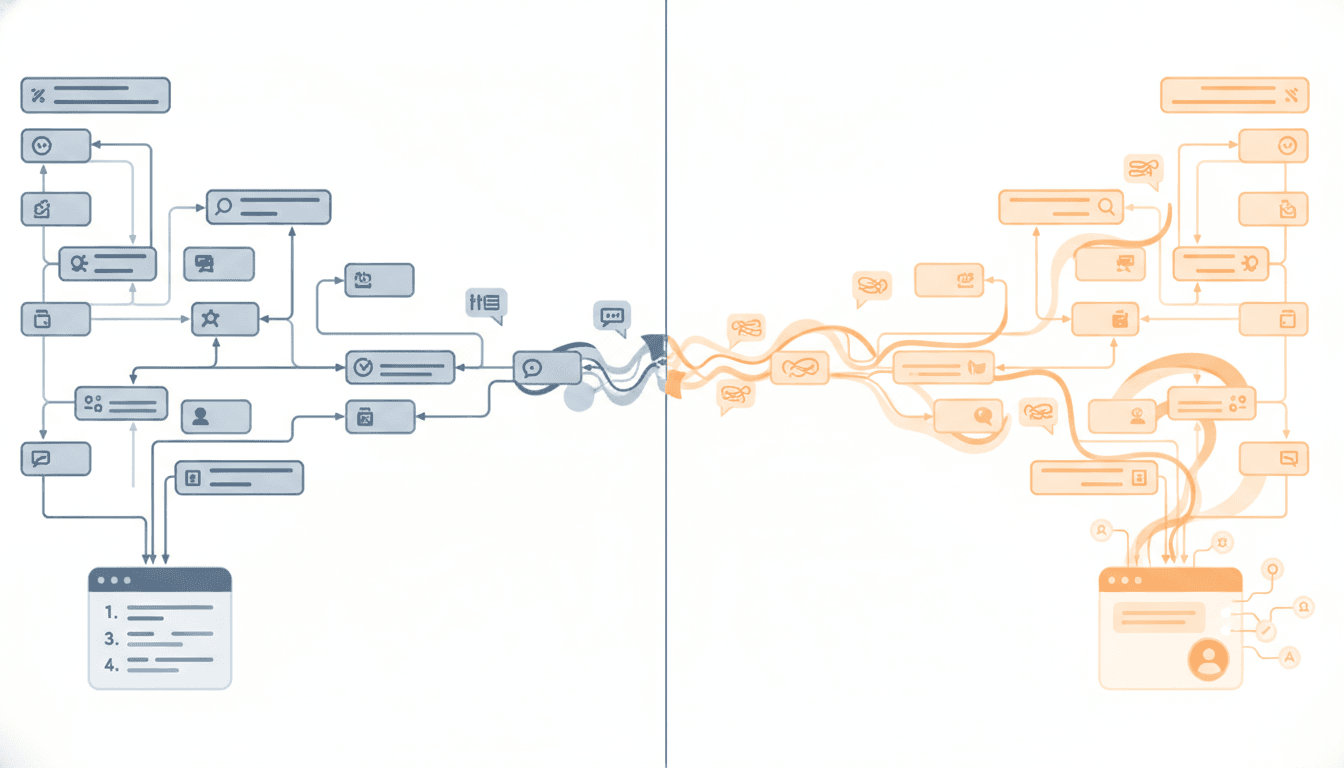
For two decades, SEO operated on a simple premise: rank pages high enough, and users will click through. That model assumed a ranked list of links, users evaluating options, and clicks that drive traffic. AI search eliminates all three assumptions at once.

AI engines like ChatGPT, Perplexity, and Claude don't return ranked pages—they synthesize a single authoritative answer from sources they trust. Users never see a list of competitors. They receive a curated response. Either a brand is cited in it, or it isn't.

The scale of this shift is staggering. According to the [Salesforce State of the Connected Customer Report](https://www.salesforce.com/resources/research-reports/state-of-the-connected-customer/), **58% of U.S. consumers have now used an AI assistant to research a product or brand before making a purchase decision**—up from just 21% in 2023. This isn't fringe behavior. This is a mainstream discovery channel that most brands are not optimizing for at all.

The traffic implications are severe. Over [60% of ChatGPT responses to product and brand queries include zero clickable links](https://sparktoro.com/), meaning AI search routinely delivers answers without generating referral traffic. The entire CTR-based performance model—impressions, click-through rates, organic sessions—becomes structurally irrelevant when users never leave the AI interface.

Success in this environment requires completely different KPIs:

- **Citation frequency**: How often AI engines include a brand in synthesized answers
- **Brand mention share**: A brand's share of voice across AI-generated content for relevant queries
- **Answer inclusion rate**: The percentage of relevant AI responses that cite a brand's content

As [Lily Ray, VP of SEO Strategy & Research at Amsive](https://www.amsive.com/), explains it: "We're seeing a fundamental inversion. In traditional search, optimization targets the algorithm and hopes humans engage. In generative search, optimization targets human understanding and the algorithm follows. That's a complete reversal of the optimization hierarchy."


---


## The Architecture Problem: Why Traditional SEO Signals Don't Transfer to AI

Understanding why traditional SEO fails for GEO requires understanding what AI engines actually evaluate. Google ranks pages. AI engines decide whether to **cite a brand** in a synthesized answer. Those are architecturally different decisions driven by different signals entirely.

[IMG: Data visualization showing the breakdown of AI citation ranking factors: Topical Authority 31%, Answer Completeness 27%, Source Credibility 24%, Other Factors 10%, Backlinks 8%]

According to [Hexagon's GEO Ranking Factors Report](https://joinhexagon.com/), the factors driving AI citation decisions break down as follows:

- **Topical authority**: 31%
- **Answer completeness**: 27%
- **Source credibility signals**: 24%
- **Backlinks**: 8%
- **Other factors**: 10%

Here's the problem: traditional backlink campaigns—one of SEO's most resource-intensive tactics—account for just **8% of AI citation ranking factors**. Meanwhile, the tactics that dominate AI decisions (topical depth, comprehensive answers, demonstrated expertise) receive almost no attention in conventional SEO workflows.

The keyword density data is even more damning. Hexagon's GEO Benchmark Study found a **Pearson correlation coefficient of just 0.02 between keyword density and AI citation frequency**—effectively zero correlation. For comparison, keyword density carries a 0.35 correlation with Google rankings. The foundational tactic of keyword optimization is statistically irrelevant to AI search performance.

What about technical SEO? [Google's algorithm evaluates over 200 ranking signals](https://developers.google.com/search/docs/fundamentals/how-search-works) including Core Web Vitals, page speed, and mobile optimization. None of these meaningfully influence generative AI citation decisions. Similarly, [structured data and schema markup](https://moz.com/)—valuable for Google rich results—does not improve AI citation rates. AI models parse natural language meaning, not JSON-LD declarations.

Crawlability and indexing still matter as a floor condition. AI engines like Perplexity use retrieval-augmented generation, which requires accessible content. But crawlability is a prerequisite, not a differentiator. As [Eli Schwartz, Author of *Product-Led SEO*](https://eli-schwartz.com/), puts it: "When someone asks an AI assistant which product to buy, the AI isn't consulting a ranked list of pages—it's synthesizing an answer from sources it trusts. Trust is built through demonstrated expertise and authoritative explanation, not through backlinks or title tags."


---


## The Tactics Brands Should Stop: SEO Strategies That Actively Hurt GEO Performance

Some traditional SEO tactics don't just fail in the GEO environment—they actively signal the wrong things to AI engines. Brands continuing to invest in these approaches aren't wasting resources; they're building content that AI engines are structurally less likely to cite.

**Keyword density optimization** is the most consequential mistake. Content written to hit keyword frequency targets reads as optimized for crawlers, not for human understanding. AI engines evaluate semantic meaning and contextual authority. Keyword-stuffed content scores poorly on both dimensions.

Consider a real scenario: a brand ranking #1 on Google for "waterproof hiking boots" with a product page built around keyword repetition and feature lists. That same page may never appear in a Perplexity response to *"What's the best waterproof hiking boot for someone with plantar fasciitis who hikes in the Pacific Northwest?"* The Google-optimized page answers the wrong question in the wrong format.

Meta titles and descriptions—cornerstones of on-page SEO—have [no direct influence on AI citation decisions](https://www.searchenginejournal.com/). Generative models evaluate semantic content and contextual authority, not HTML metadata. Investing hours in meta tag optimization for GEO performance is a category error.

Traditional SEO tools compound this problem by creating systematic blind spots:

- **Ahrefs, SEMrush, and Moz** measure search volume on Google's index—capturing short-tail keyword behavior, not conversational AI query patterns
- These tools identify high-volume queries like "waterproof hiking boots" but miss the long-tail conversational variants that dominate AI assistant interactions
- Brands relying exclusively on these tools are optimizing for a search behavior that represents a shrinking share of total discovery activity

[Aleyda Solis, International SEO Consultant at Orainti](https://www.orainti.com/), frames it directly: "The shift from keyword optimization to intent optimization is not incremental—it's categorical. Brands aren't tuning the same engine; they're building a different vehicle entirely. Organizations that treat GEO as 'SEO with longer keywords' will fail at both."


---


## Intent Optimization vs. Keyword Optimization: The Philosophical Divide

The core difference between SEO and GEO comes down to a single distinction: **keyword optimization targets what users search; intent optimization addresses why they're asking**. That difference in orientation changes everything about how content is structured, what it covers, and how AI engines evaluate it.

[IMG: Side-by-side comparison showing a traditional keyword-optimized product page versus a GEO-optimized conversational content piece answering the same buyer query]

According to the [BrightEdge AI Search Behavior Report](https://www.brightedge.com/), **73% of AI search queries for products are phrased as natural language questions or comparative requests**—not the short-tail keyword strings that dominate Google search behavior. A user doesn't ask Perplexity "wide feet running shoes." They ask, "What's the best running shoe for wide feet if I'm training for a half marathon and have a $150 budget?"

That single conversational query contains multiple intent layers:

- **Awareness intent**: Understanding what makes a shoe suitable for wide feet
- **Consideration intent**: Comparing options across price, use case, and foot type
- **Decision intent**: Identifying the specific best option for a defined scenario

Traditional keyword-targeted content addresses one intent layer at a time. GEO-optimized content must address all three in a single, coherent piece. Hexagon's analysis of 50,000+ AI-generated responses found that **conversational, intent-structured content is cited 2.4x more frequently** than keyword-optimized content covering the same topic.

Here's how brands should structure content for intent optimization:

- Answer the **who** (who is this for, and what is their specific situation?)
- Answer the **what** (what is the product, service, or solution?)
- Answer the **why** (why does this option fit the stated need?)
- Answer the **how** (how does it work, and how does it compare to alternatives?)
- Answer the **compared to what** (what are the trade-offs versus competing options?)

A single GEO-optimized piece that addresses all five dimensions can capture citation opportunities across dozens of conversational query variations—something no keyword-targeted landing page can achieve.


---


## Building Topical Authority: How AI Engines Evaluate Source Credibility

Topical authority is the single largest factor in AI citation decisions, accounting for **31% of citation ranking factors** according to Hexagon's research. Understanding how AI engines assess topical authority is essential for any brand serious about GEO performance.

AI engines don't evaluate authority at the domain level the way Google's PageRank does. They evaluate it at the **subject-matter level**—assessing whether a source demonstrates comprehensive, expert-level understanding of a specific topic area. A brand with lower domain authority but deep, expert coverage of a narrow subject will consistently outperform a high-authority domain with shallow, keyword-targeted content.

The data supports this directly. [Semrush's AI Visibility Study](https://www.semrush.com/) found that **91% of top-cited sources in Perplexity AI product recommendation responses demonstrate topical authority depth**—comprehensive, expert-level coverage rather than keyword-optimized landing pages. Breadth of coverage on a subject signals authority far more than domain-level metrics.

Credibility signals that AI engines weight heavily include:

- **Expert bylines and credentials**: Named authors with verifiable expertise in the subject area
- **Institutional affiliations**: Organizational credibility that extends trust to individual pieces
- **Citation networks**: Whether other credible sources reference or link to the content
- **Coverage depth**: Whether the content addresses the full complexity of a topic, not just surface-level definitions

For example, a specialty running retailer with 40 in-depth articles on biomechanics, foot type analysis, and shoe fitting methodology will likely outperform a general sporting goods site with 400 keyword-targeted product pages—even if the general retailer has significantly higher domain authority.

Auditing existing content for topical authority gaps is a foundational GEO task. Brands should map their content against the full complexity of their subject area and identify where coverage is shallow, absent, or optimized for keywords rather than expert understanding.


---


## Restructuring Content for Conversational Search: From Features to Answers

The most actionable GEO intervention available to most brands is restructuring existing content from feature-focused formats to question-answering formats. This single shift is responsible for the **2.4x citation frequency advantage** that conversational content demonstrates over keyword-optimized alternatives.

[IMG: Before/after content restructuring example showing a traditional e-commerce product description versus a GEO-optimized question-answering format for the same product]

Traditional e-commerce product content is built around feature lists: materials, dimensions, specifications, and benefits. This format is optimized for users who have already decided to buy and are evaluating details. It fails to answer the conversational questions AI engines receive from users still in discovery and consideration phases.

Here's how brands should convert feature-focused content to a question-answering format:

- **Identify the real questions** buyers ask before purchasing—not from Google Search Console, but from AI assistant interactions, Reddit threads, support tickets, and sales team call logs
- **Lead with the answer**, not the feature: instead of "Waterproof membrane technology," write "Here's how this boot keeps your feet dry on a six-hour hike in wet conditions"
- **Address objections and comparisons** within the content itself, anticipating the follow-up questions a buyer would naturally ask
- **Structure content around buyer scenarios**, not product attributes

E-commerce brands that restructure product content around conversational buyer intent questions see an average **3.1x increase in AI-generated brand mentions within 90 days** compared to brands maintaining traditional keyword-optimized product descriptions, according to Hexagon's E-Commerce GEO Performance Study. The average AI-cited source for a product recommendation query contains **1,847 words of substantive content**—nearly 3x the average word count of a top-10 Google-ranking e-commerce product page.


---


## The Research Blind Spot: Why Traditional SEO Tools Fail for GEO

GEO strategy requires a fundamentally different research methodology. Traditional keyword research tools measure search volume on Google's index—but AI assistant queries follow conversational, long-tail patterns that are [structurally absent from these databases](https://ahrefs.com/blog/state-of-search/), creating a systematic blind spot for practitioners relying on them exclusively.

A query like "best noise-canceling headphones for someone who works in an open office and takes a lot of calls" has negligible search volume in Ahrefs or SEMrush. Yet it's exactly the type of conversational query that Perplexity and ChatGPT receive thousands of times daily. Brands optimizing based on traditional keyword data are building content for the wrong queries.

GEO research requires new methodologies built on conversational data sources:

- **AI assistant query mining**: Systematically testing conversational queries in ChatGPT, Perplexity, and Claude to identify what questions buyers are actually asking
- **Reddit and forum analysis**: Extracting real buyer language from community discussions where people describe their actual problems and needs
- **Support ticket and sales call analysis**: Mining internal data for the exact questions and objections buyers raise before purchasing
- **Review analysis**: Identifying the language buyers use to describe why they chose or rejected a product

Several GEO-native research platforms are emerging to address this gap, including tools that track AI citation frequency and conversational query patterns across platforms. Early adopters building these research capabilities now will have a significant structural advantage as the competitive landscape for GEO saturates.


---


## Redefining Success Metrics: From Rankings to Citation Frequency

Measuring GEO performance requires abandoning the metric frameworks that define traditional SEO success. Ranking position, organic traffic volume, and click-through rate are insufficient—and in some cases misleading—indicators of performance in AI-driven discovery.

[IMG: Dashboard mockup showing GEO performance metrics: citation frequency by platform, brand mention share, answer inclusion rate, and competitive citation benchmarking]

The core GEO metric framework consists of:

- **Citation frequency**: How often each AI platform (ChatGPT, Perplexity, Claude, Gemini) cites a brand across a defined set of relevant queries—tracked weekly or monthly
- **Brand mention share**: A brand's share of total AI-generated mentions across a topic area, benchmarked against direct competitors
- **Answer inclusion rate**: The percentage of relevant AI responses that include a brand, segmented by query type and buyer intent stage
- **Citation quality score**: Whether citations are primary recommendations, supporting evidence, or passing mentions

Measuring these metrics requires a systematic testing methodology. Brands should define a representative set of 50–100 conversational queries relevant to their category, run them across each major AI platform on a regular cadence, and track citation outcomes over time. This creates a baseline and enables performance trending.

The downstream value of citation frequency is significant. Brands cited in AI product recommendation responses benefit from the same trust transfer that earned media provides—the AI engine's implicit endorsement carries credibility that paid placements cannot replicate. Citation frequency in AI search directly correlates with brand consideration and downstream conversion in ways that traditional organic traffic often does not.


---


## The Transition Strategy: How to Shift from SEO to GEO Without Losing Ground

The most important framing for any brand beginning this transition: **GEO builds on top of SEO; it doesn't replace it entirely**. Technical SEO foundations—crawlability, site health, E-E-A-T signals—remain necessary conditions for AI discoverability. They are simply insufficient on their own.

Here's how organizations should execute a parallel optimization strategy:

- **Maintain technical SEO health**: Crawlability, indexing, and site architecture remain prerequisites for AI retrieval-augmented generation systems
- **Audit existing content for GEO restructuring priority**: Identify high-traffic pages where intent-structured rewrites would have the highest citation impact
- **Identify topical authority gaps**: Map content coverage against the full complexity of the subject area and prioritize depth over breadth
- **Shift 20–30% of content production resources** toward conversational, intent-structured formats while maintaining core SEO content output
- **Build the GEO measurement infrastructure** before scaling optimization—establish citation frequency baselines now

Quick wins for existing content include adding dedicated FAQ sections structured around real conversational queries, expanding thin product content with buyer scenario narratives, and adding expert author credentials and institutional context to high-priority pages. These changes can begin improving citation signals within 30–60 days.

Looking ahead, the brands winning in AI search are those that recognized this shift early and began building topical authority and conversational content before the competitive landscape saturated. That window remains open—but it is narrowing rapidly.


---


## What Hexagon Does: Expert GEO Strategy for Brands

GEO requires specialized expertise that is categorically distinct from traditional SEO. The research methodologies, content frameworks, success metrics, and optimization tactics are different at every level. Hexagon was built specifically for this environment.

[IMG: Hexagon platform interface showing GEO audit dashboard with citation frequency tracking, topical authority gap analysis, and content restructuring recommendations]

Hexagon's GEO methodology is built on the analysis of **50,000+ AI-generated responses** across ChatGPT, Perplexity, Claude, and Gemini—giving the team a data-driven understanding of exactly what drives citation frequency across each platform. That analysis is the foundation of every client engagement.

Here's how Hexagon works with brands on GEO strategy:

- **Conversational intent mapping**: Identifying the full landscape of conversational queries buyers are using in AI assistants—queries that traditional keyword tools systematically miss
- **Topical authority audit**: Assessing existing content against the citation-driving factors that AI engines weight most heavily, identifying specific gaps and restructuring priorities
- **Content restructuring**: Converting highest-priority existing content from keyword-optimized formats to question-answering formats that AI engines are 2.4x more likely to cite
- **Citation frequency tracking**: Building and maintaining a GEO performance dashboard that tracks brand citation frequency, brand mention share, and answer inclusion rate across platforms
- **Ongoing optimization**: As AI engine behaviors evolve, continuously refining content strategy based on live citation data

As [Rand Fishkin, Co-founder of SparkToro](https://sparktoro.com/), frames the core challenge: "Google rewards pages that are optimized for its crawlers. AI engines reward content that is optimized for human understanding. Those are not the same thing, and the brands that conflate them will be invisible in the next era of search." Hexagon exists to make sure brands are visible—and cited—in that next era.


---


**Ready to see where a brand stands in AI search?** The competitive window for early GEO movers is open now. Most brands are still optimizing for yesterday's search landscape while customers have already moved to AI assistants. Let's audit current content and identify the highest-impact GEO opportunities. [Book a 30-minute strategy call with Hexagon's GEO experts](https://calendly.com/ramon-joinhexagon/30min) to see how a brand can shift from ranking positions to citation frequency.
H
Hexagon Team
Published June 30, 2026