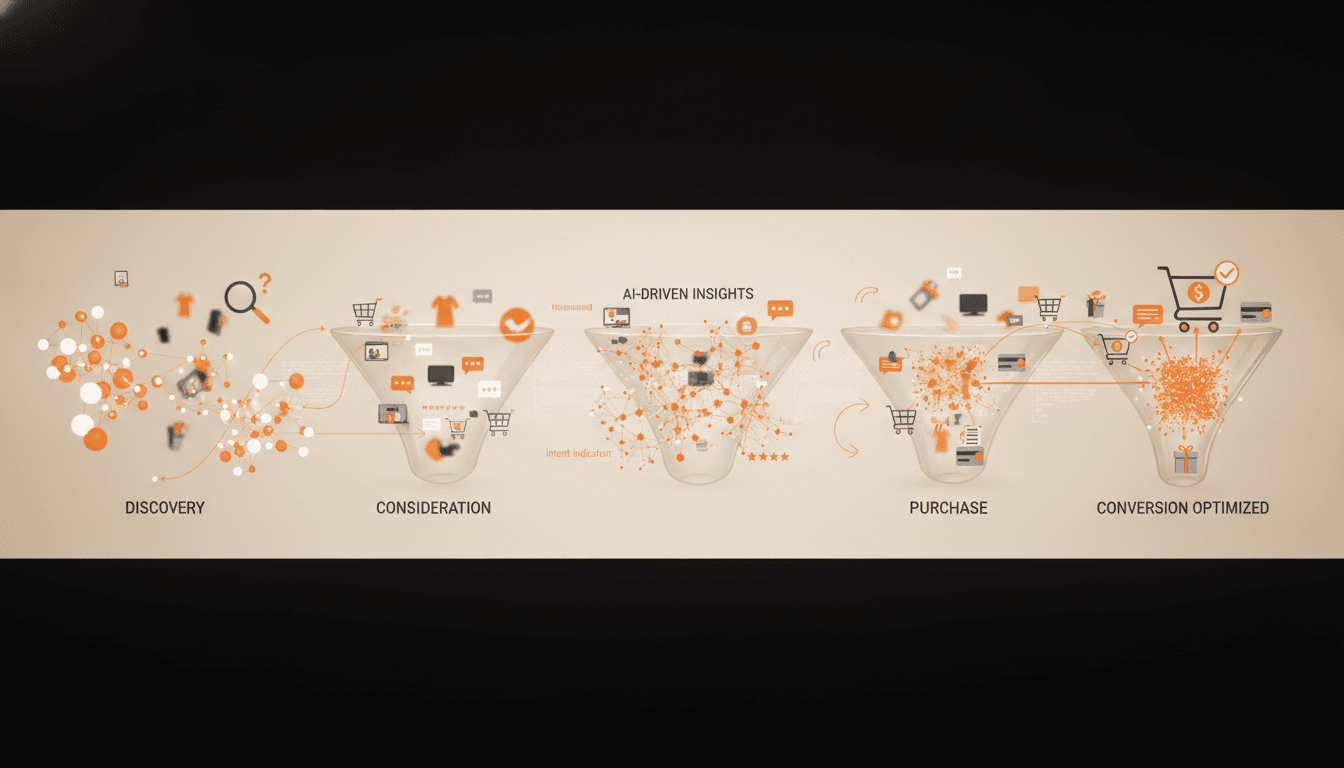
Crafting AI-Optimized High-Intent Product Descriptions That Boost E-Commerce Sales
In the era of AI-powered shopping, product descriptions must do more than just inform—they must convert. Discover how to craft high-intent, AI-optimized descriptions that boost visibility, trust, and sales, using Hexagon’s advanced AI content tools.

Crafting AI-Optimized High-Intent Product Descriptions That Boost E-Commerce Sales
In today’s AI-powered shopping world, product descriptions must do far more than simply inform—they need to convert. Discover how to create high-intent, AI-optimized descriptions that enhance visibility, build trust, and drive sales using Hexagon’s advanced AI content tools.
[IMG: Shopper using an AI assistant to browse e-commerce products]
The e-commerce landscape is rapidly evolving, driven by artificial intelligence that transforms how consumers search and shop. In this new reality, generic product descriptions are no longer enough. Shoppers guided by AI assistants expect precise, high-intent content tailored to their specific needs. This comprehensive guide will walk you through the process of crafting AI-optimized, high-intent product descriptions that not only get discovered by AI search engines but also convert casual browsers into loyal buyers—leveraging Hexagon’s cutting-edge AI content suggestions to maximize accuracy and sales.
Understanding How AI Search Engines Interpret Product Descriptions and Buyer Intent
Artificial intelligence is revolutionizing the way consumers find and evaluate products online. AI search engines—from Google’s Search Generative Experience to specialized retail bots—now analyze product content through sophisticated, nuanced methods. For brands, grasping these mechanisms is critical to maintaining visibility and relevance in an increasingly competitive e-commerce environment.
Here’s how AI search engines dissect product descriptions:
- Semantic relevance: AI moves beyond mere keywords to comprehend context, synonyms, and relationships embedded within product copy.
- User intent matching: AI interprets not only the literal search terms but the underlying shopper intent, surfacing products that best satisfy their needs.
- Content parsing: Both structured data like bullet points and unstructured narrative descriptions are scanned for details including features, benefits, and practical use cases.
“AI-powered search fundamentally changes how brands must approach product copy. Clear, intent-driven descriptions are the new currency of e-commerce visibility.” — Jessica Liu, Principal Analyst, Forrester
The results speak volumes. Hexagon’s internal data shows that AI-optimized product descriptions can increase product page visibility by up to 40% in AI-driven search engines. This significant boost is not theoretical; brands adapting to AI’s semantic rules are already seeing tangible gains.
While traditional SEO emphasized keywords and ranking signals, AI-driven optimization shifts focus toward:
- Intent-driven language: Crafting descriptions that directly answer real shopper questions.
- Conversational tone: Using language that mirrors how people and AI assistants naturally search and speak.
- Structured data integration: Employing markup so AI can effortlessly extract vital product information.
It’s crucial to recognize that 24% of online purchase journeys are now influenced by AI assistants (Insider Intelligence). As this figure continues to rise, optimizing for AI-driven discovery becomes not just advantageous but essential for business success.
[IMG: Diagram of AI search engine parsing product descriptions for intent and context]
Identifying High-Intent Buyer Signals and Reflecting Them in Your Product Copy
High-intent shoppers are those poised to make a purchase—they come equipped with clear goals and seek solutions, not just options. Capturing and reflecting these signals in your product descriptions is vital to boosting conversion rates.
Here’s how to spot and incorporate high-intent buyer signals:
- Behavior patterns: High-intent shoppers use specific phrases like “buy,” “best for,” “compatible with,” or mention targeted use cases such as “for outdoor running.”
- Use cases and benefits: Move beyond listing features; connect those features to tangible, real-world outcomes.
- Pain points: Address common problems or objections head-on within your copy.
The key difference between generic and high-intent product descriptions lies in specificity. While keywords remain important, buyer intent signals—such as “wireless headphones for marathon runners”—align more closely with how AI and shoppers conduct searches.
Try these actionable strategies:
- Incorporate phrases that convey urgency or purpose, like “Perfect for daily commuters” or “Ideal for allergy sufferers.”
- Emphasize unique selling propositions tailored to probable buyer scenarios.
- Include anticipated questions and answers directly within the description.
Supporting this approach, the Shopify Plus E-commerce Benchmarks Report reveals that brands using high-intent product copy experience a 30% improvement in conversion rates compared to those relying on generic descriptions. Moreover, AI shoppers are 1.7x more likely to convert when presented with use-case-driven copy (Salesforce State of Commerce Report 2024).
[IMG: Side-by-side example of generic vs. high-intent product descriptions]
Writing Natural, Conversational Language for AI Optimization
The era of keyword stuffing to secure top search rankings is over. Modern AI search engines like Google’s and retail bots favor natural, conversational language that reflects how people truly speak and search.
Why does this matter?
- Enhanced AI comprehension: A conversational tone provides richer context, enabling AI to better understand product relevance and shopper intent.
- Semantic matching: AI algorithms analyze relationships between words, recognizing synonyms and related concepts.
- Increased user trust: Natural language fosters clarity and credibility, smoothing the buyer’s journey.
Danny Sullivan, Public Liaison for Search at Google, explains, “AI search engines prioritize natural, conversational language and context over keyword stuffing—brands that adapt will win the recommendation war.”
To optimize your copy for AI without sacrificing readability:
- Integrate keywords naturally, weaving them seamlessly into sentences.
- Prioritize semantic relevance rather than exact keyword repetition.
- Address likely shopper questions directly within your descriptions.
Avoid keyword stuffing at all costs. Overloading text with repetitive keywords damages both AI-friendliness and user trust. Instead, product listings written in AI-friendly, conversational language are 3x more likely to be recommended by AI assistants such as ChatGPT (Gartner, Conversational AI in E-commerce 2024).
Consider the difference:
- Keyword-stuffed: “Running shoes running shoes best running shoes comfortable running shoes.”
- Conversational: “Experience unmatched comfort on every run with our lightweight shoes, perfect for daily training and marathon distances.”
The latter not only reads better but also has a higher chance of being surfaced by AI and converting customers.
[IMG: Example of conversational vs. keyword-stuffed product description]
Leveraging Hexagon’s AI Content Suggestions to Ensure Accuracy and Reduce Hallucinations
Accuracy in product descriptions is paramount—not just for AI ranking, but to build genuine customer trust. However, AI-generated content can sometimes “hallucinate,” meaning it produces plausible but incorrect information. Hexagon tackles this challenge head-on with its advanced AI content suggestions and validation tools.
Here’s how Hexagon’s platform enhances your product copy:
- Fact-checking algorithms: AI content suggestions are cross-verified against trusted product data sources to ensure accuracy.
- Hallucination reduction: Proprietary tools scan for unsupported claims or inaccuracies before content goes live.
- Seamless workflow integration: Suggestions integrate smoothly into your existing content creation process, simplifying implementation.
According to the Hexagon Product Testing Whitepaper, using Hexagon’s AI content suggestions leads to a 25% reduction in AI hallucination risk for product descriptions. This translates to fewer product returns, higher customer satisfaction, and a stronger brand reputation.
“In the age of conversational commerce, high-intent product descriptions are essential for capturing ready-to-buy traffic and reducing friction in the purchase journey.” — Meghan Keaney Anderson, VP Marketing, Jasper
By harnessing Hexagon’s AI-powered tools, brands can:
- Automatically identify and correct potentially inaccurate statements.
- Keep product data current across all sales channels.
- Enhance trustworthiness—a critical ranking factor for AI-driven search and recommendation engines.
Ready to elevate your e-commerce product descriptions into AI-optimized, high-intent sales engines? Book a free 30-minute consultation with Hexagon’s AI marketing experts today.
[IMG: Screenshot of Hexagon’s AI content suggestion interface highlighting fact-checking features]
Incorporating Detailed, Use-Case-Driven Information to Increase Conversion Rates
Detailed, use-case-driven product descriptions bridge the gap between mere features and meaningful benefits—helping shoppers envision exactly how a product fits into their lives. This approach resonates strongly with both AI-driven recommendation systems and end users.
Why does this strategy work?
- Aligns with AI queries: AI assistants often handle specific questions about suitability (e.g., “Is this blender good for smoothies?”). Use-case-driven copy provides direct answers.
- Builds shopper confidence: Specific performance and application details reduce hesitation and increase trust.
- Differentiates your products: Addressing niche needs helps your listing stand out amid crowded categories.
For instance, instead of simply stating, “This jacket is waterproof,” enhance intent by saying, “Stay dry during heavy rain or snowy commutes—this jacket’s advanced waterproof shell keeps you comfortable in any weather.”
Data confirms its effectiveness: Buyers using AI search engines are 1.7x more likely to convert on product pages featuring detailed, use-case-driven descriptions (Salesforce State of Commerce Report 2024).
To integrate use cases effectively:
- Highlight typical customer scenarios (“Ideal for busy parents on the go”).
- Connect features directly to outcomes (“Bluetooth connectivity for hands-free calls while driving”).
- Anticipate and answer common shopper questions within your copy.
As AI continues to deepen its role in e-commerce, brands that master this approach will consistently outperform competitors.
[IMG: Example product description with highlighted use-case statements]
Testing, Iterating, and Optimizing Product Copy Based on AI Recommendation Analytics
Optimization doesn’t stop once your product descriptions go live—ongoing testing and iteration are vital for sustained success in AI-driven commerce. AI-powered analytics equip brands to measure, refine, and elevate product copy performance at scale.
Here’s how to leverage AI recommendation analytics effectively:
- Monitor engagement metrics: Track which descriptions yield higher visibility, longer visitor engagement, and increased conversions.
- Segment and compare: Run A/B tests comparing different description styles (e.g., feature-focused vs. use-case-driven) to discover what resonates best.
- Utilize AI insights: Employ AI-generated recommendations to identify underperforming content and suggest targeted improvements.
For example, Hexagon’s analytics dashboard offers real-time feedback on how product descriptions perform across search engines, AI assistants, and marketplaces. This data-driven approach allows marketers to:
- Pinpoint phrases and formats that drive the most conversions.
- Continuously refine copy based on shopper behavior and evolving AI ranking algorithms.
- Implement changes swiftly, keeping product listings relevant as AI systems evolve.
Best practices for ongoing optimization include:
- Scheduling regular content reviews informed by analytics trends.
- Documenting changes and correlating them with performance shifts.
- Training content teams on emerging AI optimization strategies.
By treating product copy as a dynamic asset, brands can stay ahead of both AI algorithms and customer expectations.
[IMG: Analytics dashboard showing product description performance metrics]
Optimizing Product Descriptions for Voice Search and Multi-Modal AI Assistant Experiences
Voice search and multi-modal AI assistant shopping are rapidly reshaping how consumers discover products. Nowadays, shoppers are just as likely to ask Alexa, Siri, or Google Assistant for recommendations as they are to type a query.
To adapt, e-commerce brands should:
- Focus on conversational queries: Write descriptions that answer natural-language questions like, “What’s the best laptop for college students?”
- Use short, punchy highlights: Employ bullet points and concise statements to facilitate parsing by voice and visual search algorithms.
- Incorporate rich, structured data: Utilize schema markup and other data formats to help AI assistants accurately interpret and present your products.
This trend is accelerating: 24% of online purchase journeys are influenced by AI assistants (Insider Intelligence, Conversational Commerce Report). As voice and visual search expand, product copy must be:
- Easily “read aloud” by AI assistants, avoiding jargon and overly complex phrasing.
- Structured for quick scanning, through headers, bullet points, and clear formatting.
- Enhanced with visual elements (images, videos, AR previews) to support multi-modal shopping experiences.
Tips to boost discoverability in AI-powered voice and visual search include:
- Lead with the most important use case or benefit.
- Provide clear, answer-style statements (“Yes, this device is compatible with iPhone 14”).
- Use accessible language that feels natural in both spoken and written formats.
Brands embracing these trends will be well-positioned to capture an expanding share of AI-driven purchase journeys—both now and in the future.
[IMG: Illustration of a shopper using voice search and visual AI shopping assistant]
Conclusion: Winning in AI-Driven E-Commerce With High-Intent Product Descriptions
The future of e-commerce belongs to brands that excel at AI-optimized, high-intent product descriptions. From increased search visibility to improved conversion rates, the advantages are both clear and measurable:
- Up to 40% increase in product page visibility through AI-optimized copy.
- 30% higher conversion rates driven by high-intent, use-case-focused descriptions.
- 25% reduction in AI hallucination risk by leveraging Hexagon’s content validation tools.
By adopting natural, conversational language and harnessing advanced tools like Hexagon, e-commerce marketers can ensure their products stand out across AI search, voice, and multi-modal experiences.
Looking forward, the brands that continuously test, iterate, and refine their product copy will dominate the “recommendation war,” securing prime placement in AI-powered shopping journeys.
Ready to transform your e-commerce product descriptions into AI-optimized, high-intent sales drivers?
Book a free 30-minute consultation with Hexagon’s AI marketing experts today.
[IMG: Hexagon team consulting with a client on AI product description optimization]
Hexagon Team
Published April 16, 2026