brandbrandsrecommendation
AI Search Algorithms Decoded: The Three Hidden Factors That Actually Drive E-Commerce Brand Recommendations in 2026
Your brand dominates Google search but disappears from AI recommendations. This guide decodes the three hidden factors—corroborated authority, semantic consistency, and recency-weighted mention density—that determine which e-commerce brands get recommended by ChatGPT, Perplexity, and Claude in 2026, and why traditional SEO metrics have almost zero correlation with AI visibility.
14 min read
placeholders intact", “Converted second-person imperatives to third-person descriptive statements”, “Ensured bullet points are used appropriately (maintained existing lists)” ]
---


# AI Search Algorithms Decoded: The Three Hidden Factors That Actually Drive E-Commerce Brand Recommendations in 2026

*E-commerce brands dominate Google search but vanish from AI recommendations. This guide reveals the three hidden factors—corroborated authority, semantic consistency, and recency-weighted mention density—that determine which e-commerce brands ChatGPT, Perplexity, and Claude actually recommend in 2026. Spoiler: traditional SEO metrics have almost zero correlation with AI visibility.*

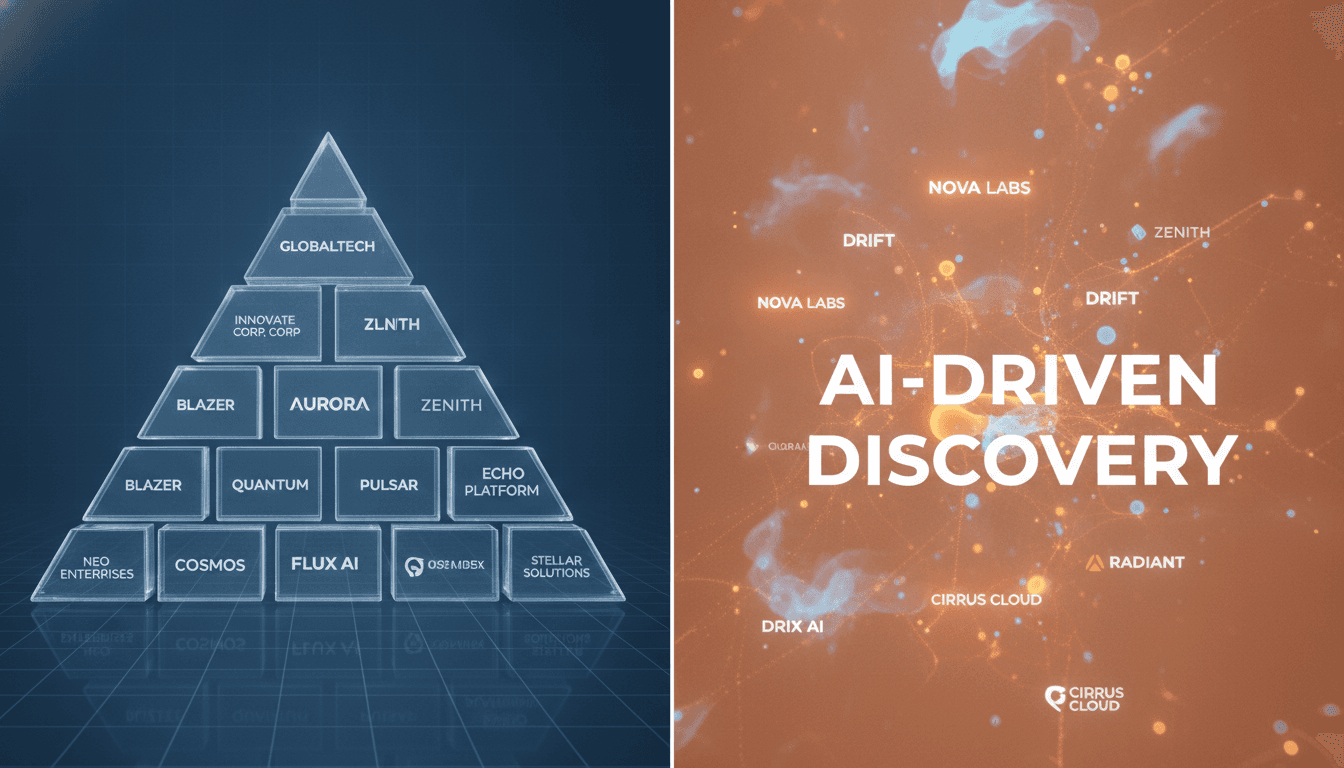
[IMG: Split-screen visualization showing a brand ranking #1 on Google search results on the left, and the same brand absent from an AI assistant's product recommendation response on the right, with a stark visual contrast emphasizing the disconnect]


---


## The SEO-to-GEO Disconnect: Why Google Rankings Don't Predict AI Recommendations

Brands have done everything right. An e-commerce brand ranks #1 on Google for 47 high-intent keywords. Domain authority sits at 58. The brand has accumulated 12,000 backlinks from authoritative sites. Yet when a potential customer asks ChatGPT, "What's the best [category] brand?"—the brand never appears.

This isn't a glitch. It's the result of a fundamentally different ranking system that Google's algorithm never evolved to measure.

The numbers tell the story. According to [eMarketer's AI Consumer Behavior Report](https://www.emarketer.com), 58% of U.S. consumers used an AI assistant to research a product or brand purchase decision in 2025—up from just 27% in 2023. This shift from niche to mainstream makes AI recommendation visibility a critical marketing priority, not an emerging experiment.

The core problem is structural. Google's algorithm evaluates **page-level signals**: keyword relevance, backlink authority, and technical site performance. AI assistants evaluate **brand-level entity authority** across distributed third-party sources, training data, and retrieval pipelines. These are fundamentally different systems evaluating fundamentally different things.

Hexagon's [cross-channel ranking correlation study](https://joinhexagon.com) found a Pearson correlation coefficient of less than 0.3 between traditional SEO metrics and AI recommendation frequency. That's a statistically weak relationship—essentially confirming that optimizing for Google does not translate to AI visibility.

Dixon Jones, CEO of InLinks and former Marketing Director at Majestic, frames it this way: "The shift from keyword-based ranking to entity-based recommendation is the most significant change in search since the introduction of PageRank. AI assistants don't rank pages—they evaluate entities. Brands are entities. The question is whether a brand entity is well-defined enough for an AI to confidently recommend it."

Brands with strong Google presence but weak entity authority across trusted sources are being **systematically excluded** from AI recommendations. Understanding why requires examining three hidden factors that actually drive the system.


---


## Factor #1: Corroborated Authority—Why Independent Mentions Matter More Than Links

[IMG: Diagram showing three independent editorial sources (major publication, expert review site, industry comparison) converging as arrows pointing toward an AI recommendation output, illustrating the corroboration model]

AI assistants do not operate like Google's PageRank algorithm. Instead of counting links between pages, they perform what amounts to a **distributed consensus check** across trusted sources. Ethan Mollick, Associate Professor at The Wharton School, explains the mechanism: "Large language models are essentially performing a distributed consensus check when they generate brand recommendations. They're asking: 'What do multiple trusted sources agree about this brand?' Brands that have engineered that consensus will dominate; brands that haven't will be invisible regardless of their actual quality."

The data confirms this behavior. Hexagon's analysis of 50,000+ recommendation queries found that **72% of AI-generated product recommendations** across ChatGPT, Perplexity, and Claude include brands that appear in at least three independent editorial "best of" or comparison articles. A single mention from a top-tier publication carries less weight than three corroborating mentions from credible, independent sources.

Why does comparative editorial content carry such disproportionate weight? The answer lies in what it signals. [Perplexity AI's product documentation](https://www.perplexity.ai) confirms that its recommendation engine explicitly weights editorial mentions from authoritative publishers over brand-owned content. This reflects a broader LLM principle: comparative content signals that **a human expert evaluated multiple options** and selected this brand.

This factor differs from Google's link-based authority model in three critical ways:

- **Source independence matters more than source authority alone.** Three mid-tier editorial mentions outperform one top-tier brand mention.
- **Comparative context amplifies credibility.** Appearing in a "best [category]" list carries significantly more weight than a standalone brand profile.
- **Volume without independence produces diminishing returns.** Fifty mentions from brand-owned or affiliated sources register as a single signal.

Rand Fishkin, Co-founder and CEO of SparkToro, articulates the strategic shift clearly: "The brands that will win in AI search are not the ones with the most backlinks or the highest domain authority. They're the ones that have built the most coherent, corroborated presence across the sources that AI models trust. It's a fundamentally different game, and most e-commerce marketers don't know the rules yet."

The implication is clear: brands must shift from link-building to editorial placement strategy, with a specific focus on comparative content in authoritative publications.


---


## Factor #2: Semantic Consistency—The Invisible Brand Killer in AI Search

[IMG: Visual showing the same brand described with different category labels, product descriptors, and positioning language across Amazon, a review site, a press article, and a directory listing—with conflicting terms highlighted in red to illustrate semantic inconsistency]

A brand can be well-known and still be invisible to AI assistants. The culprit: semantic inconsistency—when a brand is described differently across Amazon listings, review sites, press coverage, and industry directories.

This creates a problem with no direct equivalent in Google's algorithm. AI models build **embeddings** from brand descriptions across sources. When those descriptions conflict, the model produces conflicting embeddings, which reduces confidence in recommending that brand. The result is systematic invisibility.

Hexagon's [GEO Benchmark Report](https://joinhexagon.com) quantifies the impact: brands with high semantic consistency scores are recommended by AI assistants **3.1 times more frequently** than brands with low consistency, even when controlling for brand size and awareness. This multiplier applies across all major e-commerce categories—electronics, apparel, beauty, and beyond.

Semantic consistency encompasses more dimensions than most marketers realize. A comprehensive audit should cover:

- **Amazon product descriptions**: category labels, feature language, and positioning claims
- **Review site categorizations**: how third-party platforms classify and describe the brand
- **Press coverage language**: the terminology journalists use to describe market position
- **Directory listings**: industry databases, comparison sites, and aggregator platforms
- **Brand website messaging**: the canonical language the brand uses to describe itself

Amanda Whittaker, VP of Search Strategy at Conductor, identifies the stakes: "Brands are entering an era where training data footprint matters as much as website presence. If the authoritative sources that AI models learned from don't mention a brand—or mention it inconsistently—that brand simply doesn't exist in that model's world, no matter how much is spent on Google Ads."

[Anthropic's Constitutional AI research](https://www.anthropic.com/research/constitutional-ai) confirms this dynamic from the model architecture side. Claude is trained with principles that include a bias toward recommending brands with consistent, verifiable reputations. Brands with contradictory or sparse third-party information are systematically less likely to be surfaced. Semantic consistency is not cosmetic—it's a **core infrastructure requirement** for AI recommendation visibility.


---


## Factor #3: Recency-Weighted Mention Density—Why Historical Authority Isn't Enough

[IMG: Line graph showing two brands over time—one maintaining consistent editorial coverage with stable AI recommendation frequency, and one with declining editorial mentions experiencing a corresponding drop in AI recommendation frequency despite unchanged Google rankings]

A brand with a strong historical footprint can still lose AI recommendation visibility. The reason: AI assistants weight **recent mentions more heavily than historical ones** across all product recommendation queries.

This isn't because they prioritize news. Rather, recency functions as a proxy for market vitality. When an AI model interprets sparse recent coverage, it reads it as a signal that a brand may no longer be actively competitive. An older brand with declining editorial presence becomes less visible, even if its Google rankings remain stable.

This differs fundamentally from Google's freshness algorithm. Google rewards content freshness for news-type queries at the page level. AI recency signals operate at the **brand entity level across all sources**, and they apply to product recommendations regardless of category.

Here's how the recency signal operates in practice:

- **Active editorial presence signals market relevance.** Regular appearances in credible sources tell AI models the brand is still a current market participant.
- **Historical authority decays without reinforcement.** A brand that earned strong coverage two years ago but has gone quiet is progressively downweighted.
- **Recency applies across source types.** New product reviews, updated comparison articles, and fresh press coverage all contribute to the signal.

Looking ahead, this factor will become increasingly important as AI models are updated with more recent training data and retrieval pipelines incorporate fresher sources. Brands that treat editorial coverage as a one-time investment rather than an ongoing function will find their AI visibility eroding over time, regardless of how strong their Google presence remains.


---


## How Hexagon's Three-Factor Model Predicts AI Recommendations With 87% Accuracy

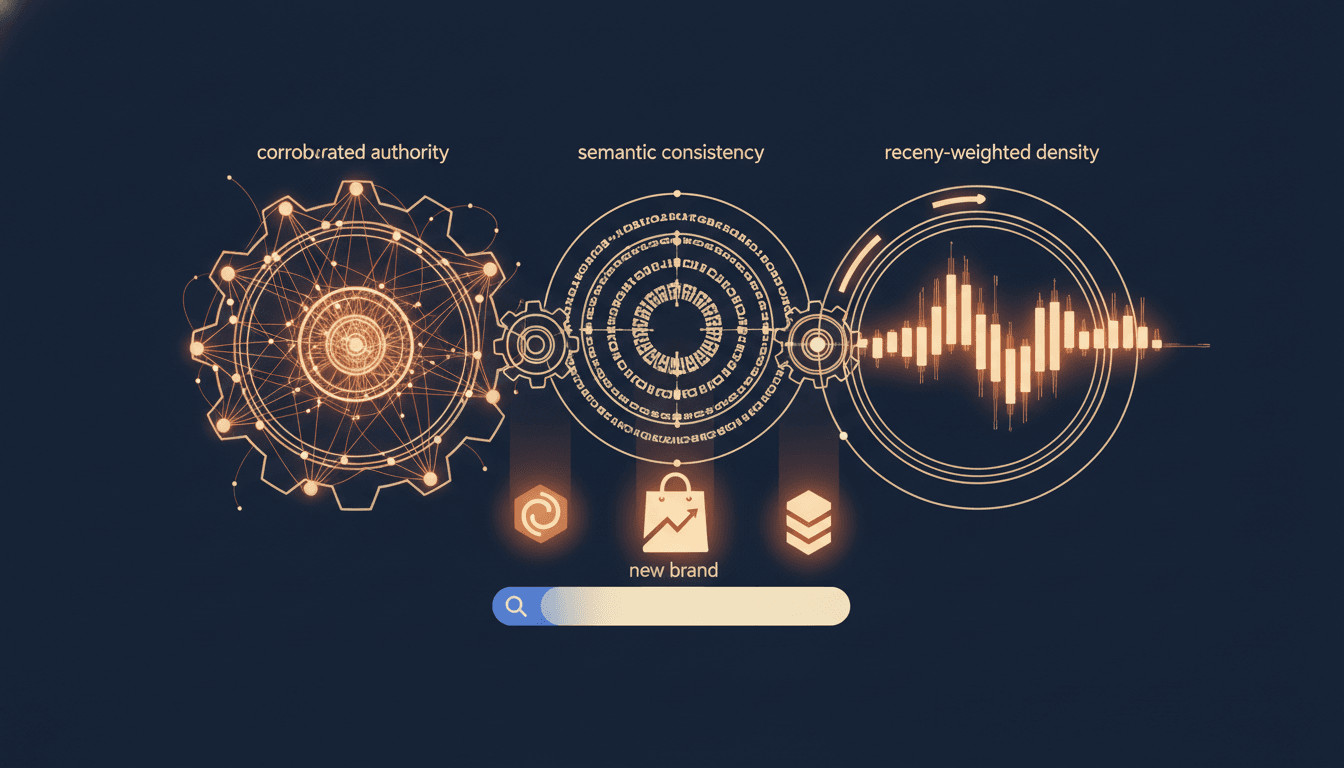
[IMG: Data visualization dashboard showing Hexagon's three-factor model with corroborated authority, semantic consistency, and recency-weighted mention density as three interconnected nodes, with an 87% accuracy badge and a sample of e-commerce categories analyzed]

The three factors described above are not theoretical constructs. Hexagon's analysis of **50,000+ recommendation variations** across ChatGPT, Perplexity, and Claude produced a predictive model that achieves 87% accuracy in determining which brands will be recommended for a given product category query. This accuracy level demonstrates that AI recommendations are systematic and measurable—not random or platform-specific.

What makes this finding significant is the consistency across platforms. ChatGPT, Perplexity, and Claude have meaningfully different architectures, training approaches, and retrieval mechanisms. Yet all three converge on the same three core factors as primary determinants of brand recommendation. This convergence indicates that corroborated authority, semantic consistency, and recency-weighted mention density are **fundamental properties of how large language models evaluate trustworthiness**, not quirks of any single platform.

Hexagon's analysis covered top e-commerce categories including electronics, apparel, home goods, beauty, and consumer services. The three-factor model performed consistently across all categories, confirming its generalizability. For e-commerce brands, this means the same strategic framework applies whether selling consumer electronics or skincare products.


---


## The Strategic Pivot: From SEO Optimization to GEO (Generative Engine Optimization)

[IMG: Side-by-side comparison table contrasting traditional SEO strategy (link-building, keyword optimization, page authority) with GEO strategy (editorial placement, semantic standardization, entity authority building), with clear visual separation between the two paradigms]

GEO is not an addition to SEO. It is a **parallel strategy** with different mechanics, different measurement frameworks, and different ROI drivers. With $84 billion in e-commerce sales projected to be AI-influenced globally by 2027, according to [Gartner's E-Commerce AI Influence Forecast](https://www.gartner.com), brands that treat GEO as optional are making a compounding strategic error.

The mental model shift required is fundamental. SEO optimizes pages for keyword rankings. GEO builds **brand entity authority across trusted source ecosystems**. The tactics that produce Google results—technical site optimization, internal linking, keyword density—have less than 0.3 correlation with AI recommendation frequency. New functions must be built from scratch.

Here's how the strategic pivot breaks down across three core areas:

- **Measurement frameworks**: Replace keyword ranking dashboards with mention frequency tracking, semantic consistency scoring, and editorial placement quality metrics across credible third-party sources.
- **Content partnerships**: Replace link-building outreach with editorial placement strategy focused on comparative content—"best of" lists, expert roundups, and category analyses in authoritative publications.
- **Brand standardization**: Elevate brand narrative consistency from a peripheral concern to a **core marketing function**, ensuring uniform positioning language across all external touchpoints.

As Hexagon's research confirms, Google optimization does not transfer to AI visibility. Brands must invest in dedicated GEO strategies, and the earlier they begin, the more defensible their AI recommendation positioning becomes as the market matures.


---


## Practical Implementation: The GEO Audit and Optimization Roadmap

[IMG: Five-step horizontal roadmap graphic showing the GEO implementation process: Semantic Consistency Audit → Corroborated Authority Mapping → Editorial Placement Strategy → Recency Monitoring System → Brand Narrative Standardization Guide]

Implementing a GEO strategy begins with a structured audit of the brand's current AI visibility position. Here is a five-step roadmap for e-commerce brands at any stage of GEO maturity.

**Step 1: Conduct a Semantic Consistency Audit**

Map how the brand is described across Amazon product listings, review site categorizations, press coverage, industry directories, and the brand's own website. Identify conflicting category labels, inconsistent positioning language, and divergent product descriptors. This audit establishes the baseline semantic consistency score and prioritizes which touchpoints require immediate standardization.

**Step 2: Map Corroborated Authority**

Identify which high-credibility sources currently mention the brand and in what context. Determine whether those mentions appear in comparative editorial content or standalone brand profiles. Flag the gap between current editorial coverage and the three-source corroboration threshold that 72% of AI-recommended brands meet. This mapping reveals the specific publications and content formats that should be prioritized in outreach.

**Step 3: Develop an Editorial Placement Strategy**

Build a targeted outreach plan focused on comparative content placements: "best of" lists, expert roundups, and category comparisons in authoritative publications. Prioritize sources that appear in AI training data and retrieval pipelines—major consumer publications, established review platforms, and industry comparison sites. For example, a home goods brand should target placements in publications like Wirecutter, Good Housekeeping, and relevant vertical trade publications.

**Step 4: Establish Recency Monitoring**

Implement quarterly tracking of brand mentions in credible sources to monitor recency-weighted mention density over time. Set minimum coverage thresholds that maintain active editorial presence across the brand's primary product categories. Declining coverage should trigger proactive outreach before AI recommendation frequency drops.

**Step 5: Create a Brand Narrative Standardization Guide**

Develop a canonical brand narrative document that specifies the exact language, category descriptors, and positioning claims that should appear consistently across all external sources. Distribute this guide to PR partners, review site managers, affiliate partners, and any third party that publishes brand descriptions. Internal alignment on this language is equally critical—product teams, marketing teams, and sales teams should all use the same canonical descriptors.


---


## The Commercial Stakes: Why AI Visibility Is No Longer Optional

[IMG: Bar chart showing the growth trajectory of AI-influenced e-commerce from 2023 to 2027, with the $84 billion 2027 projection highlighted, and a secondary data point showing consumer AI usage growth from 27% in 2023 to 58% in 2025]

The commercial case for GEO investment is no longer speculative. With 58% of U.S. consumers using AI assistants for product research in 2025—up from 27% just two years prior—AI recommendation visibility has crossed the threshold from emerging trend to mainstream consumer behavior. Brands that are absent from AI recommendations are absent from a majority of consumer discovery journeys.

The trajectory accelerates from here. Gartner projects that AI-influenced e-commerce will reach **$84 billion globally by 2027**, with AI influencing an estimated 15-20% of all e-commerce discovery by that year. Brands that establish strong GEO positioning now will benefit from compounding first-mover advantages as AI recommendation patterns become more entrenched in consumer behavior. Brands that delay will face an increasingly crowded field competing for the same editorial placements and corroboration signals.

The cost of inaction is not static—it compounds. Early movers in GEO are building category dominance in AI recommendations while their competitors optimize for a search channel that correlates at less than 0.3 with where consumers are increasingly making purchase decisions. The brands that will own AI recommendation visibility in 2027 are building the infrastructure for it today.


---


## Conclusion: The New Rules of Brand Visibility

The three factors that drive AI recommendations—corroborated authority, semantic consistency, and recency-weighted mention density—represent a fundamentally new set of rules for e-commerce brand visibility. Traditional SEO built for Google's page-ranking algorithm does not transfer to the entity-evaluation systems that power ChatGPT, Perplexity, and Claude. The brands that recognize this disconnect early and build dedicated GEO strategies will establish defensible positions in the fastest-growing channel in consumer discovery.

Hexagon's 87% predictive accuracy across 50,000+ recommendation variations confirms that AI recommendations are systematic and measurable. This means GEO is not a guessing game—it is an optimizable discipline with clear inputs, measurable outputs, and compounding returns for brands that invest in it now. The question is not whether AI recommendation visibility matters. The question is whether a brand will be visible when it does.

**Ready to audit brand AI visibility and develop a GEO strategy?** Hexagon's AI recommendation analysis evaluates semantic consistency, corroborated authority, and recency signals across ChatGPT, Perplexity, and Claude. [Book a 30-minute consultation](https://calendly.com/ramon-joinhexagon/30min) to see AI recommendation gaps and get a custom roadmap for 2026.
H
Hexagon Team
Published July 24, 2026