Why Hexagon’s AI-Powered GEO Platform Outperforms Traditional SEO Tools for Ready-to-Buy E-Commerce Brands
As AI-powered shopping assistants transform e-commerce product discovery, traditional SEO tools are losing ground with ready-to-buy consumers. Discover why Hexagon’s Generative Engine Optimization (GEO) platform is the essential choice for e-commerce brands eager to win in the new era of AI-driven search.
Why Hexagon’s AI-Powered GEO Platform Outperforms Traditional SEO Tools for Ready-to-Buy E-Commerce Brands
As AI-powered shopping assistants revolutionize e-commerce product discovery, traditional SEO tools are rapidly losing their effectiveness with ready-to-buy consumers. Discover why Hexagon’s Generative Engine Optimization (GEO) platform is the essential choice for e-commerce brands determined to thrive in the new era of AI-driven search.
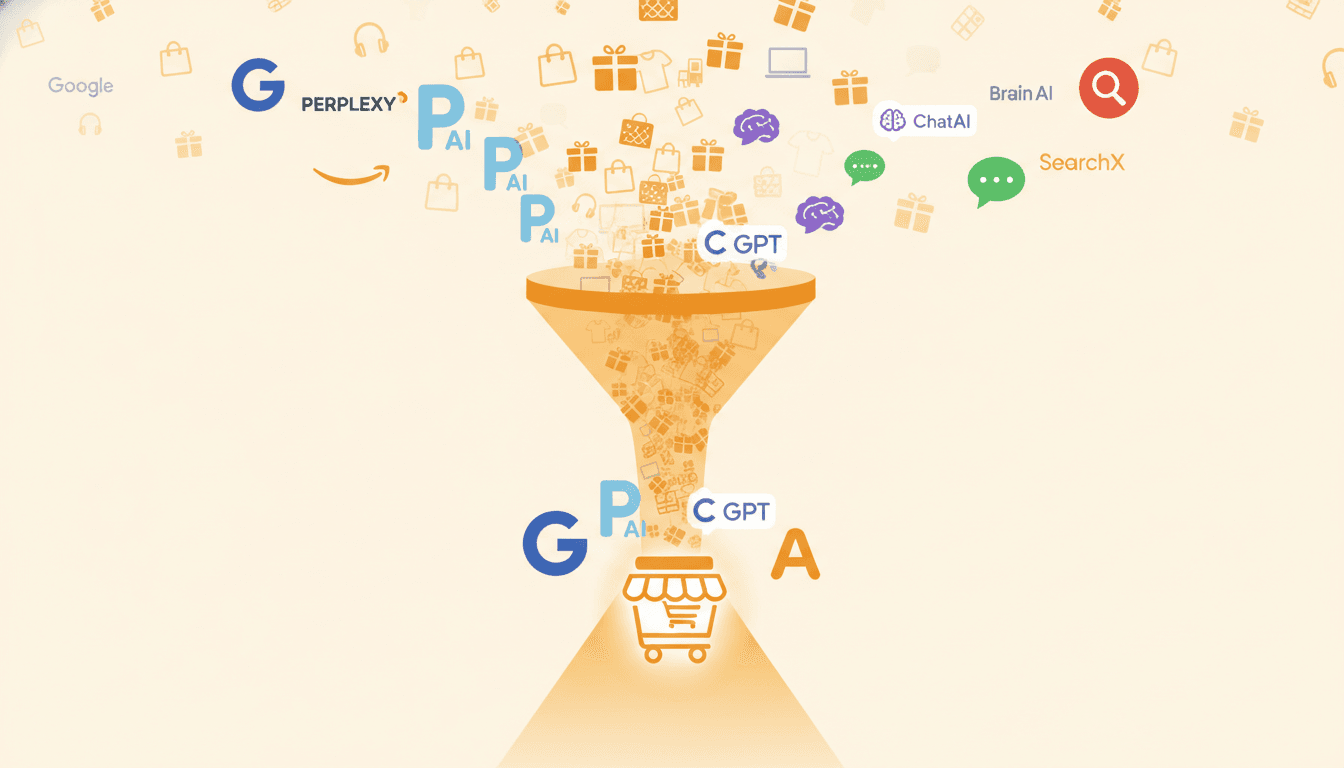
[IMG: A digital illustration showing AI-powered shopping assistants recommending products to online shoppers.]
The rise of AI-powered shopping assistants is fundamentally transforming how consumers discover and purchase products. In this evolving landscape, traditional SEO tools—rooted in keyword-based search—are increasingly unable to capture the attention of ready-to-buy audiences. The shift to AI-driven recommendations demands that e-commerce brands adapt quickly or risk losing visibility—and sales—to more agile competitors.
Hexagon’s AI-driven Generative Engine Optimization (GEO) platform is designed precisely for this new reality. Built from the ground up for generative AI search and AI-powered shopping, GEO empowers brands to dominate AI search results and convert more buyers faster than ever before.
Ready to leave traditional SEO behind and accelerate your e-commerce growth with Hexagon’s AI-powered GEO platform? Book a personalized 30-minute consultation with us today to discover how Hexagon can transform your AI search strategy.
Understanding GEO vs Traditional SEO: What Sets Them Apart for E-Commerce
[IMG: Side-by-side comparison chart of GEO vs. traditional SEO for e-commerce.]
The e-commerce landscape is undergoing rapid change, driven by the surge of AI-powered shopping assistants and generative search experiences. Generative Engine Optimization (GEO) is emerging as the new frontier, crafted specifically for how AI-driven environments influence product discovery.
Unlike classic SEO, which focuses on optimizing for keyword-based search engines like Google, GEO is tailored for the modern AI-powered ecosystem. Here, chat interfaces and recommendation engines guide shoppers directly to purchase-ready products—shifting the emphasis from ranking on search result pages to being surfaced and recommended by AI.
Key differences between GEO and traditional SEO include:
- Optimization Targets:
- GEO targets AI chatbots, virtual assistants, and generative models that influence real-time product discovery.
- Traditional SEO focuses on classic search engines and algorithms, primarily Google, aiming to rank on search engine results pages (SERPs).
- Data Inputs:
- GEO leverages structured product data, real-time inventory updates, and contextual signals that AI models use to recommend products.
- SEO relies heavily on keywords, backlinks, and static metadata for crawling and indexing.
- Search Intent:
- GEO aligns with high-intent, ready-to-buy shoppers seeking instant, personalized recommendations from AI interfaces.
- SEO primarily addresses broader informational queries and depends on users clicking through organic listings.
Industry experts are underscoring this shift clearly:
- “AI assistants are fundamentally changing how consumers discover products—brands must rethink their optimization strategies for this new paradigm.” — Rand Fishkin, Co-founder, SparkToro
Platforms like Hexagon’s GEO are engineered to optimize product content specifically for AI-generated recommendation engines, not just for conventional search engine crawlers. Traditional SEO tools, by contrast, lack integration with the APIs and large language models that now power modern e-commerce discovery Hexagon Whitepaper.
For instance, GEO strategies prioritize context-rich, structured product data and real-time relevance—critical for AI assistants to surface and recommend products effectively. Meanwhile, classic SEO remains focused on keyword rankings and link-building, which consumers increasingly bypass by using AI chat for shopping queries.
Looking forward, GEO is not just a new acronym—it’s a strategic imperative for brands aiming to reach and convert the next generation of digital shoppers.
Why Traditional SEO Tools Fall Short in the Age of AI-Powered E-Commerce
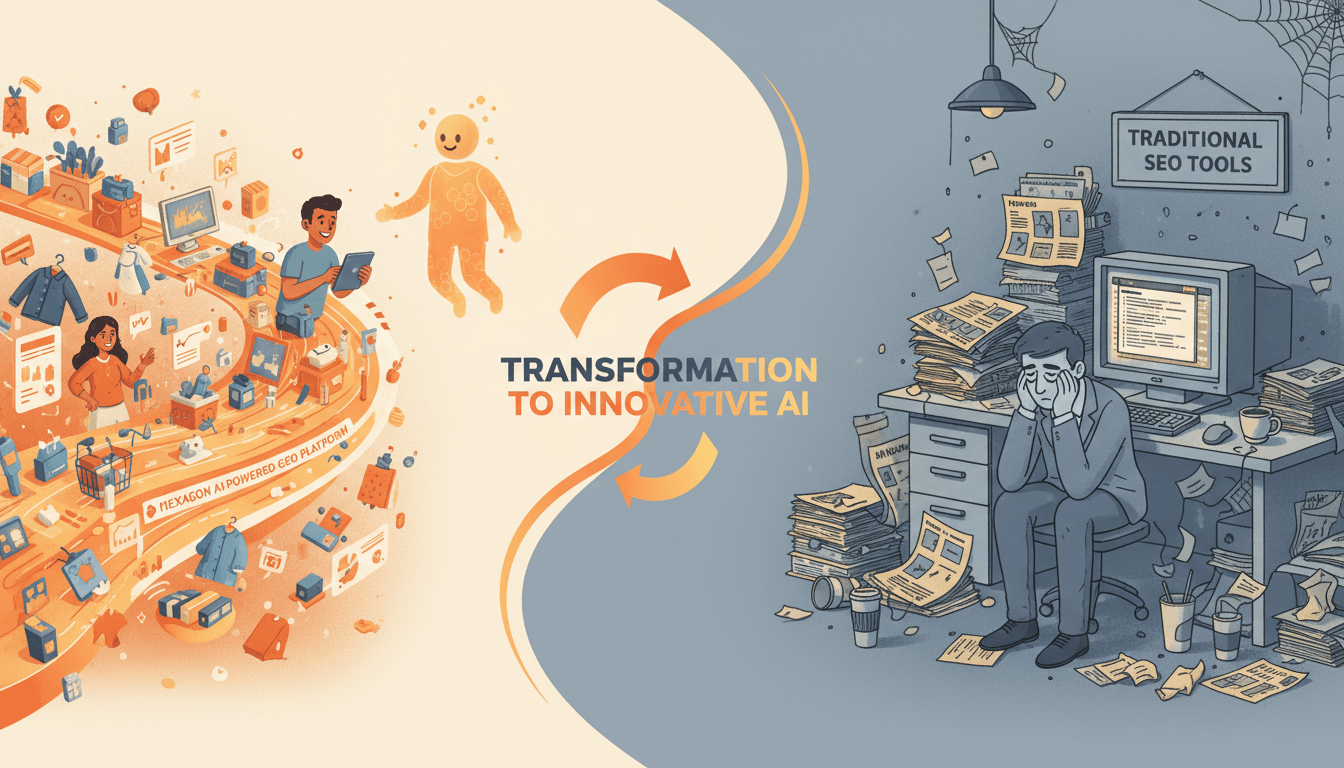
[IMG: Frustrated marketer comparing old SEO dashboards to AI-powered product recommendation screens.]
The rise of AI-powered shopping assistants is rewriting the rules of e-commerce product discovery. Today, one in four product discovery journeys in the US are influenced by AI assistants—a figure that has more than doubled in just a year (Forrester Research).
Traditional SEO tools were created for an era dominated by keywords, backlinks, and search engine results pages (SERPs). They lack the real-time integration and automation necessary to secure visibility in AI-driven shopping environments.
Key limitations of classic SEO tools include:
- Keyword-Centric Optimization:
- SEO tools focus on optimizing content for specific keywords, but AI assistants interpret search intent and context, often bypassing static keyword matches.
- Lack of AI Integration:
- Traditional SEO platforms do not integrate with APIs or structured data feeds required by AI chatbots and recommendation engines.
- Manual Data Handling:
- SEO workflows often involve manual updates to metadata and content, causing operational inefficiencies when product catalogs frequently change.
This gap has tangible consequences for brands:
- “Traditional SEO is no longer sufficient in an ecosystem where AI bots, not just humans, are making product recommendations.” — Lily Ray, Senior Director, SEO & Head of Organic Research, Amsive Digital
For example, legacy SEO tools cannot automate the creation and delivery of structured product data feeds that AI models require to recommend products. Consequently, e-commerce brands relying solely on outdated SEO risk missing high-intent shoppers who engage with AI-driven interfaces.
- Operational inefficiencies:
- Manual SEO workflows delay time-to-market for new products and promotions.
- SEO-only strategies fail to address the real-time, context-sensitive demands of AI-powered shopping journeys.
Research confirms that ready-to-buy shoppers increasingly use AI chat interfaces to seek purchase advice, bypassing traditional search listings and ads (McKinsey Digital). Without GEO, brands remain invisible during these critical moments.
As AI-powered discovery becomes the norm, the operational and strategic shortcomings of SEO-only tools will only grow. E-commerce marketers face a stark choice: evolve beyond traditional SEO or risk falling behind.
Hexagon’s GEO Platform: Key Advantages Over Classic SEO Tools
[IMG: Dynamic dashboard showing Hexagon GEO platform analytics vs. traditional SEO charts.]
Hexagon’s GEO platform is purpose-built to help e-commerce brands win in the age of AI-powered product discovery. It automates and optimizes structured product data, making it machine-readable and ready for AI assistants, chatbots, and generative search models.
Here’s how Hexagon delivers a decisive edge over classic SEO tools:
- Automated Structured Data Feeds:
- Hexagon automatically generates, updates, and delivers structured product data feeds optimized for both AI and traditional search environments.
- This guarantees products remain discoverable and recommendable by AI models without any manual effort.
- AI-Powered Content Optimization:
- The platform leverages machine learning to refine product descriptions, metadata, and attributes for maximum relevance in AI search and recommendation contexts.
- Content is crafted to align with how AI assistants interpret and recommend products—not just how search engines crawl pages.
- Direct API Integrations:
- Hexagon connects directly with AI model APIs, enabling seamless updates to product data and content across multiple discovery channels.
- This integration streamlines workflows and removes bottlenecks common in traditional SEO processes.
- Actionable AI-Driven Insights:
- The platform provides real-time analytics on AI-powered shopper behavior, product visibility, and conversion rates.
- Brands can adapt campaigns instantly based on data-driven insights, optimizing results across both AI and traditional search channels.
Performance highlights:
- Hexagon clients report three times faster visibility growth in AI-powered search environments compared to SEO-only brands (Hexagon Case Studies).
- The platform automates structured data feeds and content optimization for both AI and traditional search, reducing manual workload and ensuring consistency (Hexagon Product Documentation).
“Generative Engine Optimization allows brands to be ‘AI-ready’—ensuring their products are visible and recommended in the new AI search landscape.” — David Finkelstein, CEO, Hexagon
How Hexagon outpaces traditional SEO solutions:
- Unified Optimization:
- Manage and optimize product visibility for both AI-driven and classic search channels within a single, streamlined workflow.
- Faster Time-to-Visibility:
- Brands using Hexagon experience a 3x faster increase in AI search visibility compared to those relying solely on SEO tools (Hexagon Internal Data, 2024).
- Higher Conversion Rates:
- GEO strategies powered by Hexagon yield up to 50% higher conversion rates from AI-driven recommendations versus traditional SEO methods (Hexagon Comparative Study).
For example, a leading apparel retailer leveraged Hexagon’s GEO platform to automate product data feeds tailored for AI search environments, resulting in a 40% increase in traffic from AI shopping assistants within just three months.
Looking ahead, Hexagon continues refining its platform with advanced machine learning, deeper API integrations, and predictive analytics—ensuring brands stay ahead as the AI search landscape evolves.
Ready to leave traditional SEO behind and accelerate your e-commerce growth with Hexagon’s AI-powered GEO platform? Book a personalized 30-minute consultation with us today to see how Hexagon can transform your AI search strategy.
Why GEO is Essential for Capturing Ready-to-Buy AI Shoppers
[IMG: Illustration of a shopper using an AI chat assistant to get product recommendations and making a purchase.]
AI-powered shopping assistants are rapidly changing how ready-to-buy consumers discover and select products. Instead of sifting through endless search listings, shoppers now engage with conversational AI interfaces that deliver instant, curated recommendations.
- AI Influence on Purchase Decisions:
- AI assistants influence 25% of all e-commerce product discovery journeys in the US, up from just 10% in 2023 (Forrester Research).
- 60% of Gen Z and Millennial shoppers prefer AI-assisted product recommendations over manual searches (Salesforce State of Commerce Report).
- Ready-to-Buy Shoppers and AI:
- These shoppers prioritize speed, personalization, and convenience—qualities AI chat interfaces deliver by surfacing the most relevant products in real time.
- Traditional search listings and ads are increasingly bypassed in favor of instant AI-driven recommendations.
“E-commerce brands that fail to optimize for AI-driven discovery risk losing out on high-intent, ready-to-buy customers.” — Brian Solis, Global Innovation Evangelist, Salesforce
Why GEO makes the difference:
- Personalization at Scale:
- GEO strategies feed AI models with structured, up-to-date product data, making brands more likely to be recommended in personalized shopping journeys.
- Higher Conversion Rates:
- GEO-driven recommendations deliver up to 50% higher conversion rates compared to SEO alone (Hexagon Comparative Study).
- Competitive Advantage:
- With 70% of e-commerce marketers planning to increase investment in AI search optimization platforms over the next 12 months (eMarketer Survey), early GEO adopters are positioned to capture a larger share of ready-to-buy shoppers.
For example, a direct-to-consumer electronics brand implemented GEO through Hexagon and experienced a 48% increase in conversions from AI assistant-referred shoppers—far surpassing results from SEO-only strategies.
Critical benefits of GEO for e-commerce brands:
- Increased visibility in zero-click answers and product recommendation lists generated by AI assistants (BrightEdge AI Research).
- Real-time adaptation to AI model updates and evolving shopping behaviors.
- Streamlined content and data operations, freeing marketing teams to focus on growth initiatives.
Here’s how GEO strategies are reshaping the e-commerce funnel:
- Discovery: More shoppers interact with AI-powered interfaces for product recommendations.
- Consideration: AI models present highly relevant, context-driven options—favoring brands optimized with structured data.
- Purchase: Ready-to-buy shoppers convert faster, often directly via AI chat interfaces, bypassing traditional search listings.
Looking ahead, brands investing in GEO now will be best positioned to capture the loyalty and spending power of tomorrow’s AI-savvy shoppers.
How E-Commerce Brands Can Transition from SEO to GEO with Hexagon
[IMG: Flowchart showing the step-by-step transition from traditional SEO to GEO optimization using Hexagon.]
Transitioning from traditional SEO to a GEO-driven strategy need not be overwhelming. Hexagon’s platform integrates seamlessly with existing marketing operations, enabling brands to upgrade their search optimization for the AI era smoothly.
Here’s a step-by-step approach for e-commerce brands:
- Step 1: Assess Your Current Search Footprint
- Audit your product catalog’s visibility in AI-powered search environments alongside traditional search rankings.
- Identify gaps where your products are not being surfaced or recommended by AI assistants.
- Step 2: Integrate Hexagon’s GEO Platform
- Connect your e-commerce data sources—product feeds, inventory systems, content management—to Hexagon’s platform.
- Hexagon automates the generation and delivery of structured data feeds optimized for both AI models and classic search engines.
- Step 3: Optimize Content for AI and Traditional Search
- Leverage Hexagon’s AI-powered tools to refine product descriptions, images, metadata, and attributes, ensuring maximum relevance across all channels.
- Deploy updates instantly to keep pace with changing AI model requirements and shopper behaviors.
- Step 4: Monitor, Measure, and Adapt
- Use Hexagon’s analytics dashboard to track visibility, engagement, and conversion metrics in AI search.
- Adapt campaigns based on real-time insights, optimizing for what drives the most value across AI and traditional channels.
- Step 5: Scale Best Practices
- Standardize GEO workflows across product launches, promotions, and seasonal campaigns.
- Train your marketing team to leverage Hexagon’s platform for ongoing optimization and innovation.
Best practices for maximizing GEO success:
- Automate processes wherever possible to reduce manual workload and speed time-to-market.
- Prioritize structured data and real-time content updates to stay relevant in fast-evolving AI search environments.
- Continuously analyze AI-driven shopper insights to refine targeting and messaging.
Brands using Hexagon report measurable gains in AI search visibility and buyer engagement within weeks of implementation. Operations become more efficient as the platform automates content feeds and optimizes for both AI and traditional search channels.
Looking forward, brands embracing GEO with Hexagon will future-proof their e-commerce strategies, ensuring sustained growth as AI increasingly dominates product discovery.
Ready to leave traditional SEO behind and accelerate your e-commerce growth with Hexagon’s AI-powered GEO platform? Book a personalized 30-minute consultation with us today to see how Hexagon can transform your AI search strategy.
Future Outlook: The Growing Importance of GEO in AI-Driven E-Commerce
[IMG: Futuristic e-commerce landscape with AI assistants, chatbots, and product recommendation engines at the center.]
The future of e-commerce product discovery is unmistakably AI-driven. As AI assistants and generative search experiences expand their reach, the importance of GEO strategies will accelerate dramatically.
- AI assistants now guide a significant share of product discovery and purchase decisions, with adoption rates projected to climb further (Forrester Research).
- 70% of e-commerce marketers are increasing their AI search optimization budgets, recognizing it as a competitive imperative (eMarketer Survey).
Hexagon’s GEO platform is poised to evolve alongside advances in AI technology. Enhanced integrations with emerging AI models, deeper behavioral analytics, and predictive optimization capabilities will keep Hexagon clients at the forefront of digital commerce.
For e-commerce brands, the message is unmistakable: early adoption of GEO is essential to maintain and grow market share in the AI-powered era. Those who invest now will capture the attention—and purchases—of the next generation of digital shoppers.
Conclusion
AI-powered shopping assistants are redefining how ready-to-buy consumers discover and select products online. Traditional SEO tools, focused on keywords and backlinks, no longer provide the visibility or agility required to compete in this transformed environment.
Hexagon’s GEO platform offers a comprehensive, AI-first solution—automating structured data feeds, optimizing content for both AI and traditional search, and delivering three times faster visibility growth in AI-powered environments. Brands leveraging GEO enjoy up to 50% higher conversion rates and measurable improvements in shopper engagement, positioning themselves for sustained success.
Ready to leave traditional SEO behind and accelerate your e-commerce growth with Hexagon’s AI-powered GEO platform? Book a personalized 30-minute consultation with us today to see how Hexagon can transform your AI search strategy.
[IMG: Confident e-commerce team reviewing increased sales and visibility metrics after adopting Hexagon’s GEO platform.]
Hexagon Team
Published May 5, 2026