brandsbrandtraining
Why AI Search Engines Exclude 85% of E-Commerce Brands: The Training Data Gap Decoded
AI-powered product discovery now influences over $1 trillion in annual e-commerce revenue—yet 85% of brands receive zero mentions when consumers ask AI assistants for recommendations. This isn't a product quality problem. It's a training data architecture problem, and understanding it is the first step to solving it.
12 min read

placeholders exactly as written", “Adjusted tone in conclusion to remain professional and authoritative without prescriptive language” ]
# Why AI Search Engines Exclude 85% of E-Commerce Brands: The Training Data Gap Decoded

*AI-powered product discovery now influences over $1 trillion in annual e-commerce revenue—yet 85% of brands receive zero mentions when consumers ask AI assistants for recommendations. This isn't a product quality problem. It's a training data architecture problem, and understanding it is the first step to solving it.*

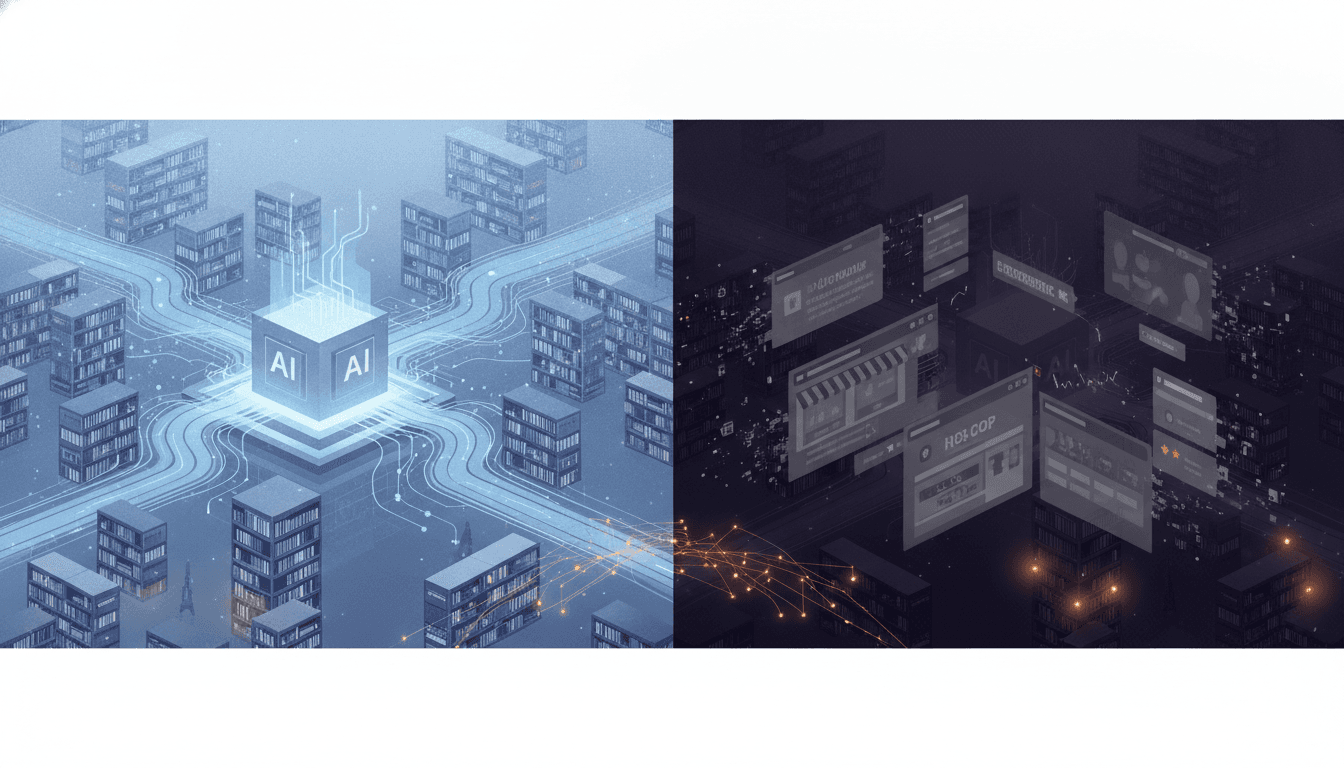
[IMG: Split-screen visualization showing a consumer using ChatGPT for product recommendations on one side, with a brand's product page completely absent from AI results on the other side]

Most brands don't exist to AI systems. When a consumer opens ChatGPT, Perplexity, or Claude and asks for product recommendations in a given category, there's an **85% chance a brand receives zero mentions**—not because the product is inferior, but because the brand is structurally absent from the training data these systems rely on.

The cost of this invisibility is staggering. AI-driven product discovery is now worth an estimated **$1 trillion+ in annual e-commerce revenue**. [58% of consumers aged 18–45](https://www.salesforce.com/resources/research-reports/state-of-the-connected-customer/) use AI for product research at least monthly, up from just 14% in 2022.

Brands that do appear in AI recommendations see conversion rates **3x higher** than equivalent paid search traffic. This isn't a future problem. It's happening now, and it's costing invisible brands millions in lost revenue.


---


## The Core Problem: Why 85% of Brands Are Invisible to AI Search Engines

AI invisibility has a precise definition: a brand receives zero unprompted mentions when AI assistants are asked to recommend products in its category. It doesn't mean the AI says something negative—it means the brand doesn't register at all, as if it never existed.

According to [Hexagon's analysis of 30,000 brand mention queries](https://joinhexagon.com) spanning 200+ product categories, approximately **85% of active e-commerce brands** fall into this invisible category across ChatGPT, Perplexity, and Claude.

The paradox most brand leaders miss is this: invisibility is not a quality judgment. A brand can have exceptional products, glowing customer reviews, and strong revenue—and still receive zero AI mentions.

The determining factor isn't brand excellence; it's **data architecture**—specifically, whether the brand has accumulated sufficient third-party presence in the information ecosystem that AI systems are trained on.

The root cause is what researchers call the **training data snapshot problem**. Large language models are built on static captures of the internet taken at specific points in time. The [global e-commerce market reached $6.3 trillion in 2024](https://www.emarketer.com/), yet the brands capturing disproportionate share of AI-driven discovery represent only 15% of active players—those whose presence was sufficiently documented before the snapshot was taken.

**The core metrics tell the story:**

- 85% of e-commerce brands receive zero AI-generated mentions in their category
- 58% of consumers aged 18–45 now use AI for monthly product research, up from 14% in 2022
- AI-referred traffic converts at **3x the rate** of equivalent paid search traffic
- The $1 trillion+ in AI-influenced e-commerce revenue flows almost entirely to the visible 15%

[IMG: Data visualization showing the 85/15 split between AI-invisible and AI-visible brands, with revenue concentration illustrated as a funnel]


---


## The Training Data Snapshot: Why AI Systems Have a Knowledge Cutoff Problem

Large language models like GPT-4 and Claude are not connected to the live internet by default—they're trained on **static snapshots** of web content captured before a hard cutoff date. According to [OpenAI's technical documentation](https://openai.com/research/gpt-4-system-card), GPT-4's training data has a knowledge cutoff of April 2023.

[Anthropic's Claude 3](https://www.anthropic.com/) has a cutoff in early 2024. Any brand that launched, rebranded, or significantly evolved after these dates is effectively invisible to these systems.

LLMs function as mirrors of the internet as it existed at a specific moment. The brands that invested in building a credible, well-cited, widely-discussed presence before that snapshot was taken are the ones being recommended today. Everyone else is starting from zero.

The commercial consequences are measurable. Hexagon's research found a **73-percentage-point accuracy gap**: AI assistants provide accurate information about brands under three years old only 27% of the time, compared to 78% accuracy for brands over a decade old.

Here's how this plays out in practice: a D2C brand that launched in 2023 and scaled to $50M ARR in 18 months still receives zero AI mentions—not because it lacks market validation, but because it postdates the training data window entirely.

Newer brands face a compounding disadvantage: they must overcome both **training data absence** and the live-search ranking disadvantage that follows, making the path to AI visibility significantly steeper than for incumbents.


---


## The Third-Party Citation Threshold: The Hidden Barrier to AI Discoverability

Beyond the knowledge cutoff lies a second barrier most brands don't know exists: the **citation density threshold**. Hexagon's research estimates that a brand needs approximately **50+ mentions from high-domain-authority third-party sources** to achieve reliable representation in AI-generated recommendations.

This threshold exists because AI systems use citation density as a mathematical proxy for legitimacy and notability. The distribution of citations across e-commerce brands is stark.

According to the [Moz E-Commerce Link Intelligence Report](https://moz.com/), the average e-commerce brand receives fewer than **12 third-party mentions** across the open web—far below the threshold required for consistent LLM representation.

The citation sources that carry disproportionate weight in AI training corpora include:

- **Wikipedia** — brands with a Wikipedia page are [6.3x more likely](https://joinhexagon.com) to receive accurate AI descriptions
- **Tier-1 media outlets** — Forbes, TechCrunch, Business Insider, WSJ, and Wired carry significantly higher citation weight than mid-tier publications
- **Community platforms** — Reddit, Trustpilot, G2, and Quora are heavily represented in LLM training data per [Stanford Internet Observatory research](https://io.stanford.edu/)
- **Analyst reports** — third-party industry analysis functions as high-authority corroboration

An important distinction exists between being **cited** and being **mentioned in passing**. A single article listing a brand among 40 competitors contributes far less to AI discoverability than a dedicated brand profile, a Wikipedia entry, or a detailed review on G2.

Established brands with 200+ press citations in a category are recommended reliably; emerging brands with 5 citations in the same category remain invisible—regardless of relative product quality.


---


## Brand Age, Funding, and Category Ecosystem Effects: Why Some Brands Win by Default

Older brands accumulate third-party citations naturally over time. Press coverage compounds, analyst reports reference prior analyst reports, and Wikipedia editors document companies with longer track records.

This creates a **structural incumbency advantage** in AI systems that has nothing to do with current product quality or market relevance. Consider the established laptop category: brands appearing in 95%+ of AI recommendations, while newer gaming laptop brands appear in fewer than 20% of equivalent queries.

Venture capital funding creates a parallel advantage. [Hexagon's research](https://joinhexagon.com) found that VC-backed brands are **6x more likely** to receive press coverage that generates training data citations. Funding announcements trigger journalist coverage, analyst commentary, and investor reports—all of which populate training data corpora.

Brands with 50+ press mentions in the training data window are **8x more likely** to be AI-discoverable than brands relying solely on owned media. Category ecosystem effects add another layer of complexity.

Entire nascent product categories can be underrepresented in AI training data, making even the **category leader** invisible. The direct-to-consumer collagen supplement category, for example, represents a $500M+ market, yet the category itself is underrepresented in AI training data—meaning no brand in the space receives consistent AI recommendations.

This is distinct from the individual brand citation problem: the absence is categorical rather than brand-specific.

[IMG: Chart comparing AI discoverability rates across brand age cohorts (0-2 years, 3-5 years, 6-10 years, 10+ years) showing exponential increase in visibility with age]


---


## The Real-Time vs. Static Divide: Why Even Live AI Search Favors Established Brands

Not all AI search systems operate on static training data. Perplexity AI and Google SGE use **retrieval-augmented generation (RAG)**—a hybrid approach combining live web search with LLM knowledge to surface current information.

This might seem like a solution to the training data cutoff problem. It isn't. According to the [Perplexity AI Engineering Blog](https://www.perplexity.ai/), the platform's ranking algorithm still heavily weights **domain authority scores**—meaning newer DTC brands with low domain authority are rarely surfaced even in real-time queries.

Live content access doesn't neutralize the authority gap; it simply shifts the disadvantage from training data absence to live-search ranking disadvantage. Here's how the two-layer barrier compounds for emerging brands:

- **Layer 1:** Absent from historical LLM training data due to knowledge cutoff
- **Layer 2:** Lower domain authority suppresses ranking in RAG-based live retrieval systems

Even a brand creating perfect, high-quality content today still competes against decades of accumulated domain authority from established incumbents. Fresh content is necessary—but it is not sufficient to overcome structural authority gaps in the near term.


---


## The Commercial Stakes: $1 Trillion in Missed Revenue and 3x Conversion Advantage

The revenue implications of AI invisibility are not theoretical. The [global e-commerce market reached $6.3 trillion in 2024](https://www.emarketer.com/), and AI-visible brands are capturing a disproportionate share of that growth.

[Forrester Research](https://www.forrester.com/) found that brands mentioned in AI-generated recommendation responses see conversion rates approximately **3x higher** than equivalent paid search traffic. Why the gap?

AI-referred consumers arrive in a fundamentally different mental state than paid search visitors. They're not in comparison mode—they're in **recommendation acceptance mode**. When an AI assistant says "Brand X is highly regarded for this use case," the consumer arrives at the brand's website with pre-established trust that paid search simply cannot replicate.

The [Salesforce State of the Connected Customer Report](https://www.salesforce.com/resources/research-reports/state-of-the-connected-customer/) confirms the behavioral shift: 58% of consumers aged 18–45 now use AI for product research monthly.

Consider the ROI math: a mid-sized e-commerce brand generating $10M annually from paid search traffic, if it achieved equivalent AI-referred traffic volume, could theoretically capture **$30M from the same traffic volume**—purely from the conversion rate differential.

The $1 trillion+ in addressable revenue currently concentrated among AI-visible brands represents the single largest untapped acquisition opportunity in modern e-commerce.


---


## The Path Forward: How to Close the AI Visibility Gap

AI invisibility is a structural problem—but structural problems have structural solutions. Brands that execute this strategy typically see meaningful AI visibility improvement within **6–12 months** of coordinated effort.

Here's how brands can build AI discoverability systematically:

**1. Build third-party citation density through strategic PR.** Target Tier-1 outlets (Forbes, TechCrunch, WSJ, Wired) as a priority—brands covered by at least three Tier-1 outlets appear in AI results at a rate 4.8x higher than brands with only owned-media content.

**2. Secure a Wikipedia presence.** A Wikipedia page correlates with a **6.3x AI discoverability advantage**—making it one of the single highest-leverage assets available to any brand pursuing AI visibility.

**3. Cultivate community discussion on AI-indexed platforms.** Reddit, Trustpilot, G2, and Quora are disproportionately represented in LLM training data. Active, authentic community presence on these platforms measurably improves AI recall rates.

**4. Create structured brand narrative content.** Press releases, case studies, and analyst-facing content formatted with clear attribution are more reliably absorbed into future training cycles than unstructured blog posts.

**5. Develop relationships with Tier-1 media outlets and analyst firms.** Analyst reports and editorial features carry compounding citation weight—each mention increases the probability of downstream citations from other authoritative sources.

**6. Optimize for RAG systems with high-quality, cited content.** For Perplexity and Google SGE, content that cites authoritative sources and earns inbound links from high-domain-authority sites ranks higher in live retrieval.

**7. Monitor AI visibility metrics across major LLMs.** Brands should track mention frequency, accuracy, and sentiment across ChatGPT, Claude, and Perplexity using AI visibility monitoring tools to measure progress and identify gaps.

**8. Partner with agencies specializing in AI discoverability strategy.** The intersection of PR, SEO, and LLM architecture requires specialized expertise that traditional digital marketing agencies are not yet equipped to provide.

One critical misconception to correct: structured data markup (Schema.org) on e-commerce product pages does **not** directly influence LLM training data inclusion. AI visibility requires third-party corroboration—not on-site technical optimization alone.


---


## What Happens Next: AI Training Data Will Evolve, But the Window Is Now

Next-generation models—GPT-5, Claude 3.5, and their successors—will have longer training windows and potentially more dynamic update mechanisms. But they will still weight **established authority heavily**.

The brands that build citation density and editorial presence today will carry that structural advantage into every future iteration of AI search, compounding across multiple model generations rather than starting from zero each time.

Looking ahead, the competitive dynamic will intensify rather than equalize. The brands that will win the next decade of commerce are not necessarily those with the best products—they're the ones that become part of the information ecosystem that AI systems are trained on.

If the model doesn't know a brand exists, that brand doesn't exist to an entire generation of AI-assisted shoppers. Waiting for AI systems to "catch up" to newer brands is a losing strategy. The systems are designed to weight established authority, and that design is unlikely to change fundamentally.

The first-mover advantage in AI discoverability is real and measurable. Early brands in each category to achieve consistent AI representation will capture disproportionate market share—and the citation density they build now becomes the structural moat that keeps competitors out later.

The window to act before AI-visible market positions calcify is narrowing.

[IMG: Timeline graphic showing the compounding advantage of early AI visibility investment across multiple LLM generations (2024-2027)]


---


*A brand's AI visibility gap is measurable, addressable, and commercially critical. Brands that are part of the 85% invisible to AI search engines don't have to stay that way. Hexagon specializes in AI discoverability strategy—helping e-commerce brands build the citation density, editorial presence, and content infrastructure needed to become visible to ChatGPT, Perplexity, Claude, and next-generation AI systems. **[Book a 30-minute AI visibility consultation](https://calendly.com/ramon-joinhexagon/30min)** to find out exactly where a brand stands—and what it will take to be found. Learn more at [joinhexagon.com](https://joinhexagon.com).*
H
Hexagon Team
Published August 22, 2026