brandsvisibilitytraining
Why 82% of E-Commerce Brands Remain Invisible to AI Search Engines: The 2026 Data Crisis
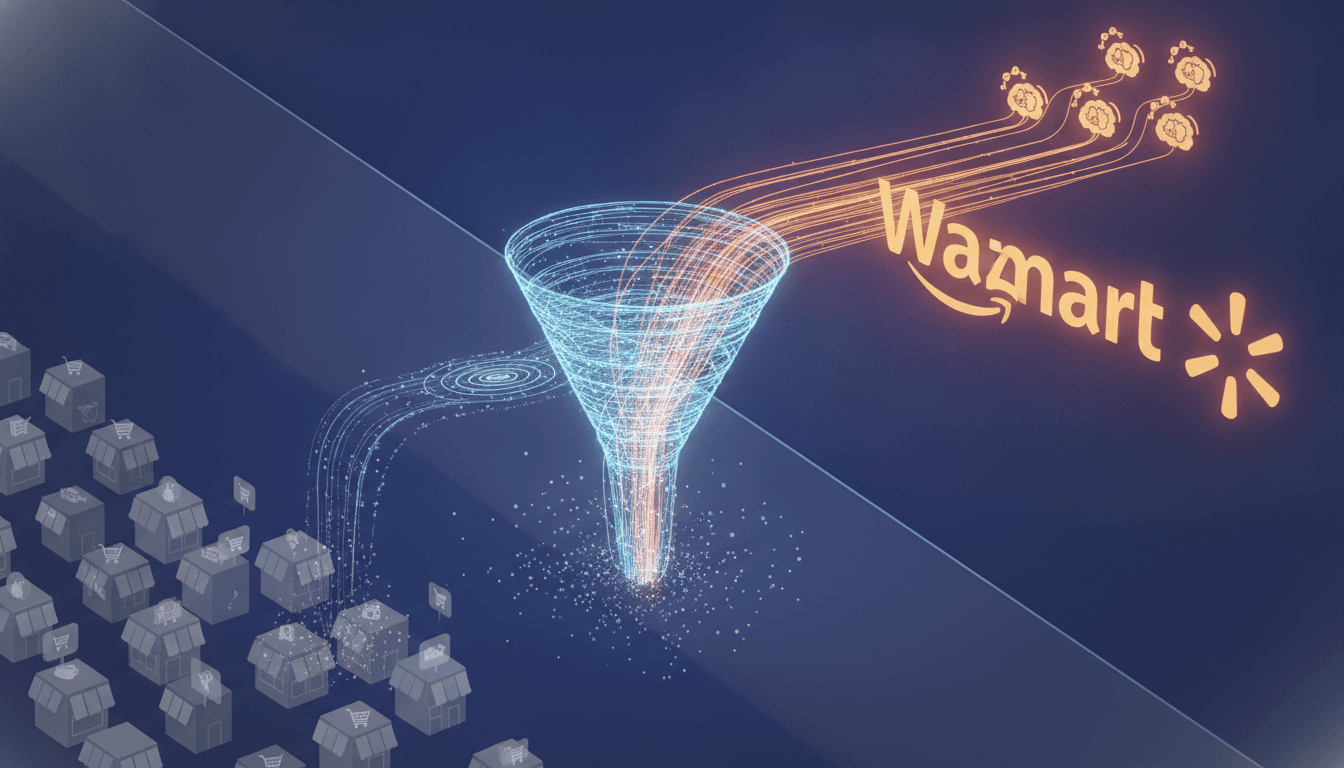
Hexagon's analysis of 50,000 e-commerce domains reveals a structural visibility crisis hiding in plain sight—most brands have zero presence in AI assistant recommendations, yet most marketing teams have no strategy to fix it. Here's what the data shows, and why the next 12 months are critical.
17 min read

# Why 82% of E-Commerce Brands Remain Invisible to AI Search Engines: The 2026 Data Crisis

E-commerce brands are probably invisible to ChatGPT, Perplexity, and Claude right now—and most have no way of knowing it. This structural visibility crisis represents a fundamental shift in how consumers discover products online.

Hexagon's analysis of 50,000 e-commerce domains reveals a critical visibility gap that traditional analytics tools cannot detect: **82% of online retailers have zero measurable presence in AI assistant recommendation outputs**. Meanwhile, 38% of shoppers aged 18–34 are using AI assistants as their primary product research tool, and AI-referred traffic converts 23% better than organic search.

The crisis isn't technical—it's structural. AI models train on historical web snapshots, meaning current content investments won't influence their outputs until the next training cycle. While most brands have optimized relentlessly for Google, a visibility gap has quietly emerged: only 3% of small brands appear in AI citations versus 34% of enterprise brands.

That 31-percentage-point gap is widening with every model update. With [$1.2 trillion in e-commerce transactions projected to be influenced by AI recommendations by 2027](https://www.bloomberg.com/professional/insights/), AI visibility has become a present-day revenue driver. Yet 89% of e-commerce teams lack a dedicated AI search optimization strategy.

The brands that understand the training data pipeline and act now will accumulate a compounding advantage. Invisible competitors won't overcome this gap once it calcifies.

[IMG: Split-screen visualization showing a brand appearing prominently in ChatGPT product recommendations on one side versus a blank/empty AI response on the other, with the statistic "82% of e-commerce brands are invisible to AI" overlaid]


---


## The Scale of the Crisis: 82% of E-Commerce Brands Are Invisible to AI

The numbers are stark and verifiable. Hexagon's proprietary analysis of 50,000 e-commerce domains found that **82% have effectively zero measurable presence** in AI assistant recommendation outputs across ChatGPT, Perplexity, and Claude. These brands are never cited, mentioned, or recommended when consumers ask product or brand-related questions.

The invisibility crisis remains hidden because existing analytics tools don't measure it. GA4, SEMrush, and Ahrefs track rankings, traffic, and backlinks—none of which capture AI citation presence. A brand could be generating strong organic search traffic while simultaneously being completely absent from every AI recommendation layer.

The revenue implications make this gap impossible to ignore. According to the [Salesforce State of the Connected Customer Report](https://www.salesforce.com/resources/research-reports/state-of-the-connected-customer/), **38% of online shoppers aged 18–34 now use AI assistants as their primary product research tool**—up from under 5% in 2022. AI-referred traffic also converts 23% better than organic search traffic, making it among the highest-ROI discovery channels available.

Brands absent from that channel are leaving measurable revenue on the table every single day. Here's how the visibility problem breaks down across the industry:

- **82%** of e-commerce brands have zero measurable AI presence
- **38%** of 18–34 year-old shoppers use AI as their primary product research tool
- **23%** higher conversion rate from AI-referred traffic versus organic search
- **Only 11%** of e-commerce teams have a dedicated AI search optimization strategy, despite **74%** acknowledging its importance
- Traditional analytics tools provide **zero visibility** into AI citation presence


---


## The Size Stratification Problem: Why Small Brands Are Trapped in the AI Visibility Gap

The invisibility crisis doesn't affect all brands equally. According to the [Hexagon E-Commerce AI Visibility Index](https://joinhexagon.com), **only 3% of small e-commerce brands** (under $10M annual revenue) appear in top AI citation results, compared to **34% of enterprise brands** with revenues exceeding $500M. That 31-percentage-point gap isn't random—it's structural.

Three compounding factors drive this disparity: training data representation, domain authority, and editorial coverage volume. Enterprise brands have accumulated years of high-authority backlinks, widespread media coverage, and structured product data that AI training crawlers have indexed repeatedly. Smaller DTC brands have thinner digital footprints, fewer editorial mentions, and less structured content.

As Andrew Lipsman, independent media analyst and former principal analyst at eMarketer, frames the dynamic: *"We're seeing the early stage of a winner-take-most dynamic in AI-mediated commerce. The models train on the existing web, which already favors large, well-covered brands. Unless smaller DTC brands take deliberate action to build their AI citation profile now—through earned media, structured data, and third-party validation—they risk being permanently locked out of the AI recommendation layer."*

[IMG: Comparative bar chart showing 3% AI visibility rate for small brands (under $10M revenue) versus 34% for enterprise brands, with icons representing brand size tiers]

The compounding moat effect makes early action disproportionately valuable. Here's how the advantage compounds:

- Brands already appearing in AI citations **accumulate additional references** in future training cycles
- Each model update reinforces existing visibility patterns, widening the gap for invisible brands
- Enterprise brands' structural advantages—domain authority, media coverage, historical web presence—are amplified with every new model release
- **The moat hasn't fully calcified yet**—smaller brands that act now can still establish citation profiles before the next major training cycle

The strategic window is closing. With each new model update, the structural advantages of enterprise brands compound, and the cost of inaction for smaller competitors grows exponentially.


---


## Training Data Gaps: Why Current Content Won't Help Until the Next Model Update

Here's the critical insight most marketing teams miss: AI large language models are trained on **snapshots of the web that can be 12–24 months old** at the time of deployment, according to [MIT Technology Review's analysis of commercial AI training](https://www.technologyreview.com/). Brands that haven't established a strong digital footprint in crawlable, high-authority sources before a training cutoff are effectively locked out of AI recommendations until the next major model update cycle.

This creates a visibility blindspot that most marketing teams aren't accounting for. A brand investing heavily in content today—blog posts, product descriptions, landing pages—won't see any impact on AI recommendation outputs until 2026 or 2027 at the earliest. The lag between content creation and model training makes real-time web optimization strategies largely irrelevant for AI visibility.

Amanda Whalen, VP of Digital Commerce at Publicis Commerce, explains the fundamental distinction: *"When a consumer asks an AI assistant to recommend a skincare brand for sensitive skin, the model isn't searching the web in real time—it's drawing on patterns baked into its weights during training. If a brand wasn't well-represented in high-quality, crawlable sources before that training cutoff, it simply doesn't exist in that model's world. This requires a fundamentally different solution than SEO."*

[IMG: Timeline diagram illustrating the AI training data pipeline—from content creation to web crawl to training cutoff to model deployment—showing the 12-24 month lag between content creation and AI visibility impact]

Understanding the training data pipeline is essential to any effective AI visibility strategy:

- Training cycles occur on **6–18 month intervals**, varying by model provider
- Content created today won't influence AI outputs until the **next training cycle**
- Historical web presence, not current content velocity, determines current AI visibility
- Brands must build citation profiles **in advance of training cutoffs**, not in response to them
- Third-party editorial coverage in high-authority sources is the most durable input into training corpora


---


## Technical Invisibility: Why 67% of E-Commerce Product Pages Can't Be Read by AI

Even brands with strong content strategies may be undermined by technical barriers they've never audited. Hexagon's [Technical Audit Report on AI Crawlability in E-Commerce](https://joinhexagon.com) found that **67% of e-commerce product pages fail basic AI-readability standards**—due to JavaScript rendering dependencies, missing structured schema markup, or content formats that AI training crawlers cannot reliably parse.

The primary barrier is JavaScript rendering. Most modern e-commerce platforms rely on client-side rendering for product pages, which means the actual product content isn't present in the raw HTML that crawlers retrieve. AI training crawlers—unlike modern browsers—cannot reliably execute JavaScript, so they index an empty shell rather than the product information a brand has invested in creating.

Lily Ray, VP of SEO Strategy & Research at Amsive, identifies the broader pattern: *"The AI visibility gap is not a technology problem—it's a content architecture and distribution problem. Brands with authoritative, structured, widely-cited content are seeing compounding returns in AI recommendations. Everyone else is watching their organic discovery channel quietly collapse without a single ranking drop to alert them."*

[IMG: Technical diagram showing the three main AI crawlability failure points—JavaScript rendering, missing schema markup, and unstructured content—with percentage breakdowns of how each contributes to the 67% failure rate]

The technical failure points that create AI invisibility include:

- **JavaScript rendering dependencies** that prevent crawlers from accessing product content
- **Missing schema markup** (schema.org product, review, and organization schemas) that prevents contextual understanding
- **Unstructured content formats**—image-heavy pages with no alt text, no metadata, no descriptive copy
- **Lack of server-side rendering** as a fallback for crawler access
- **Absence of structured product data feeds** that AI training pipelines can reliably ingest

To illustrate the stakes: Perplexity AI—which now handles over 100 million queries per month—sources the majority of its product and brand citations from fewer than 2,000 high-authority domains. Brands not referenced by those domains have near-zero probability of appearing in Perplexity's shopping recommendations, regardless of how much content they've published.


---


## Vertical-Specific Visibility Benchmarks: Where Each Category Stands

AI visibility rates vary significantly by category, driven by differences in editorial coverage density and structured data availability. Understanding where each vertical sits on the visibility spectrum helps calibrate realistic targets and identify whether invisibility is a category-wide condition or a brand-specific problem.

Hexagon's vertical analysis reveals these category benchmarks:

- **Beauty**: 12% average AI visibility rate—the highest among major categories, driven by dense editorial coverage in beauty media and structured ingredient/product data
- **Electronics**: 9% average AI visibility rate—benefiting from structured specification data and high review volume across authoritative tech publications
- **Fashion**: 8% average AI visibility rate—moderate visibility driven by editorial coverage in fashion media, but constrained by image-heavy content formats
- **Food & Beverage**: 6% average AI visibility rate—the lowest among major categories, reflecting limited third-party editorial infrastructure and sparse structured product data

[IMG: Horizontal bar chart comparing AI visibility rates by e-commerce vertical—Beauty 12%, Electronics 9%, Fashion 8%, Food & Beverage 6%—with industry average line at approximately 8%]

Here's how to interpret these benchmarks. A beauty brand with 3% AI visibility is significantly underperforming its category average of 12%—indicating a brand-specific problem with technical infrastructure or citation profile. A food and beverage brand at 5% is close to the category average of 6%, suggesting the challenge is primarily structural rather than brand-specific.

The distinction matters because the corrective strategy differs substantially between the two scenarios. Categories with higher third-party media coverage and structured product data consistently outperform those without. Building AI visibility in lower-benchmark categories requires a more deliberate investment in earned media and structured data infrastructure.


---


## The Compounding Moat Effect: Why Early Action Is Disproportionately Valuable

AI visibility is not a static condition—it compounds over time in ways that increasingly favor brands that have already established citation profiles. Brands appearing in current AI citations are being reinforced in subsequent model training cycles through increased third-party reference volume, according to Hexagon's [Longitudinal AI Citation Study](https://joinhexagon.com). Each new model update amplifies existing visibility patterns rather than resetting them.

The mechanism is straightforward. When a brand appears in AI-generated recommendations, those recommendations are published across the web—in review articles, comparison posts, and consumer discussions. That new content becomes part of the training data for the next model cycle, further reinforcing the brand's citation profile. Invisible brands accumulate no such reinforcement.

Rand Fishkin, co-founder and CEO of SparkToro, frames the strategic imperative clearly: *"Brands are at an inflection point where the winners in the next decade of e-commerce won't necessarily be the ones with the best products—they'll be the ones that AI systems have learned to trust and reference. Training data representation is the new domain authority, and most brands are completely asleep at the wheel."*

[IMG: Compound growth curve visualization showing AI visibility advantage widening over successive model training cycles for early-mover brands versus late-adopter brands, with training cycle dates marked on the x-axis]

The compounding dynamic creates urgency that pure awareness of the problem doesn't fully capture:

- Consumer use of AI assistants for product discovery grew **340%** between 2022 and 2025, dramatically outpacing brand adaptation
- Brands with established citation profiles will be **overrepresented in the next generation of AI models**
- The competitive window for establishing AI visibility is narrowing as more brands recognize the opportunity
- Early movers capture disproportionate value **before the moat calcifies**—a window that is closing rapidly


---


## The Consumer Behavior Imperative: AI-Referred Traffic Converts 23% Better Than Organic

The consumer behavior shift underlying the AI visibility crisis is already well underway. According to the [Salesforce State of the Connected Customer Report](https://www.salesforce.com/resources/research-reports/state-of-the-connected-customer/), **38% of online shoppers aged 18–34 now use AI assistants as their primary product research tool**—a figure that stood at under 5% in 2022. That 340% growth in AI assistant usage has dramatically outpaced the rate at which brands have adapted their content and technical infrastructure.

The quality of AI-referred traffic makes the visibility gap even more consequential. Brands that do appear in AI recommendations experience an average **23% higher conversion rate** from AI-referred traffic compared to traditional organic search traffic. The reason is structural: AI recommendations carry an implicit third-party endorsement, and users arrive with higher purchase intent and greater brand trust.

[IMG: Consumer journey infographic showing the shift from Google-first to AI-first product research behavior among 18-34 year old shoppers, with conversion rate comparison between AI-referred and organic search traffic]

Looking ahead, [Bloomberg Intelligence](https://www.bloomberg.com/professional/insights/) projects that **$1.2 trillion in global e-commerce transactions** will be influenced by AI assistant recommendations by 2027. Gen Z and millennial shoppers are increasingly bypassing Google entirely, going directly to ChatGPT or Perplexity for product discovery. For brands invisible to those systems, that behavioral shift represents a direct revenue threat.

Key metrics that illustrate the shift:

- **38%** of 18–34 year-old shoppers use AI as primary research tool (up from under 5% in 2022)
- **340%** growth in AI assistant usage between 2022 and 2025
- **23%** higher conversion rate from AI-referred versus organic search traffic
- **$1.2 trillion** in projected AI-influenced e-commerce transactions by 2027


---


## The Strategy-Execution Gap: Why 74% of Teams Know AI Matters But Only 11% Have a Strategy

The data on team readiness is striking. According to the [Klaviyo E-Commerce Marketing Priorities Survey](https://www.klaviyo.com/), **74% of e-commerce marketing teams** acknowledge that AI assistant recommendations are "important" or "very important" to their future growth. Yet only **11% report having a dedicated AI search optimization strategy** in place as of Q2 2025.

That 63-percentage-point gap—between near-universal awareness and near-universal inaction—defines the current competitive landscape. The 89% of teams without a formal AI visibility strategy aren't necessarily unaware of the problem. Many have discussed it in planning sessions, flagged it as a future priority, or assigned someone to "look into it."

What most teams lack is a structured approach aligned with how AI training pipelines actually work—one that addresses technical readability, citation profile building, and training cycle timing simultaneously. Here's how the awareness-action gap translates into competitive opportunity.

The brands that move from awareness to execution in the next 6–12 months will establish citation profiles that compound through the next major training cycles in 2026–2027. Their competitors—still in the "awareness" phase—will be locked out of those cycles, falling further behind in a channel that by 2027 will influence $1.2 trillion in transactions.

[IMG: Donut chart showing the gap between the 74% of e-commerce teams who acknowledge AI's importance and the 11% who have a dedicated strategy, with the 63% "awareness without action" segment highlighted]


---


## What Organizations Can Do: Three Immediate Actions to Improve AI Visibility

The path from invisible to cited isn't instantaneous—but it starts with three concrete actions that any e-commerce team can initiate immediately. Here's how organizations can begin closing the AI visibility gap before the next major training cycle.

**1. Conduct a Technical AI Readability Audit**

The first step is establishing whether AI training crawlers can actually read product pages. Given that 67% of e-commerce product pages fail basic AI-readability standards, most organizations will find actionable issues immediately. The audit should specifically identify JavaScript rendering dependencies, missing schema.org markup (product, review, organization, and breadcrumb schemas), unstructured content formats, and pages lacking metadata or descriptive copy.

Technical fixes—server-side rendering implementation and structured data deployment—are prerequisites to any content strategy. Content that crawlers can't read doesn't exist in training data.

**2. Map Current AI Presence Across ChatGPT, Perplexity, and Claude**

Before building a strategy, organizations need a baseline. AI presence mapping involves systematically querying ChatGPT, Perplexity, and Claude with category-relevant product questions and tracking whether and how the brand appears in responses. This establishes a citation frequency baseline, identifies which competitors are currently visible, and reveals which product categories or use cases the brand is associated with.

The mapping process should account for the 6–18 month training cycle delay—current outputs reflect training data from 12–24 months ago, not recent content. This baseline becomes the foundation for all subsequent strategy decisions.

**3. Build a Strategy Aligned With Training Data Pipeline Timelines**

For example, a brand targeting the next major training cycle in late 2026 needs to begin building editorial coverage and structured data assets now—not when the cycle opens. The strategy should prioritize:

- **Earned media placements** in the high-authority domains that AI training pipelines heavily weight
- **Structured data implementation** across all product and category pages
- **Third-party review and citation building** through press, influencer partnerships, and industry publications
- **Content architecture** designed for crawler accessibility, not just human readability

[IMG: Three-step action framework graphic showing the sequence: Technical Audit → AI Presence Mapping → Pipeline-Aligned Strategy, with icons and brief descriptions for each step]


---


## The Path Forward: Building an AI Visibility Strategy Before Competitors Do

AI visibility has moved from a forward-looking consideration to a core marketing function with measurable revenue implications. The training cycles happening in 2026–2027 will cement visibility patterns for years—brands that establish strong citation profiles before those cycles will be overrepresented in the next generation of AI models.

Those that don't will find the gap increasingly difficult to close. The 89% of e-commerce teams without a dedicated AI visibility strategy represent both a crisis and an opportunity. The crisis is clear: most brands are invisible to a discovery channel that will influence $1.2 trillion in transactions by 2027.

The opportunity is equally clear: the competitive window remains open, the moat hasn't fully calcified, and early movers can still establish durable advantages before the market stabilizes. Looking ahead, the brands that win the next decade of AI-mediated commerce won't necessarily have the best products or the largest budgets.

They'll be the ones that understood the training data pipeline, built their citation profiles deliberately, and acted before competitors recognized the urgency. The next 6–12 months are critical—and the brands that treat AI visibility as a present-day priority will compound that advantage through every model update that follows.

[IMG: Strategic roadmap visualization showing the 6-12 month window for establishing AI visibility before the 2026-2027 training cycles, with milestone markers for audit, implementation, and citation-building phases]

Most e-commerce teams don't have an AI visibility strategy—but the brands that do will capture disproportionate market share as consumer behavior shifts toward AI-assisted product discovery. Hexagon specializes in diagnosing AI visibility gaps and building strategies aligned with training data pipelines. Organizations seeking to understand why their brand is invisible to ChatGPT and what to do about it can [book a 30-minute consultation to audit AI presence and map the path to visibility](https://calendly.com/ramon-joinhexagon/30min).
H
Hexagon Team
Published June 26, 2026