What E-commerce Marketers Should Know About AI Hallucinations and Brand Safety
As AI-powered search and shopping assistants reshape the e-commerce landscape, brand safety faces an urgent new threat: AI hallucinations. This guide unpacks the risks, solutions, and actionable strategies every e-commerce marketer needs to know.
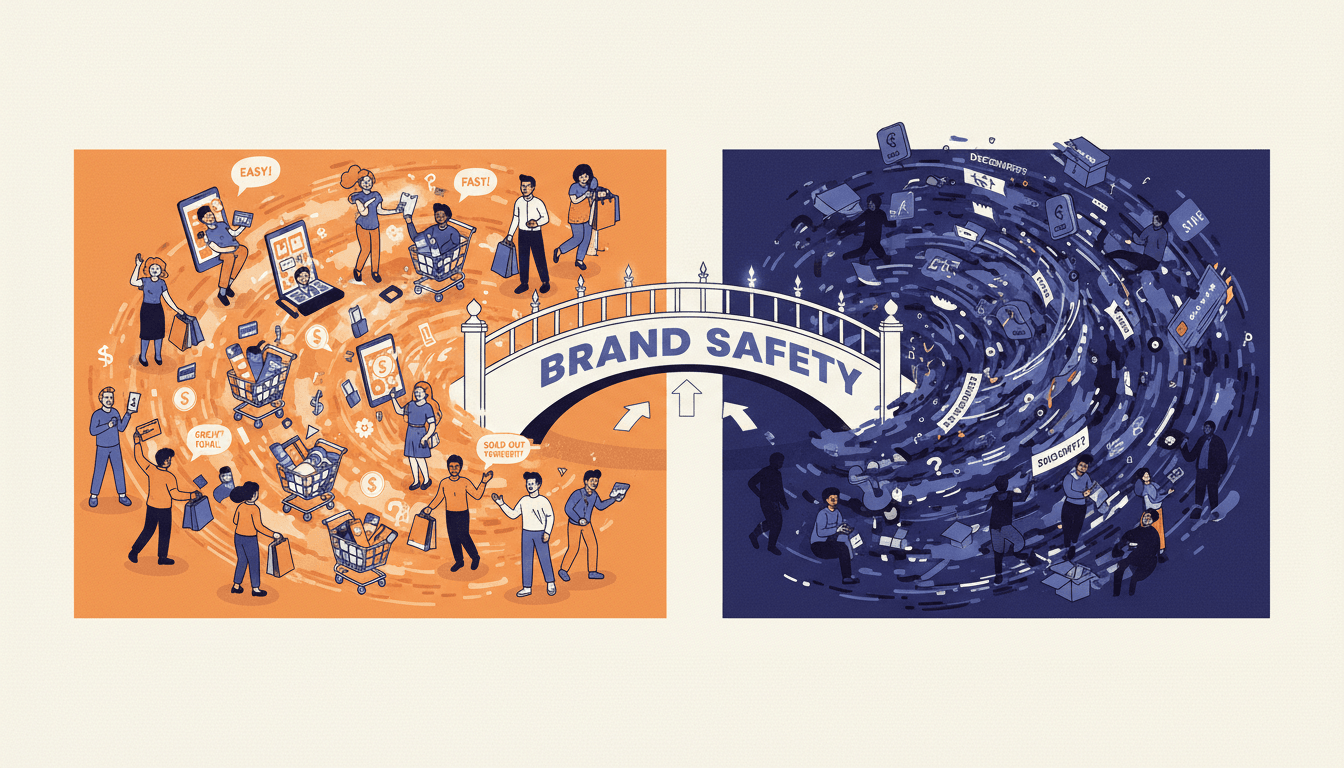
What E-commerce Marketers Should Know About AI Hallucinations and Brand Safety
As AI-powered search and shopping assistants revolutionize the e-commerce landscape, brand safety faces a critical new challenge: AI hallucinations. This guide unpacks the risks, solutions, and actionable strategies every e-commerce marketer must understand to protect their brand.
Artificial intelligence is rapidly transforming how consumers discover and purchase products online. But as AI-powered search and shopping assistants become integral to the e-commerce experience, they bring with them a hidden and growing threat: AI hallucinations. These are misleading or entirely fabricated outputs generated by AI models that can tarnish brand reputation, erode customer trust, and directly impact sales.
In this article, we will demystify AI hallucinations—what they are, why they pose a serious risk to brands, and exactly how e-commerce marketers can detect and prevent them. By arming yourself with this knowledge, you can safeguard your brand’s integrity in the evolving AI search landscape.
Ready to protect your e-commerce brand from AI hallucinations and misinformation? Book a free 30-minute consultation with our AI brand safety experts today.
Understanding AI Hallucinations and Their Impact on E-commerce Brands
[IMG: Illustration of an AI chatbot producing both accurate and inaccurate product information]
AI hallucinations occur when language models confidently generate false or misleading information. According to the Stanford HAI Report 2024, these hallucinations often arise due to gaps in training data or ambiguous prompts that confuse the AI. For e-commerce brands, this can mean incorrect product details, fake reviews, or erroneous brand associations appearing in AI-powered search or chatbot results.
The scale of this problem is growing. Recent data reveals that 15% of AI shopping queries contain hallucinated or misleading brand information (AI Risk Assessment 2024). Additionally, 23% of shoppers report encountering inconsistent or incorrect product details when using AI search assistants (Forrester, State of E-commerce Brand Safety 2024). These inaccuracies not only confuse potential buyers but also undermine trust in both the brand and the platforms consumers rely on.
The consequences for brands can be severe, including:
- Brand misrepresentation: Products are inaccurately described or linked to misleading attributes.
- Loss of consumer trust: Shoppers encountering conflicting or false information may doubt the brand’s credibility.
- Sales decline: Customers may abandon purchases or switch to competitors with clearer, more reliable product data.
Julie Ask, VP and Principal Analyst, underscores the stakes: “AI hallucinations are a significant brand risk in e-commerce. Inaccurate AI recommendations can directly impact customer trust, loyalty, and ultimately sales.” As AI increasingly becomes the new digital shelf, misinformation can be as damaging as an out-of-stock product.
Detecting AI Misinformation: How E-commerce Brands Can Identify Hallucinations
[IMG: Dashboard of an AI monitoring tool highlighting flagged hallucinations in brand queries]
Spotting AI hallucinations is uniquely challenging. Their outputs often appear subtle yet highly convincing, making manual detection difficult even for seasoned marketers. AI search assistants generate responses that seem authoritative—blurring the line between legitimate insights and fabricated content.
To stay ahead, e-commerce brands should consider these strategies:
- Monitor AI-generated responses to brand-related queries with specialized tools. Automated systems can flag anomalies and inconsistencies far faster than manual reviews.
- Leverage structured data and metadata to provide AI systems with verifiable product facts. Supplying authoritative, machine-readable product details reduces ambiguity and helps pinpoint hallucinations.
- Establish alerting systems that notify teams immediately when AI search assistants produce unexpected or risky content.
The benefits are clear. Brands employing proactive monitoring tools have reported a 50% decrease in AI misinformation incidents (Hexagon client case studies). This not only shields brand reputation but also ensures compliance amid increasing regulatory scrutiny over AI-generated content (European Commission AI Regulation Updates 2024).
David Sze, Managing Partner, emphasizes: “Proactive brand monitoring and structured data submission are the most effective defenses against the reputational risks of AI-generated misinformation.” For e-commerce marketers, early detection isn’t just best practice—it’s essential for staying competitive.
Best Practices for Protecting Brand Safety in AI Search Environments
[IMG: Flowchart of AI hallucination prevention strategies for e-commerce brands]
Ensuring brand safety in the era of AI search demands a layered and strategic approach. E-commerce marketers must go beyond traditional SEO and adopt tactics tailored to generative AI platforms.
Leading brands defend against AI hallucinations by:
- Implementing structured data markup: Use Schema.org and other industry standards to deliver rich, authoritative product information. This enables AI systems to better understand and accurately represent your offerings.
- For instance, Google’s AI search best practices confirm that optimizing product data in structured formats can significantly reduce hallucination rates for brand-related queries.
- Optimizing AI prompts and training data: Collaborate with AI providers to include your brand’s data in training sets and keep it up-to-date. Clear, precise information minimizes the risk of fabricated outputs.
- Deploying ongoing monitoring and alerting systems: Utilize dashboards that track how your brand is portrayed across AI search platforms, with automated alerts to enable rapid response to inaccuracies.
- Coordinating cross-functional teams: Engage marketing, legal, and data experts to respond swiftly to AI-driven brand risks and remain compliant with evolving regulations.
- Collaborating with AI providers: Maintain open communication channels with search platforms and AI vendors to provide feedback and corrections that help retrain AI models.
- Monitoring regulatory trends: Stay abreast of policy developments as regulators increasingly scrutinize AI-generated content for misinformation and brand misrepresentation (European Commission AI Regulation Updates 2024).
These concerns are reflected in industry sentiment:
- 68% of e-commerce executives worry about AI-generated misinformation harming their brand (Gartner, AI in Commerce Trends 2024).
- 40% of e-commerce brands plan to increase investment in AI brand safety tools within the next year (McKinsey Digital, Protecting Brands in the Age of AI).
Fei-Fei Li, Co-Director of Stanford HAI, cautions: “Hallucinations in generative AI models can be reduced, but not eliminated. Continuous oversight is essential for brand safety.”
A robust AI brand safety strategy should include:
- Regular audits of AI search results featuring your brand and products.
- Frequent updates to structured data as products or policies evolve.
- Training customer service teams to recognize and escalate AI-driven misinformation.
- Clear escalation protocols for correcting inaccuracies with AI partners.
Looking forward, brands that treat AI search results as a dynamic and critical digital shelf will be best positioned to protect their reputation and secure customer loyalty. Brian Nowak, Managing Director at Morgan Stanley, aptly states: “Brands must treat AI search results as a new digital shelf—where misinformation can be as damaging as out-of-stock products.”
Real-World Examples: How E-commerce Brands Mitigate AI Hallucination Risks
[IMG: Case study graphic showing a reduction in AI-generated misinformation after implementing monitoring tools]
Consider a leading apparel retailer that discovered inconsistent product sizing information appearing across multiple AI shopping assistants. By adopting structured data markup and deploying proactive monitoring, the brand quickly identified and corrected these hallucinations. The outcome? Customer complaints about sizing discrepancies dropped by 35%, and trust scores in post-purchase surveys improved significantly.
In another case, an electronics company found AI chatbots recommending discontinued products. Partnering closely with their AI provider and supplying up-to-date inventory data in machine-readable formats led to a sharp decline in hallucinated recommendations. Sales stabilized, and customer sentiment showed measurable improvement.
Key lessons from these successes include:
- Structured data and regular updates are vital: Brands providing the most accurate, current information to AI platforms experience fewer hallucinations.
- Ongoing monitoring is invaluable: Real-time alerts empower brands to address misinformation before it spreads widely.
- Cross-team collaboration builds resilience: Coordinated efforts among legal, technical, and marketing teams ensure fast, compliant responses to emerging risks.
These examples prove that while AI hallucinations persist, their impact can be effectively managed—and even minimized—with the right combination of technology, processes, and people.
Future-Proofing Your Brand: Ongoing Strategies for GEO Brand Protection
[IMG: Infographic showing continuous adaptation cycle for GEO (Generative Engine Optimization) brand protection]
Looking ahead, e-commerce brands must embrace continuous adaptation as AI search technologies evolve. Generative Engine Optimization (GEO) is emerging as a crucial discipline to keep brand content visible, accurate, and resilient against misinformation in AI-driven environments.
To future-proof your brand with GEO-focused strategies:
- Integrate GEO into your digital marketing playbook: Optimize for both traditional search engines and AI-generated responses by curating authoritative content, feeding high-quality data, and building strong partnerships with AI platform providers.
- Invest in AI monitoring and detection tools: The AI landscape shifts rapidly, making automated systems essential for anticipating and mitigating risks.
- Encourage collaboration across marketing, legal, and technical teams: Brand safety in AI search is a multidisciplinary challenge requiring aligned goals, clear responsibilities, and defined escalation paths.
- Stay informed and agile: Regulatory frameworks and AI capabilities continue to evolve. Regular training and knowledge sharing will empower your team to respond quickly to new threats.
Continuous improvement is critical. As AI search platforms grow more sophisticated, so too must your brand protection efforts. The brands that thrive will be those who view AI search not just as a channel, but as a new frontier for brand safety.
Conclusion: Take Action Now to Safeguard Your Brand
AI hallucinations represent a clear and immediate threat to e-commerce brands. If left unchecked, AI-generated misinformation can damage trust, misrepresent products, and jeopardize sales. By understanding these risks, investing in proactive monitoring, and adopting best practices around structured data and cross-team collaboration, marketers can transform AI search from a source of risk into a competitive advantage.
Ready to protect your e-commerce brand against AI hallucinations and misinformation? Book a free 30-minute consultation with our AI brand safety experts today.
[IMG: Group of e-commerce marketers reviewing AI monitoring reports, looking confident and prepared]
Hexagon Team
Published March 27, 2026