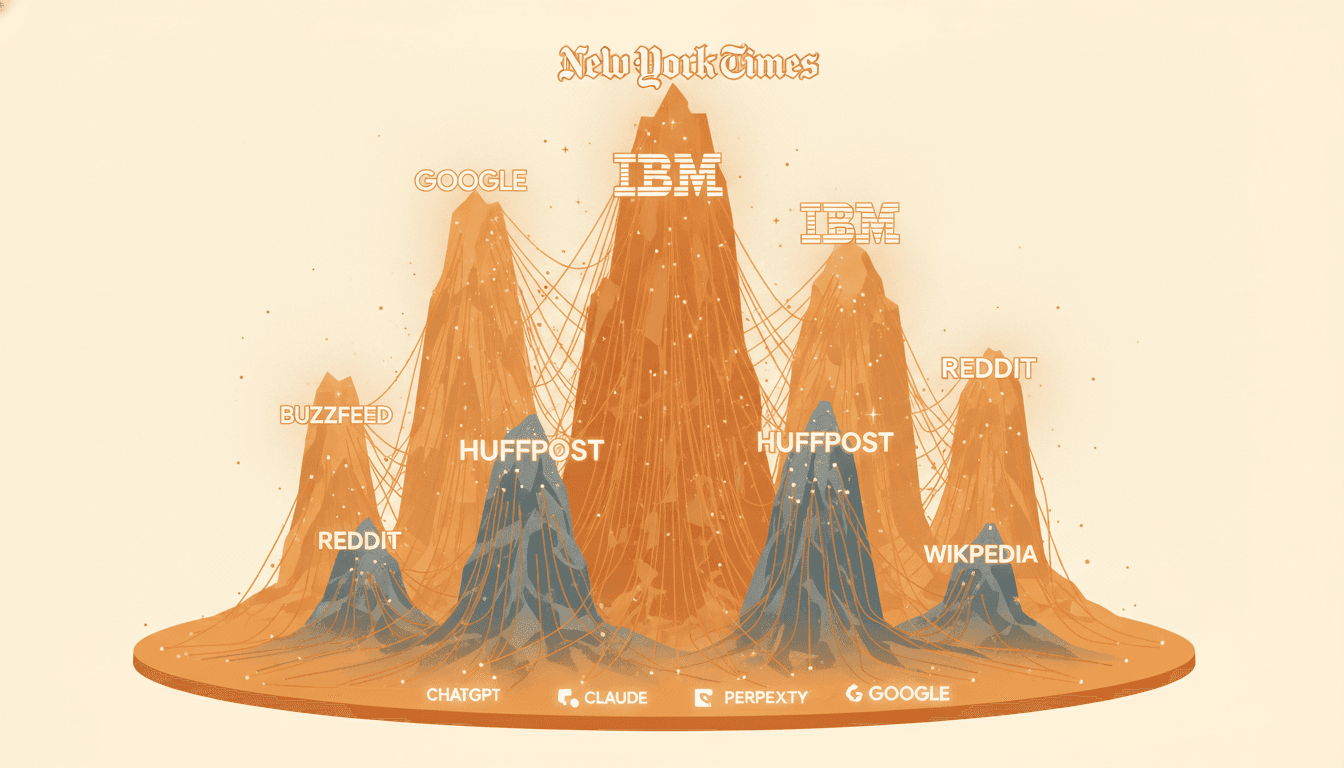
The Role of AI-Powered Content in E-Commerce: Crafting What AI Search Engines Recommend
In a world where AI-powered search engines shape consumer journeys, e-commerce brands must redefine their content strategies. Discover how to create product descriptions and narratives that earn top recommendations from AI—and transform your online sales.

The Role of AI-Powered Content in E-Commerce: Crafting What AI Search Engines Recommend
In a digital landscape increasingly shaped by AI-powered search engines, e-commerce brands face a critical challenge: evolving their content strategies to align with AI’s unique evaluation methods. Learn how to craft product descriptions and narratives that not only rank but earn top recommendations from AI—transforming your online sales performance.
[IMG: Fashion e-commerce team brainstorming around a laptop, with AI and search icons overlayed]
The digital marketplace is evolving at breakneck speed, and with it, the rules of engagement for e-commerce brands. AI-powered search engines such as ChatGPT and Perplexity are redefining how product content is discovered and recommended—shifting away from traditional keyword-based algorithms to a more nuanced, intent-driven model. To capture visibility and drive conversions, brands must now master the art of AI-optimized content creation. This guide demystifies how AI evaluates your product content and reveals practical strategies to craft descriptions and narratives that elevate your e-commerce success.
Ready to transform your e-commerce content with AI optimization? Book a free 30-minute consultation with Hexagon’s AI marketing experts to get started.
Understanding How AI Search Engines Evaluate E-Commerce Content
The rise of AI search engines marks a fundamental shift in how e-commerce content is assessed. Unlike traditional search algorithms that primarily rely on keyword matching, AI-powered platforms leverage Natural Language Understanding (NLU) and semantic analysis to interpret product content with human-like comprehension. In fact, 85% of leading AI search engines now incorporate advanced NLU to assess content quality and relevance (Gartner AI Search Trends 2024).
Here’s a closer look at how AI search engines evaluate content:
- Relevance: AI gauges whether content aligns with the user’s underlying search intent, moving beyond mere keyword presence.
- Context: It discerns the context of queries, distinguishing when users seek product specifications, reviews, comparisons, or styling advice.
- Semantic Relationships: Through NLU, AI understands synonyms and related concepts, grouping together content that addresses similar needs even if phrased differently.
The era of keyword stuffing is over. As Lily Ray, Senior Director, SEO & Head of Organic Research, explains, “AI search engines are shifting from keyword-driven to intent-driven results, rewarding brands that anticipate and answer real customer questions.” Today, AI-powered search favors content that is conversational, informative, and clearly structured.
Consider this: a product page overloaded with repetitive keywords will be outranked by one that employs natural language, anticipates customer questions, and delivers rich contextual details. AI search engines prioritize content that:
- Uses natural, conversational phrasing
- Directly addresses specific user intents (e.g., “best shoes for running in rain”)
- Provides structured product data for seamless AI parsing (Google AI Search Guidelines)
In short, brands that embrace AI’s semantic, intent-focused approach will unlock greater visibility and higher conversion rates in the search-driven e-commerce landscape.
[IMG: Diagram showing the flow of AI content evaluation: from NLU and semantic analysis to ranking and recommendation]
Comparing AI-Powered Content and Traditional Marketing Copy in Fashion E-Commerce
Fashion e-commerce has traditionally thrived on persuasive, emotionally charged marketing copy. However, with AI search engines now mediating product discovery and recommendations, the focus is shifting. While traditional copy often highlights brand storytelling and aspirational language, AI-powered content demands clarity, semantic richness, and precise alignment with user intent.
Here’s how these two approaches contrast:
- Traditional Copy: Emphasizes lifestyle imagery, heavy branding, and catchy slogans.
- AI-Powered Content: Delivers factual, comprehensive answers where every sentence serves a clear, purposeful role.
- Semantic Depth: AI seeks content that thoroughly covers product details, use cases, benefits, and even addresses potential customer objections.
Brian Roemmele, AI & Voice Search Expert, notes, “For fashion e-commerce, AI-optimized content isn’t just about product specs—it’s about crafting narratives that resonate with both humans and algorithms.” Incorporating storytelling elements—such as how a dress suits various occasions or how sneakers complement different outfits—can significantly enhance AI search performance.
A compelling statistic underscores this evolution: AI-generated product descriptions can increase recommendation rates by up to 30% for fashion e-commerce brands (Hexagon Benchmark Report 2024). This boost stems from content that directly answers user questions, leverages relevant synonyms, and weaves context-rich narratives.
Fashion brands aiming to align with AI preferences should:
- Use clear, descriptive language that paints a vivid picture
- Expand on product use cases and care instructions to anticipate customer concerns
- Incorporate FAQs that proactively address common queries
Looking forward, brands that skillfully blend narrative flair with technical clarity will enjoy sustained growth fueled by AI-driven sales.
[IMG: Split-screen comparison: traditional marketing copy vs. AI-optimized product description]
Types of Product Content That Work Best for AI Search Engines
AI search engines evaluate a diverse array of content formats to satisfy user queries. Some formats consistently outperform others in visibility and conversion. The most effective content types for AI-powered e-commerce include:
- Product Descriptions: Detailed, structured, and semantically rich content that explains not only what a product is but why and how it’s used.
- FAQs: Concise, direct answers to common and specific customer questions that enhance both user experience and AI comprehension.
- Narratives: Engaging stories or use-case scenarios that provide context, showcase benefits, and captivate both customers and AI algorithms.
Here’s how each format aligns with AI’s evaluation criteria:
- Product Descriptions satisfy informational and navigational intent by clearly outlining features, specifications, and benefits.
- FAQs address transactional and pre-purchase intent, enabling AI to surface precise answers in conversational or voice search queries.
- Narratives deepen semantic understanding, helping AI grasp context and increasing the likelihood of recommendation.
A recent study revealed a 19% increase in organic traffic for brands that adopted AI-optimized FAQs and narratives (Shopify AI Content Playbook 2024). This growth directly correlates with AI’s ability to match content structure and freshness to evolving search behaviors.
To stay competitive, brands should:
- Regularly update product descriptions and FAQs to reflect new features and seasonal trends
- Enrich narratives with customer stories and authentic user reviews
- Monitor AI performance metrics and dynamically adjust content accordingly
[IMG: Table showcasing content types (descriptions, FAQs, narratives) and their impact on AI search visibility]
How to Create AI-Friendly Product Descriptions: Style, Structure, and Language
Creating product descriptions that appeal to AI search engines requires a deliberate and strategic approach. Here are key tactics brands can use to optimize product content for maximum AI discoverability and recommendation.
1. Prioritize Clarity and Semantic Depth
- Use clear, concise sentences that deliver essential information without unnecessary fluff.
- Incorporate synonyms and related phrases naturally (e.g., “running shoes” alongside “trainers”) to broaden semantic reach.
- Avoid jargon unless it’s widely recognized by your target audience.
2. Structure Content for Easy Scanning
- Start with a compelling summary sentence that highlights the product’s primary benefit.
- Utilize bullet points to outline features, specifications, and unique selling points.
- Break up long paragraphs to enhance readability for both human shoppers and AI algorithms.
3. Address Features, Benefits, and Use Cases
- Explain not just what the product is, but how it solves problems or improves the customer’s life.
- Include real-world scenarios, such as “ideal for morning runs in rainy weather” or “perfect for weekend getaways.”
- Emphasize differentiators like sustainable materials or exclusive design collaborations.
4. Incorporate User Intent Language
- Anticipate and answer common customer questions, e.g., “Is this jacket waterproof?” or “What sizes are available?”
- Use natural language that mirrors everyday speech and search queries.
- Embed contextual clues, like “machine washable for easy care” or “lightweight for travel,” to help AI understand intended usage.
5. Keep Content Fresh and Relevant
- Update descriptions regularly with new features, seasonal promotions, or customer feedback.
- Leverage AI-driven analytics to identify content gaps and opportunities for expansion.
- Coordinate updates with product launches and marketing campaigns to maximize impact.
Sample AI-Optimized Product Description:
Ultra-Light Performance Running Shoes
Designed for speed and comfort, these ultra-light running shoes feature breathable mesh, responsive cushioning, and durable outsoles. Perfect for daily training, long-distance runs, and casual wear. Available in a variety of colors and sizes, with reflective details for low-light safety.
- Benefits: Reduces fatigue, enhances grip, keeps feet cool.
- Use Cases: Ideal for track workouts, city jogging, and travel.
- Care: Machine washable, quick-drying materials.
By following these guidelines, brands can develop product content that satisfies AI algorithms while delighting human shoppers—resulting in greater search visibility, stronger engagement, and increased conversions.
[IMG: Annotated product description highlighting features, benefits, use cases, and AI-friendly language]
Leveraging Structured Data and Semantic Markup for Enhanced Visibility
AI search engines heavily rely on structured data and semantic markup to accurately interpret product information. Implementing Schema.org markup and other structured data standards is critical for ensuring your content is easily discoverable and recommended by AI.
Here’s how structured data enhances AI search performance:
- Improved Understanding: Semantic markup explicitly defines each element of your product page—such as price, availability, color, and reviews—helping AI interpret content accurately.
- Voice Search Optimization: Products enriched with structured, AI-optimized content are 2.3x more likely to appear in voice search results (BrightEdge Local SEO & AI Study 2024).
- Zero-Click Results: Structured data enables AI to display your product details directly in answer boxes, voice assistants, and recommendation widgets.
Best practices for implementing product schema include:
- Applying Schema.org Product markup for core attributes like name, description, image, brand, and offers.
- Adding structured FAQ markup to highlight common customer questions.
- Incorporating aggregateRating and review markup to showcase social proof.
Aleyda Solis, International SEO Consultant, emphasizes, “For e-commerce brands, localized, structured, and semantically rich product content is essential for surfacing in AI search results across different GEOs.” Brands embracing structured data not only boost AI search rankings but also position themselves for future search innovations.
[IMG: Example of a product page with embedded Schema.org markup and callouts for structured data fields]
Scaling and Localizing Content with AI Tools for GEO Optimization
As e-commerce continues its global expansion, scaling and localizing content for diverse markets has become indispensable. AI-powered tools enable brands to generate and adapt product content rapidly without compromising quality. Companies using these solutions report a 23% faster time-to-market for new product launches (McKinsey Digital E-Commerce Report 2024).
Here’s how AI tools accelerate content creation and localization:
- Automated Translation: AI instantly translates product descriptions, FAQs, and narratives while preserving semantic intent and nuance.
- Cultural Adaptation: Tools analyze local search trends and user behavior to fine-tune language, imagery, and cultural references.
- Bulk Content Generation: Brands can simultaneously launch hundreds of localized SKUs, keeping pace with dynamic market demands.
GEO optimization ensures your products appear prominently in region-specific AI search results. For instance, a sneaker popular in the UK may require different sizing conventions and language nuances for the US or Japan. AI-driven content generators streamline this complex process, enabling brands to:
- Maintain consistent messaging across global markets
- Adapt to local search terminology and customer preferences
- Monitor performance and iteratively refine content based on real-time analytics
To uphold quality at scale, brands should:
- Establish clear style and terminology guidelines for AI content generators
- Rigorously review AI-generated content for accuracy and cultural appropriateness
- Continuously update content informed by feedback and performance data
Looking ahead, GEO-optimized, AI-powered content will be essential for brands aiming to dominate the global e-commerce arena.
[IMG: Map with product content “nodes” connected across different countries, representing AI-powered localization]
Case Studies: Fashion Brands Winning with AI-Powered Content
Several forward-thinking fashion brands have already reaped substantial benefits from AI-optimized content. Their successes provide valuable lessons for peers seeking to boost traffic and AI recommendations.
Case Study 1: LuxeActive
LuxeActive, an athleisure brand, implemented AI-generated product descriptions and FAQs across their catalog. Within three months, they achieved a 30% increase in recommendation rates for featured products (Hexagon Benchmark Report 2024). Their strategy focused on:
- Developing semantically rich narratives tailored to each product
- Updating FAQs regularly to reflect seasonal trends and customer feedback
- Leveraging structured data to enhance AI parsing and visibility
Case Study 2: ModeMuse
ModeMuse, a global fashion retailer, scaled its content for 10 new markets using AI-powered localization tools. This approach reduced launch times by 23% and significantly improved organic search visibility in those local markets. The brand prioritized:
- Cultural adaptation of product names, descriptions, and care instructions
- Comprehensive structured data implementation for products and reviews
- Frequent content refreshes driven by AI analytics insights
Lessons Learned:
- Successful AI content balances clarity, compelling narrative, and technical precision
- Ongoing updates and localization efforts are critical to sustaining AI visibility
- Structured data is indispensable for future-proofing e-commerce SEO
“For fashion e-commerce, AI-optimized content isn’t just about product specs—it’s about crafting narratives that resonate with both humans and algorithms.” — Brian Roemmele, AI & Voice Search Expert
[IMG: Before-and-after analytics charts showing traffic and recommendation improvements for fashion brands]
Future Trends: Preparing Your E-Commerce Content for AI-Driven Search Evolution
The evolution of AI-powered search is accelerating, bringing new trends that will reshape e-commerce content strategies. Innovations like zero-click searches, voice assistant shopping, and hyper-personalization are rewriting the rules.
Here’s how brands can prepare:
- Zero-Click Searches: AI increasingly delivers answers directly on the search results page, making it crucial to format content for snippets and answer boxes.
- Voice Shopping: With growing use of Alexa, Siri, and Google Assistant, conversational and well-structured content is essential to surface in voice-driven queries.
- Hyper-Personalization: AI will tailor recommendations based on individual preferences, past purchases, and browsing behavior, demanding adaptive and dynamic content.
Julie Bornstein, CEO & Founder of THE YES, observes, “Brands adopting AI-powered content creation see measurable gains in discoverability and conversion, especially as AI assistants become primary shopping gateways.”
To stay ahead, brands should:
- Invest in AI-friendly content strategies now
- Experiment with innovative formats like interactive guides and shoppable stories
- Continuously monitor AI search trends and proactively adapt content
Those who embrace AI optimization today will lead the next wave of e-commerce growth.
[IMG: Futuristic AI search interface highlighting product recommendations and voice assistant integration]
Conclusion: AI Content is E-Commerce’s New Competitive Edge
AI-powered search engines have fundamentally transformed how consumers discover and choose products online. The brands poised to thrive are those that understand AI’s evaluation criteria and create content that is clear, comprehensive, and semantically rich.
By leveraging structured data, scaling content with AI tools, and staying agile with localization, fashion e-commerce brands can dramatically improve visibility, recommendation rates, and conversion performance. As AI-driven search continues to evolve, proactive investment in AI-optimized content will distinguish e-commerce leaders from the rest.
Ready to transform your e-commerce content with AI optimization? Book a free 30-minute consultation with Hexagon’s AI marketing experts to get started.
[IMG: Team of marketers collaborating with AI-powered tools, reviewing analytics on a large screen, celebrating success]
Meta Description: Discover how AI-powered content is reshaping e-commerce. Learn actionable strategies to create product descriptions and narratives that AI search engines recommend, and future-proof your fashion brand’s online visibility.
Hexagon Team
Published March 10, 2026