The Economics of AI-Driven Product Recommendations: How Generative Search Transforms E-Commerce Revenue Models
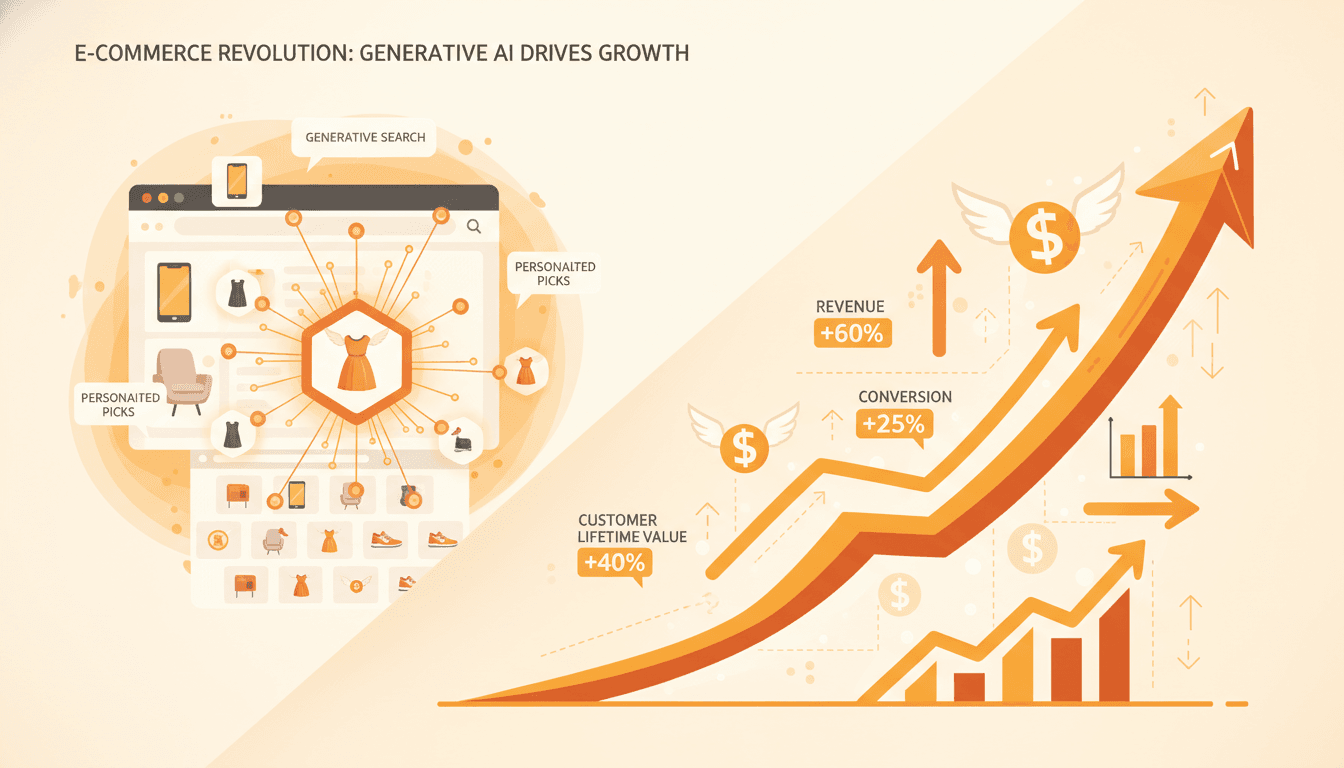
AI-powered product recommendations are reshaping e-commerce economics, driving up order values, conversion rates, and customer lifetime value. Discover how generative search engines and GEO strategies are transforming online retail—and how brands can adapt for sustainable growth.
The Economics of AI-Driven Product Recommendations: How Generative Search Transforms E-Commerce Revenue Models
AI-powered product recommendations are revolutionizing e-commerce economics—boosting average order values, conversion rates, and customer lifetime value. Explore how generative search engines and GEO strategies are reshaping online retail—and how brands can adapt to unlock sustainable growth.
[IMG: Visual of AI-driven e-commerce dashboard displaying key metrics like average order value, conversion rates, and customer lifetime value]
Introduction: The New Economics of E-Commerce in the AI Era
In today’s hypercompetitive e-commerce landscape, brands leveraging AI-powered product recommendations enjoy a remarkable 27% increase in average order value and a 35% higher conversion rate compared to those relying solely on traditional SEO. With generative search engines emerging as the new gatekeepers of online shopping, understanding the economics behind these AI-driven strategies has shifted from optional to essential for sustainable growth.
Artificial intelligence is fundamentally transforming how consumers discover and purchase products online. Gartner forecasts the market impact of AI-driven e-commerce will soar to $12 billion by 2027, underscoring the technology’s disruptive power. Leading brands now attribute up to 40% of their total e-commerce revenue to personalized AI recommendations, according to Boston Consulting Group.
At the forefront of this revolution is generative search—powered by advanced large language models and conversational interfaces. This shift is forcing traditional revenue models to evolve. Today, brands must consider not just search visibility but how AI engines interpret, recommend, and contextualize their products uniquely for each shopper.
“Generative AI marks a paradigm shift in how consumers discover products online—brands that fail to optimize for these new platforms risk being left behind.” — Satya Nadella, CEO, Microsoft
As the digital landscape transforms, businesses that adapt their revenue models to harness AI and generative search will unlock significant advantages in customer engagement, loyalty, and profitability.
Ready to transform your e-commerce revenue with AI-driven product recommendations? Book a free 30-minute consultation with Hexagon’s AI marketing experts today.
How AI-Driven Generative Search Enhances Product Recommendations and Boosts Revenue
[IMG: Illustration showing the flow of generative search engines surfacing AI-powered product recommendations to a shopper]
Generative search engines are redefining consumer interactions with e-commerce platforms. Unlike traditional keyword-based search, generative search blends user intent, context, and real-time data to deliver hyper-personalized product recommendations. This evolution directly drives higher conversion rates and increased order values.
Here’s how AI-powered product recommendations operate within generative search frameworks:
- Personalization at Scale: AI models analyze browsing behavior, purchase history, and contextual signals to curate product suggestions tailored to each individual.
- Real-Time Adaptation: Recommendations update dynamically as customers interact, maintaining relevance with every click or query.
- Semantic Understanding: Generative engines interpret natural language questions, connecting users with products that best fit their needs—even without exact keywords.
For instance, a shopper querying “What’s the best running shoe for flat feet in rainy climates?” on a generative search platform will receive AI-refined recommendations that consider both product features and user context. Such precision remains out of reach for traditional SEO strategies.
The results are compelling:
- Brands using AI-powered recommendations report a 27% increase in average order value McKinsey & Company.
- E-commerce sites implementing Generative Engine Optimization (GEO) strategies achieve 35% higher conversion rates compared to those relying solely on traditional SEO Forrester.
Personalization powered by AI is no longer a luxury—it is the cornerstone of future e-commerce growth.
- “Personalization, powered by AI, is no longer a luxury; it’s the foundation of future e-commerce growth.” — Brian Solis, Global Innovation Evangelist, Salesforce
By delivering the right products at precisely the right moment, generative search not only elevates user experience but also drives measurable financial gains. This is especially critical as over 60% of online product discovery is projected to occur through AI-powered conversational interfaces by 2026 Accenture.
In summary, AI-driven generative search delivers:
- Superior contextual relevance
- Enhanced customer satisfaction
- Significant revenue uplift
For brands aiming to maintain a competitive edge, investing in these technologies offers a direct path to boosting both conversion rates and customer loyalty.
Financial Impact: Reshaping E-Commerce Revenue Models with Generative Search
[IMG: Graph depicting the evolution of e-commerce revenue models from SEO to GEO, highlighting key financial metrics]
Generative search is fundamentally reshaping the financial framework of e-commerce. One of the most profound shifts is in revenue attribution models, which now increasingly recognize the influence of AI-driven recommendations throughout every stage of the customer journey.
Here’s how these dynamics affect key financial metrics:
- Customer Lifetime Value (CLV): Brands optimizing for generative AI-driven platforms like ChatGPT and Perplexity have seen a 22% increase in customer lifetime value [Hexagon internal analysis, 2024]. This boost stems from more relevant product discovery, tailored recommendations, and increased repeat purchases.
- Customer Acquisition Costs (CAC): AI-powered recommendations streamline the purchase path by surfacing high-conversion products faster, leading to a 19% reduction in customer acquisition costs for DTC brands Shopify Plus.
- Revenue Attribution: Traditional last-click attribution models are giving way to multi-touch frameworks that credit AI-driven touchpoints for their role in influencing purchase decisions.
Looking forward, the long-term profitability improvements driven by AI recommendations are clear:
- Brands leveraging AI report a 26% faster path to purchase compared to static search Salesforce.
- GEO strategies correlate with higher customer engagement and loyalty, further enhancing lifetime value.
“The ROI from GEO strategies is compelling—brands embracing AI-driven search optimization are not only seeing higher conversion rates but also more loyal, higher-value customers.” — Mary Meeker, Partner, Bond Capital
By shifting focus away from mere traffic generation toward genuine engagement and personalized experiences, e-commerce companies unlock new revenue streams and improve operational efficiency. This transformation transcends technology—it represents a new economic model where each customer’s value grows with every interaction.
Measuring and Attributing ROI from GEO Strategies
[IMG: Analytics dashboard tracking GEO performance metrics: conversion rate, attribution paths, average order value]
Accurate measurement forms the backbone of any successful GEO initiative. Nevertheless, tracking the true impact of generative search and AI-driven recommendations introduces unique complexities.
Key performance indicators (KPIs) for evaluating GEO effectiveness include:
- Conversion Rate Uplift: Compare conversion rates before and after GEO implementation. Brands leveraging GEO often see up to a 35% increase in conversion rates over SEO-only strategies Forrester.
- Average Order Value (AOV): Track changes in AOV attributed to AI-powered product suggestions. A typical uplift is 27% for brands integrating these technologies McKinsey.
- Attribution Pathways: Employ multi-touch attribution models to credit GEO touchpoints accurately across the customer journey.
- Customer Lifetime Value: Monitor long-term shifts in retention and repeat purchase behavior.
Challenges in attributing generative search influence include:
- Cross-Platform Complexity: Consumers increasingly interact across a blend of generative engines, chatbots, and traditional search, complicating unified attribution.
- Data Integration: Combining data from AI-driven systems with legacy analytics platforms requires sophisticated integration and normalization.
Best practices for ROI measurement and attribution involve:
- Implementing UTM parameters and consistent event tracking across all platforms.
- Leveraging AI-driven analytics tools capable of parsing conversational and generative search data.
- Conducting A/B testing to isolate GEO strategies’ impact versus traditional SEO.
For example, a leading apparel brand that adopted comprehensive GEO tracking reported:
- A 32% conversion rate increase after optimizing for generative search engines
- A 19% rise in customer lifetime value over 12 months
- Improved attribution accuracy, enabling smarter budget allocation and campaign optimization
By investing in robust measurement frameworks, brands can precisely quantify the ROI of GEO and AI-driven recommendation strategies—fueling continuous improvement and data-driven decision-making.
Budgetary Shifts: Adapting E-Commerce Spend for AI Search Optimization
[IMG: Pie chart contrasting traditional SEO vs. GEO and AI search optimization budget allocations]
The economics of e-commerce marketing are rapidly evolving. Traditional SEO budgets are shrinking by 12% annually as brands reallocate resources toward GEO and AI optimization eMarketer. This budgetary migration is far from a passing trend; it is a strategic imperative for brands targeting sustainable growth in an AI-first world.
Here’s how leading e-commerce brands are adjusting their marketing spend to maximize ROI:
- Increased AI Investment: Industry data reveals a steady rise in AI-driven search optimization budgets, with some brands allocating up to 30% of their digital marketing spend to GEO and AI-powered product recommendations.
- Balanced Channel Mix: Forward-looking companies are not abandoning traditional channels but are strategically balancing investments across SEO, paid media, and AI-driven discovery platforms.
- Outcome-Oriented Allocation: Budgets are increasingly tied to measurable outcomes—conversion lift, AOV, and lifetime value—rather than legacy traffic metrics.
For instance, a health and beauty retailer reallocated 20% of its SEO budget to GEO initiatives, achieving:
- A 24% revenue increase attributed to AI-driven recommendations
- A 15% reduction in overall customer acquisition costs
- Stronger ROI from every dollar spent on marketing optimization
Looking ahead, recommended budget allocations for AI search optimization typically range from 20% to 40% of total digital marketing spend, depending on business maturity and category competitiveness.
For brands aiming to future-proof their strategies:
- Audit current marketing spend to identify underperforming channels
- Pilot GEO initiatives with clear KPIs and iterative investment
- Continuously review and reallocate based on direct revenue impact
Ready to transform your e-commerce revenue with AI-driven product recommendations? Book a free 30-minute consultation with Hexagon’s AI marketing experts today.
Case Studies: Brands Succeeding with GEO and AI-Driven Recommendations
[IMG: Montage of brand logos and graphs showing revenue/conversion growth linked to GEO strategies]
Real-world examples highlight the transformative power of GEO and AI-driven recommendations. Below are three standout brands that have successfully adopted these strategies—and the key lessons from their journeys.
1. Fashion Retailer: Accelerating Conversions with GEO
A leading fashion retailer integrated generative search and AI-powered recommendations into its online shopping experience, achieving remarkable results:
- Conversion rates rose by 37% within six months of GEO implementation
- Average order value increased 28%, driven by highly relevant upsell and cross-sell suggestions
- Customer lifetime value grew 20%, fueled by more repeat buyers and higher overall spend
The brand’s Head of Digital remarked: “AI-driven recommendations have transformed how we engage shoppers. Generative search helps us surface the right products, at the right time, for every individual.”
2. Direct-to-Consumer (DTC) Electronics Brand: Reducing Acquisition Costs
Facing rising customer acquisition costs and stagnating growth via traditional SEO, a prominent DTC electronics brand shifted 25% of its digital marketing budget to GEO and AI search optimization. The outcomes included:
- 19% reduction in customer acquisition costs over 12 months
- 31% increase in new customer conversions from generative search platforms
- A 23% faster path to purchase, with shoppers completing transactions more quickly
“Within the next two years, AI-driven interfaces will dominate online product discovery, making GEO an essential part of every e-commerce brand’s toolkit.” — Julie Ask, VP, Principal Analyst, Forrester
3. Health & Wellness Brand: Driving Revenue Through Personalization
A fast-growing health and wellness retailer prioritized personalization, leveraging AI to deliver tailored recommendations via chat-based interfaces and generative search engines. Key achievements included:
- 40% of total e-commerce revenue attributed to personalized AI recommendations Boston Consulting Group
- A 22% boost in customer lifetime value after optimizing for generative search [Hexagon internal analysis]
- Positive customer feedback highlighting easier product discovery and more relevant suggestions
Key Takeaways:
- GEO and AI-driven recommendations consistently deliver measurable improvements in conversion, order value, and retention.
- Strategic budget reallocation and rigorous measurement frameworks are critical for maximizing impact.
- Brands embracing AI-powered personalization build lasting competitive advantages.
Future Trends: Forecasting the AI-Driven Commerce Market and Generative Search Adoption
[IMG: Futuristic graphic showing the trajectory of AI adoption in e-commerce with timeline markers]
The future of e-commerce will be defined by AI-driven discovery and generative search. Market forecasts and expert analyses indicate rapid technological progress and accelerating adoption rates.
Gartner predicts the market impact of AI-driven e-commerce will reach $12 billion by 2027. Generative search engines like ChatGPT, Perplexity, and Google’s Search Generative Experience are becoming dominant e-commerce gatekeepers, influencing over 50% of new customer journeys PwC.
Emerging trends shaping the next wave of AI-driven commerce include:
- Conversational Commerce: Over 60% of product discovery is expected to occur through AI-powered conversational interfaces by 2026 Accenture.
- Contextual and Visual Search: AI will increasingly interpret not only language but also images and contextual cues, delivering even more relevant recommendations.
- Proactive Personalization: AI will anticipate customer needs, proactively suggesting products before a search is initiated.
Retailers experimenting with voice and chat-based shopping assistants are already experiencing higher engagement and conversion rates, signaling the growing importance of multi-modal AI interfaces.
To prepare strategically for this future, brands should:
- Invest in AI infrastructure that enables seamless integration with generative search platforms
- Develop content and product data optimized for conversational and generative discovery
- Continuously adapt GEO strategies based on evolving search engine algorithms and shifting user behaviors
By positioning themselves at the forefront of AI-driven commerce, brands can capture greater market share, deepen customer loyalty, and drive long-term profitability.
Conclusion: Positioning Your Brand for Success in the AI-Driven E-Commerce Economy
AI-driven product recommendations and generative search are reshaping e-commerce economics, delivering measurable gains in order value, conversion rates, and customer lifetime value. The brands that will thrive are those willing to embrace GEO strategies, invest in AI search optimization, and rigorously measure their impact.
Now is the time to adapt, innovate, and secure your brand’s place in the future of digital commerce.
Ready to transform your e-commerce revenue with AI-driven product recommendations? Book a free 30-minute consultation with Hexagon’s AI marketing experts today.
Hexagon Team
Published April 15, 2026