searchbrandsbrand
The E-E-A-T Framework for AI Search: How Experience, Expertise, Authority, and Trust Drive Brand Recommendations
When AI assistants recommend brands, consumers trust those recommendations at nearly 2.3x the rate of paid search ads. Here's how the E-E-A-T framework determines which brands earn that visibility—and exactly what marketers can do about it.
14 min read
---


# The E-E-A-T Framework for AI Search: How Experience, Expertise, Authority, and Trust Drive Brand Recommendations

When AI assistants recommend brands, consumers trust those recommendations at nearly 2.3x the rate of paid search ads. Here's how the E-E-A-T framework determines which brands earn that visibility—and exactly what marketers can do about it.

[IMG: Split-screen visualization comparing AI recommendation trust (79%) versus paid search trust (34%), with a modern, data-driven design aesthetic]

A brand that receives a recommendation from ChatGPT gains consumer trust at a 79% rate—far more than a paid search ad (34%) or social media promotion (38%) would generate. This represents the highest-trust brand touchpoint ever created. Yet most marketers remain unaware of what determines whether their brand gets recommended at all.

AI engines don't recommend brands randomly. They apply a framework—the same E-E-A-T framework Google developed to solve the trust problem—to decide which brands deserve visibility. Unlike Google's partially opaque algorithm, E-E-A-T signals for AI search are transparent, measurable, and actionable. This guide shows exactly how to build them.


---


## What Is E-E-A-T and Why Does It Matter for AI Search?

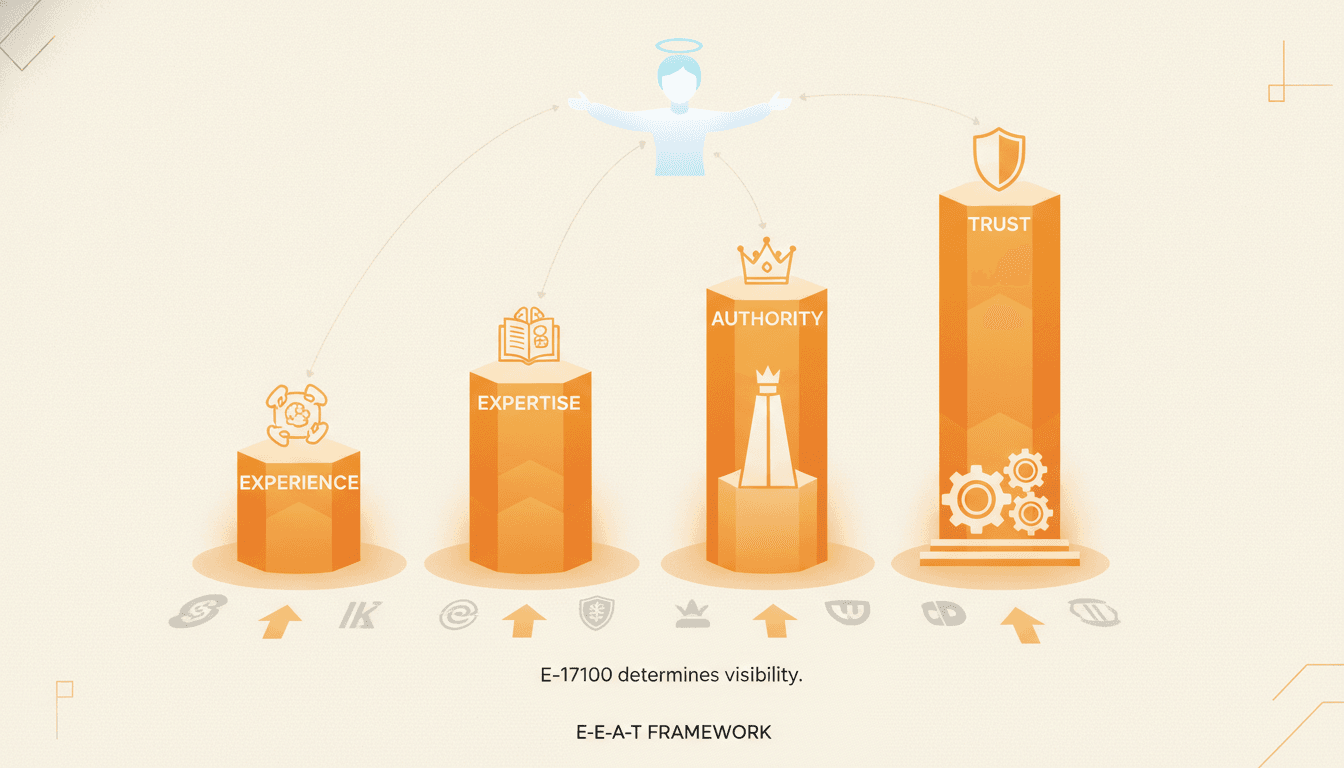
E-E-A-T stands for Experience, Expertise, Authoritativeness, and Trustworthiness—Google's framework for evaluating content quality. Originally developed as a three-pillar system (E-A-T), Google expanded it in December 2022 by adding "Experience" as a distinct signal. This addition signaled something important: demonstrated, first-hand knowledge matters as much as formal credentials.

Large language models face the exact same core problem Google originally solved: determining which sources and brands deserve recommendation. LLMs are trained on vast corpora of web content and inherit the quality signals embedded in that content. This means brands that perform well on E-E-A-T in traditional search are disproportionately represented in AI training data—and therefore in AI recommendations.

The scale is already significant. According to a 2024 BrightEdge study, 68% of AI-generated search responses now include some form of brand or product recommendation, rising to over 80% in high-consideration categories like software, health products, and consumer electronics. This isn't an experimental channel anymore—it's a critical commercial one.

The trust differential amplifies the urgency. AI recommendation trust (79%) is 2.3x higher than paid search (34%), creating a uniquely valuable brand touchpoint. E-E-A-T is the most relevant existing framework for understanding how AI engines decide which brands deserve that visibility. It's the Rosetta Stone marketers need to decode modern AI search.


---


## The Experience Pillar: Why First-Hand Knowledge Is a Competitive Advantage in AI Search

Experience is the newest and most powerful E-E-A-T pillar for AI search because LLMs are specifically trained to recognize the texture of authentic, first-person knowledge versus synthesized or derivative content. The addition of "Experience" to E-E-A-T signaled that demonstrated, lived expertise from people who have actually done the thing matters more than polished credentials alone. For AI search, this principle is amplified—LLMs are trained to recognize the texture of genuine first-hand knowledge versus synthesized or derivative content.

[IMG: Infographic showing types of Experience signals—founder stories, customer case studies, testimonials, documented outcomes—with arrows showing how they feed into AI recommendation engines]

Here's how brands can systematically build Experience signals:

- **Publish detailed customer case studies** with verifiable outcomes, company names, and measurable results—these function as high-confidence experience signals that ground AI recommendations in documented reality
- **Document founder and leadership expertise** publicly through blog posts, bylined articles, and interview content that captures genuine operational knowledge
- **Structure testimonials and customer success stories** in crawlable HTML formats—video-only content cannot be reliably parsed by AI engines
- **Publish behind-the-scenes content** that demonstrates real operational processes, not just marketing messaging

First-person narratives carry higher weight in LLM training data because they directly address the hallucination problem. AI engines are more confident recommending brands whose real-world experience is thoroughly documented. Brands that publish detailed case studies, customer success stories, and founder insights consistently see higher citation rates in AI responses.

The key insight: Experience signals must be crawlable, structured, and distributed across multiple platforms—not buried in formats that AI engines cannot access.


---


## The Expertise Pillar: Building Credibility Signals That AI Engines Can Parse

Expertise signals must be explicit, structured, and cross-platform to be reliably parsed by AI engines. According to the Hexagon AI Search Visibility Study, verified expertise signals—certifications, industry awards, and published credentials on both brand-owned and third-party websites—increase the probability of brand citation in AI-generated responses by 45%. That's a significant ROI for a relatively straightforward investment in credentialing and structured data.

Schema.org structured data for Person, Organization, Award, and Certification schemas directly improves AI engine parsing by reducing ambiguity in entity recognition. Author bylines with credentials (title, certifications, years of experience) on published content create readable expertise signals. Professional affiliations—board memberships, association leadership, speaking engagements—are crawlable expertise markers that compound over time.

Build expertise signals systematically with these steps:

- **Identify 3-5 key certifications and awards** relevant to the industry and map them to specific team members
- **Publish credentials consistently** across LinkedIn, official websites, industry databases, and G2 profiles—single-platform presence carries significantly less weight than cross-platform validation
- **Implement Schema.org markup** for all organizational and individual expertise claims to ensure AI engines can parse them reliably
- **Document speaking engagements, editorial contributions, and industry recognition** on brand-owned sites with structured data support

Expertise gaps are immediately visible to AI engines. Inconsistent or missing credentials create confidence penalties that reduce citation probability—the inverse of the 45% advantage that verified signals provide.


---


## The Authority Pillar: Building a Web of Third-Party Validation

Authority is the hardest E-E-A-T pillar to build—and it creates the strongest competitive moat. Brands that secure mentions in authoritative industry publications and trade media see a 60% increase in recommendation likelihood from AI engines, according to the Hexagon AI Search Visibility Study. That's not a marginal gain; it's a structural advantage that reflects how LLMs weight third-party authority signals similarly to PageRank logic.

The brands that will win in AI search are the ones that have spent years building genuine authority—not just optimizing for algorithms. AI systems are remarkably good at detecting the difference between a brand that is genuinely trusted in its industry and one that has simply gamed its way to visibility.

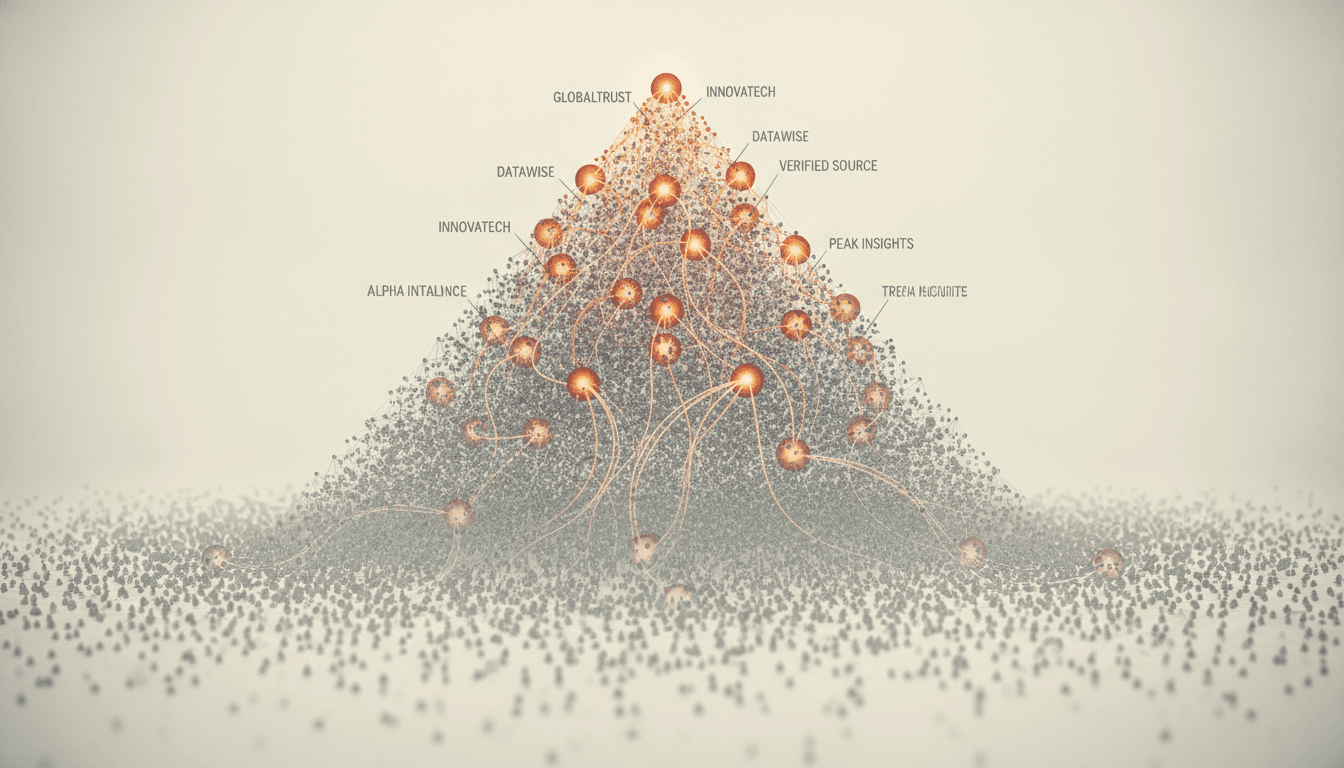
[IMG: Authority signal ecosystem diagram showing the relationship between editorial mentions, Wikipedia entries, analyst reports, industry awards, and AI recommendation engines]

Wikipedia presence deserves special attention. According to Search Engine Journal research, brands with established Wikipedia entries are referenced in AI assistant responses at 2.5x the rate of comparable brands without Wikipedia coverage. LLMs use Wikipedia as a high-confidence source for entity verification and factual grounding, making it a disproportionately valuable authority signal.

Build authority through these high-impact actions:

- **Pursue editorial mentions** in tier-1 publications (TechCrunch, Forbes, Wall Street Journal) and industry-specific outlets—these carry disproportionate weight in AI training data
- **Secure placement in "best of" roundups** and expert review content, which function as authority signals across multiple query categories
- **Pursue analyst recognition** from Gartner, Forrester, and IDC—analyst reports are treated as high-confidence third-party validation by AI engines
- **Establish a Wikipedia entry** for the brand, ensuring all factual claims are verifiable and sourced
- **Build backlinks from authoritative domains** (DA 70+), which contribute to authority signals in AI training data


---


## The Trust Pillar: Reviews, Consistency, and Information Alignment Across the Open Web

Trust is the most accessible E-E-A-T pillar for most brands—and the most immediately actionable. The Hexagon AI Search Visibility Study found that brands with 50 or more verified customer reviews are cited 3.2x more frequently in AI-generated product recommendations compared to brands with fewer than 10 reviews. Review volume serves as a proxy for real-world experience and social proof, making it one of the highest-leverage trust signals available.

Trustworthiness in AI search isn't just about having a privacy policy or SSL certificate. AI engines are effectively asking: does the broader internet ecosystem vouch for this brand? That means reviews on independent platforms, citations in editorial content, expert endorsements, and a track record of accurate, reliable information.

[IMG: Trust signal audit checklist visualization showing review platforms, information consistency checks, and security certifications]

Trustworthiness extends well beyond reviews. Information consistency across the open web is a critical trust signal that most brands overlook. According to Moz's Entity SEO and AI Search Guide, inconsistency in brand information—founding dates, product descriptions, leadership credentials—triggers lower confidence scores in AI entity resolution algorithms. A founding date that varies by two years across platforms, or a product description that contradicts itself on G2 versus the official website, directly reduces AI recommendation likelihood.

Build a comprehensive trust strategy with these actions:

- **Target 50+ verified reviews** across at least three independent platforms: Google Business, G2, Trustpilot, and relevant industry-specific review sites
- **Conduct quarterly information consistency audits** across 10+ platforms—brand descriptions, founding dates, and product claims must align exactly
- **Publish security certifications and compliance badges** (SOC 2, GDPR, ISO) in crawlable formats on brand-owned sites
- **Structure customer testimonials** with verifiable details—company names, measurable outcomes, and timelines—to maximize trust signal strength
- **Monitor for contradictory entity data** across Wikipedia, LinkedIn, G2, and official websites, as discrepancies create AI confidence penalties


---


## The Compounding "Halo Effect": Why Early E-E-A-T Investment Creates Exponential Returns

E-E-A-T functions as a strategic moat rather than a tactical fix. According to Semrush's Generative AI Visibility Study, brands cited in AI responses for one query category tend to receive a halo effect across related queries. Establishing authority in a core topic area creates a compounding citation advantage as AI engines build internal confidence in the brand's domain expertise. A brand with all four E-E-A-T pillars strong may see a 5-7x citation advantage versus brands lacking E-E-A-T investment.

When sources like ChatGPT and Perplexity are examined for consistency, a clear pattern emerges: these systems heavily favor brands that have built dense, consistent webs of authority signals across the open web. It's not about any single review or any single article—it's about the cumulative weight of evidence that a brand is the real deal in its category.

The first-mover advantage in AI search is significant because building E-E-A-T takes 6-18 months. Unlike paid search—where advantage resets when budget stops—E-E-A-T creates compounding, self-reinforcing visibility. LLM training data includes historical citations, meaning brands with long citation histories gain trust advantages in new model releases. Brands that invested in E-E-A-T before AI search became mainstream now hold a 2-3 year citation advantage that competitors cannot close quickly.


---


## Actionable E-E-A-T Strategy: A Roadmap to AI Search Visibility

Building E-E-A-T for AI search requires a systematic, cross-platform approach executed over 6-12 months. Here's the step-by-step roadmap:

[IMG: Six-step E-E-A-T roadmap timeline visualization with milestone markers at 30, 60, 90, and 180 days]

**Step 1: Audit Current E-E-A-T Signals**

Marketers should map existing signals across all four pillars on both brand-owned and third-party platforms. Identifying gaps in cross-platform expertise documentation, review volume, and information consistency reveals which pillars need the most urgent investment. This baseline assessment provides the foundation for all subsequent E-E-A-T work.

**Step 2: Document and Publish Experience Signals**

Brands should publish 2-4 detailed customer case studies per quarter and founder expertise content monthly. All content must be in crawlable HTML formats with structured data markup. Prioritizing case studies with measurable outcomes and verifiable customer names ensures maximum impact on AI recommendation likelihood.

**Step 3: Build Expertise Signals**

Marketers should identify 3-5 key certifications and awards relevant to the industry and map credentials to team members. Publishing credentials consistently across LinkedIn, official websites, G2, and industry databases creates cross-platform validation that AI engines require. Implementing Schema.org markup for all expertise claims ensures AI engines can parse them reliably.

**Step 4: Pursue Authority Through Earned Media**

Developing an earned media strategy targeting 10-15 tier-1 and tier-2 publications in the industry establishes credibility with AI engines. Establishing a Wikipedia entry with verifiable, sourced claims and pursuing analyst recognition from relevant research firms strengthens authority signals. This step typically requires 3-6 months to show measurable results.

**Step 5: Consolidate Trust**

Setting a review generation goal of 50+ verified reviews across three or more independent platforms within 12 months creates a powerful trust signal. Conducting information consistency audits quarterly across all platforms where the brand appears prevents confidence penalties. Publishing security certifications in crawlable formats on the website completes the trust foundation.

**Step 6: Monitor and Iterate**

Tracking brand citations in AI responses monthly provides visibility into strategy effectiveness. Monitoring entity information consistency across platforms and adjusting strategy quarterly based on citation frequency data ensures sustained visibility. This ongoing optimization keeps the brand competitive as AI search evolves.

Expect 6-12 months for initial E-E-A-T signals to compound into measurable AI citation increases. Brands that start now will hold a structural advantage as AI search continues its rapid growth.


---


## Why E-E-A-T Matters More Than Traditional SEO for AI Search

AI search is fundamentally different from Google search in one critical way: it recommends brands rather than ranking pages. Traditional SEO focuses on on-page optimization and backlink acquisition to rank individual URLs. AI search focuses on entity signals and information consistency to determine which brands deserve recommendation across an entire category.

E-E-A-T signals for AI search are distributed across the open web—brand-owned sites, third-party platforms, earned media, and review ecosystems—rather than concentrated on a single domain. This means AI search engines like Perplexity AI and ChatGPT with browsing capabilities actively retrieve and synthesize real-time web content. Trust signals must exist in live, crawlable, structured formats—not just in historical training data.

The 79% consumer trust in AI recommendations versus 34% for paid search creates a unique opportunity. E-E-A-T investment supports both AI search visibility and traditional brand authority, delivering dual ROI that no other marketing investment can match. Brands that invested in E-E-A-T before AI search became mainstream now hold a 2-3 year citation advantage. For brands that haven't started yet, the window to build that foundation before the competitive landscape hardens is narrowing—but it remains open.


---


## Common E-E-A-T Mistakes That Kill AI Search Visibility

Most brands make at least one of these five critical E-E-A-T mistakes—and each one directly reduces AI citation probability.

**Mistake 1: Publishing Expertise Signals Only on Brand-Owned Sites**

Credentials on LinkedIn, brand sites, G2, and industry databases carry significantly more weight than single-platform presence. LLMs need cross-platform validation to confidently recommend a brand. A credential that appears only on a website creates less confidence than the same credential appearing on the website, LinkedIn, and G2.

**Mistake 2: Inconsistent Entity Information Across Platforms**

A founding date that varies by two years across platforms, or a product description that contradicts itself on G2 versus the official website, creates AI confidence penalties. Auditing brand information across 10+ platforms quarterly catches and fixes inconsistencies before they damage recommendation likelihood.

**Mistake 3: Treating E-E-A-T as a One-Time Project**

New reviews, published expertise content, earned media mentions, and information updates compound over time. E-E-A-T requires ongoing optimization, not a single sprint. Brands that build E-E-A-T and then stop see their citation advantage erode as competitors catch up.

**Mistake 4: Ignoring Review Generation**

The 3.2x citation advantage for brands with 50+ verified reviews represents the highest-leverage E-E-A-T signal available to most brands—yet review generation is consistently deprioritized in favor of content and SEO work. This is a missed opportunity; review generation delivers faster, more measurable results than most other E-E-A-T tactics.

**Mistake 5: Failing to Structure Experience Signals for Crawlability**

Case studies, customer testimonials, and founder stories published only in video or audio formats cannot be reliably parsed by AI engines. All Experience content must be published in crawlable HTML with structured data support. Looking ahead, brands that audit competitor E-E-A-T signals will identify category gaps and opportunities before competitors do—creating first-mover advantages in AI recommendation visibility.


---


## Build the Foundation That AI Search Rewards

E-E-A-T is not a new concept—but its application to AI search represents the most significant shift in brand visibility strategy since the rise of Google. The brands that will dominate AI-driven discovery are not necessarily the ones with the largest budgets; they're the ones that have built genuine, cross-platform, well-documented authority that AI engines can confidently surface.

With 68% of AI responses already including brand recommendations—and consumer trust in those recommendations running at 79%—the commercial stakes have never been higher. The framework is clear. The signals are measurable. The roadmap is actionable. What remains is execution.


---


*Sources: [Edelman Trust Barometer Special Report: AI and Consumer Trust](https://www.edelman.com/trust/2024-trust-barometer) | [BrightEdge Generative AI and Search Report 2024](https://www.brightedge.com/research/generative-ai-search-report) | [Stanford HAI Foundation Models Research](https://hai.stanford.edu/research/foundation-models) | [Search Engine Journal – AI Entity Authority Research](https://www.searchenginejournal.com/ai-entity-authority) | [Semrush Generative AI Visibility Study 2024](https://www.semrush.com/blog/generative-ai-visibility/) | [Moz – Entity SEO and AI Search Guide](https://moz.com/learn/seo/entity-seo) | Hexagon AI Search Visibility Study*
H
Hexagon Team
Published June 26, 2026