brandsbrandvisibility
The AI Search Visibility Crisis: How Big Brands Are Winning (And Losing) in Generative Commerce
A brand with a #1 Google ranking for its primary keyword received zero AI-powered product recommendations last month. Meanwhile, a competitor with weaker traditional SEO visibility captured 34% of AI-generated mentions in the same category. This competitive intelligence briefing breaks down who's winning in generative commerce—and exactly why.
17 min read
# The AI Search Visibility Crisis: How Big Brands Are Winning (And Losing) in Generative Commerce

*A brand with a #1 Google ranking for its primary keyword received zero AI-powered product recommendations last month. Meanwhile, a competitor with weaker traditional SEO visibility captured 34% of AI-generated mentions in the same category. This competitive intelligence briefing breaks down who's winning in generative commerce—and exactly why.*

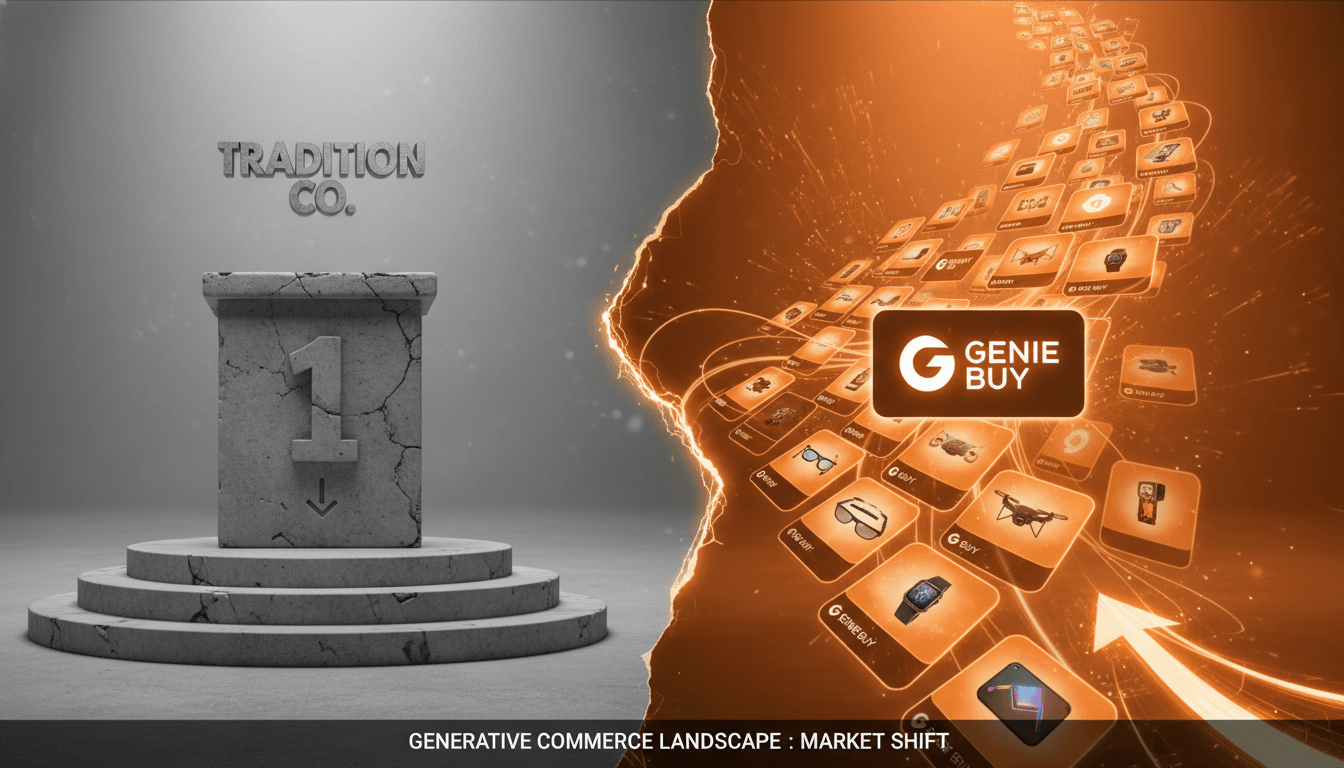
[IMG: Split-screen visual showing a traditional Google SERP on one side and an AI assistant product recommendation interface on the other, with a brand prominently featured in AI but absent from Google's top results]


---


## The Invisible Battlefield: Where Traditional SEO Dominance No Longer Matters

A #1 Google ranking means nothing in the fastest-growing commerce channel available.

As $1.2 trillion in e-commerce revenue shifts toward AI-influenced channels by 2027, the competitive landscape has fundamentally fractured. The brands winning aren't the ones dominating Google—they're winning on a completely different battlefield that most mid-market brands don't even know exists.

This isn't an anomaly. It's the new competitive reality, and the window to respond is closing rapidly.


---


## The SEO-to-AI Visibility Disconnect: Why Google Rankings No Longer Predict AI Success

The assumption that Google dominance equals digital dominance is now dangerously outdated. According to [BrightEdge's 'Search Everywhere Optimization Report'](https://www.brightedge.com), only **6% of brands that rank on page one of Google for their primary keywords also rank in the top 5 for equivalent AI assistant queries** in the same category. That's not a minor gap—it's a structural disconnect between two entirely separate competitive systems.

Traditional SEO and AI visibility operate by fundamentally different rules. Google's algorithm rewards technical optimization, backlink authority, and on-page relevance signals. AI systems, by contrast, weight third-party credibility, editorial citations, community trust, and content depth—factors that traditional SEO strategies never prioritized.

For example, Brand A holds the #1 Google ranking for "best noise-canceling headphones." Brand B ranks #8. Yet in AI assistant queries using equivalent language—"What are the best noise-canceling headphones?"—Brand B dominates recommendations while Brand A doesn't appear in the top five.

The reason lies in how AI systems are trained. These models learn from the broader web ecosystem—editorial reviews, Reddit discussions, expert roundups, consumer Q&A platforms—not from the technical signals that move Google rankings. A brand with superior organic authority in the human conversation layer of the internet will consistently outperform a brand that has invested exclusively in traditional SEO infrastructure.

The scale of this shift is already visible in consumer behavior. [AI-powered search and shopping assistants now influence an estimated 1 in 4 online purchase decisions in the United States](https://www.mckinsey.com), up from fewer than 1 in 20 just two years ago. The channel has scaled faster than most marketing teams have adapted.

**AI visibility requires a separate strategy, separate metrics, and separate investment.** Brands that recognize this distinction in 2026 will be positioned to compete. Those that don't will continue pouring budget into a channel that no longer predicts where customers are making decisions.


---


## Category Concentration in AI: The Three-Brand Monopoly Problem

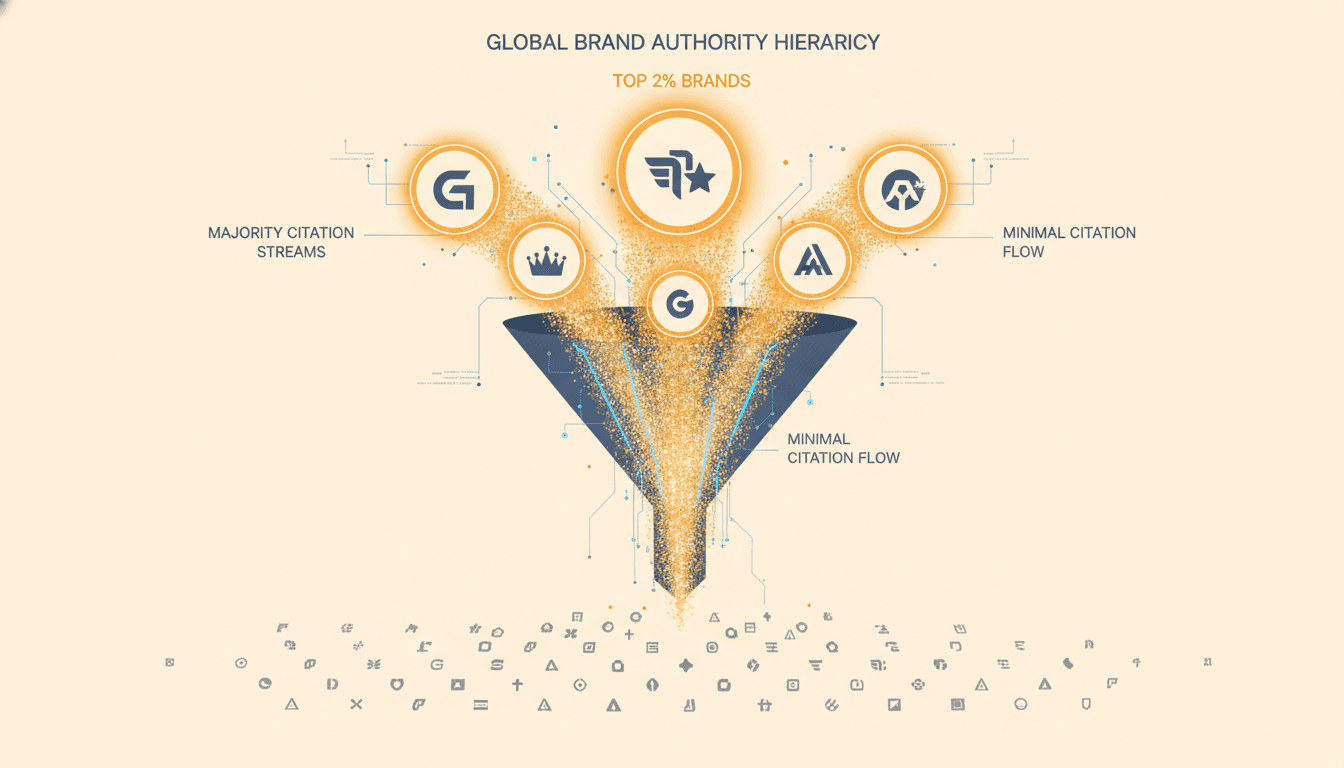
The AI recommendation landscape isn't a level playing field—it's a winner-take-most system with concentration levels that should alarm any brand outside the top tier. Analysis of AI shopping queries reveals a sobering reality: **the top 3 brands in any given category capture over 60% of all unprompted AI recommendations**, according to [Gartner Digital Markets' 'Generative AI in Consumer Search' Benchmark Study](https://www.gartner.com).

The concentration is most extreme in consumer electronics. Apple, Samsung, and Sony collectively appear in over **72% of AI-generated electronics recommendations**, leaving fewer than 28% of mentions distributed across every other brand in the category, per [Hexagon's Consumer Electronics Category Analysis](https://joinhexagon.com). The beauty category shows a similar pattern: just five brands—Sephora, Ulta, CeraVe, The Ordinary, and Neutrogena—account for approximately **47% of all AI assistant product mentions**, despite hundreds of competing brands at similar price points.

This concentration isn't random. AI systems demonstrate a measurable **authority bias**—brands cited frequently in editorial publications, Reddit communities, and independent review sites are recommended at rates up to 5x higher than brands with superior paid media presence but lower organic mention rates, according to [MIT Sloan Management Review](https://sloanreview.mit.edu). Legacy brands with decades of earned media have a structural head start that compounds with every passing month.

Here's how this dynamic reinforces itself: citation patterns in AI systems reinforce themselves over time. A brand that appears frequently in AI recommendations generates more consumer engagement, more reviews, and more editorial coverage—all of which feed back into the training signals that drive future AI recommendations. First-mover advantage isn't just real; it's calcifying in real time.

Shaquille Elias, VP of Commerce Strategy at Salesforce, frames the urgency clearly: *"Brands that show up in AI recommendations will enjoy the same compounding advantages that brands with top Google rankings enjoyed in the 2000s—except the consolidation is happening faster and the barriers to re-entry are higher."*

**The window of opportunity is measured in months, not years.** Brands acting in Q1–Q2 2026 can still establish top-3 category positions before the market stabilizes. Brands waiting until 2027 will enter a landscape where entrenched authority is prohibitively expensive to displace.


---


## The Authority Bias Advantage: Why Paid Media Can't Buy AI Visibility

The most disorienting truth in generative commerce is this: **brands cannot buy their way into an AI recommendation set.** Paid search budgets, display advertising, and sponsored placements have zero influence on how AI assistants recommend products. The economics of visibility have fundamentally changed.

AI systems are trained on the organic web—editorial coverage, community discussions, expert endorsements, and verified consumer reviews. These training datasets are designed to reflect genuine authority, not advertising spend. Andrew Lipsman, Independent Retail & Commerce Analyst at Media, Ads + Commerce, observes: *"The generative commerce era rewards brands that have built genuine authority ecosystems—earned media, community presence, expert endorsements. Brands cannot buy their way into an LLM's recommendation set the way they could buy their way to the top of a search results page."*

The authority signals that actually move AI recommendations break down into five categories:

**Editorial Coverage** — Product reviews, roundups, and mentions in publications with high domain authority carry significant weight. AI systems trust established publications more than brand-owned content.

**Community Discussions** — Organic mentions in Reddit threads, Quora answers, and niche forums signal genuine consumer interest and authentic brand advocacy.

**Third-Party Review Platforms** — Verified reviews on platforms like G2, Trustpilot, Amazon, and category-specific sites provide the social proof that AI systems use to validate recommendations.

**Expert and Influencer Citations** — Recommendations from credible voices in a product category amplify visibility, particularly when those voices are cited across multiple platforms.

**Q&A Platform Presence** — Answers to consumer questions on platforms that AI systems actively index establish authority and directly influence recommendation frequency.

Here's how this translates to measurable outcomes: one brand reallocated a portion of its paid media budget toward review platform optimization and editorial outreach. Within six months, the brand saw a **41% increase in AI-generated mentions** in its category. The same budget that was generating diminishing returns in paid search began compounding as earned authority.

**AI visibility must now be included as a KPI in marketing ROI calculations.** A dollar spent building organic authority has a measurable return in AI recommendation frequency—a return that paid media investment simply cannot replicate.


---


## The Mid-Market Vulnerability: Why $10M–$500M Revenue Brands Are Most at Risk

Mid-market brands—those generating between $10 million and $500 million in annual revenue—occupy the most precarious position in the AI visibility landscape. They have the resources to compete but lack the legacy authority that enterprise brands have accumulated over decades. They're simultaneously the most vulnerable segment and the most opportunity-rich.

The data reveals a critical preparation gap. According to [Digital Commerce 360's 'AI Readiness Survey of 800 E-Commerce Brands'](https://www.digitalcommerce360.com), **only 14% of mid-market e-commerce brands have a documented strategy for AI search visibility**, compared to 71% who have a formal SEO strategy. The awareness exists—[Gartner's CMO Survey](https://www.gartner.com) found that 87% of VP-level marketing executives rate AI search visibility as "critical" or "high priority" for 2026 planning—but only 23% have allocated dedicated budget to address it.

That gap between intention and action is where competitive advantage is being created and lost simultaneously. Lily Ray, Senior Director of SEO & Head of Organic Research at Amsive Digital, identifies the core misconception: *"When auditing brands' AI recommendation performance, the pattern is almost always the same: brands assume their category dominance in traditional search translates to AI visibility. It almost never does."*

The opportunity side of this equation is equally compelling. Mid-market brands that invested in AI visibility optimization saw an average **41% increase in organic brand mentions within 6 months**, according to [Hexagon's Mid-Market Brand Cohort Study](https://joinhexagon.com). Early movers in this segment are compounding their advantage rapidly—and creating competitive moats that will be expensive to overcome by 2027.

**Brands that optimize in 2026 will face entrenched competition by 2027.** The mid-market brands that act now aren't just gaining visibility—they're establishing the citation patterns that AI systems will reinforce for years.


---


## The Conversion Economics: Why AI Recommendations Are Worth 2.8x More Than Traditional Search

The business case for AI visibility investment is measurable and compelling. According to [Adobe Analytics' 'AI-Influenced Commerce Report'](https://www.adobe.com), **71% of consumers who receive an AI product recommendation complete a purchase within 48 hours**, compared to 38% who discover products through traditional search. That conversion rate differential alone reframes how marketing budgets should be allocated.

[IMG: Bar chart comparing 71% AI recommendation conversion rate vs. 38% traditional search conversion rate, with supporting revenue-per-dollar data showing the 2.8x differential]

The revenue-per-dollar advantage is equally significant. Hexagon's analysis of 500+ brands across five industries found that **brands in the top quartile of AI visibility scores generate 2.8x more revenue per marketing dollar** than bottom-quartile brands in the same category. AI visibility is now a stronger predictor of marketing efficiency than domain authority, social following, or paid media investment.

Why does this conversion gap exist? AI recommendations arrive at the precise moment of consumer intent—when someone is actively asking for a product recommendation, not passively scrolling past an ad. The recommendation carries the implicit trust of an AI system the consumer has already chosen to consult.

The market context amplifies the stakes. [IDC's 'Worldwide Generative AI in Commerce Forecast'](https://www.idc.com) projects **$1.2 trillion in global e-commerce revenue will be influenced by AI assistants by 2027**, up from an estimated $142 billion in 2024. For a brand competing in a $5 billion category, capturing just 1% of AI-influenced commerce represents $50 million in revenue influence at 2027 scale.

The scale is already visible today. [Perplexity AI's shopping feature](https://www.perplexity.ai) now processes over 100 million product-related queries per month, with click-through rates to product pages averaging 34%—compared to traditional search's 2–3% average for commercial queries. The channel isn't emerging; it's already operating at scale.


---


## Winning Brands Share Three Replicable Characteristics

The brands dominating AI recommendations didn't get there by accident—and their playbook is replicable. Hexagon's analysis of emerging brands that have successfully broken into AI recommendation pools reveals three consistent characteristics that any brand can build toward.

### 1. Category-Specific Content Depth

Winning brands have produced 10 or more authoritative, specific articles that address real consumer questions in their category. An eco-conscious beauty brand doesn't just publish generic sustainability content—it publishes detailed breakdowns of ingredient sourcing, third-party certification comparisons, and formulation transparency reports. This specificity is what AI systems recognize as genuine expertise.

Rand Fishkin, Co-Founder and CEO of SparkToro, frames it clearly: *"The brands winning in AI search right now aren't necessarily the biggest or the best-funded. They're the ones that have been consistently producing authoritative, specific, helpful content for years—the brands that the internet genuinely trusts."*

### 2. Broad Third-Party Review Platform Presence

Presence on at least 15 third-party review platforms is a consistent differentiator among brands with strong AI visibility. The specific platforms that matter vary by category:

- **Consumer Electronics:** Amazon, Best Buy reviews, CNET user ratings, Reddit communities
- **Beauty:** Sephora reviews, Ulta ratings, Influenster, Reddit's r/SkincareAddiction
- **B2B Software:** G2, Capterra, Trustpilot, TrustRadius

[Forrester Research](https://www.forrester.com) found that brands with structured product data and verified third-party reviews are cited by AI assistants at a rate **3.2x higher** than brands with equivalent product quality but unstructured web presence.

### 3. Consistent Brand Entity Data

Schema markup, verified brand information, and consistent structured data across the web are non-negotiable for AI visibility. AI systems use entity consistency as a trust signal—brands with conflicting information across platforms are effectively penalized in recommendation frequency.

Here's a quick audit checklist to assess current position:

- Are brand name, description, and product categories consistent across all major platforms?
- Is schema markup implemented on product and category pages?
- Is the brand present and actively reviewed on the top 10–15 platforms in its category?
- Have 10+ category-specific, expert-level content pieces been published in the last 12 months?

Brands starting from zero on all three dimensions can realistically reach top-quartile visibility within **6–12 months** with consistent execution. The timeline is achievable—but only for brands that start now.


---


## Measuring the Gap: How to Assess AI Visibility vs. Competitors

AI visibility is measurable today, with or without specialized tools. The first step is understanding exactly where a brand stands relative to competitors—a gap analysis that most brands have never conducted.

Here's how to run a basic AI visibility audit:

**Query multiple AI platforms** — Search ChatGPT, Perplexity, and Claude with category-level queries ("best [product type] for [use case]") and brand-specific queries ("Is [Brand Name] a good option for [use case]?").

**Track mention frequency** — Document how often the brand appears across 20–30 representative queries. Note whether mentions are prompted (brand-specific queries) or unprompted (category-level queries).

**Note ranking position** — When the brand appears, is it first, third, or buried in a comparison list? Position matters—first-mentioned recommendations drive disproportionate traffic.

**Assess citation source diversity** — Are AI systems citing the brand from editorial sources, reviews, and community discussions—or not at all? Source diversity indicates stronger authority signals.

[IMG: Sample competitive benchmarking table showing Brand A, B, and C across metrics including mention frequency, average ranking position, citation source diversity score, and review platform presence count]

Red flags that indicate significant AI visibility gaps include:

- **Zero mentions** in AI responses to category-level queries
- **Mentions only in comparison contexts** ("Brand X is similar to [Competitor]")
- **Single-source citations** (AI only references one platform when mentioning the brand)
- **No review platform presence** on the top 5 platforms in the category

Brands that appear in AI recommendations see an average **23% lift in direct website traffic within 90 days**, as consumers use AI recommendations as validation before conducting follow-up brand searches, according to [Salesforce Commerce Cloud](https://www.salesforce.com). Measuring this halo effect is part of a complete AI visibility tracking framework.

Manual auditing, while time-intensive, can surface the most critical gaps within a single business day.


---


## The 2027 Projection: $1.2 Trillion in AI-Influenced Commerce and the Brands That Will Own It

The scale of what's coming demands strategic urgency. [IDC projects](https://www.idc.com) that AI-influenced e-commerce will grow from $142 billion in 2024 to $1.2 trillion by 2027—a compound annual growth rate that outpaces every other digital marketing channel currently tracked. This isn't incremental growth; it's a category-level transformation of how commerce happens.

Consumer behavior is already shifting. [ChatGPT's browsing and shopping capabilities are now used by over 100 million weekly active users](https://openai.com) for product research, with "best [product category]" queries growing 312% year-over-year. The behavior change isn't coming—it's already here.

The revenue math is straightforward. For a brand competing in a $10 billion category, capturing just 0.1% of AI-influenced commerce at 2027 scale represents $1.2 billion in influenced revenue. Even at conservative conversion assumptions, the revenue impact of AI visibility investment dwarfs the cost of optimization.

The risk scenario for brands that wait is equally clear. Brands optimizing now will have **12+ months of compounding authority advantage** by the time the market reaches 2027 scale. Fortune 500 retail brands are already 4.7x more likely to appear in AI-generated product recommendations than direct-to-consumer brands with revenues under $50 million, per [Hexagon's Brand Visibility Index](https://joinhexagon.com). That gap will widen, not narrow, as citation patterns compound.

**Brands that wait until 2027 will enter a market where the top 3–5 brands in every category have established entrenched authority.** That authority will be prohibitively expensive to displace. The opportunity scenario for brands acting in Q1–Q2 2026 is a top-3 category position established before the market stabilizes.

That window is open now. It will not remain open.


---


## The Action Framework: Three Steps to AI Visibility Optimization (Starting This Month)

AI visibility optimization is not a "hire an agency and wait" initiative. Mid-market brands with existing internal resources can execute a meaningful program with a clear three-step framework—starting this month.

### Step 1: Audit Current AI Visibility Position (Week 1–2)

The first deliverable is a clear-eyed baseline. Conduct the manual AI visibility audit described in the previous section, covering at least 25 representative category queries across ChatGPT, Perplexity, and Claude. Document mention frequency, ranking position, and citation source diversity. Then benchmark results against the top three competitors using the same methodology.

The output is a gap analysis that identifies the highest-priority optimization targets. This work can be completed in 3–5 business days with a single team member.

### Step 2: Build Category-Specific Content and Review Platform Presence Simultaneously (Month 1–3)

The second step runs two workstreams in parallel. On the content side, develop a 3–6 month editorial calendar focused exclusively on category-specific, expert-level content that answers real consumer questions. On the review side, identify the top 15 review platforms in the category and implement a systematic strategy to build verified presence on each.

Quick wins here include:

- Claiming and optimizing existing profiles on review platforms where the brand is already mentioned
- Launching a post-purchase review request sequence targeting highest-satisfaction customer segments
- Identifying 3–5 editorial publications in the category for targeted outreach and contribution

This phase generates visible momentum—expect to see measurable changes in mention frequency by month 3.

### Step 3: Implement Entity Data Consistency and Track Progress Monthly (Ongoing)

The third step addresses the structural data layer. Conduct an entity data audit across all major platforms—Google Business Profile, social channels, e-commerce marketplaces, and review sites. Implement schema markup on product and category pages if not already in place. Establish a monthly tracking dashboard that measures mention frequency, citation source diversity, and review platform presence against the baseline established in Step 1.

Long-term plays in the 6–12 month range—sustained editorial outreach, community presence building, and structured content programs—establish durable competitive advantage. The 30–60 day quick wins from Steps 1 and 2 will generate measurable movement in AI visibility before the next planning cycle.


---


## The Brands That Act Now Will Own the Next Decade of Commerce

The AI search visibility crisis is real, it's measurable, and it's creating winners and losers in every product category right now. The brands winning aren't necessarily the biggest or the best-funded—they're the ones that recognized the SEO-to-AI disconnect early and built authority ecosystems that AI systems are trained to amplify.

The data is unambiguous: 71% conversion rates, 2.8x revenue per marketing dollar, $1.2 trillion in influenced commerce by 2027. The strategic window is equally unambiguous: brands acting in the first half of 2026 can establish top-3 category positions before the market stabilizes. Brands waiting will face entrenched competition and prohibitively high displacement costs.

The three-step framework is executable with existing resources. The audit takes days, not months. The content and review platform programs generate measurable results within 60–90 days. The entity data work is a one-time infrastructure investment with compounding returns.

**The window for first-mover advantage in AI visibility is closing.** Organizations ready to assess their position can book a 30-minute AI Visibility Assessment to benchmark their standing and build a 90-day optimization roadmap.


---


*Sources: Adobe Analytics AI-Influenced Commerce Report (2025) · IDC Worldwide Generative AI in Commerce Forecast (2025) · BrightEdge Search Everywhere Optimization Report (2025) · Gartner CMO Survey (2025) · Gartner Digital Markets Generative AI in Consumer Search Benchmark Study (2025) · Hexagon Brand Visibility Index (2025) · Digital Commerce 360 AI Readiness Survey (2025) · Forrester Research AI Discoverability Report Q1 2025 · MIT Sloan Management Review (2025) · McKinsey State of AI in Retail (2025) · Salesforce Commerce Cloud Halo Effect Report (2025)*
H
Hexagon Team
Published May 26, 2026