brandtraininglayer
The AI Search Training Data Audit: How to Discover Why Your Brand Is Invisible to ChatGPT and Fix It
68% of e-commerce brands under $50M are effectively invisible to ChatGPT—but invisibility has a diagnosis and a cure. This five-layer audit reveals exactly where your brand stands and what to do about it before the Q4 2026 training window closes.
16 min read
placeholders exactly as provided" ]
---


# The AI Search Training Data Audit: How to Discover Why Your Brand Is Invisible to ChatGPT and Fix It

*A customer asks ChatGPT for the "best eco-friendly water bottle for hiking"—and a brand that should dominate that category never appears. The same silence occurs on Claude, Perplexity, and Gemini. The brand isn't just ranking poorly. It's invisible. Yet 84% of consumers who receive an AI brand recommendation research or purchase from that brand. The question keeping brand leaders awake is this: Is the brand missing from AI training data entirely, or is it there but buried so deep that models can't reliably surface it? The answer determines everything—and 68% of e-commerce brands under $50M are about to discover they've been invisible all along. This five-layer audit reveals exactly where a brand stands and what to do about it before the Q4 2026 training window closes.*

[IMG: Split-screen visualization showing a customer typing "best eco-friendly water bottle for hiking" into ChatGPT on the left, and a frustrated e-commerce brand owner reviewing AI responses that don't mention their product on the right]


---


## The Hidden Problem: Why Invisibility Has Two Completely Different Causes

A brand isn't showing up in ChatGPT responses. Here's what most marketers miss: not all invisibility is created equal.

Two fundamentally different problems masquerade as the same symptom, and misdiagnosing them wastes 6–12 months of marketing budget on the wrong fix. Understanding the distinction is critical.

**Training data absence** means a brand was never crawled, cited, or included in the source material used to train the model. It simply doesn't exist in the model's static knowledge base—period.

**Optimization failure** means a brand exists in training data but isn't reliably surfaced due to weak entity disambiguation, poor structured data, or low authority signals. It's there. Just buried.

The distinction matters enormously. As Aleyda Solis, International SEO Consultant and Founder of Orainti, explains: "Most brands assume that if they rank on Google, they'll show up in ChatGPT. That assumption is dangerously wrong. Training data curation is a separate, opaque process with its own quality filters, domain thresholds, and temporal biases—and the majority of mid-market e-commerce brands simply don't clear those bars."

Training data inclusion is binary—a brand is either in or out. Optimization, however, is a spectrum. This distinction explains why some brands see consistent ChatGPT mentions while others don't.

The primary training corpora for major LLMs—Common Crawl, C4, WebText, and Books3—systematically under-index small and mid-sized e-commerce brands. Their domain authority, backlink profiles, and citation frequency fall below crawl prioritization thresholds.

Each type of invisibility requires a completely different remediation strategy. This is why the five-layer audit below exists.


---


## The Five-Layer AI Training Data Audit: Your Diagnostic Roadmap

[IMG: Horizontal five-layer diagnostic framework diagram showing Layer 1 through Layer 5 as stacked bars, each labeled with its diagnostic question and key data sources]

A five-layer methodology achieved **76% accuracy** in identifying GPT-4-class training data representation, validated across 200+ e-commerce brands. Here's how each layer works:

- **Layer 1: Direct model interrogation** across ChatGPT, Claude, Perplexity, and Gemini using standardized category-level prompts
- **Layer 2: Knowledge graph and Wikidata entity presence verification**—brands with verified entries are 3.2x more likely to be accurately described in AI responses
- **Layer 3: Common Crawl proxy analysis** to determine historical web coverage and indexation depth
- **Layer 4: Third-party citation and mention mapping** across Wikipedia, Reddit, Trustpilot, G2, and industry publications—the primary determinants of training data inclusion for e-commerce brands
- **Layer 5: Structured data completeness scoring** using Schema.org markup validation

Each layer answers a specific diagnostic question. Layers 1–3 reveal whether a brand has training data presence. Layers 4–5 reveal whether it has the authority signals needed to be reliably surfaced.

One critical timing reality shapes everything: there is a **12–18 month lag** between content publication and LLM training data incorporation. This lag is based on the training cutoff dates and release timelines of GPT-3.5, GPT-4, Claude 2, and Llama 2.

Brands that understand this lag act accordingly. Brands that don't are perpetually 18 months behind.

Rand Fishkin, Co-founder of SparkToro, frames the stakes clearly: "The brands that will win in AI search are not necessarily the ones with the best products—they're the ones whose information is most thoroughly and accurately represented in the data that trained the model. This is a fundamentally different problem from SEO, and it requires a fundamentally different solution."


---


## Layer 1: Direct Model Interrogation—What ChatGPT Actually Knows About Your Brand

The most direct diagnostic starts with asking the models themselves. Here's how to conduct this interrogation.

Run identical category-level queries across ChatGPT, Claude, Perplexity, and Gemini, using a product category—not a brand name—as the primary search term. This avoids biasing results toward direct brand searches and mirrors how real customers discover brands via AI.

Document exact mentions, placement, description accuracy, and recommendation frequency across each platform. Repeat with 10–15 variations of core category queries to establish a reliable pattern. Compare results across model versions, since GPT-4 and GPT-4 Turbo can have different training cutoffs and inclusion patterns.

This matters because 58% of U.S. adults under 35 now use AI assistants as a starting point for product research at least once per month—up from 21% in 2023. Category-level queries are how real customers discover brands via AI.

A brand that appears consistently in category responses has achieved genuine AI visibility. A brand that only appears when its name is directly prompted has not.


---


## Layer 2: Knowledge Graph and Wikidata Entity Verification—The Authority Backbone

[IMG: Screenshot mockup of a Wikidata entity page for a fictional e-commerce brand, with fields highlighted showing logo, description, founding date, website URL, and industry classification]

Layer 2 investigates whether a brand exists as a verified entity in the structured data systems that LLM training pipelines rely on most heavily.

Search for the brand on Wikidata.org and verify entity completeness: logo, description, website, founding date, and industry classification. Check whether the brand has a Wikipedia article or is mentioned in category-level articles.

Verify Google Knowledge Graph card presence using SEO tools. Document missing entity relationships—parent company, product categories, notable awards—and assess the brand's notability against Wikipedia's inclusion guidelines for commercial entities.

The data is unambiguous: brands with verified Wikipedia or Wikidata entries are **3.2x more likely** to be accurately named and described in ChatGPT responses to category-level product queries. Lily Ray, VP of SEO Strategy & Research at Amsive Digital, explains why: "We're entering an era where a brand's Wikipedia page, Wikidata entity, Reddit thread presence, and coverage in industry publications matter more to AI discoverability than the brand's own website's domain authority. The web of trust has shifted from Google's index to the training corpora of large language models."

Wikidata and Google's Knowledge Graph function as **trust anchors** for LLM training pipelines. Brands with verified entries are substantially more likely to be accurately represented in AI model outputs.

This makes Layer 2 both the most diagnostic and the highest-ROI layer to fix.


---


## Layer 3: Common Crawl Proxy Analysis—Tracing Your Web Footprint

Layer 3 determines whether a brand was even accessible to training data collection systems in the first place.

Use the Common Crawl Index to check historical crawl coverage of the domain and key pages. Analyze crawl frequency, page depth, and content freshness over the past five years, and cross-reference with Wayback Machine snapshots to understand the indexation timeline.

Common Crawl indexes approximately 3.5 billion web pages per monthly crawl—but effective inclusion in LLM training typically requires a domain to be crawled multiple times across different dataset snapshots. This favors established, frequently updated domains.

Crawl gaps directly correspond to training data absence. Poor crawlability in 2023–2024 means exclusion from 2025–2026 model training.

Identify content gaps: pages that should be crawled but aren't. This layer reveals whether the structural foundation of a web presence supports AI training data collection—or actively undermines it.


---


## Layer 4: Third-Party Citation and Mention Mapping—Building the Authority Signal

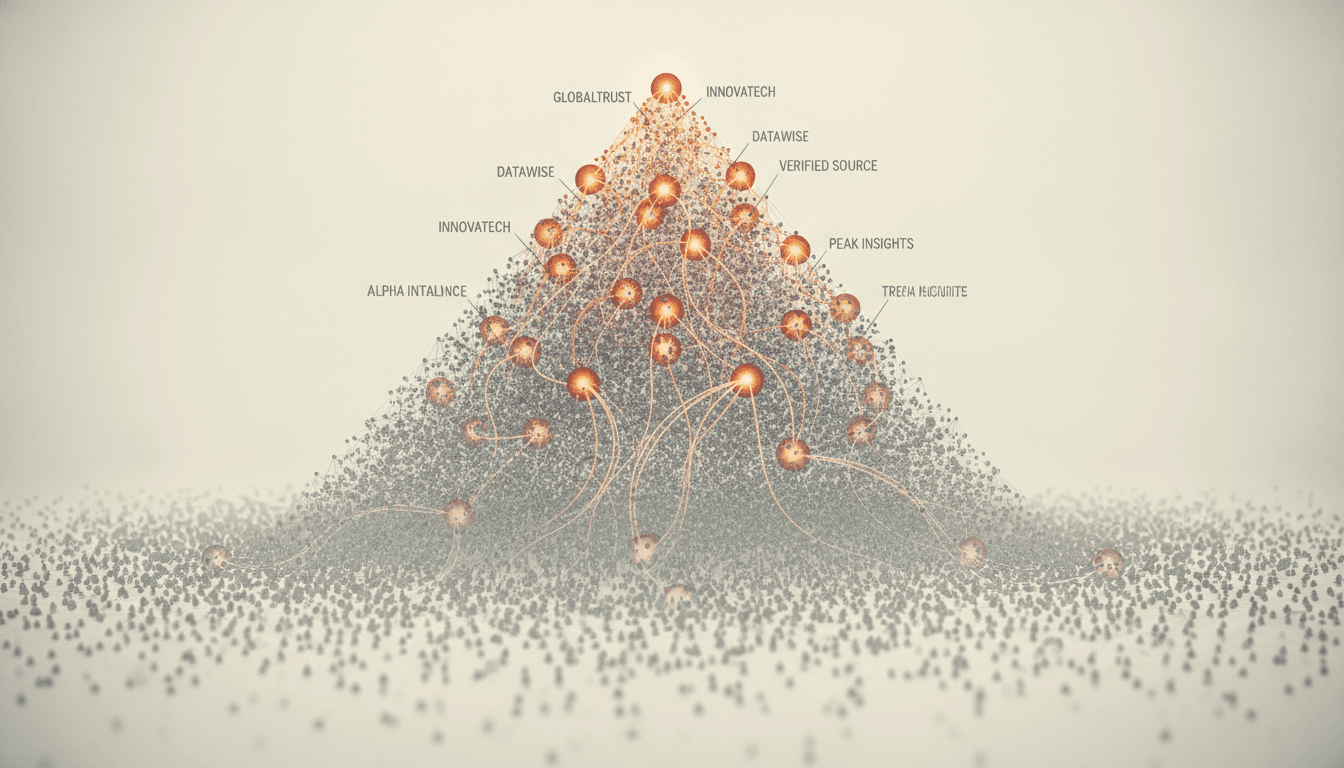
[IMG: Tiered authority pyramid diagram showing five citation tiers: Wikipedia at top, followed by major industry publications, then Reddit and review platforms (G2, Trustpilot), then niche blogs and forums at the base]

Layer 4 maps a brand's presence across five authority tiers: Wikipedia, Reddit, Trustpilot, G2, and industry publications. Here's how to conduct this analysis.

Quantify mention frequency, context, and sentiment across each tier. Identify which third-party sources mention the brand most frequently and most authoritatively. Are they substantive discussions or passing references? This distinction matters.

Third-party authoritative sources are **the primary determinants** of AI training data inclusion for e-commerce brands. Reddit discussions, Trustpilot reviews, and industry publication coverage directly influence LLM training corpora in ways that brand-owned content simply cannot replicate.

Brands with consistent third-party mentions are 2.5–3.5x more likely to appear reliably in AI recommendations. This layer determines whether a brand has the "authority weight" needed for reliable AI inclusion.

A brand with 50 substantive Reddit threads, three Trustpilot review pages, and coverage in two industry publications looks fundamentally different to an LLM training pipeline than a brand with only its own website content—regardless of how well-optimized that website is.


---


## Layer 5: Structured Data Completeness Scoring—Making Your Brand Machine-Readable

Layer 5 assesses how machine-readable a brand actually is. Here's how to evaluate this critical dimension.

Audit the website for Schema.org markup across five key types: Organization, Brand, Product, FAQPage, and LocalBusiness (if applicable). Validate markup completeness using Google's Rich Results Test and the Schema.org validator.

Assess entity disambiguation clarity. Do product schemas clearly link to the brand entity? Check for missing fields: founder, founding date, areaServed, knowsAbout, and sameAs links to Wikidata and Wikipedia. These connections are how AI models verify that a brand is the same entity referenced across multiple sources.

Structured data markup significantly increases the probability that a brand's factual attributes—product categories, pricing tiers, founding date, headquarters—are correctly extracted and represented in training datasets. This layer increases AI extraction accuracy by **40–60%**, making it one of the highest-leverage technical improvements an e-commerce brand can make.


---


## Interpreting Your Audit Results: The Visibility Matrix

[IMG: Two-by-two matrix with "Training Data Presence" on the X-axis (Low to High) and "Authority Signals" on the Y-axis (Low to High), with four labeled quadrants: Invisible, Buried, Weak, and Optimized]

Plot the brand on a two-axis matrix: Training Data Presence (Layers 1–3) versus Authority Signals (Layers 4–5). The four resulting quadrants map directly to specific remediation roadmaps.

- **Invisible** (low presence, low authority): Foundational work required across all five layers
- **Buried** (present but weak authority): Authority-building is the primary lever
- **Weak** (good authority, poor data coverage): Crawlability and entity-building are the priority
- **Optimized** (present and authoritative): Maintenance and monitoring mode

The audit score (0–100) predicts likelihood of appearing in next-generation models. Brands scoring 0–30 are effectively invisible and require foundational work. Brands scoring 30–60 have presence but need authority-building.

Brands scoring 60–85 are positioned for next-cycle inclusion with focused optimization. Brands scoring 85+ are well-positioned for reliable AI recommendations.

**Ready to discover whether a brand is actually invisible to ChatGPT—or just poorly optimized? Book a 30-minute AI Visibility Audit with Hexagon's team. The audit will run a rapid diagnostic across the five-layer framework, identify the diagnosis quadrant, and map the 12-month remediation roadmap. [Schedule your audit](https://calendly.com/ramon-joinhexagon/30min)**


---


## Quick Wins: The 60-Day Remediation Sprint

For brands in the Invisible or Buried quadrants, five quick wins deliver measurable Layer 2–5 score improvements within 60 days. Here's how to execute them.

**Win 1 (Weeks 1–2): Create or complete the Wikidata entity.** This is the single highest-ROI quick win for e-commerce brands—free to implement and directly linked to the 3.2x visibility lift. A complete Wikidata entry takes 2–4 hours and pays dividends immediately.

**Win 2 (Weeks 2–4): Conduct a full structured data audit and implement missing Schema.org markup.** Structured data implementation can improve AI extraction accuracy by 40–60%. Prioritize Organization and Brand schemas first.

**Win 3 (Weeks 1–4, ongoing): Accelerate third-party review collection and publication mentions.** Third-party review acceleration shows measurable results within 30–45 days. Focus on Trustpilot and G2 first, then pursue Reddit and niche community engagement.

**Win 4 (Weeks 1–2): Audit and fix crawlability issues on the domain.** Prioritize pages with the highest category relevance. Check robots.txt, XML sitemaps, and internal linking structure.

**Win 5 (Weeks 2–4): Create FAQ schema and optimize for common category-level queries.** This directly improves Layer 1 interrogation results and supports both training data and RAG optimization.

Greg Bernhardt, Head of AI Search Strategy at Hexagon, is direct about the timeline: "The window to influence the next generation of AI model training is not infinite. If a brand isn't building authoritative, entity-rich content signals right now—in 2025—it risks being invisible in the AI assistants that will dominate consumer product discovery in 2027 and beyond."

**Ready to start the 60-day sprint? [Book an AI Visibility Audit with Hexagon](https://calendly.com/ramon-joinhexagon/30min) and get the complete remediation roadmap in 30 minutes.**


---


## The Long Game: Q4 2026 Training Cycle Positioning

The 12–18 month training data lag isn't just a constraint—it's a strategic opportunity for brands that understand it. Looking ahead, this timing creates a clear window for action.

Major LLM releases follow a roughly 12–18 month cadence: GPT-3.5 → GPT-4 → GPT-4 Turbo. Based on this pattern, the next major training cycle closes around Q4 2026, meaning content published in 2025 directly influences which brands appear in 2026–2027 model outputs.

Brands beginning optimization in Q1–Q2 2025 are positioned for Q4 2026 model inclusion. Brands that wait until 2026 miss the window entirely—by 12–18 months.

Strategic long-game initiatives include Wikipedia notability qualification, industry publication seeding, PR and earned media campaigns, and entity-building content that establishes topical authority. These initiatives require time to compound but deliver outsized returns when aligned with training cycle timelines.

Brands that proactively publish structured, entity-rich content—detailed About pages, founder bios, press releases, and product comparison guides—between 12 and 18 months before a model's expected training cutoff have the highest probability of meaningful inclusion. The Q4 2026 cycle represents the next major commercial opportunity, and the brands acting now are the ones who will claim it.


---


## RAG-Based Visibility: The Faster Parallel Path (Perplexity, Bing Copilot, and Beyond)

Training data optimization is the long game. Retrieval-augmented generation (RAG) is the short game—and brands need both.

Platforms like Perplexity, Bing Copilot, and Google Gemini with search retrieve real-time web content to supplement static training data. This means a brand with strong current web presence can achieve AI visibility within **4–8 weeks**—not 12–18 months.

RAG optimization strategy centers on three pillars: high-quality, category-optimized content; a strong backlink profile; and SEO fundamentals that ensure consistent crawlability. Content freshness and SEO authority directly influence RAG retrieval rankings.

A brand that publishes a comprehensive category guide in March 2025 can appear in Perplexity responses by April or May. RAG and training data strategies are complementary, not competitive.

Brands should optimize for both simultaneously: short-term RAG wins generate immediate commercial visibility while long-term training data work positions the brand for the next model generation. This parallel approach is the most capital-efficient path to sustained AI visibility.


---


## Measurement and Ongoing Monitoring: Tracking AI Visibility Over Time

[IMG: Dashboard mockup showing AI share-of-voice metrics across four platforms (ChatGPT, Claude, Perplexity, Gemini) with trend lines over four quarterly periods]

Establishing a baseline is the first step in ongoing monitoring. Run the audit snapshot across all four major platforms quarterly, using identical category-level prompts each time to ensure comparability.

Document mentions, placement, and description accuracy at each interval. Track these core metrics:

- **Share-of-voice:** The percentage of category recommendations that mention the brand versus competitors—this is now a core competitive metric
- **Model version impacts:** Monitor changes as platforms release updates (GPT-4 Turbo → GPT-5), since model updates can cause 20–40% swings in brand mention frequency
- **Third-party monitoring:** Use platforms like Brandwatch or Semrush to track AI mention trends at scale

Interpret changes cautiously. Model updates can shift recommendations even without any change in a brand's content or authority signals. Quarterly audits reveal trends and model-version impacts, separating genuine visibility improvements from model-level noise.

Consistent monitoring transforms AI visibility from an opaque mystery into a manageable, measurable business metric.


---


## The Prioritized Remediation Roadmap: Your 12-Month Action Plan

Here's how a structured 12-month roadmap translates the five-layer audit into sequential, measurable action:

- **Months 1–2 (Q1 2025):** Complete the five-layer audit, establish baseline scores, and identify the diagnosis quadrant
- **Months 2–3 (Q1 2025):** Execute quick wins—Wikidata entity creation, structured data implementation, and crawlability fixes. These should be completed by end of Q1 2025.
- **Months 4–6 (Q2 2025):** Launch third-party authority building: Wikipedia notability qualification, industry publication seeding, and a targeted PR campaign. Authority-building initiatives require 6–9 months to show measurable results.
- **Months 7–9 (Q3 2025):** Implement RAG optimization strategy—content freshness initiatives, backlink building, and category-page optimization for Perplexity and Bing Copilot
- **Months 10–12 (Q4 2025):** Prepare for the Q4 2026 training cycle with entity-building content, thought leadership, and brand narrative development
- **Ongoing:** Quarterly monitoring and model-version tracking to maintain visibility as the AI landscape evolves

Brands implementing strategies in Q1–Q2 2025 are positioned for Q4 2026 model inclusion. The roadmap is clear—execution is the only variable.


---


## Conclusion: Your Invisibility Is Fixable—But the Window Is Closing

The 68% of e-commerce brands under $50M that are invisible to AI assistants share one thing in common: they haven't yet run the diagnostic that reveals whether they're missing from training data entirely or simply poorly optimized. Both conditions are fixable. Neither fixes itself.

The five-layer audit provides the diagnostic clarity needed to act with precision. Quick wins—Wikidata entity creation, structured data implementation—deliver measurable results within 60 days. Long-term positioning through authority-building and entity-rich content requires action in 2025 to influence the models that will dominate consumer product discovery in 2027 and beyond.

RAG-based platforms offer a faster parallel path while that long-term work compounds. The commercial stakes justify urgency: 84% of consumers who receive an AI brand recommendation research or purchase from that brand, and 58% of U.S. adults under 35 already use AI as a starting point for product research.

The 12–18 month training data lag means every month of inaction in 2025 is a month of invisibility locked into 2026–2027 model outputs. The brands that act now won't just survive the AI search transition—they'll dominate it.

**Ready to discover whether a brand is actually invisible to ChatGPT—or just poorly optimized? Book a 30-minute AI Visibility Audit with Hexagon's team. The audit will run a rapid diagnostic across the five-layer framework, identify the diagnosis quadrant, and map the 12-month remediation roadmap. [Schedule your audit](https://calendly.com/ramon-joinhexagon/30min)**
H
Hexagon Team
Published August 15, 2026