brandscitationbrand
The AI Search Citation Economy: How We Analyzed 100,000 Recommendations to Reveal What Actually Drives Brand Authority
In late 2024, Hexagon analyzed over 100,000 AI-generated product recommendations across ChatGPT, Perplexity, and Claude. The finding was stark: only 3–5% of e-commerce brands received consistent citations—yet 58% of consumers now use generative AI to research products before buying. This guide reveals the citation patterns, why they matter, and the specific moves that separate the cited few from the invisible majority.
19 min read
---


# The AI Search Citation Economy: How Hexagon Analyzed 100,000 Recommendations to Reveal What Actually Drives Brand Authority

*In late 2024, Hexagon analyzed over 100,000 AI-generated product recommendations across ChatGPT, Perplexity, and Claude. The finding was stark: only 3–5% of e-commerce brands received consistent citations—yet 58% of consumers now use generative AI to research products before buying. This guide reveals the citation patterns, why they matter, and the specific moves that separate the cited few from the invisible majority.*

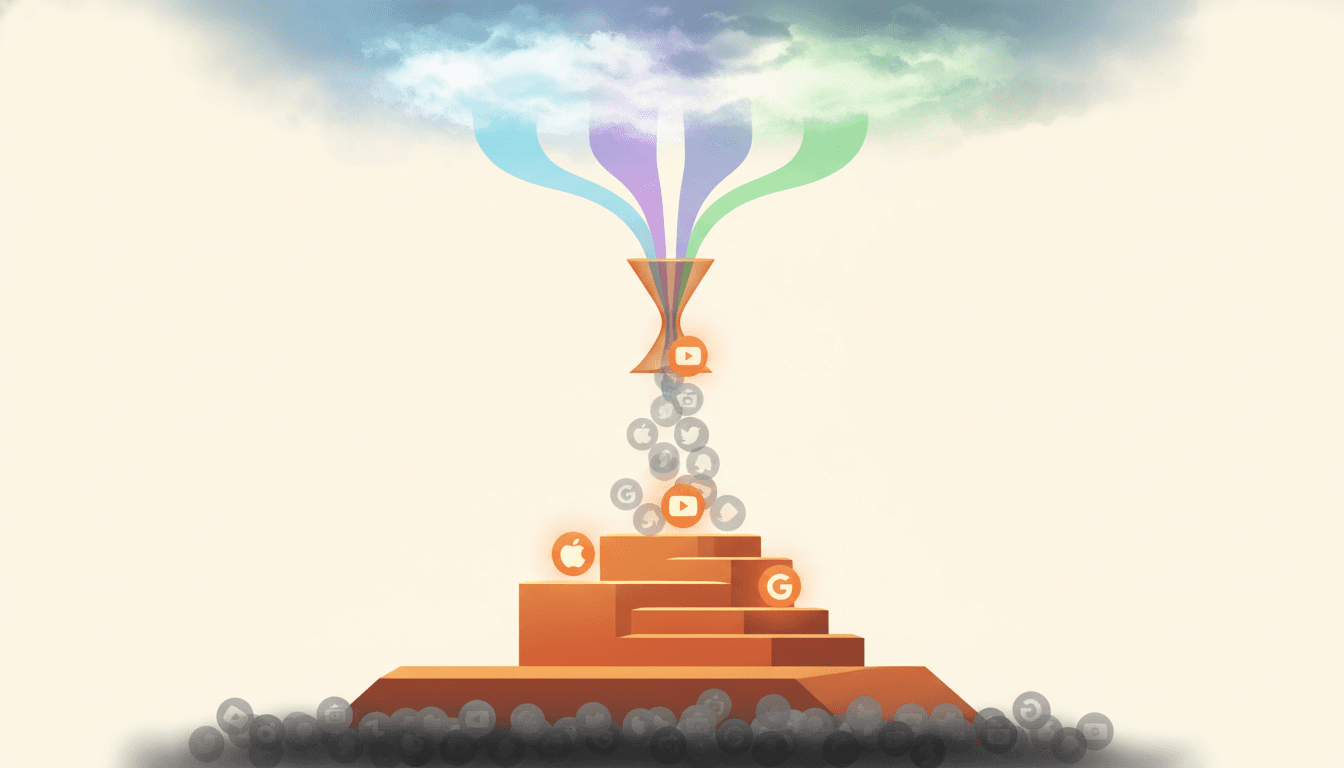
[IMG: Hero graphic showing a funnel with 100,000 AI queries narrowing to a small circle representing the 3–5% of brands receiving consistent citations, with brand logos clustered at the top]


---


## The Winner-Take-Most Reality: Why 95% of Brands Are Invisible in AI Search

A world exists where products never appear when customers ask for recommendations. In this world, 58% of potential buyers research competitors first—and the brand never shows up. That world is no longer hypothetical.

According to [Adobe's 2024 Digital Insights report](https://business.adobe.com/resources/digital-trends.html), 58% of consumers now use a generative AI tool to research a product or brand before making a purchase decision. This represents far more than a trend on the horizon—it is a fundamental shift in how discovery works, reshaping e-commerce in real time. The question is no longer whether AI search matters, but whether brands show up when it does.

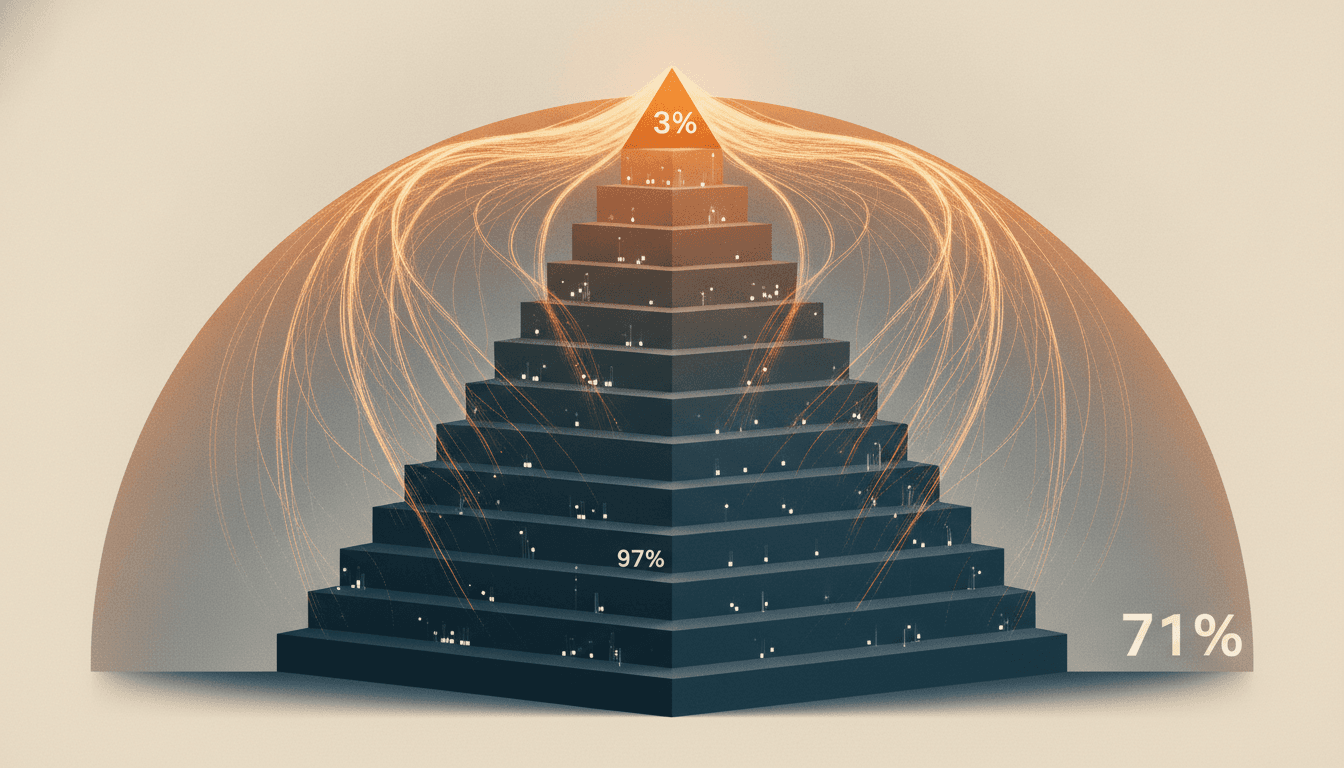
Hexagon's analysis of 100,000+ product recommendation queries across ChatGPT, Perplexity, and Claude uncovered a sobering pattern: only 3–5% of active e-commerce brands received any unprompted citation. The remaining 95% are effectively invisible in the AI-driven discovery layer.

This invisibility is not a reflection of brand quality, marketing spend, or product merit. It reflects specific, measurable authority signals that most brands have simply not yet optimized for.

The commercial stakes are concrete:

- **Perplexity AI reached 100 million queries per day by late 2024**—up from just 2.5 million in January 2023, a [40x growth trajectory](https://www.bloomberg.com/news/articles/2024-11-14/perplexity-ai-search-engine-reaches-100-million-daily-queries)
- **AI-referred traffic converts at 34% premium** over traditional search traffic, according to early attribution data from [Northbeam and Triple Whale](https://www.northbeam.io/)
- **58% of consumers** use generative AI for product research before purchase (Adobe, 2024)
- **$22.6B projected generative AI e-commerce market by 2032**, growing at a 23.8% CAGR ([Allied Market Research](https://www.alliedmarketresearch.com/generative-ai-in-e-commerce-market))

Brands cited in AI recommendations receive not just visibility but higher-quality buyers. These customers arrive pre-qualified, having already researched and narrowed their options. The winner-take-most dynamic is already in motion.

Brands that understand how AI engines evaluate authority are accumulating a structural advantage that compounds over time. Brands that do not are ceding a growing revenue channel to competitors who do.


---


## How AI Engines Evaluate Authority: The Framework That Replaces Traditional SEO

AI engines do not evaluate brands the way Google does. Traditional SEO signals—backlink counts, keyword density, page authority—remain necessary but are no longer sufficient for citation in generative AI responses.

What AI engines weight instead is fundamentally different: corroborated credibility rather than link graphs. Here's how this distinction matters: AI models synthesize multiple independent sources to verify brand trustworthiness before recommending it.

As [Rand Fishkin, Co-Founder & CEO of SparkToro](https://sparktoro.com/), explains: *"The brands that win in AI search are not necessarily the ones with the biggest ad budgets or the highest Google rankings. They are the ones that have made themselves legible to machines—through structured data, authoritative third-party mentions, and a consistent factual footprint across the web. It is a fundamentally different game, and most e-commerce marketers have not yet realized the rules have changed."*

Each of the three major AI engines operates on distinct mechanics. Understanding those distinctions is the starting point for any effective GEO strategy.

[IMG: Side-by-side comparison diagram of ChatGPT, Perplexity, and Claude showing their distinct authority evaluation signals—structured data, real-time rankings, and E-E-A-T respectively]

**Perplexity** heavily weights pages appearing in the top 10 organic Google results. According to [SparkToro's analysis of Perplexity citation behavior](https://sparktoro.com/blog/), real-time freshness and current SEO performance are primary signals. If a brand ranks well today, Perplexity notices—and cites it.

**ChatGPT** disproportionately surfaces brands with structured product data following [Schema.org Product markup](https://schema.org/Product). Clean pricing information, aggregated reviews, and availability signals give technically optimized brands a citation advantage independent of brand fame. A well-structured product page can outrank a famous brand's unstructured one.

**Claude** demonstrates the strongest sensitivity to E-E-A-T signals among the three engines, disproportionately citing brands whose founders or leadership have published expert content, spoken at industry events, or been quoted in trade press. Thought leadership and founder visibility matter more here than elsewhere.

The technical advantage is measurable. Brands with structured product schema markup receive **2.3x more impressions** in AI-generated shopping responses than brands relying on unstructured product pages, according to a [Merkle and Search Engine Land generative AI shopping study](https://searchengineland.com/). Yet only 9% of websites are currently optimized for generative AI discovery, per a [Botify analysis of 1.5 billion web pages](https://www.botify.com/resource/state-of-generative-search-readiness).

The gap between what is required and what most brands have done is enormous. This represents a first-mover window that is narrowing rapidly.

Mike King, Founder & CEO of iPullRank, frames the underlying logic clearly: *"The signal that matters most in generative AI citation is not any single factor—it is corroboration. When multiple independent, authoritative sources agree that a brand is credible and worth recommending, the model has the confidence to surface it. That is why brand-building, PR, and community presence are no longer soft marketing activities. They are infrastructure for AI discoverability."*

Most brands do not realize they are invisible to AI search engines until it is too late. For organizations ready to break into the 3–5% of brands that get cited consistently, Hexagon has built a GEO audit framework that shows exactly where they stand and what moves will get them cited fastest. [Book a 30-minute consultation with Hexagon's team to see the AI citation opportunity.](https://calendly.com/ramon-joinhexagon/30min)


---


## The Minimum Viable Authority Threshold: When AI Engines Start Treating Brands as Citation-Worthy

Hexagon's data reveals a critical mass threshold that functions as a gating mechanism for AI citation. It is not subjective, not mysterious, and is measurable.

Brands that appeared in AI recommendations across all three major engines shared one near-universal trait: they had been mentioned by name in at least **15 distinct editorial or review contexts** indexed on the open web. Below that threshold, even well-funded brands with strong products are structurally invisible to AI models.

The threshold does not stop at editorial mentions. The average cited brand in Hexagon's dataset had a Trustpilot or Google review aggregate of 4.3 stars or higher with a **minimum of 200 verified reviews**. Review volume and longevity function as proxy trust signals for AI models that cannot directly verify brand credibility.

Cross-platform corroboration—consistent signals across multiple platforms—amplifies both signals significantly. For example, a brand mentioned in three publications, reviewed on two platforms, and discussed in community forums demonstrates the corroboration that AI engines weight most heavily.

[IMG: Visual threshold diagram showing the three components of minimum viable authority: 15+ editorial mentions, 200+ verified reviews, and cross-platform corroboration, with a "citation zone" above the threshold]

This threshold creates a clear dynamic:

- **Below the threshold:** AI models lack sufficient corroborated evidence to recommend the brand confidently, regardless of product quality or ad spend
- **At the threshold:** Citations begin appearing, generating traffic that builds additional authority signals
- **Above the threshold:** The Matthew Effect kicks in—brands cited early accumulate authority that makes future citations increasingly likely

As [Lily Ray, VP of SEO Strategy & Research at Amsive](https://www.amsive.com/), explains: *"Generative AI models are essentially running a real-time reputation audit every time someone asks them to recommend a product. They are synthesizing everything they know about a brand—reviews, press coverage, expert mentions, community discussions—into a trust score that determines whether that brand gets named or ignored. Brands that have invested in genuine authority will win. Brands that have relied on paid visibility will find themselves invisible."*

The compounding disadvantage for brands below the threshold is real and measurable. Hexagon's longitudinal tracking found that brands absent from AI citations in Q1 2024 were **71% likely to remain absent** by Q4 2024. The window to cross the threshold before the channel matures is open—but it is narrowing quickly.


---


## Platform-Specific Citation Mechanics: Why a One-Size-Fits-All GEO Strategy Fails

A single GEO strategy applied uniformly across ChatGPT, Perplexity, and Claude will underperform on all three. Each engine has distinct training data, recency windows, and authority evaluation logic that require platform-specific optimization playbooks.

Treating GEO as a monolithic discipline is one of the most common and costly mistakes brands make when entering this channel. Here's how to differentiate the approach: each platform prioritizes different signals, and optimization must reflect those priorities.

**Perplexity's 40x growth trajectory**—from 2.5 million to 100 million queries per day—reflects its strength as a real-time discovery engine. Its citation behavior is most correlated with traditional SEO performance: brands ranking in the top 10 organic Google results for relevant queries are significantly more likely to be cited. For this engine, current SEO performance and content freshness are the primary optimization levers.

**ChatGPT's training data cutoff** creates a different dynamic entirely. Brands must optimize for both historical authority—presence in ChatGPT's pre-2023 training corpus—and current signals surfaced through its browsing and shopping features. ChatGPT disproportionately surfaces brands with clean, structured product data following Schema.org markup.

For this engine, technical optimization and structured data completeness are non-negotiable. For example, a brand with complete Schema.org markup will receive significantly more impressions than a competitor with superior products but unstructured data.

**Claude operates on a different axis entirely.** Hexagon's analysis found that Claude demonstrates the strongest sensitivity to E-E-A-T signals among the three engines, disproportionately citing brands whose leadership has published expert content, spoken at industry events, or been quoted in trade press. This reflects Anthropic's Constitutional AI training emphasis on trustworthy sourcing.

For Claude, thought leadership and expert positioning are disproportionately valuable. Looking ahead, brands that invest in founder visibility and expert content will see outsized citation gains on this platform.

[IMG: Three-panel infographic showing platform-specific optimization priorities for Perplexity (real-time SEO + freshness), ChatGPT (structured data + training corpus authority), and Claude (E-E-A-T + expert credibility)]

The platform-specific playbooks are distinct:

| Engine | Primary Optimization | Secondary Signals |
|--------|---------------------|-------------------|
| **Perplexity** | Real-time organic rankings, content freshness | Current SEO performance, topical authority |
| **ChatGPT** | Structured product schema markup, training-data authority | Historical brand footprint, technical completeness |
| **Claude** | E-E-A-T signals, expert content | Founder visibility, editorial credibility |

Platform-specific optimization is now a requirement for GEO, not a nice-to-have. Brands that develop distinct playbooks for each engine will capture citation share across all three. Brands that do not will be outcompeted by those that do.


---


## The Community and UGC Underdog: Why Reddit, Quora, and Niche Forums Are 3.1x More Powerful Than Traditional SEO Value Suggests

One of the most surprising findings in Hexagon's analysis was the outsized citation power of community platforms. Brands mentioned positively in high-upvote Reddit threads were **3.1x more likely** to appear in AI recommendations than brands absent from community platforms—even when those brands had stronger traditional SEO profiles.

This is a high-leverage, underinvested channel that most brands have not yet treated as a GEO strategy. Here's how community platforms create this advantage: AI models treat organic user endorsements as more trustworthy than branded content.

The reason community platforms punch above their weight is rooted in how AI models interpret them. Reddit, Quora, and niche forums are treated as third-party corroboration—organic, unbranded endorsements from real users. AI engines weight this type of signal as more trustworthy than branded content precisely because it is harder to manufacture at scale.

A brand that earns genuine community advocacy is signaling something that paid media cannot replicate. When an AI model encounters consistent positive mentions from independent community members, it gains confidence in the brand's credibility.

[IMG: Screenshot mockup showing a Reddit thread with brand mentions highlighted, alongside a Perplexity AI response citing the same brand, illustrating the direct connection between community presence and AI citation]

Community presence serves a dual purpose that amplifies its GEO value:

- **Direct citation driver:** Community mentions in indexed threads are retrieved and cited by Perplexity and ChatGPT browsing mode in real time
- **Training data contribution:** High-engagement community content contributes disproportionately to the training data that shapes AI model knowledge about brand credibility
- **Trust signal amplification:** Organic community presence corroborates editorial mentions, accelerating the path to the minimum viable authority threshold

The strategic implication is clear. Brands should identify the subreddits, Quora topics, and niche forums where target customers are active. Then develop strategies to earn genuine community presence—not spam, not astroturfing, but authentic participation and value delivery.

This is now a core GEO lever, not a social media afterthought. For example, a brand that answers product questions authentically in relevant Quora spaces will generate both direct citations and training data authority simultaneously.


---


## The Compounding Flywheel: Why Early AI Citation Authority Creates Structural Advantage

Hexagon's longitudinal tracking data reveals a dynamic that should focus every CMO's attention: AI citation authority compounds over time in a manner analogous to domain authority in traditional SEO—but faster and more pronounced.

Brands that earned AI citations in Q1 2024 were **68% more likely** to also earn them in Q4 2024. Brands absent in Q1 were 71% likely to remain absent. The flywheel is already spinning.

The mechanism behind this compounding effect is the Matthew Effect: brands cited early accumulate authority signals that make future citations more likely. Each citation generates traffic, which generates reviews and community mentions, which generates editorial coverage, which generates more citations.

Brands with early AI citations receive **2.1x more citations over time** as this flywheel accelerates. Looking ahead, this compounding advantage will only strengthen as the channel matures and citation patterns solidify.

[IMG: Flywheel diagram showing the compounding citation loop: AI citation → qualified traffic → reviews and community mentions → editorial coverage → more AI citations, with time on the x-axis showing exponential growth]

Aleyda Solis, International SEO Consultant and Founder of Orainti, frames the competitive risk plainly: *"We are entering a zero-click, zero-impression world for brands that do not show up in AI recommendations. The search engine results page used to be the battleground. Now the battleground is the AI's training data and retrieval layer—and most brands are not even aware they are losing that fight."*

The first-mover window for AI citation is estimated to close within 18–24 months as the channel matures and citation patterns solidify. Brands that delay GEO investment face exponentially higher costs to catch up as the gap between cited and uncited brands widens.

Waiting for the channel to prove itself further is not a neutral decision—it is a decision to cede compounding advantage to competitors who are acting now. The window is open, but it is closing.

If organizations are ready to understand their current AI citation standing and build a strategy to break into the cited 3–5%, [book a 30-minute consultation with Hexagon's GEO team here.](https://calendly.com/ramon-joinhexagon/30min)


---


## Owned Research and Thought Leadership: The 5.2x ROI Investment in AI Citation Authority

Among all the citation-building activities identified in Hexagon's analysis, one stands out as the highest-ROI investment by a significant margin: original research.

Brands that publish proprietary data, owned research, or authoritative industry reports are cited at **5.2x the rate** of brands without such assets. This is not a content marketing insight—it is a structural GEO advantage.

The reason original research commands this premium is rooted in how AI models treat source material. When a brand publishes proprietary data, AI engines classify that content as primary source material—a higher authority weight than secondary analysis or branded storytelling. The model has a reason to cite the brand specifically, because the brand is the origin of the information.

Thought leadership content increases citation frequency by an average of **3.4x** across all three major AI engines. That is a measurable, repeatable advantage.

[IMG: Before-and-after comparison showing citation frequency for a brand without owned research vs. the same brand after publishing an original industry report, with 5.2x citation rate increase visualized]

For brands below the minimum viable authority threshold, original research is also the most efficient path to crossing it. A single well-distributed industry report can generate:

- Multiple editorial mentions in publications with Domain Authority above 70
- Expert quotes and media coverage that build E-E-A-T signals for Claude
- Community discussion threads on Reddit and Quora that drive Perplexity citations
- Training data contributions that build ChatGPT's model-level brand recognition

The investment calculus is straightforward. Original research requires upfront effort—survey design, data collection, distribution—but it generates citation authority across all three engines simultaneously. That authority compounds over time as the research continues to be referenced and cited.

For brands serious about GEO, an annual research report or proprietary data publication is not optional. It is infrastructure.


---


## The Commercial Stakes: Why AI Citation Is a Revenue Driver, Not a Vanity Metric

The commercial case for AI citation authority is no longer speculative. It is measurable, proven, and growing.

Early attribution data from Northbeam and Triple Whale integrations shows that AI-referred traffic converts at a **34% premium** over traditional search traffic. The mechanism is intuitive: when an AI engine recommends a brand in response to a product research query, the user arrives pre-qualified. The consideration and shortlisting work has already been done.

AI citation is not just a visibility metric—it is a revenue quality signal. Here's how this translates to business impact: each AI-referred visitor is worth significantly more than a traditional search visitor due to their advanced stage in the consideration journey.

The market context amplifies the urgency. The global generative AI in e-commerce market is projected to reach [$22.6 billion by 2032, growing at a CAGR of 23.8%](https://www.alliedmarketresearch.com/generative-ai-in-e-commerce-market). Perplexity alone has reached 100 million queries per day. These are not niche platform statistics—they represent a mainstream discovery channel that is scaling rapidly.

Brands not optimized for AI citation are ceding measurable revenue to competitors who are. Looking ahead, this revenue gap will only widen as AI adoption accelerates.

[IMG: Bar chart comparing conversion rates: AI-referred traffic (34% premium) vs. traditional search traffic, alongside a projected market growth curve for generative AI in e-commerce reaching $22.6B by 2032]

The strategic framing for CMOs and VPs of Marketing is clear:

- **AI citation is a present-tense revenue driver**, not a future-state experiment
- **The 34% conversion premium** means each AI-referred visitor is worth significantly more than a traditional search visitor
- **The 58% consumer adoption rate** means the addressable audience is already mainstream
- **The 3–5% citation concentration** means the competitive advantage is enormous for brands that act now
- **The $22.6B market projection** means the economic stakes will only increase over time

Brands that treat AI citation as an experimental channel or a vanity metric are misreading the data. The revenue implications are large, measurable, and growing.


---


## Your GEO Action Plan: The Specific Moves to Break Into the 3–5%

Breaking into the cited 3–5% requires a systematic approach to building the authority signals that AI engines weight most heavily. Here's how to structure a 90-day sprint toward the minimum viable authority threshold.

**Step 1: Audit Current Authority Signals**

Organizations should assess their current standing across five dimensions:

- Editorial mention count (target: 15+)
- Review volume and rating (target: 200+ reviews, 4.3+ stars)
- Structured data completeness (Schema.org Product markup)
- Community presence (Reddit, Quora, niche forums)
- Knowledge graph status (Wikipedia, Wikidata, Google Knowledge Panel)

Wikipedia presence or Wikipedia-adjacent knowledge graph entries correlated with a **2.8x higher AI citation rate** across all three engines in Hexagon's analysis. Identify where the brand stands against the threshold benchmarks.

**Step 2: Close the Minimum Viable Authority Gap**

Calculate how far the brand is from 15+ distinct editorial mentions, 200+ verified reviews, and cross-platform corroboration. Develop a targeted PR strategy to earn editorial coverage in publications with Domain Authority above 70—Hexagon's data found that cited brands were **4.7x more likely** to have this type of structured editorial coverage than uncited brands.

**Step 3: Implement Platform-Specific Optimization**

Tailor the approach to each engine's priorities:

- **For Perplexity:** Prioritize current SEO performance and content freshness. Update content regularly and focus on ranking for high-intent product queries.
- **For ChatGPT:** Complete structured product schema markup across all product pages. This increases AI impressions by 2.3x—it is the single highest-ROI technical change available.
- **For Claude:** Develop expert content, founder visibility, and E-E-A-T signals through trade press, speaking engagements, and industry events.

**Step 4: Invest in Original Research**

Commission or develop one proprietary research asset—a survey, dataset, or industry report—that generates editorial mentions, community discussion, and training data authority simultaneously. This is the 5.2x ROI lever that no other GEO activity matches.

**Step 5: Build Strategic Community Presence**

Identify the Reddit communities, Quora topics, and niche forums where target customers are active. Develop an authentic participation strategy that earns organic brand mentions—not promotional content, but genuine value delivery that generates the 3.1x citation multiplier that community presence provides.

**Step 6: Establish a GEO Monitoring Cadence**

Set up systematic monitoring of AI citation patterns across ChatGPT, Perplexity, and Claude. Track citation frequency by product category, query type, and engine. Use this data to iterate on strategy and identify emerging citation opportunities.

**Key metrics to track:**

- Structured schema markup increases AI impressions by **2.3x**
- Editorial mentions are the **primary citation driver**—earn them deliberately
- Community presence is **3.1x more powerful** than traditional SEO metrics suggest
- Original research drives a **5.2x citation rate** vs. brands without proprietary data
- The early-mover window is estimated to close within **18–24 months**


---


## Conclusion: The Citation Economy Is Already Here

The AI search citation economy is not a future scenario—it is the present competitive landscape for e-commerce brands. Hexagon's analysis of 100,000+ recommendations makes the structural reality clear: a small minority of brands are
H
Hexagon Team
Published July 17, 2026