Preparing Food & Beverage Brands for Medium-Intent AI Search Recommendations in 2024
As AI-driven meal planning and product recommendations reshape the digital landscape, food & beverage brands must optimize for medium-intent AI queries to capture new growth. Discover how to enhance your product feeds, content strategies, and measurement tactics using Hexagon’s GEO platform to maximize AI-driven referral traffic in 2024.
Preparing Food & Beverage Brands for Medium-Intent AI Search Recommendations in 2024
As AI-driven meal planning and product recommendations revolutionize the digital landscape, food & beverage brands face a pivotal moment to optimize for medium-intent AI queries and unlock new growth avenues. This guide reveals how to elevate your product feeds, refine content strategies, and sharpen measurement tactics using Hexagon’s GEO platform to capture and maximize AI-driven referral traffic throughout 2024.
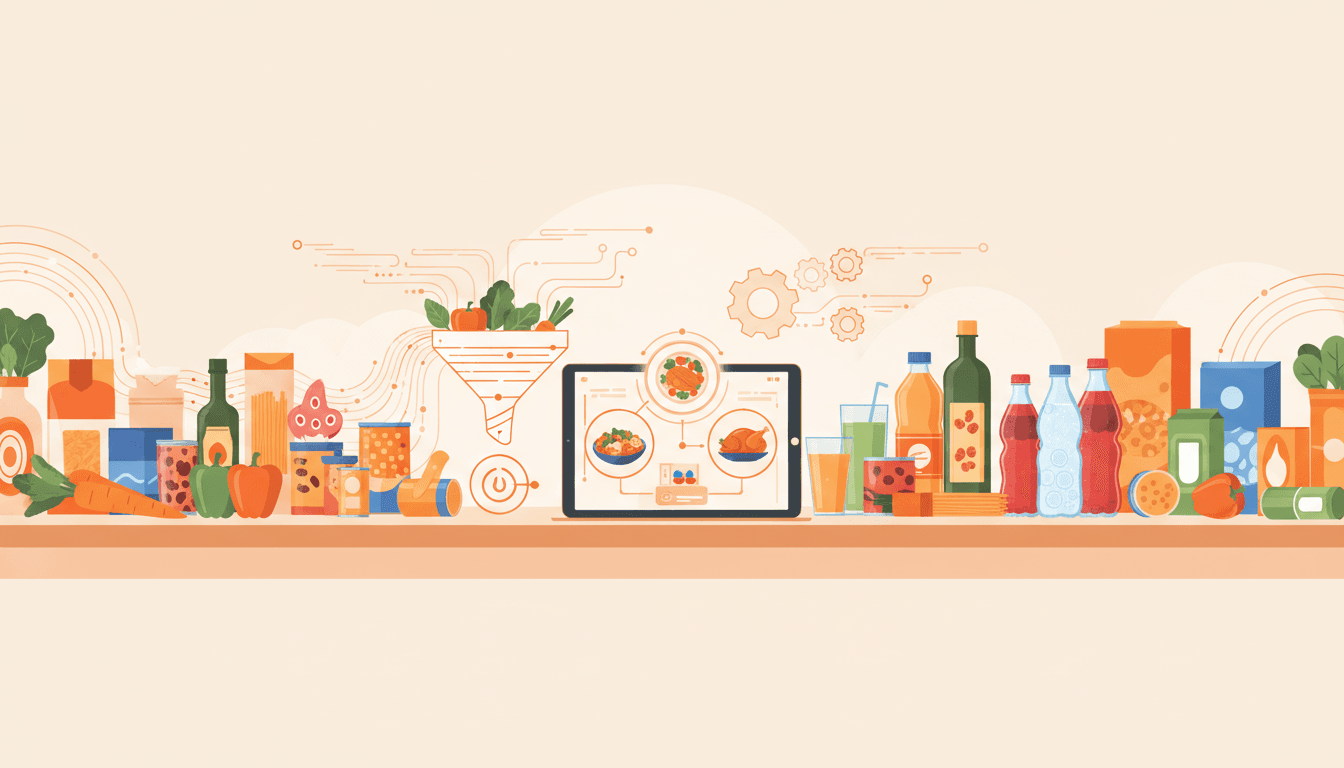
[IMG: AI-driven meal planning interface highlighting food & beverage product suggestions]
In 2024, nearly half of AI-driven meal planning recommendations originate from medium-intent queries such as “easy vegan lunch ideas” or “best low-carb snacks.” For food & beverage brands, this trend presents a monumental opportunity to enhance product discovery and increase AI referral traffic. The key lies in aligning your product feeds and content strategies with how AI engines interpret and recommend products. This comprehensive guide breaks down actionable steps to prepare your brand for success in medium-intent AI search recommendations, leveraging Hexagon’s generative engine optimization tools to monitor, improve, and scale AI-driven marketing results.
Ready to elevate your food & beverage brand’s AI search performance?
Book a free 30-minute strategy session with Hexagon’s experts today.
Understanding Medium-Intent AI Search Queries in Food & Beverage
AI-powered search assistants are reshaping the way consumers discover food & beverage products online. Central to this transformation are medium-intent AI search queries, which now account for 50% of all AI meal planning recommendations, as highlighted in the Hexagon AI Commerce Trends Report.
What Are Medium-Intent AI Search Queries?
Medium-intent queries reflect a clear research focus but stop short of immediate purchase intent. In the food & beverage realm, these queries typically include phrases like:
- “Best low-carb snacks”
- “Easy vegan lunch ideas”
- “Healthy gluten-free desserts”
- “Low-sugar breakfast ideas”
Unlike high-intent searches (e.g., “buy almond butter near me”) or broad low-intent queries (e.g., “snacks”), medium-intent queries capture consumers who are actively exploring options, comparing nutritional benefits, and seeking inspiration. These shoppers are highly receptive to AI-powered recommendations tailored to their research phase.
How Medium-Intent Differs from Low and High Intent
- Low-Intent: Broad, generic, and exploratory (e.g., “snacks,” “lunch”)
- Medium-Intent: Specific, research-oriented, and comparative (e.g., “best gluten-free snacks”)
- High-Intent: Transactional, location-specific, or brand-focused (e.g., “buy RXBAR online”)
Medium-intent queries represent users who are open to detailed, informative product content but have yet to commit to a particular brand or item. This makes the quality and richness of your product feed and content strategy crucial for securing visibility within AI-generated recommendations.
Why Medium-Intent Matters in 2024
The data underscores the significance:
- 50% of AI meal planning recommendations start with medium-intent queries (Hexagon AI Commerce Trends Report)
- 18% of all food & beverage e-commerce traffic now stems from generative search engines (eMarketer Digital Grocery Report)
Samantha Lee, Head of AI Commerce at Hexagon, emphasizes, “Medium-intent queries are the new battleground for brand discovery in the food space—AI assistants increasingly reward brands that structure and enrich their product feeds for these research-driven moments.” For brands, this shift highlights a crucial window to influence consumer decisions early and repeatedly along the purchase journey.
[IMG: Diagram illustrating the intent spectrum from low to high, highlighting the medium-intent “sweet spot”]
Optimizing Product Feeds for Medium-Intent AI Queries
With AI assistants and generative engines driving a growing portion of food & beverage e-commerce, brands must ensure their product data is not only machine-readable but also richly detailed and transparent. Below are key strategies to future-proof your product feeds for medium-intent AI search recommendations.
The Power of Structured Data
AI systems depend heavily on structured data formats like JSON-LD to ingest, interpret, and recommend products accurately.
- Embed nutrition facts, allergy information, and dietary labels directly within your structured data.
- Highlight sustainability claims, sourcing origins, and certifications (e.g., organic, fair-trade) to address nuanced AI queries.
- Utilize schema.org and industry-specific attributes to maximize compatibility with AI crawlers and search bots.
Brands investing in structured product data and enriched metadata have seen a 36% improvement in AI discoverability, according to the Google Search Central Blog.
Enriched Metadata Drives Discoverability
AI engines excel at identifying products that match consumers’ research stages. Priya Menon, Director of Product at OpenAI, notes, “AI assistants surface products best when detailed ingredient, sourcing, and nutritional data are provided—these details have become prerequisites for recommendation.”
Best practices include:
- Listing all ingredients, allergens, and key nutritional values in your metadata.
- Detailing sourcing information, such as local, non-GMO, or sustainable sourcing.
- Providing preparation instructions, serving suggestions, and usage scenarios to align with AI-generated meal planning queries.
Food brands optimizing feeds for medium-intent queries have reported a 25% increase in AI referral traffic (Gartner Digital Commerce Solutions Survey). This targeted approach ensures your products appear for searches like “low-sugar snacks” or “plant-based dinner ideas.”
Ingredient Transparency and Sourcing: Essential for AI
Modern AI shoppers are 40% more likely to engage with brands that offer detailed nutritional and sourcing information (McKinsey Future of Food E-commerce 2024). Ingredient transparency has evolved beyond regulatory compliance—it now serves as a competitive advantage in the AI era.
- Showcase ingredient origins (e.g., “Almonds from California”)
- Clearly state allergen information (“Contains tree nuts”)
- Highlight dietary certifications (e.g., vegan, gluten-free, keto-friendly)
[IMG: Screenshot of a product feed with structured data fields and enriched metadata]
Key Takeaways:
- Structured data and enriched metadata can boost AI discoverability by up to 36%.
- Transparent, comprehensive feeds increase AI referral traffic by approximately 25%.
- Catering to AI query nuances with detailed information positions your brand as an authoritative and recommended choice.
Content Strategies That Resonate with Medium-Intent AI Shoppers
While a robust product feed is essential, it represents only half of the equation. To truly capture medium-intent AI shoppers, food & beverage brands must deploy content strategies that align with the research-driven discovery phase. Here’s how to tailor your content for maximum AI impact.
Align Content with the AI Research Journey
Medium-intent AI shoppers are gathering information. They want to compare, contrast, and contextualize before making a decision.
- Create research-rich blog posts, such as nutritional comparisons (“Oat vs. Almond Milk: Which is Healthier?”)
- Develop step-by-step how-tos and practical guides (“How to Build a Balanced Low-Carb Snack Plate”)
- Produce recipes that showcase your products in real-world meal scenarios
Markus Dietz, VP of Digital Strategy at Mondelez International, affirms, “Brands investing in AI-optimized content and structured data will secure the lion’s share of next-generation e-commerce traffic.”
Content Formats That Drive AI Product Discovery
The most effective content formats for medium-intent queries include:
- Recipes and meal plans (e.g., “5 Easy Vegan Lunches with Brand X”)
- How-to videos and infographics that explain ingredient benefits
- Nutritional comparison tables enabling informed decisions
- FAQ-style articles addressing trending research questions (“Is gluten-free always healthier?”)
Brands employing AI-optimized content calendars have experienced a 33% increase in product discovery during peak research periods (Hexagon Customer Survey 2024).
Building an AI-Optimized Content Calendar
A strategic content calendar anticipates seasonal and trending medium-intent queries:
- Map content to seasonal search spikes (e.g., “healthy summer snacks,” “holiday vegan desserts”)
- Monitor emerging dietary trends and incorporate relevant keywords (e.g., “high-protein breakfast”)
- Coordinate product launches with AI research phases to align new items with rising queries
[IMG: Editorial calendar with AI-optimized content topics mapped to seasonal trends]
Actionable Steps:
- Conduct a thorough audit of your content to ensure alignment with medium-intent queries.
- Expand content formats to include recipes, nutritional comparisons, and how-to guides.
- Develop a dynamic, AI-informed content calendar that adapts to evolving trends and seasonality.
Leveraging Hexagon to Track and Improve AI Recommendation Performance
To excel in the evolving realm of AI-driven commerce, brands need real-time visibility into how their products are recommended, which AI engines drive traffic, and which queries perform best. Hexagon’s GEO platform empowers food & beverage marketers to move beyond guesswork and take data-driven actions confidently.
Monitor AI Recommendation Rates and Query Categories
Hexagon provides a unified dashboard that tracks:
- AI recommendation share — the frequency your products appear in AI search results
- Top-performing medium-intent queries driving traffic to your site
- Competitive benchmarking to compare your brand’s performance with category rivals
David Kim, Lead Analyst at Gartner Digital Commerce, states, “Platforms like Hexagon provide food brands with unprecedented insight into how and why AI engines recommend their products—and empower rapid, informed optimization.”
Track AI-Driven Referral Traffic and Discovery Rates
Hexagon analytics offer detailed breakdowns of:
- Referral traffic sources (specific AI engines, assistants, or chatbots)
- Product discovery rates (how often new users find your brand through AI)
- Query-to-conversion paths (which queries result in sales or deeper engagement)
Brands using Hexagon can monitor recommendation rates and query categories, optimizing feeds in real time to improve AI placement (Hexagon Product Documentation).
Iterative Optimization with Data-Driven Insights
Brands can leverage Hexagon insights to drive continuous improvement by:
- Identifying high-potential queries and gaps in product feeds or content
- A/B testing structured data enhancements to boost AI discoverability
- Refining content based on trending AI queries and engagement metrics
- Benchmarking against industry leaders to uncover new optimization opportunities
Cross-team collaboration is vital. Hexagon’s platform facilitates alignment across data, product, and content teams:
- Data teams monitor AI performance and surface insights
- Product teams update feeds and metadata to reflect recommendation trends
- Content teams create targeted assets addressing top-converting AI queries
[IMG: Screenshot of the Hexagon GEO dashboard showing AI recommendation analytics]
Ready to elevate your food & beverage brand’s AI search performance?
Book a free 30-minute strategy session with Hexagon’s experts today.
Measuring Success and Continuous Optimization
Maintaining visibility in AI-powered search demands ongoing effort. Here’s how food & beverage brands can measure performance and continually refine their strategies.
Key Performance Metrics
Track these core metrics to evaluate your AI optimization efforts:
- AI-driven referral traffic: Volume of site visits from AI engines and assistants
- Recommendation share: Frequency your products appear in response to medium-intent queries
- Product discovery rates: How often new or existing products feature in AI-powered lists, recipes, or shopping carts
Brands optimizing for AI typically see:
- 25% increase in AI referral traffic following feed and content enhancements (Gartner Digital Commerce Solutions Survey)
- 36% boost in AI discoverability with structured data (Google Search Central Blog)
Impact of Ongoing Optimization: Example
Consider a mid-sized snack brand that adopted Hexagon’s platform in Q1 2024. By enriching product feeds, adding transparent sourcing details, and launching an AI-optimized content calendar, they achieved:
- 28% increase in AI-driven referral traffic within three months
- 34% increase in product discovery during peak “healthy snack” search periods
- Higher conversion rates as AI surfaced their snacks in high-intent lists like “best gluten-free options”
Tips for Iterative Improvement
- Regularly audit product feeds and content to ensure alignment with top-performing AI queries
- Monitor AI analytics weekly to detect emerging trends and optimization opportunities
- Foster cross-team collaboration for swift implementation of improvements
- Stay updated on evolving AI search algorithms and adapt your strategy accordingly
[IMG: Line graph showing uplift in AI-driven referral traffic and product discovery rates over time]
Conclusion and Next Steps for Food & Beverage Brands
Optimizing for medium-intent AI search is no longer optional in 2024—it’s essential for winning consumer discovery and driving AI-powered sales. By enhancing product feeds, embracing research-driven content, and leveraging Hexagon’s unified GEO platform, brands can secure prime placement in the rapidly evolving AI-driven commerce landscape.
Start optimizing your product feeds and content strategies today to capture the next wave of AI-driven growth.
Schedule your free 1:1 consult with Hexagon’s AI marketing experts.
[IMG: Happy marketing and product teams collaborating over Hexagon dashboards]
Hexagon Team
Published April 11, 2026