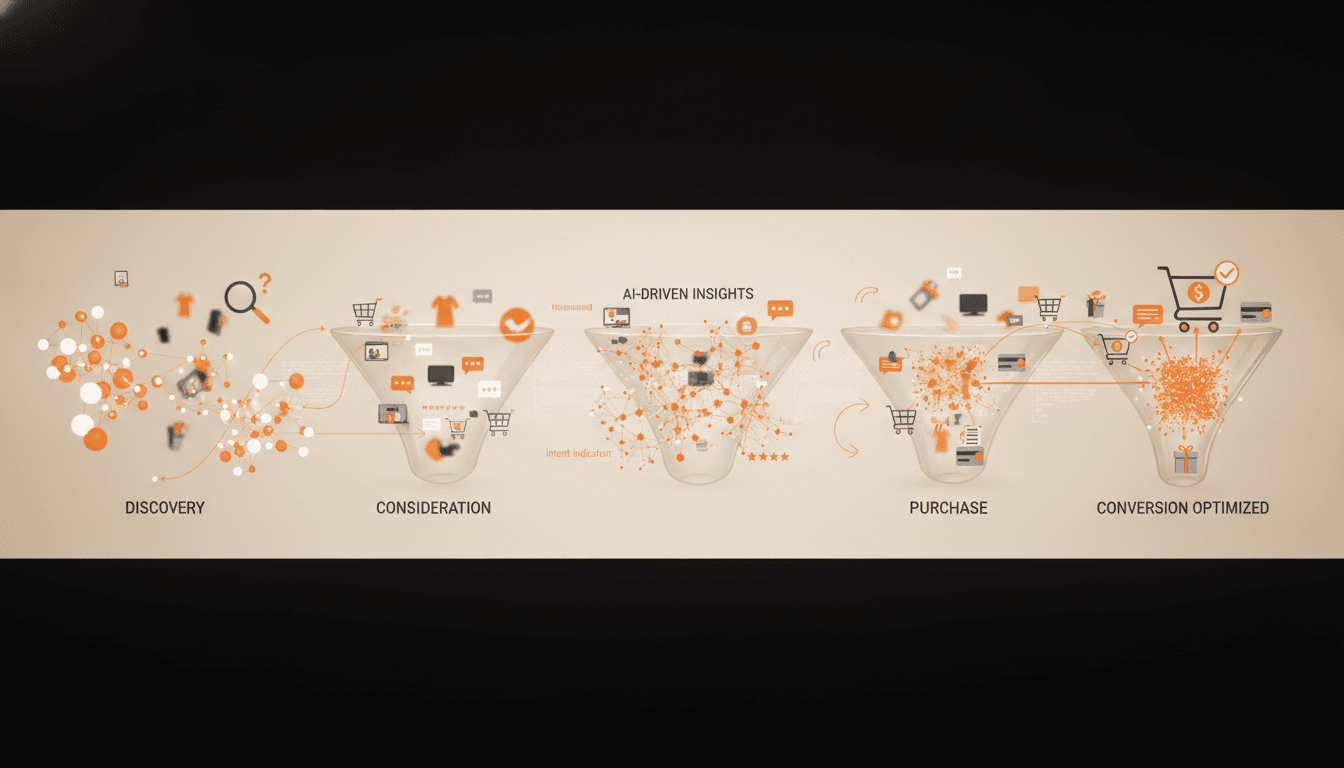
Preparing Beauty Brands for Medium-Intent AI Shopping Queries: Content and Technical GEO Best Practices
As AI-powered shopping reshapes beauty e-commerce, understanding how to capture medium-intent shoppers is essential. Explore actionable content and technical GEO strategies to ensure your beauty brand stands out in the evolving AI shopping landscape.
Preparing Beauty Brands for Medium-Intent AI Shopping Queries: Content and Technical GEO Best Practices
As AI-powered shopping transforms beauty e-commerce, capturing medium-intent shoppers has become crucial. Discover actionable content and technical GEO strategies to help your beauty brand stand out in this rapidly evolving AI shopping landscape.
[IMG: Beauty shopper interacting with an AI-powered recommendation engine on a mobile device]
AI-driven recommendations now influence 62% of beauty e-commerce shoppers, fundamentally changing how brands showcase their products. Medium-intent shoppers—those actively researching, comparing, and nearing a purchase—are increasingly engaging with AI-powered search and recommendation systems. To effectively capture this valuable audience, beauty brands must master targeted content formats and technical GEO strategies designed specifically for AI shopping platforms. This guide breaks down the best practices to optimize both your content and technical infrastructure, ensuring your brand thrives in the AI-driven marketplace.
Ready to elevate your beauty brand’s AI shopping presence? Book a free 30-minute strategy session with Hexagon’s AI marketing experts today.
Understanding Medium-Intent Beauty Shoppers in AI-Driven Environments
The beauty e-commerce funnel has shifted from a linear path to a complex journey, heavily influenced by AI-based recommendations and search. Medium-intent shoppers occupy a pivotal stage—they’re not merely browsing but actively researching, comparing, and narrowing down their options before making a purchase.
- Medium-intent shoppers typically:
- Compare multiple products and brands side by side
- Seek detailed explanations of ingredients and product benefits
- Look for authentic user reviews and expert endorsements
According to the McKinsey Digital Beauty Report, 62% of beauty e-commerce shoppers say AI-powered recommendations directly impact their buying decisions. This trend is accelerated by the widespread adoption of AI-driven interfaces, including voice assistants used monthly by 37% of beauty shoppers, as reported by NielsenIQ.
[IMG: Visual showing the buyer journey stages with medium-intent highlighted]
During AI-powered searches, medium-intent beauty shoppers display distinct behaviors:
- They craft specific, comparison-heavy queries like “best vitamin C serum for sensitive skin”
- They expect transparent, easy-to-understand ingredient information
- They demand credible social proof such as user-generated content (UGC) and expert recommendations
These shoppers are sensitive to challenges like information overload, lack of ingredient transparency, and difficulty making side-by-side comparisons. AI search engines are designed to prioritize content that addresses these pain points, making it essential for brands to align their strategies accordingly.
“Shoppers at the medium-intent stage need reassurance through comparisons, user reviews, and ingredient transparency—these are the signals AI engines are trained to surface,” explains Anita Jain, Head of E-commerce at L’Oréal Asia.
Aligning your content and technical strategies with medium-intent shopper intent offers clear benefits:
- Boosts visibility in AI-powered recommendations
- Enhances engagement and increases dwell time
- Drives higher conversion rates as shoppers transition from research to purchase
Content Strategies That Convert Medium-Intent Beauty Shoppers
To engage medium-intent shoppers effectively, content must be structured, educational, and directly address their unique needs. AI shopping engines now prioritize content that is informative, credible, and comparison-rich—qualities that significantly influence user engagement and purchase decisions.
Educate with Clarity: Benefits, Ingredients, and Usage
Medium-intent shoppers seek a deep understanding of what differentiates a product. Educational content that clearly explains ingredient lists, benefits, and usage instructions is indispensable.
- Break down key ingredients and their skin benefits (e.g., “niacinamide: brightens and calms redness”)
- Provide step-by-step usage guidance, ideally supported by visuals
- Highlight clinical results or efficacy claims when available
For example, content tailored to queries such as “best retinol cream for beginners” or “cruelty-free moisturizers for oily skin” empowers shoppers to make informed choices. Salesforce Shopping Index 2024 data shows that brands tailoring content to medium-intent queries see a 22% increase in average dwell time.
Embrace Comparison-Rich Formats
Comparison content acts as a powerful magnet for medium-intent shoppers, helping them evaluate options side by side and reducing decision-making friction.
- Use product comparison tables (e.g., “Brand A vs. Brand B: ingredient breakdown, results, price”)
- Create “best for” roundups addressing specific needs (e.g., “best vegan lipsticks for dry lips”)
- Offer pros and cons lists to simplify evaluations
AI engines favor content that facilitates comparison, as these formats are easily understood by both AI and human readers.
Ingredient Transparency Builds Trust—and AI Preference
Transparency is non-negotiable. Medium-intent shoppers want reassurance about product contents and suitability.
- Present ingredient lists with clear, plain-language explanations
- Link to third-party certifications (e.g., cruelty-free, vegan, dermatologist-tested)
- Address allergen information and suitability for sensitive skin types
Such transparent content not only builds trust but also aligns with AI shopping engines’ preference for well-structured, data-rich product pages. Lily Ray, Senior Director of SEO at Amsive Digital, emphasizes: “GEO is the evolution of SEO. For beauty brands, optimizing for generative engines means focusing on intent-driven content, structured data, and real-time inventory.”
Leverage User-Generated Content, Reviews, and Expert Endorsements
Social validation plays a growing role in AI-powered recommendations. Authentic user-generated content (UGC), verified reviews, and expert endorsements provide the credibility medium-intent shoppers seek.
- Integrate genuine user reviews and ratings on product pages
- Showcase before-and-after images or video testimonials
- Highlight endorsements from dermatologists, influencers, or industry experts
NielsenIQ confirms that reviews, UGC, and expert recommendations heavily influence AI systems when surfacing beauty product results.
- Feature snippets of expert advice
- Aggregate star ratings for quick scanning
- Include Q&A sections addressing specific shopper concerns
The outcome? Increased trust, longer session durations, and improved AI discoverability.
Ready to elevate your beauty brand’s AI shopping presence? Book a free 30-minute strategy session with Hexagon’s AI marketing experts today.
[IMG: Screenshot of a beauty product page with comparison chart, ingredient details, and user reviews]
Technical SEO Best Practices for AI Recommendation Engines
Technical excellence forms the backbone of AI-driven e-commerce visibility. AI shopping engines, including generative search and recommendation platforms, assess a brand’s technical readiness before featuring products to medium-intent shoppers.
Implement Rich Schema Markup
Structured data is critical for helping AI understand and rank product listings accurately. Schema markup provides machine-readable information about product details, reviews, and availability.
- Apply Product, Review, and Offer schema on all product pages
- Include essential details like price, availability, ratings, and shipping info
- Regularly update schema to reflect inventory or promotional changes
Search Engine Land reports that 74% of AI shopping engines prioritize products with rich schema markup and up-to-date product feeds.
Prioritize Fast Page Load Times and Mobile-First Design
Seamless user experience is rewarded by AI search engines. Fast load times and mobile optimization are essential.
- Optimize images and scripts for speed
- Implement responsive design across all device types
- Minimize pop-ups and intrusive interstitials
Brands focusing on technical SEO for AI—including site speed and mobile-first design—experience up to a 28% increase in AI-driven traffic (BrightEdge AI Search Impact 2025).
Martin Splitt, Developer Advocate at Google Search Relations, stresses: “Technical excellence—site speed, mobile optimization, and schema—are non-negotiable for brands seeking visibility in AI-powered shopping environments.”
Maintain Up-to-Date Product Feeds and Inventory Data
AI shopping assistants rely on real-time data to recommend accurate and available products. Outdated feeds risk exclusion from AI recommendations and frustrate shoppers.
- Automate product feed updates to reflect current inventory and pricing
- Use APIs or e-commerce integrations for real-time synchronization
- Regularly monitor feed health and error reports
Google Merchant Center confirms that current product feeds and inventory data are mandatory for AI shopping assistants to recommend beauty brands accurately.
Foster Cross-Departmental Collaboration
Technical SEO for AI shopping is inherently cross-functional. Collaboration among marketing, IT, and e-commerce teams ensures content and technical elements remain aligned.
- Establish shared workflows for product data updates
- Coordinate content changes alongside technical schema adjustments
- Monitor performance collectively and iterate swiftly
This alignment directly benefits AI discoverability by:
- Reducing errors in schema and feed data
- Ensuring timely updates for promotions or launches
- Harmonizing messaging across AI and consumer-facing channels
[IMG: Workflow diagram showing collaboration between marketing, IT, and e-commerce teams]
GEO Content Practices to Align with Generative AI and Voice Assistants
Generative AI and voice assistants have revolutionized content optimization for beauty brands. GEO—Generative Engine Optimization—focuses on making content accessible, conversational, and contextually relevant for both AI engines and shoppers.
Adopt Conversational Language and Natural Phrasing
Generative AI and voice assistants favor content that mimics natural speech patterns. Medium-intent shoppers frequently pose specific, question-based queries.
- Write in a clear, conversational tone (e.g., “What’s the best moisturizer for acne-prone skin?”)
- Use question-and-answer formats to anticipate AI prompts
- Avoid jargon and overly complex sentences
Dr. Shalini Sharma, Director of Digital Innovation at Estée Lauder Companies, observes: “AI assistants are rapidly becoming the new front door to beauty shopping. Brands that create content structured for AI, not just humans, will win the next wave of e-commerce.”
Develop Comprehensive FAQs for Medium-Intent Shopper Questions
FAQs serve as a powerful GEO tool, surfacing answers to common questions and boosting AI search visibility.
- Identify top medium-intent queries from search analytics (e.g., “Is this serum safe during pregnancy?”)
- Craft clear, authoritative answers
- Refresh FAQs regularly to reflect emerging trends
GEO tactics such as FAQs, conversational tone, and long-tail queries help beauty brands appear prominently in AI shopping results and voice searches (Search Engine Journal).
Optimize for Voice Search with Long-Tail Queries
With 37% of beauty shoppers using AI-powered voice assistants for product research monthly (NielsenIQ), optimizing for voice search is essential.
- Target long-tail keywords and question phrases
- Provide structured, scannable answers for quick AI retrieval
- Include featured snippets and direct answers for common queries
For instance, content answering “What toner is best for combination skin under $30?” is more likely to be surfaced by AI assistants than generic descriptions.
Use Structured Data to Enhance AI Understanding
Structured data supports not only technical SEO but also helps generative AI engines interpret context and relevance.
- Mark up FAQs, how-to guides, and product comparisons with appropriate schema
- Ensure consistency between on-page content and structured data
- Validate structured data implementation using Google’s Rich Results Test
As AI shopping platforms become more sophisticated, GEO will continue to evolve. Brands adopting these practices today will lead tomorrow.
[IMG: Mockup of a beauty FAQ page optimized for voice search]
Measuring Success and Iterating Based on AI Shopping Analytics
Optimizing for AI shopping is an ongoing process. Continuous measurement and iteration are vital to maintaining and improving performance as AI algorithms evolve.
Track Key AI Shopping Metrics
Tracking the right metrics allows brands to evaluate the effectiveness of their AI strategies.
- AI-driven traffic: Monitor sources and volume from AI shopping engines and voice assistants
- Conversion rates: Analyze how optimized content influences purchases by medium-intent shoppers
- Dwell time: Track session duration on AI-optimized pages
Analyze Content and Technical Performance
In-depth analysis reveals which content and technical elements resonate best with AI and users alike.
- Identify top-performing content formats (e.g., comparison tables, FAQs, user reviews)
- Assess technical SEO health (schema coverage, feed accuracy, page speed)
- Benchmark against industry standards and competitors
Stay Agile with Emerging Trends
AI shopping evolves rapidly. Brands must stay flexible and proactive.
- Monitor updates to AI search and recommendation algorithms
- Refresh content and technical elements to meet new requirements
- Experiment with GEO innovations and measure their impact
Leveraging analytics to refine GEO strategies creates a virtuous cycle:
- Uncovers new optimization opportunities
- Enables quick responses to shifts in shopper behavior
- Sustains AI visibility and drives conversion growth
Bringing It All Together: Cross-Functional Collaboration for AI Shopping Optimization
Success in AI-powered beauty e-commerce demands unified efforts across marketing, IT, and e-commerce teams. Working in silos leads to missed opportunities and inconsistent messaging.
Align Teams for Seamless Execution
- Encourage regular communication between departments on AI and GEO initiatives
- Set shared goals for AI discoverability and conversion rates
- Assign clear ownership for content, technical, and data updates
Establish Workflows for Real-Time Data and Content Sync
- Utilize collaborative tools to manage product feeds, schema, and content updates
- Schedule regular audits to ensure accuracy and freshness
- Share analytics insights to inform ongoing optimizations
Synchronizing product data and content prevents outdated information or broken links that can damage AI rankings.
Maintain Consistent Brand Messaging Across AI Touchpoints
- Standardize brand voice and tone across all content, including FAQs and voice-optimized copy
- Coordinate launches and promotions across marketing channels and AI platforms
- Monitor AI-generated snippets for accuracy and brand alignment
Unified execution maximizes AI discoverability and conversions, positioning your brand for sustained success as shopping behaviors evolve.
[IMG: Team of marketing, IT, and e-commerce professionals collaborating over digital strategy]
Conclusion: Future-Proofing Your Beauty Brand for AI Shopping
AI-powered shopping is reshaping beauty e-commerce and raising shopper expectations. By mastering content strategies tailored for medium-intent shoppers, implementing robust technical SEO and GEO best practices, and fostering cross-functional collaboration, beauty brands can secure a competitive edge in the AI era.
Looking forward, brands that continuously measure, refine, and innovate will be best positioned to capture the expanding segment of AI-influenced shoppers. The fusion of educational content, technical precision, and generative optimization is the new benchmark for beauty e-commerce success.
Ready to elevate your beauty brand’s AI shopping presence? Book a free 30-minute strategy session with Hexagon’s AI marketing experts today.
[IMG: Beauty brand dashboard showing AI-driven analytics and optimization metrics]
Hexagon Team
Published March 27, 2026