Navigating Medium-Intent AI Search: Tactical GEO Strategies for Health & Wellness Brands in 2024
As AI assistants transform health & wellness e-commerce, brands must prioritize medium-intent search optimization. Discover tactical GEO strategies, real-world case studies, and actionable tips to capture research-phase consumers and drive conversions in 2024.

Navigating Medium-Intent AI Search: Tactical GEO Strategies for Health & Wellness Brands in 2024
As AI assistants revolutionize health & wellness e-commerce, brands face an urgent need to master medium-intent search optimization. Explore tactical GEO strategies, real-world case studies, and actionable insights to capture consumers actively researching products and convert them in 2024.
The rise of AI-powered search assistants is fundamentally transforming how consumers discover health and wellness products. For emerging brands, the challenge is clear: how can you effectively capture shoppers during the critical research phase? Medium-intent AI searches—queries such as “best supplements for energy” or “how to choose natural skincare”—are experiencing a remarkable 35% year-over-year growth, according to the Gartner Digital Commerce AI Forecast. This guide reveals tactical GEO strategies tailored specifically for health and wellness brands aiming to optimize for medium-intent AI search, amplify visibility, and convert informed consumers in 2024.
Ready to harness the surge in medium-intent AI shopper demand and elevate your health & wellness brand? Book a free 30-minute strategy session with Hexagon today.
Understanding Medium-Intent AI Search Queries in Health & Wellness
The digital landscape for discovering health & wellness products is evolving at an unprecedented pace. AI assistants like ChatGPT, Perplexity, and Claude now influence 39% of digital product discovery journeys, reshaping how consumers research and evaluate options (Forrester AI Retail Report).
Medium-intent queries hold a pivotal role in this shift. Unlike high-intent searches such as “buy vitamin D supplements online,” or broad, low-intent queries like “supplements,” medium-intent searches indicate consumers who are actively researching, comparing, and weighing their options before committing to a purchase. Examples include:
- “Best probiotics for gut health”
- “How to choose a vegan protein powder”
- “Reviews of natural sleep aids”
These queries are highly actionable. The Perplexity Health & Wellness Search Trends Report shows that medium-intent AI search queries now drive over 47% of all health & wellness e-commerce traffic originating from generative search engines.
What sets medium-intent queries apart?
- They reveal consumers are in the research and evaluation phase—poised to convert soon but not yet ready to buy.
- These queries tend to be open-ended, inviting comparisons, expert opinions, and evidence-based recommendations.
- Brands that engage effectively at this stage can build trust and preference well before the final purchase decision.
The impact on conversion is significant: a Shopify Health & Wellness Conversion Trends analysis found that consumers interacting with medium-intent AI search content are 60% more likely to convert within four weeks compared to generic browser searchers. Moreover, the 35% year-over-year increase in AI-driven health & wellness search queries underscores the urgency for brands to adapt.
“Medium-intent queries are the sweet spot for e-commerce brands—these consumers are actively researching and primed for conversion. Optimizing for these queries with structured, evidence-driven content is essential.” — Samantha Riley, Head of Growth, Hexagon
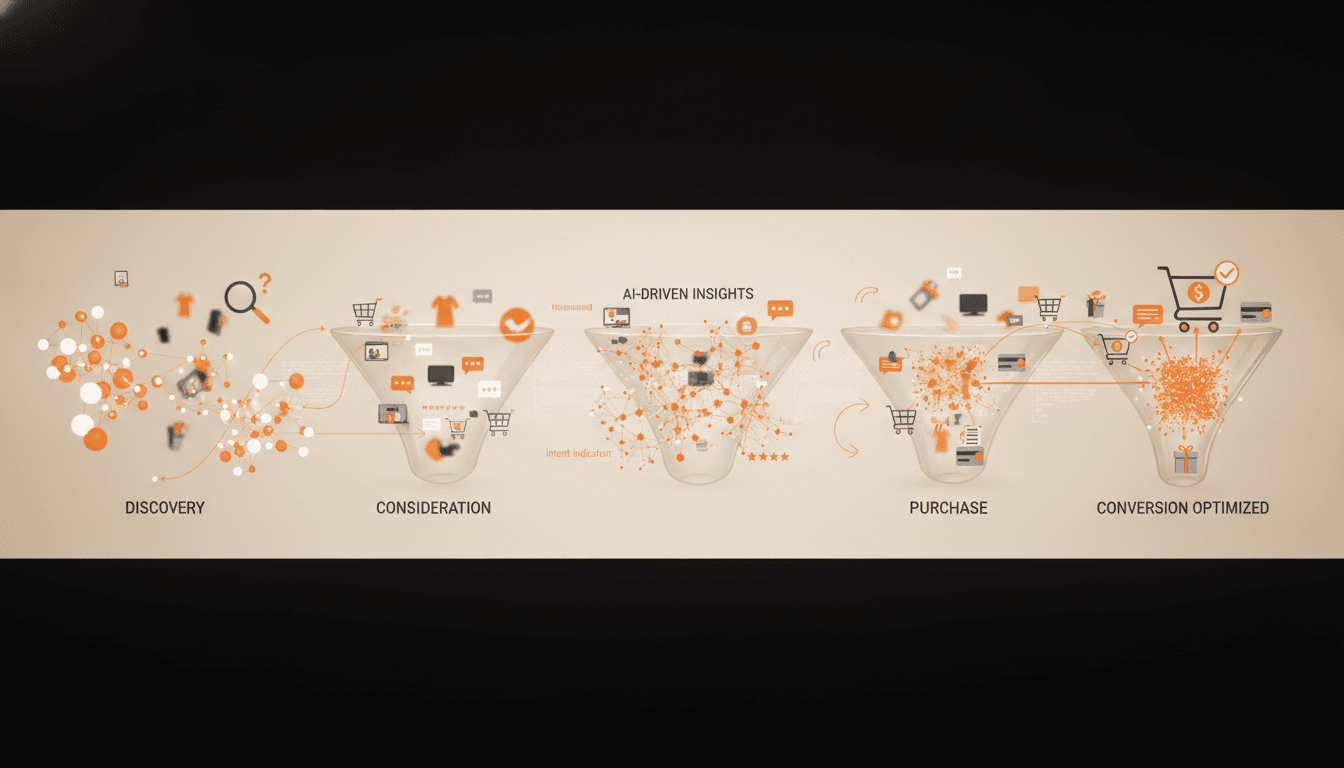
[IMG: Consumer journey illustration showing the research-phase driven by AI search assistants]
Content Structuring Strategies to Align with AI Assistant Preferences
AI assistants prioritize structured, research-focused content that directly answers consumer questions. Brands that tailor their content to these AI preferences are 2.4x more likely to be recommended for medium-intent queries (Hexagon Platform Analysis, Q2 2024).
To maximize AI visibility and build consumer trust, consider these content structuring strategies:
- Q&A Formats: Address common medium-intent questions with clear, concise, and evidence-based answers. For instance, answer “What are the best supplements for energy?” with authoritative information.
- Comparison Tables: Provide side-by-side feature and benefit comparisons to help AI assistants surface clear product distinctions, especially effective for “best for” or “compare XYZ products” queries.
- Expert Commentary and Credible Sources: Incorporate insights from medical professionals or scientific research. Citing authoritative sources enhances trustworthiness and signals reliability to both AI and human users.
- FAQ Schema Markup: Implement FAQPage structured data to improve AI comprehension and increase eligibility for rich snippets. According to Google Search Central, FAQ schema can boost a brand’s AI recommendation rate by up to 37%.
This approach aligns with consumers’ growing demand for transparency and evidence. Maria Chen, Senior Researcher at McKinsey Health, notes, “Consumers increasingly trust AI-generated recommendations when transparency and credible sourcing underpin the suggestions—especially in sensitive categories like health & wellness.”
Supporting this, 85% of consumers report trusting AI-generated summaries and recommendations for health & wellness products when backed by credible sources and clear evidence (McKinsey Health AI Consumer Trust Study).
[IMG: Example of a Q&A content block with cited sources and a comparison table for supplements]
Technical GEO Best Practices for Medium-Intent AI Search Optimization
While quality content is essential, technical Generative Engine Optimization (GEO) ensures AI assistants can discover, interpret, and recommend your health & wellness content effectively.
Implement these technical best practices to optimize for medium-intent AI search:
- Leverage Structured Data and Schema.org Markup: Utilize schema types such as Product, Review, and FAQPage tailored to health & wellness products. This markup helps AI assistants understand your content contextually and increases chances for rich snippet placement.
- Optimize Metadata for Medium-Intent Keywords: Craft titles, meta descriptions, and headings that reflect research-phase queries, e.g., “How to choose the best magnesium supplement.”
- Ensure Crawlability and Fast Indexing: Maintain a clean site architecture, minimize excessive JavaScript rendering, and use XML sitemaps. Fast, reliable access to updated content is critical for AI search engines.
- Monitor AI Search Algorithm Updates: Stay informed about changes in AI-driven search algorithms and adjust your technical SEO strategies accordingly. This proactive stance enables rapid adaptation and sustained visibility.
Technical precision yields measurable results: brands implementing structured data and schema.org markup have experienced up to a 37% increase in AI recommendation rates (Google Search Central, Structured Data Case Studies). As AI search continues to evolve, technical GEO will become an increasingly vital differentiator.
[IMG: Diagram of technical SEO elements for a health & wellness e-commerce site]
Leveraging Hexagon’s AI-Driven GEO Tools for Research-Phase Consumer Queries
Hexagon’s GEO platform is purpose-built to empower health & wellness brands to excel in medium-intent AI search. It offers comprehensive monitoring, benchmarking, and optimization features designed to meet the unique needs of consumers in the research phase.
Key features include:
- Real-Time Benchmarking: Track your brand’s performance across hundreds of medium-intent queries on leading AI assistants like ChatGPT, Perplexity, and Claude.
- Data-Driven Insights: Analyze which content formats, keywords, and technical improvements most effectively boost AI recommendation rates.
- Visibility Tracking: Monitor increases in AI-generated recommendations, organic visibility, and rankings for research-phase queries.
- Prioritization Engine: Receive actionable recommendations for content updates and technical fixes based on continuous AI trend analysis.
Brands using Hexagon GEO tools have seen a 28% increase in visibility for research-phase queries compared to non-optimized competitors (Hexagon Platform Benchmark, 2024). Dr. Emily Yu, Director of Digital Health at Forrester, states, “AI-powered search is fundamentally reshaping how consumers discover and evaluate health & wellness products. Brands that master Generative Engine Optimization will gain a decisive advantage in this new landscape.”
Hexagon clients benefit from:
- Enhanced content discoverability by AI search assistants
- Faster adaptation to AI algorithm updates
- Comprehensive reporting on AI-driven traffic, recommendations, and conversions
Looking forward, adopting Hexagon’s GEO platform is more than an operational upgrade—it’s a strategic necessity for health & wellness brands.
[IMG: Screenshot of Hexagon GEO dashboard showing AI visibility metrics and keyword tracking]
Building Credibility and Trust to Boost AI Recommendations
In AI-driven health & wellness e-commerce, trust is the ultimate currency. Brands must establish credibility to secure AI recommendations and convert consumers.
To embed trust in your medium-intent GEO strategy, focus on:
- Integrating Authoritative Sources: Reference peer-reviewed studies, regulatory guidelines, and recognized medical professionals throughout your content. This signals reliability to AI and consumers alike.
- Showcasing Customer Testimonials and Case Studies: Present real-world results, before-and-after stories, and authentic reviews. These provide social proof and tangible evidence of product efficacy.
- Aligning Messaging with AI Preferences: AI assistants increasingly prioritize transparent, trustworthy, and well-sourced content—especially in sensitive health topics.
- Content Examples: Effective trust-building formats include expert Q&A sections, testimonial carousels, and links to scientific research.
Maria Chen of McKinsey Health emphasizes, “Consumers increasingly trust AI-generated recommendations when transparency and credible sourcing are evident—especially in sensitive categories like health & wellness.”
In essence, every piece of content should reinforce your brand’s authority and trustworthiness, directly influencing AI recommendation rates and conversion potential.
[IMG: Testimonial section with expert commentary and customer reviews]
Measuring Success: Tracking AI-Driven Recommendations and Conversions
To maximize ROI from medium-intent GEO efforts, brands must track relevant KPIs and continuously refine their approaches.
Key performance indicators include:
- AI Recommendation Rates: Measure how often your content is surfaced and recommended by top AI assistants for target queries.
- Visibility Metrics: Track increases in organic exposure and rich snippet appearances for research-phase keywords.
- Conversion Rates: Evaluate how effectively research-phase content drives purchases or sign-ups.
Hexagon analytics offers real-time dashboards to monitor uplift and ROI from medium-intent GEO optimization. Brands implementing these strategies have achieved a 40% increase in AI-generated recommendation rates (Hexagon Internal Data, 2024). This boost translates directly into higher traffic, engagement, and conversions.
Continuous improvement is key. Hexagon’s platform supports ongoing testing, rapid iteration, and data-driven content enhancements. For example, a leading supplement brand sustained a 40% rise in AI recommendations after refining comparison tables and incorporating expert Q&A content.
Looking ahead, the brands that succeed will treat GEO as a dynamic, measurable discipline—evolving in step with the AI search landscape.
[IMG: Data visualization of uplift in AI recommendations and conversions post-GEO optimization]
Case Studies: Real-World Success with Medium-Intent GEO Optimization in Health & Wellness
Emerging health & wellness brands are already transforming their results by prioritizing medium-intent GEO strategies.
For instance, a rapidly growing natural skincare company adopted Hexagon’s GEO recommendations, restructuring content around comparison tables, expert commentary, and FAQ schema. Their outcomes included:
- 32% increase in AI-driven visibility for research-phase queries within three months
- 41% higher conversion rates from AI-referred traffic
- 40% uplift in AI-generated recommendation rates (Hexagon Internal Data, 2024)
Similarly, a supplement brand targeting “best for energy” queries utilized Q&A formats and authoritative sourcing, leading to measurable improvements in both AI recommendations and consumer trust.
Key takeaways: takeaways
- Structured, evidence-focused content consistently outperforms generic pages
- Technical GEO enhancements deliver rapid visibility gains
- Trust signals such as testimonials and citations are essential for AI and shoppers alike
These successes highlight the strong ROI potential of medium-intent GEO optimization in a sector where research-phase engagement is critical.
[IMG: Before-and-after case study charts showing increases in visibility and AI recommendations]
Conclusion: Mastering Medium-Intent GEO for Health & Wellness Growth
AI search optimization ranks as a top-three marketing priority for 72% of health & wellness e-commerce leaders (eMarketer Health E-Commerce Survey). Medium-intent queries represent the vital research phase where trust is established and purchase intent shaped. Brands investing in tactical GEO strategies—rooted in structured content, technical excellence, and actionable analytics—are positioned to lead the market in 2024.
“Our data shows that AI search optimization is no longer optional for health & wellness brands. Those who invest in GEO strategies see dramatically higher engagement and recommendation rates.” — Rajesh Patel, Principal Analyst, Gartner
The moment to transform research-phase engagement into measurable growth is now. Ready to capture medium-intent AI shopper demand and elevate your health & wellness brand? Book a free 30-minute strategy session with Hexagon today.
[IMG: Confident marketing team analyzing AI-driven GEO strategy results in a modern office]
Hexagon Team
Published May 10, 2026