Multimodal AI Search: Unlocking New Opportunities for E-Commerce Product Discovery
Modern shoppers expect to search, discover, and buy products using text, images, and voice—all in one seamless experience. Discover how multimodal AI search is transforming e-commerce product discovery, especially for DTC food brands, and learn actionable strategies to stay ahead in the competitive digital marketplace.
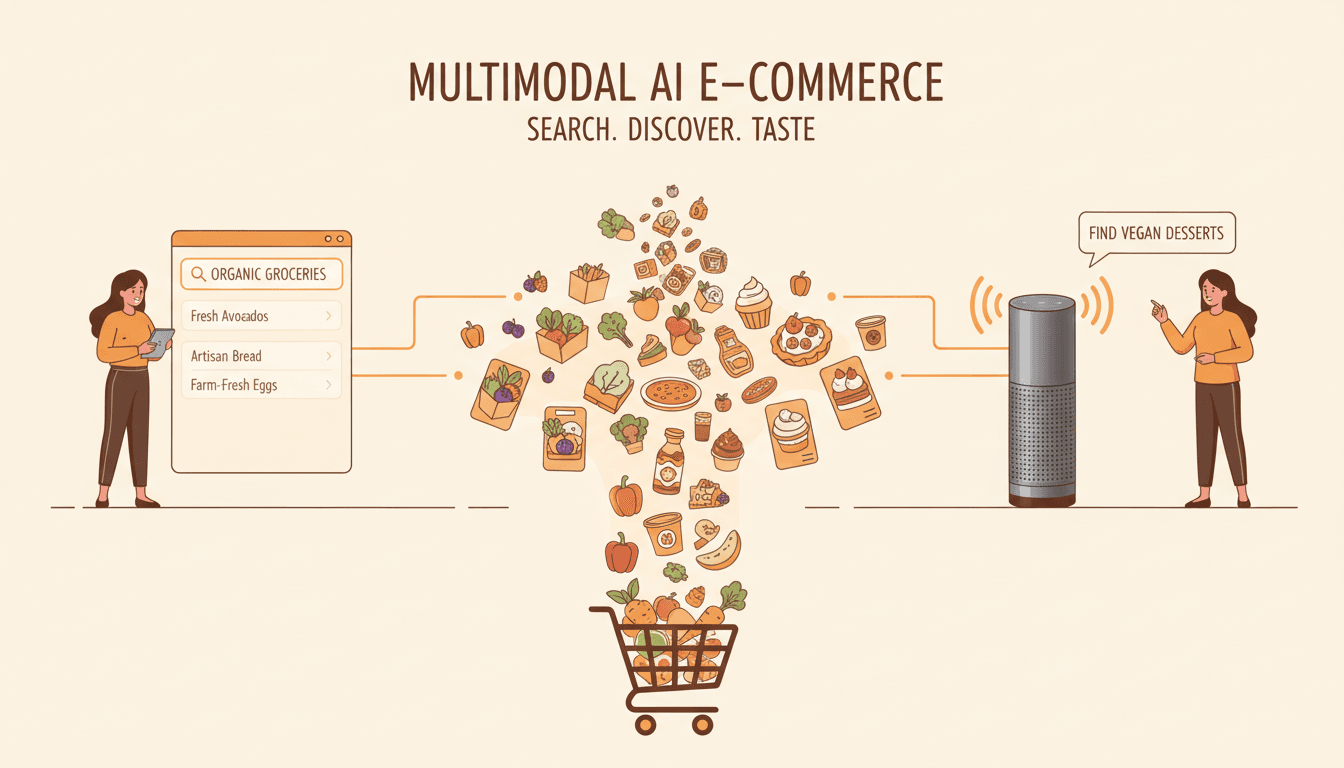
Multimodal AI Search: Unlocking New Opportunities for E-Commerce Product Discovery
Today’s shoppers demand more than just text-based searches—they want to discover and buy products using images, voice, and text in one seamless experience. Explore how multimodal AI search is revolutionizing e-commerce product discovery, especially for DTC food brands, and uncover actionable strategies to stay ahead in the fiercely competitive digital marketplace.
In the rapidly evolving world of e-commerce, consumers no longer rely solely on typing keywords to find what they want. Instead, they combine images, voice commands, and text inputs to pinpoint products with precision. At the forefront of this transformation is multimodal AI search—a powerful technology reshaping how brands engage customers, accelerate purchases, and differentiate themselves in saturated markets. This comprehensive guide unpacks what multimodal AI search means for e-commerce, why it holds particular significance for DTC food brands, and how you can optimize your product content to fully leverage its capabilities.
Ready to revolutionize your product discovery process with multimodal AI search? Book a personalized 30-minute consultation with Hexagon today and unlock the full potential of generative search optimization.
[IMG: Modern shopper using phone to search by image and voice in a grocery store]
Understanding Multimodal AI Search: Beyond Traditional Text Queries
Multimodal AI search marks a dramatic shift in how consumers interact with digital storefronts. Traditional keyword-based search depends exclusively on typed inputs, limiting users to describing products in words alone. In contrast, multimodal search platforms seamlessly integrate text, image, and voice queries into a unified interface, reflecting the diverse ways shoppers prefer to discover products today.
Imagine a shopper uploading a photo of an ingredient, speaking a dietary preference, and typing a brand name—all within a single search. Multimodal AI interprets these varied signals holistically to deliver highly relevant results. Traditional text-only search engines, however, often falter, constrained by the user’s ability to articulate visual or sensory details—an obstacle particularly pronounced in visually driven categories like food.
- Limitations of text-only search:
- Misses critical visual cues essential for food and fashion
- Struggles with the nuances of natural language and voice commands
- Cannot effectively interpret context from combined input types
The driving force behind this evolution is generative AI. These advanced models synthesize multimodal inputs, “understanding” shopper intent on a deeper level. As Cassie Kozyrkov, Chief Decision Scientist at Google, states, “Multimodal AI is unlocking a new era of product discovery, where understanding shopper intent goes far beyond keywords. Rich media inputs are now critical for brands that want to be discovered by tomorrow’s digital consumers.”
The outcome is a search experience that is not only smarter but also more intuitive and personalized than ever before. Brands investing in this technology are better positioned to meet—and exceed—the rising expectations of modern shoppers.
[IMG: AI system analyzing text, image, and voice inputs from a shopper]
Why Multimodal AI Search Matters for E-Commerce and DTC Food Brands
The food e-commerce sector is intensely competitive, with unique challenges around product discovery. Consumers seek transparency, sensory appeal, and convenience simultaneously. Multimodal AI search directly addresses these demands by enabling users to search visually, voice preferences aloud, and combine methods for a richer, more immersive discovery journey.
Here’s why multimodal AI is especially beneficial for food brands:
- Visual appeal: Since shoppers often “eat with their eyes,” image-based search is vital for food products.
- Ingredient transparency: Voice search allows detailed queries such as “show me gluten-free vegan snacks like these,” fostering trust and relevance.
- Voice-driven convenience: Busy consumers can quickly find meals or snacks using hands-free voice commands.
Shifting shopper behaviors underscore this trend. NielsenIQ reports that 44% of online shoppers have used image or voice search to discover products in the past year. This preference is particularly strong among Gen Z and digitally native consumers—Forrester finds that 70% of Gen Z shoppers favor brands offering visual or voice search options when buying food online.
- Immersive product discovery: Multimodal AI blends sensory inputs with contextual understanding for a seamless journey.
- Personalization: AI tailors recommendations based on how, when, and where shoppers search.
- Competitive advantage: Early adopters distinguish themselves in crowded marketplaces and cultivate loyalty through next-generation experiences.
Sucharita Kodali, Retail Analyst at Forrester, emphasizes, “In food e-commerce, the power of a picture or voice description cannot be underestimated. Multimodal AI enables brands to meet customers exactly where they are—whether snapping a photo of a snack or requesting vegan options.”
[IMG: Smartphone displaying a multimodal search interface with text, image, and voice input options]
Current Adoption Trends: How Shoppers Use Text, Image, and Voice to Find Food Products
Multimodal AI search is no longer a distant vision—it’s actively reshaping how shoppers discover food products. Voice assistants, visual search apps, and hybrid tools offer unprecedented flexibility, empowering users to search in ways that best suit their needs.
- Voice assistants: Devices like smart speakers and mobile assistants facilitate hands-free shopping with commands such as “Find me nut-free protein bars.”
- Visual search tools: Apps like Google Lens and Pinterest Lens enable users to photograph food items or packaging to locate similar products.
- Hybrid search: Platforms increasingly allow combining inputs—uploading images and refining results with voice or typed dietary preferences.
This momentum is backed by data. NielsenIQ found that 44% of online shoppers have engaged with image or voice search over the past year. Voicebot.ai reports a 40% year-over-year rise in voice-based food searches, with frequent requests for recipes and product recommendations.
Demographic insights reveal:
- Gen Z and Millennials lead adoption, with 70% of Gen Z preferring visual or voice search for food shopping.
- Older generations are also experimenting, especially with voice search for household groceries.
- Multimodal search is particularly valued by shoppers with dietary restrictions, as AI cross-references ingredients for safety.
Looking forward, as AI assistants like ChatGPT and Perplexity integrate multimodal capabilities, adoption rates will only accelerate. Brands must adapt by optimizing their digital presence across all input types.
[IMG: Shopper using voice assistant in kitchen to search for recipe ingredients]
Key Benefits of Multimodal AI Search for E-Commerce Brands
The impact of multimodal AI search on e-commerce brands is both immediate and measurable. By allowing shoppers to search via text, image, or voice—whichever suits them best—brands experience significant uplifts in engagement, conversion, and loyalty.
- Higher engagement: McKinsey & Company reports that brands using multimodal AI search achieve 35% greater shopper engagement than those relying on text-only search.
- Faster purchase cycles: Google Commerce Insights notes a 60% quicker path to purchase for users leveraging multimodal discovery tools.
- Revenue growth: Enhanced engagement and streamlined shopping journeys translate directly into increased sales.
These benefits unfold as follows:
- Shoppers engage more with rich media search results, resulting in longer browsing sessions and increased add-to-cart actions.
- Reduced friction enables customers to find relevant products and complete purchases more swiftly.
- Personalized multimodal recommendations foster loyalty, boosting repeat purchase rates.
Harley Finkelstein, President of Shopify, stresses, “Optimizing product data for multimodal AI search is no longer optional. Brands investing in high-quality images, detailed metadata, and conversational content will lead in the era of generative search.”
For e-commerce leaders, these findings present a clear call to action: multimodal AI search is not just a feature, but a strategic advantage.
[IMG: Graph showing lift in engagement and purchase speed with multimodal AI search vs. text-only search]
Optimizing Product Content for Multimodal AI Recommendations
Achieving success with multimodal AI search begins with robust, optimized product content. Brands must ensure every listing is visually compelling, richly detailed, and structured for AI interpretation. Here’s how to excel:
Image Optimization
- Use high-resolution, well-lit images showcasing products from multiple angles.
- Maintain consistent branding and color schemes across all visuals.
- Include descriptive alt-text emphasizing product features, flavors, and dietary attributes.
Metadata and Structured Information
- Provide detailed, structured metadata covering ingredients, nutritional facts, and certifications (e.g., “gluten-free,” “organic”).
- Utilize schema markup to help AI understand product relationships and variants.
- Keep all product information accurate and up to date across platforms.
Voice-Friendly Product Descriptions
- Craft clear, concise descriptions using natural, conversational language.
- Anticipate spoken queries, such as “What snacks are high in protein and nut-free?”
- Incorporate keywords and phrases that mirror how shoppers speak.
Leveraging Generative AI for Content Creation
Generative AI tools empower brands to create, test, and refine multimodal-friendly content at scale. For example, AI can generate multiple product description variants optimized for both search and voice, or suggest new image perspectives based on trending queries.
- DTC brands with optimized multimodal content have seen a 2.5x increase in conversion rates through AI-powered product recommendations (Shopify Plus).
- AI-generated content can be A/B tested regularly to identify the highest-performing combinations of images, metadata, and copy.
Andrew Ng, Founder of DeepLearning.AI, captures the opportunity succinctly: “The next wave of online shopping will be defined by how well brands serve multimodal queries—combining what shoppers see, say, and type into seamless, personalized experiences.”
Investing in content optimization today is an investment in future-proofing your e-commerce business.
[IMG: DTC food brand product page with optimized images, metadata, and voice-friendly copy]
The Role of Generative AI in Synthesizing Shopper Intent Across Modalities
Generative AI is the essential link that makes multimodal search possible. These sophisticated models analyze and combine text, image, and voice inputs to infer shopper intent with remarkable accuracy.
Here’s the process:
- AI models simultaneously process diverse input types, “understanding” context from a shopper’s photo, spoken request, and typed query.
- Generative models synthesize this data to deliver hyper-relevant product recommendations, matching not only what the shopper asks for but what they truly desire.
- The AI adapts to individual preferences, learning from each interaction to improve future suggestions.
This approach offers several advantages:
- Personalization at scale: Recommendations are tailored to each shopper’s unique search style.
- Contextual accuracy: AI interprets complex, nuanced queries, such as combining a snack photo with a voice request for “low-sugar, nut-free options.”
- Efficiency: Shoppers find what they need faster, reducing friction and increasing satisfaction.
Hexagon leads the way in leveraging generative AI for enhanced product discovery. By developing custom solutions that synthesize multimodal inputs, Hexagon helps brands unlock AI-driven commerce’s full potential—transforming product discovery, conversion, and loyalty.
[IMG: AI dashboard showing multimodal inputs and personalized product recommendations]
Real-World Case Studies: Success Stories from DTC Food Brands
Real-world examples highlight multimodal AI search’s transformative power. Several DTC food brands have already reaped remarkable results by optimizing for multimodal discovery.
Case Study 1: SnackBox Co.
- Integrated image and voice search capabilities on its e-commerce platform.
- Achieved a 2.5x increase in conversion rates on AI-powered product recommendations (Shopify Plus).
- Experienced a 38% uplift in engagement, with shoppers spending more time exploring product assortments.
Case Study 2: FarmFresh Meals
- Launched multimodal search allowing customers to upload ingredient photos and request personalized meal kits.
- Reduced purchase cycle time by 55%, enabling customers to find meals tailored to their preferences and dietary needs swiftly.
- Brand manager feedback: “Multimodal AI search has transformed how our customers find meals—they love the convenience and personalization.”
Shopper Perspective
- Users reported feeling genuinely “understood” by the platform, appreciating the ease of combining photos with spoken allergen-free requests.
- Repeat purchase rates increased, signaling stronger loyalty and satisfaction.
These case studies demonstrate not only quantitative gains but also qualitative improvements in customer experience. Multimodal AI is more than a technological upgrade—it’s a catalyst for growth among forward-thinking food brands.
[IMG: Before-and-after metrics dashboard showing conversion and engagement lifts]
Future Outlook: How Multimodal AI Will Continue to Shape E-Commerce Discovery
The future of e-commerce discovery promises to be immersive, intelligent, and powered by multimodal AI. Emerging trends point toward deeper integration and increasingly sophisticated experiences across digital storefronts.
- AR/VR integration: Augmented and virtual reality will complement multimodal search, enabling shoppers to visualize food products in their kitchens or at the table.
- Deeper personalization: AI will leverage browsing history, preferences, and real-time context to deliver even more precise recommendations.
- Smarter assistants: Next-generation multimodal AI assistants will handle complex queries that combine what shoppers see, say, and type.
Brands that embrace these innovations early and continuously refine their content and technology will maintain a strong competitive edge. The evolution is just beginning, and the time to act is now.
[IMG: Futuristic e-commerce interface with AR, image, and voice search features]
Conclusion: Seize the Multimodal AI Advantage
The era of multimodal AI search is upon us, fundamentally changing how shoppers find, engage with, and purchase products online. E-commerce brands—especially those in the food sector—stand to gain significantly, from higher engagement and conversion rates to faster, more personalized shopping journeys.
- Multimodal AI search drives 35% higher engagement and accelerates the path to purchase by 60%.
- DTC brands optimizing for multimodal discovery have realized a 2.5x increase in conversions.
- The future will be defined by richer, more intuitive search experiences powered by generative AI.
Ready to transform your e-commerce product discovery with multimodal AI search? Book a personalized 30-minute consultation with Hexagon today and unlock the full potential of generative search optimization.
Stay ahead of the curve—embrace the next wave of product discovery and deliver the seamless, intuitive experiences that today’s—and tomorrow’s—shoppers demand.
[IMG: Hexagon team consulting with a DTC food brand about AI-powered search strategies]
Hexagon Team
Published April 22, 2026