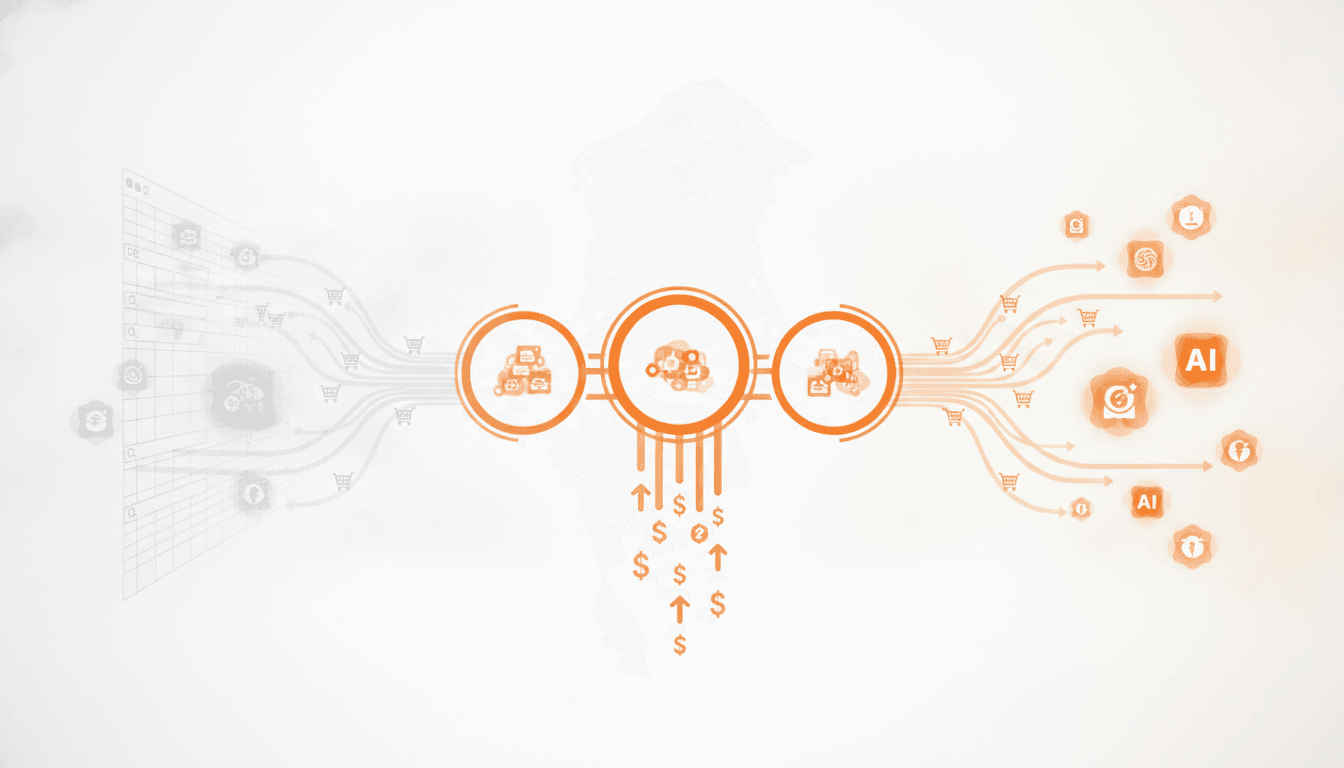
Measuring the ROI of Generative Engine Optimization: Essential KPIs for E-commerce Brands
E-commerce brands are embracing Generative Engine Optimization (GEO) to capture AI-driven search traffic—but measuring its true ROI requires a new playbook. This authoritative guide details the essential KPIs, attribution best practices, and analytics solutions e-commerce leaders need to maximize GEO performance and future-proof their AI marketing strategies.

Measuring the ROI of Generative Engine Optimization: Essential KPIs for E-commerce Brands
As AI-powered discovery engines revolutionize how consumers search and shop online, e-commerce brands are racing to harness Generative Engine Optimization (GEO) to capture this new wave of traffic. However, unlocking GEO’s full potential demands a fresh approach to measuring ROI. This authoritative guide reveals the essential KPIs, attribution best practices, and analytics tools e-commerce leaders need to maximize GEO performance and future-proof their AI marketing strategies.
[IMG: Illustration of AI-powered search engines recommending products to online shoppers]
Understanding Generative Engine Optimization and Its Impact on E-commerce
Generative Engine Optimization (GEO) is swiftly transforming the digital marketing landscape for e-commerce brands. Unlike traditional SEO, which focuses on improving keyword rankings on conventional search engines like Google, GEO zeroes in on optimizing for AI-powered discovery platforms such as ChatGPT, Perplexity, and Claude. These AI assistants are rapidly becoming the primary gateways through which consumers discover products online.
Traditional SEO centers on optimizing for search algorithms. In contrast, GEO demands that brands tailor their strategies to how AI assistants select, cite, and recommend products in real time. This shift is profound: AI-driven platforms are reshaping the customer journey. According to Martech Today, 12% of e-commerce referral traffic now originates from AI-powered search platforms—a clear signal of their growing dominance.
[IMG: Chart showing the rise of AI-driven referral traffic vs. traditional search traffic]
For e-commerce brands, the implications are significant. Customers arriving via AI-generated recommendations complete purchases 40% faster than those coming through traditional channels, reports Forrester. This accelerated path to purchase means GEO is far more than a technical upgrade—it’s a strategic imperative. Measuring GEO’s ROI is essential for brands aiming to justify investments, optimize marketing budgets, and outpace competitors leveraging AI for discovery.
- GEO targets AI-driven discovery platforms rather than traditional search engines.
- 12% of referral traffic now comes from AI-powered search.
- Time-to-purchase is 40% shorter for AI-referred customers.
Priya Venkatesan, VP of Digital Marketing at Shopify, captures this shift succinctly: “Generative Engine Optimization is reshaping how brands measure digital success—brands must now focus on AI-driven KPIs like citation rate and share of AI voice to stay relevant.”
Key GEO-Specific KPIs That Matter for Measuring ROI
To truly gauge the effectiveness of GEO, e-commerce brands need to track metrics tailored to the unique dynamics of AI-driven discovery. Conventional SEO metrics such as keyword rankings and organic page views no longer suffice when AI assistants act as the gatekeepers to product recommendations.
Here’s how forward-thinking brands measure GEO success:
- AI-driven traffic volume and growth trends: Track the absolute number and proportion of site visitors coming from AI assistants, generative search engines, and conversational platforms.
- Citation rate: Measure how frequently your brand is mentioned or linked within AI assistant responses—a critical KPI emphasized by Gartner.
- Share of AI voice: Assess the percentage of times your products are recommended in AI-generated shopping queries compared to competitors.
- Conversion rates from AI search: Benchmark conversion rates from AI-referred traffic against those from traditional SEO. Martech Today reports that e-commerce brands experience 15-25% conversion rates from AI search—up to four times higher than the 2-6% typical of traditional SEO traffic.
- Referral share: Calculate the proportion of total site referrals attributed to AI-driven platforms. With 12% of e-commerce referral traffic now stemming from AI sources, this metric is rapidly gaining importance.
- Time-to-purchase: Evaluate whether customers arriving via AI recommendations progress through the sales funnel faster, supported by Forrester’s finding of a 40% shorter time-to-purchase.
[IMG: Dashboard mockup displaying GEO-specific KPIs: citation rate, share of AI voice, AI-driven conversion rate]
Brands that incorporate GEO-specific KPIs report a 20% higher ROI from AI search campaigns compared to those relying solely on traditional SEO metrics, according to Hexagon Data. This KPI-focused approach empowers marketers to:
- Identify the highest-performing AI channels and tailor content accordingly.
- Quantify the incremental value GEO delivers beyond legacy SEO strategies.
- Establish realistic, data-driven performance targets.
Mark Johnson, Editor-in-Chief of Martech Today, puts it plainly: “With AI assistant referrals converting at up to four times the rate of traditional search, e-commerce brands ignoring GEO are leaving significant revenue on the table.”
Attributing Sales to AI-Generated Recommendations: Best Practices
Assigning credit for sales driven by AI-generated recommendations introduces new complexities for e-commerce teams accustomed to last-click attribution models. AI assistants often serve as the initial touchpoint, influencing multiple interactions before a purchase occurs.
Here’s how attribution leaders connect the dots:
- Advanced attribution models: Combine UTM parameters, analytics APIs from AI search platforms, and post-engagement surveys to capture the full customer journey—from AI mention to final purchase.
- End-to-end tracking: Implement unique campaign tags and real-time dashboards that merge click, citation, and conversion data from AI platforms alongside e-commerce analytics.
- Customer journey mapping: Analyze the sequence of customer interactions, beginning with the AI assistant’s recommendation, to pinpoint which touchpoints drive conversions and repeat business.
[IMG: Flowchart showing the customer journey from AI assistant recommendation to e-commerce purchase]
A key hurdle is the absence of standardized attribution frameworks for generative platforms. Sarah Kim, Principal Analyst at Forrester, explains, “Attributing sales to AI-generated recommendations requires new analytics frameworks that extend beyond last-click models to capture the entire journey from AI mention to purchase.”
Brands investing in GEO have observed a 30% increase in first-time customer acquisition attributed to AI assistant referrals, according to Insider Intelligence. This highlights how robust attribution not only validates GEO investments but also uncovers fresh growth avenues.
- Use UTM tagging to distinctly identify AI-driven traffic.
- Integrate analytics APIs from platforms like OpenAI for granular tracking.
- Complement quantitative data with post-purchase surveys to verify AI’s influence.
Ready to unlock the full potential of GEO for your e-commerce brand? Book a free 30-minute strategy session with our AI marketing experts to get started.
Benchmarking AI Search Conversion Rates and Other Performance Metrics
Benchmarking is vital for contextualizing GEO performance and setting achievable goals. As AI search becomes a mainstream acquisition channel, industry benchmarks are evolving quickly.
Top e-commerce brands approach benchmarking by focusing on:
- AI search conversion rates: Martech Today highlights that AI-driven search traffic yields conversion rates between 15-25%, significantly outperforming the 2-6% typical of organic SEO. If your AI conversion rate falls short, it’s a clear signal to refine your GEO strategy.
- Citation frequency: Gartner identifies citation rate—the frequency with which a brand is mentioned or linked in AI responses—as an emerging standard success metric. Comparing your citation rate against competitors provides insight into your share of AI attention.
- Referral share from AI platforms: With 12% of total referral traffic now sourced from AI-driven platforms, leading brands use this as a baseline for growth tracking and goal-setting.
[IMG: Comparative bar graph of AI vs. SEO conversion rates and citation frequencies]
- Benchmark your AI referral traffic against the 12% industry average.
- Aim for a 15-25% conversion rate from AI-generated visits.
- Monitor citation rate and share of AI voice for competitive intelligence.
By aligning your performance metrics with these industry standards, your brand can identify gaps, set data-driven objectives, and justify continued investment in GEO.
Leveraging Analytics Tools and Dashboards for Real-Time GEO Insights
The surge of generative search platforms has catalyzed a new wave of analytics solutions designed specifically for GEO-focused marketers. Access to real-time insights is crucial for maintaining agility in this rapidly evolving ecosystem.
Analytics leaders gain a competitive edge by:
- Purpose-built GEO dashboards: Solutions like Hexagon provide dashboards that consolidate citation, mention, click, and conversion data from leading AI assistants.
- Integration with AI analytics APIs: AI platforms offer APIs that supply raw data on brand mentions, user engagements, and assisted conversions. Integrating these data streams enables real-time performance monitoring.
- Unified reporting ecosystems: Advanced teams connect GEO data with existing analytics tools (e.g., Google Analytics, Shopify, Adobe Analytics) to achieve a comprehensive view of customer journeys.
[IMG: Screenshot of a GEO analytics dashboard showing real-time citation and conversion data]
Real-time data empowers marketers to:
- Pinpoint which AI platforms and queries generate the most valuable traffic.
- Detect trends—such as surges in citation rate or shifts in referral share—before competitors.
- Dynamically adjust campaigns and content strategies based on live performance insights.
Linda Zhao, Head of AI Partnerships at Hexagon, emphasizes, “The future of e-commerce analytics lies in understanding how and why AI assistants recommend products—and crafting strategies that make your brand the top suggestion.”
Measuring Customer Quality and Lifetime Value from AI-Referred Audiences
GEO’s influence goes beyond immediate conversions; it extends to customer quality and lifetime value (LTV). E-commerce brands must evaluate not only how many sales AI referrals generate but also the long-term value of these customers.
Leading brands measure customer quality from AI-driven traffic by tracking:
- Customer acquisition cost (CAC): Compare the cost of acquiring customers through AI referrals versus traditional channels. Insider Intelligence reports a 30% increase in first-time customer acquisition from AI assistant referrals, making CAC optimization vital for GEO ROI.
- Retention and repeat purchase rates: Determine whether AI-referred customers exhibit higher loyalty, engage more with loyalty programs, or make more frequent high-value purchases.
- Lifetime value (LTV): Hexagon Data finds that customer LTV from AI-referred traffic averages 18% higher than from SEO-referred customers, indicating AI-driven discovery attracts more valuable, engaged shoppers.
[IMG: Infographic comparing LTV and retention rates for AI vs. traditional channels]
Monitoring these metrics enables brands to:
- Identify which AI channels deliver the most profitable customers.
- Tailor GEO strategies to attract and retain high-value segments.
- Refine messaging and product recommendations for sustained engagement.
By prioritizing customer quality alongside quantity, brands can maximize GEO investments for long-term growth and profitability.
Adapting Marketing Strategies Based on GEO Performance Data
Generative Engine Optimization is not a “set it and forget it” strategy. Continuous refinement, grounded in robust KPI tracking, is essential for sustained success.
Here’s how top-performing brands adapt their marketing efforts:
- Optimize AI-generated content and product recommendations based on conversion and citation insights.
- Reallocate budgets toward the highest-performing AI platforms and most effective queries.
- Monitor leading indicators—such as share of AI voice and time-to-purchase—to identify emerging trends and market shifts.
Looking ahead, e-commerce marketing teams must stay agile as AI discovery platforms become increasingly integral to consumer journeys. Future-proofing requires ongoing experimentation, data-driven decision-making, and a willingness to evolve.
[IMG: Illustration showing marketing team analyzing GEO performance data and adjusting strategy]
Conclusion: Make GEO Your Competitive Advantage
Generative Engine Optimization is rewriting the rules of e-commerce discovery. Brands that embrace GEO, track the right KPIs, and invest in real-time analytics achieve higher conversion rates, accelerated purchase cycles, and deeper customer relationships than ever before.
- Monitor AI-driven traffic, citation rate, and share of AI voice for actionable insights.
- Employ advanced attribution models to validate GEO’s impact on sales and customer acquisition.
- Focus on customer quality and lifetime value to maximize long-term ROI from AI-referred audiences.
Ready to unlock the full potential of GEO for your e-commerce brand? Book a free 30-minute strategy session with our AI marketing experts to get started.
Stay ahead of the curve—make GEO your next growth engine.
[IMG: Call-to-action banner: “Book Your Free GEO Strategy Session” with Hexagon branding]
Hexagon Team
Published March 24, 2026