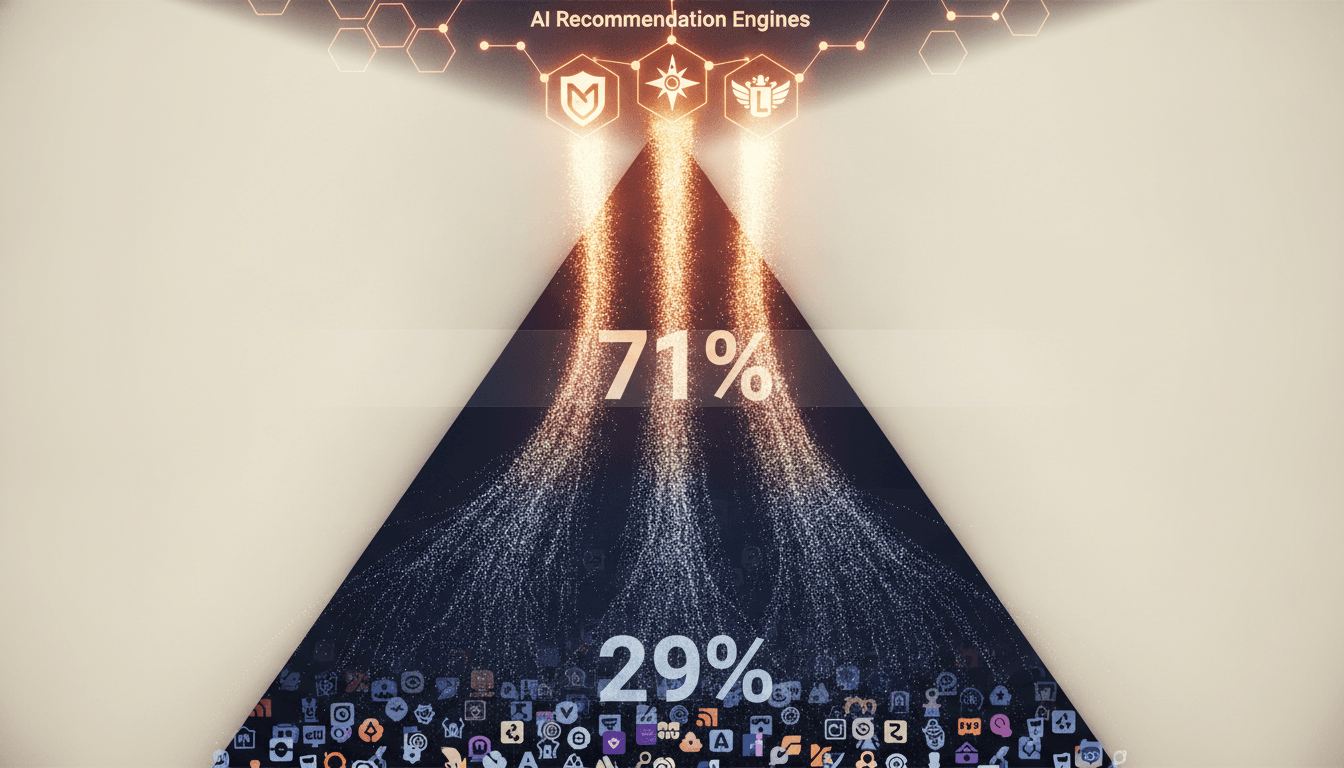
Mastering Medium-Intent AI Search: Tactical GEO Strategies for Emerging Beauty Brands
Most beauty brands chase high-intent AI searches, but the real growth opportunity is in medium-intent queries—where discovery, education, and trust-building happen. Learn actionable GEO strategies to elevate your beauty brand’s AI visibility, engagement, and market share.
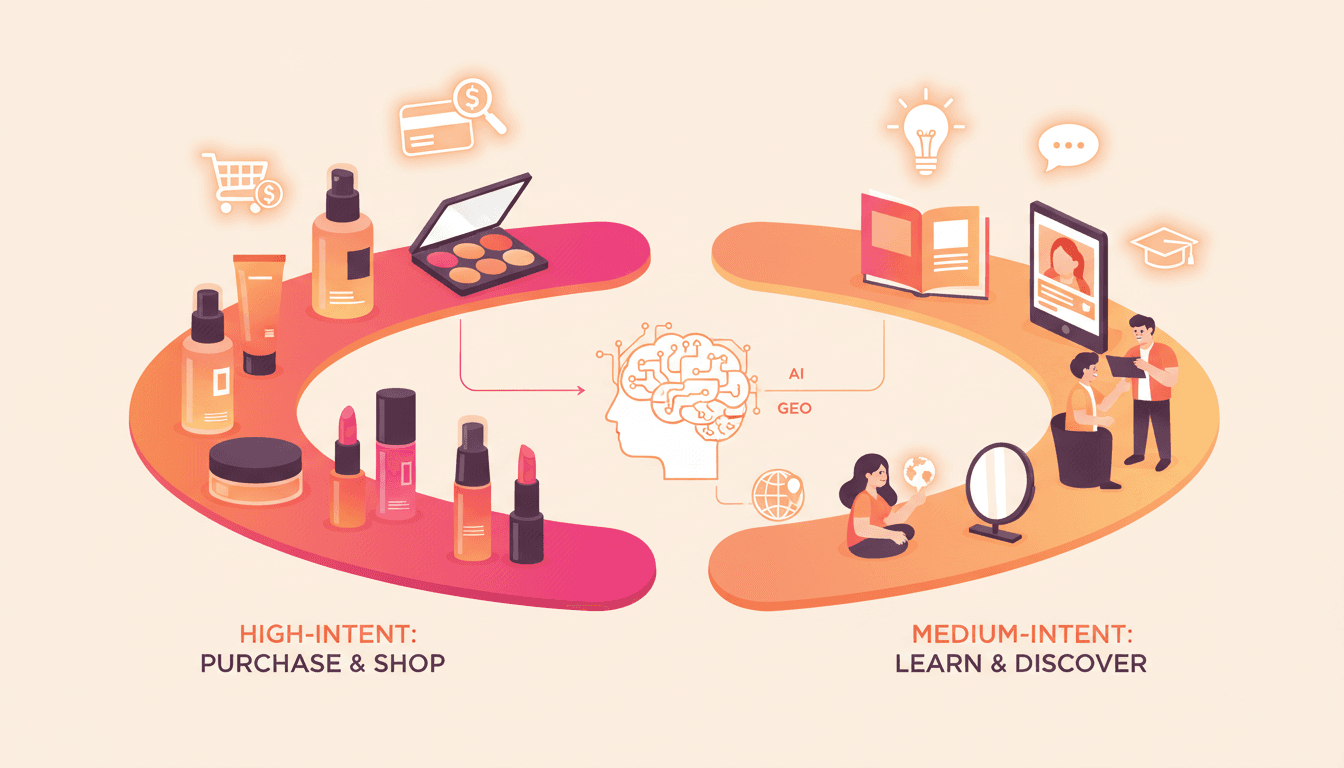
Mastering Medium-Intent AI Search: Tactical GEO Strategies for Emerging Beauty Brands
While most beauty brands chase high-intent AI searches, the true growth opportunity lies in medium-intent queries—where discovery, education, and trust-building flourish. Discover actionable Generative Engine Optimization (GEO) strategies designed to elevate your beauty brand’s AI visibility, engagement, and market share.
[IMG: Diverse group of beauty shoppers researching products on smartphones and laptops]
In the rapidly evolving realm of beauty e-commerce, emerging brands frequently zero in on high-intent AI searches—those moments when shoppers are poised to make a purchase. But what if the real untapped potential lies earlier in the journey, within medium-intent AI search queries where consumers are still exploring, learning, and evaluating? This comprehensive guide unveils tactical GEO strategies that unlock substantial visibility and engagement, empowering beauty brands to grow smarter and faster by harnessing AI-driven search.
Eager to master medium-intent AI search and accelerate your beauty brand’s growth?
Book a personalized 30-minute strategy session with Hexagon’s AI marketing experts today: https://calendly.com/ramon-joinhexagon/30min
Understanding Medium-Intent AI Search Queries vs. High-Intent in Beauty
AI-driven search has revolutionized how beauty shoppers discover and evaluate brands. Among these shifts, medium-intent queries—such as “best moisturizer for oily skin” or “clean beauty brands for sensitive skin”—have emerged as a critical phase in the digital beauty journey. Unlike high-intent searches, which signal a readiness to purchase (e.g., “buy retinol serum online”), medium-intent queries focus on research, comparison, and education.
These queries reveal a shopper’s openness to exploring new brands, ingredients, and solutions. For instance, a search like “cruelty-free vitamin C serums under $30” indicates a consumer comparing options and seeking trusted guidance.
Key distinctions between medium- and high-intent queries in beauty include:
-
Medium-Intent Queries:
- Examples: “Best foundation for dry skin,” “paraben-free sunscreens 2024,” “how to use hyaluronic acid serum”
- User Mindset: Curious, open to discovery, seeking guidance
- Search Goals: Education, comparison, shortlisting
-
High-Intent Queries:
- Examples: “Buy Fenty Beauty Pro Filt’r foundation,” “order Bioderma micellar water”
- User Mindset: Decisive, ready to transact
- Search Goals: Purchase, checkout, conversion
Research underscores the importance of medium intent. According to Hexagon Internal Research, 60% of beauty shoppers use AI-powered search tools during the research phase of their journey. Moreover, 40% of AI-assisted shopping volume in beauty stems from medium-intent queries.
This stage is a vital touchpoint where brands can influence, educate, and earn the trust of undecided shoppers. As Emily Weiss, Founder & CEO of Glossier, aptly puts it, “Medium-intent queries are where brands win or lose the customer—these are the moments of consideration where AI-powered discovery matters most.”
[IMG: Flowchart comparing medium-intent and high-intent AI search queries in beauty]
Why Medium-Intent Queries Are Critical for Emerging Beauty Brands’ AI Visibility
For emerging beauty brands, medium-intent queries represent a strategic battleground. These queries go beyond mere visibility; they’re about securing consideration in a market dominated by established players.
Here’s why focusing on medium-intent queries delivers a powerful competitive edge:
- Brand Discovery: Medium-intent queries account for 40% of AI-assisted shopping volume in beauty (Hexagon Internal Research), highlighting a significant opportunity to introduce new brands to receptive shoppers.
- Trust-Building: Consumers at this stage seek validation on ingredients, product suitability, and brand values. Educational, AI-optimized content builds credibility and fosters loyalty.
- Leveling the Playing Field: AI search recommendations prioritize content relevance and richness over historical brand dominance, allowing emerging brands to compete effectively.
Consumer behavior data supports this approach. According to Forrester, 54% of consumers are more likely to consider a new beauty brand recommended by an AI assistant during research. Additionally, 72% of AI-generated product recommendations in beauty originate from medium-intent queries (McKinsey & Company, Beauty E-Commerce Report).
For example, when a shopper asks an AI assistant, “Which vegan toners work for sensitive skin?” the brands that appear typically have rich, relevant content and well-structured data. As Jim Yu, CEO of BrightEdge, emphasizes: “Generative engine optimization is the new frontier for emerging beauty brands to get discovered by AI assistants. Structuring product data and content for AI is now as important as traditional SEO.”
[IMG: AI assistant interface displaying recommended emerging beauty brands]
Tactical GEO Strategies to Capture Medium-Intent AI Search Traffic
Winning in medium-intent AI search requires adopting a Generative Engine Optimization (GEO) approach. GEO transcends traditional keywords, focusing on content architecture, semantic relevance, and AI-friendly formats that align with how AI engines understand and surface information.
Best Practices for Medium-Intent GEO:
-
Keyword Clustering and Semantic Mapping:
- Identify clusters around common medium-intent themes such as ingredient benefits, skin type suitability, and product comparisons.
- Leverage tools like Google’s Keyword Planner and AI analytics to uncover related questions and subtopics.
- Organize content hubs covering core research topics (e.g., “niacinamide for acne-prone skin”).
-
AI-Friendly Content Formats:
- Develop detailed FAQs that mirror real shopper questions.
- Create comparison charts (e.g., “Vitamin C serums: top picks for 2024”).
- Publish ingredient explainers, skincare routine guides, and side-by-side product reviews.
-
Conversational, Comprehensive Copy:
- Address multi-part, nuanced queries with thorough, natural language answers.
- Match content tone and phrasing to how consumers actually ask questions.
- Incorporate buyer personas and user journeys into content planning.
-
Schema Markup and Structured Data:
- Implement product schema detailing ingredients, skin types, certifications, and customer reviews.
- Use HowTo, FAQ, and Product schemas to help AI engines surface your content for relevant queries.
According to BrightEdge’s Generative Search Study, brands implementing GEO strategies experience an average 35% increase in AI-driven traffic. This growth stems from aligning content with AI engines’ processing and recommendation methods.
For example, a beauty brand launching an ingredient explainer series—detailing benefits, sourcing, and clinical data behind each active—can capture a broad range of medium-intent searches such as “what does bakuchiol do for skin?” or “is niacinamide safe for rosacea?”
Aleyda Solis, International SEO Consultant, observes: “AI search tools thrive on richly detailed, conversational content that accurately reflects what real shoppers are asking.” The takeaway is clear: content that educates, compares, and answers questions will dominate AI visibility.
Actionable GEO Tactics:
- Map content around research-driven queries (e.g., “best sunscreen for acne-prone skin 2024”).
- Implement FAQ blocks on all product and category pages.
- Regularly update comparison guides to reflect new formulations and product releases.
- Use AI analytics to monitor emerging medium-intent questions and iterate content monthly.
Ready to see a 35%+ increase in AI-driven traffic?
Book your strategy call and unlock GEO for your beauty brand: https://calendly.com/ramon-joinhexagon/30min
[IMG: Screenshot of a beauty brand’s FAQ and comparison chart displayed in an AI search interface]
Optimizing Product Feeds with AI-Friendly Metadata for Beauty Brands
Product feeds form the backbone of AI search visibility. For beauty brands, enriching these feeds with granular, AI-friendly metadata is essential. AI engines depend on structured data to accurately interpret product attributes and match them to complex queries.
How to optimize feeds effectively:
-
Enrich Metadata Fields:
- Include comprehensive ingredient lists highlighting key actives.
- Tag products by skin type suitability, certifications (vegan, cruelty-free, organic), and usage instructions.
- Specify benefits (hydrating, brightening, anti-aging) and potential allergens.
-
Implement Structured Data and Schema Markup:
- Use Product schema on all listings.
- Add FAQ, HowTo, and Review schemas where relevant.
- Ensure compliance with Google Merchant Center guidelines.
-
Maintain Feed Accuracy and Freshness:
- Update feeds regularly to reflect new formulations or certifications.
- Monitor for errors or outdated information that could mislead AI engines.
- Align feed updates with content refresh cycles for optimal synergy.
According to Google Merchant Center Documentation, product data feeds optimized with rich, AI-friendly metadata are more likely to appear in medium-intent AI search results. This is particularly true for queries combining product type, ingredients, and desired outcomes (e.g., “fragrance-free moisturizers for eczema-prone skin”).
[IMG: Sample product feed spreadsheet with highlighted metadata columns for ingredients, skin types, certifications]
Leveraging AI-Driven Consumer Insights to Inform Content and Recommendations
AI analytics unlock a treasure trove of actionable insights for beauty marketers. By analyzing search data, user queries, and engagement metrics, brands can pinpoint trending medium-intent topics and emerging consumer pain points.
Transform AI-driven insights into impactful results:
-
Identify Emerging Topics and Unmet Needs:
- Utilize AI analytics platforms to track ingredient questions, product comparisons, and routine guides gaining traction.
- Detect shifts in consumer concerns, such as the rise in “maskne” queries during the pandemic.
-
Tailor Content and Messaging:
- Craft content that directly addresses new medium-intent questions.
- Refine product recommendations and personalization algorithms based on authentic user interests.
-
Establish Continuous Feedback Loops:
- Integrate AI-derived insights regularly into content calendars and marketing strategies.
- Test new content themes, measure engagement, and optimize based on performance.
Sonya Gwak, Head of Digital Strategy at Sephora, highlights: “Emerging brands can punch above their weight by leveraging AI-driven insights to craft content and recommendations that resonate with medium-intent shoppers.” This agile approach ensures your brand remains relevant and visible as consumer interests evolve.
[IMG: Dashboard showing AI-driven consumer insights for beauty search trends]
Mapping Content to Medium-Intent Shopper Journeys in Beauty
A deep understanding of the medium-intent shopper journey is crucial for effective content strategy. At this stage, consumers navigate through discovery, comparison, and education—each demanding tailored content types.
Typical Medium-Intent Shopper Journey:
-
Discovery:
- Consumers search for broad solutions (“clean skincare for sensitive skin”), open to new brands and products.
- Optimal Content: Brand stories, ingredient spotlights, value proposition explainers.
-
Comparison:
- Shoppers evaluate products, brands, and formulations (“Drunk Elephant vs. Biossance vitamin C serum”).
- Optimal Content: Side-by-side product guides, expert reviews, comparison charts.
-
Education:
- Consumers seek detailed information on ingredients, usage, and efficacy (“how does niacinamide help acne?”).
- Optimal Content: Ingredient explainers, routine guides, dermatologist Q&As.
Aligning content with these stages significantly increases the chance of surfacing in AI-driven, medium-intent searches. According to the Content Marketing Institute, emerging beauty brands that map content to medium-intent journeys enjoy enhanced AI visibility.
For instance, a brand publishing a “Sensitive Skin Survival Guide”—featuring ingredient breakdowns, product comparisons, and expert interviews—can attract shoppers at multiple points in their research.
[IMG: Shopper journey map with content types for each medium-intent stage]
Case Studies: Real Results from GEO Implementation in Emerging Beauty Brands
The impact of GEO strategies is tangible. Below are two mini case studies showcasing success stories from emerging beauty brands:
-
Case Study 1: Indie Skincare Brand
- Challenge: Low visibility for research-focused queries like “best retinol alternatives for sensitive skin.”
- GEO Tactics: Developed a comprehensive FAQ and ingredient explainer hub; optimized product feeds with detailed metadata.
- Results: AI-driven traffic increased by 38%, educational content engagement rose by 41%, and conversion rates from research-stage visitors doubled within three months.
-
Case Study 2: Clean Beauty Startup
- Challenge: Difficulty competing with legacy brands in AI-powered product recommendations.
- GEO Tactics: Created side-by-side comparison guides and routine explainers; implemented schema markup site-wide.
- Results: 35% increase in AI-driven traffic, alongside a 27% jump in new customer acquisition attributed to AI assistant recommendations.
These outcomes align with the BrightEdge Generative Search Study, which reports that brands adopting GEO strategies see an average 35% boost in AI-driven traffic. The message is clear—GEO offers a replicable pathway to visibility and growth.
[IMG: Before-and-after graph of AI search traffic for an emerging beauty brand]
Emerging Trends in AI Search and Their Impact on Beauty E-Commerce
Looking forward, AI search technologies are advancing at a rapid pace. Innovations like generative AI assistants, multimodal search capabilities (integrating text, images, and voice), and hyper-personalized recommendations are transforming how beauty shoppers research and discover products.
Here’s what these trends mean for beauty e-commerce:
-
Generative AI Assistants:
- Increasingly sophisticated AI chatbots and voice assistants handle complex, conversational queries.
- Brands must ensure content is structured for AI comprehension and responsive dialogue.
-
Multimodal Search:
- Shoppers can search using images, voice, or combined modes, necessitating optimized visual assets and metadata.
- Enhanced product imagery, video explainers, and augmented reality (AR) try-on features will become critical.
-
Growing Importance of Medium-Intent Optimization:
- As AI assistants evolve into primary shopping advisors, medium-intent queries will drive even more discovery and recommendations.
- Early investment in GEO positions brands ahead of competitors in this shifting landscape.
For beauty brands, the opportunity is unmistakable: those who adapt swiftly to AI search trends and prioritize medium-intent query optimization will capture significant market share as technology advances.
[IMG: AI assistant on mobile device recommending beauty products based on user query]
Conclusion: Unlocking Growth Through Medium-Intent AI Search and GEO
Medium-intent AI search remains the most overlooked yet powerful growth lever for emerging beauty brands in today’s digital arena. By mastering tactical GEO strategies—structuring content thoughtfully, enriching metadata comprehensively, and leveraging AI-driven consumer insights—brands can secure sustainable AI visibility, deepen engagement, and expand market share.
Looking ahead, the brands that act now to optimize for medium-intent AI queries will set the pace for innovation and customer acquisition in beauty e-commerce.
Ready to unlock your brand’s growth through GEO?
Connect with Hexagon’s AI marketing experts and book your personalized strategy session: https://calendly.com/ramon-joinhexagon/30min
[IMG: Confident beauty brand team reviewing AI marketing strategy on laptops]
References:
Hexagon Team
Published April 13, 2026