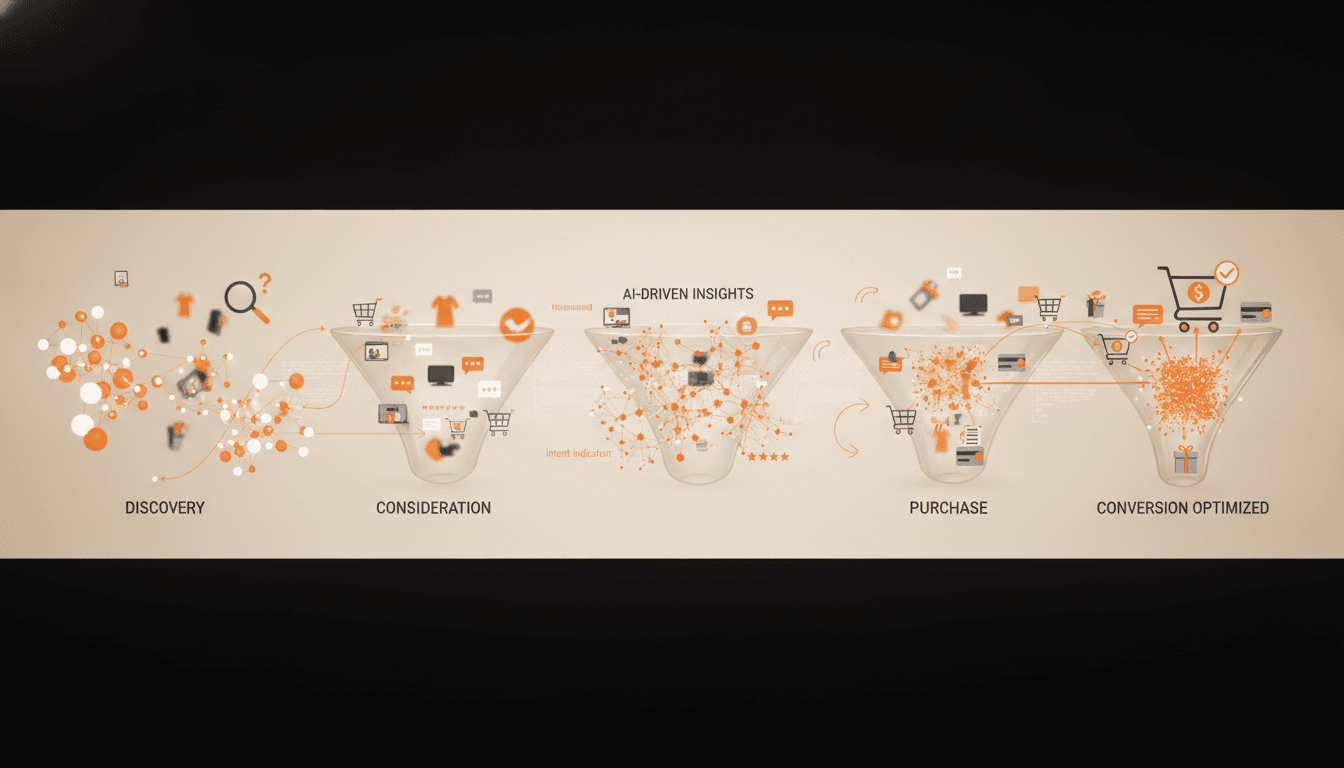
Mastering Medium-Intent AI Search Behavior: A Guide for Health & Wellness E-Commerce Marketers
Medium-intent AI search is exploding in influence across health & wellness e-commerce. Discover how to optimize your product content and GEO strategy to capture high-intent, research-driven shoppers and drive sustainable growth.

Mastering Medium-Intent AI Search Behavior: A Guide for Health & Wellness E-Commerce Marketers
Medium-intent AI search is rapidly transforming health & wellness e-commerce. Learn how to optimize your product content and GEO strategy to capture research-driven shoppers with high purchase intent, unlocking sustainable growth.
[IMG: AI-driven health & wellness product search interface on a tablet]
As AI-powered shopping engines revolutionize how consumers discover and purchase health and wellness products, medium-intent searches have emerged as the most influential yet often overlooked segment. Understanding the motivations behind these AI shoppers and tailoring your content for generative engine optimization (GEO) can unlock substantial traffic and boost conversions. In this comprehensive guide, we decode medium-intent AI search behavior and provide health e-commerce marketers with actionable insights and strategies to dominate this expanding opportunity.
Ready to elevate your health & wellness e-commerce strategy with expert GEO insights? Book a personalized 30-minute consultation with Hexagon today.
Understanding Medium-Intent AI Search in Health & Wellness E-Commerce
Medium-intent AI search queries occupy the crucial space between purely informational and transactional searches. They reflect shoppers who are actively researching but not yet ready to buy—those who are weighing options carefully. Examples include queries like “best plant-based protein for muscle gain” or “top-rated probiotics for gut health.” These searches blend curiosity and comparison, signaling a desire for trusted evidence before making a purchase. Unlike purely informational queries such as “what is collagen?” or straightforward transactional ones like “buy collagen peptides,” medium-intent queries combine education with clear purchase intent.
[IMG: Illustration showing the spectrum of search intent: informational, medium, transactional]
In health & wellness, medium-intent searches are especially valuable. Consumers in this segment often seek side-by-side product comparisons, clinical validation, and third-party certifications to distinguish credible brands from marketing hype. Because these products impact personal well-being, shoppers demand a higher level of transparency and evidence than typical retail categories.
AI-powered search engines now play a vital role in interpreting these nuanced queries. Instead of delivering generic product lists, generative engines provide detailed, contextually relevant recommendations based on product data, user intent, and historical outcomes. According to Gartner Digital Commerce Insights, medium-intent queries on AI shopping platforms are growing at three times the rate of transactional queries.
This growth aligns with evolving consumer habits. A striking 60% of health & wellness shoppers now rely on AI-powered search assistants to research products before purchasing, as reported by Forrester Research. For brands, this means the battle for influence is shifting upstream—into the research phase, where AI guides buyers’ decisions.
- Medium-intent queries represent the fastest-growing segment on AI shopping engines
- Health & wellness shoppers prioritize transparency, evidence, and relevant comparisons
- AI engines interpret intent to surface tailored, trust-focused recommendations
As Dr. Maya Singh, Head of AI Commerce Strategy at Gartner, highlights:
“Medium-intent queries represent the most dynamic opportunity for health & wellness brands to influence AI-driven purchase decisions. Brands that offer transparent, evidence-backed content are winning the recommendation race.”
Key Drivers of Medium-Intent AI Shopper Behavior in Health & Wellness
Today’s AI shoppers demand more than just product listings—they seek credible, comprehensive information. Transparency and evidence-based content are central to medium-intent decision-making, especially in health & wellness, where choices impact personal health.
[IMG: Shopper comparing two supplement product pages with clinical evidence and certifications]
What motivates medium-intent AI shoppers?
- Transparency: Shoppers want clear details on product ingredients, sourcing, and validation. Ingredient lists, origin information, and third-party certifications are essential for building trust.
- Evidence-Based Information: Clinical claims, citations of scientific studies, and endorsements by medical professionals significantly boost confidence. The Pew Research Health & AI Study 2024 found shoppers are three times more likely to trust AI assistant recommendations that cite clinical evidence or expert endorsements.
- Product Comparisons: Medium-intent shoppers spend 16% more time on product pages that offer side-by-side comparisons and evidence-backed content (Salesforce Commerce Cloud Insights). They want to evaluate thoroughly, not just purchase impulsively.
Trust signals play a pivotal role. Certifications such as NSF, USP, or organic labels, combined with authentic user reviews, directly influence both AI engine recommendations and shopper decisions. The OpenAI Plugin Ecosystem Study 2024 reports that product feeds including third-party certifications and transparent sourcing are 2.5 times more likely to be recommended by AI assistants.
Contextual relevance is equally critical. According to the AI Product Manager Survey, The Recommender Institute, 2024, 72% of AI product managers identify contextual relevance as the top driver of recommendations in health e-commerce.
Key behavioral drivers include:
- A strong demand for evidence and transparency
- Preference for curated, relevant product comparisons
- Heavy reliance on visible trust signals
Elena Browne, Director of E-Commerce Strategy at OpenAI Plugin Ecosystem, sums it up:
“AI shoppers seek more than mere product listings—they want holistic information that includes clinical evidence, certifications, and authentic user stories.”
The Impact of Medium-Intent Queries on Health E-Commerce Traffic and Sales
Medium-intent AI search is swiftly becoming a primary source of high-value traffic and conversions for health & wellness e-commerce brands. This segment influences the entire purchase funnel—from initial research to the final sale.
[IMG: Traffic analytics dashboard highlighting AI-driven referral sources]
The growth is remarkable. SimilarWeb Health E-Commerce Trends 2024 reports that generative engines now drive over 18% of all referral traffic to health e-commerce sites. Projections indicate this figure will climb to 30% by 2026, as AI becomes the default shopping companion.
Brands investing in generative engine optimization (GEO) are seeing tangible benefits. Hexagon’s internal benchmarking (Q1 2024) reveals a 25% average increase in AI-driven traffic for GEO-optimized health brands compared to those without optimization. These brands enjoy not only higher visits but also longer engagement and deeper exploration, as medium-intent shoppers immerse themselves in trustworthy, evidence-rich content.
- 18% of health e-commerce traffic now originates from generative engines
- 25% average uplift in AI-driven visits for GEO-optimized health brands
- Medium-intent queries drive both product discovery and purchase decisions
Medium-intent queries help surface credible, side-by-side product options, guiding shoppers seamlessly down the conversion funnel. AI assistants have become adept at shepherding users through research, comparison, and purchase—making GEO indispensable for health e-commerce growth.
As Alexis Rivera, Chief Marketing Officer at Hexagon, emphasizes:
“Generative engine optimization is rapidly becoming as critical as traditional SEO in health e-commerce. Brands that don’t adapt risk missing out on a fast-growing channel.”
Optimizing Product Content and Feeds for Medium-Intent AI Shoppers
To capture the attention—and trust—of medium-intent AI shoppers, health & wellness brands must rethink how they structure, tag, and present product content. This goes far beyond keyword stuffing; it requires anticipating research-driven queries and responding with transparent, evidence-rich information.
[IMG: Product feed interface with highlighted certifications, clinical claims, and structured data]
Best practices for medium-intent product content:
- Craft Descriptions for Research-Oriented Queries: Directly address “which,” “best,” and “compare” questions within product copy. Emphasize clinical efficacy, ingredient sourcing, and certifications early on.
- Embed Comparative Data: Use tables or bullet points to highlight key differences in formulations, strengths, and intended benefits. Shoppers engage longer with clear side-by-side comparisons.
- Highlight Trust Signals: Showcase certifications (e.g., NSF, Non-GMO Project), third-party test results, and endorsements by credible health professionals prominently. Verified user reviews also reinforce credibility.
The role of structured data and rich snippets:
Structured data, such as schema.org/MedicalWebPage, enables AI engines to parse product claims, health benefits, and evidence sources effectively. Brands that implement structured data for health claims see a 19% improvement in AI recommendation rates (Search Engine Journal SEO & Health 2024). Rich snippets highlighting clinical claims, review scores, and certifications increase the likelihood of featuring in AI-generated shopping guides.
- Use schema markup for ingredients, certifications, and clinical studies
- Keep product feeds updated with transparent, verifiable data
- Incorporate timestamps to signal freshness and relevance to AI engines
Including certifications, clinical evidence, and transparent ingredient lists:
- Detail every ingredient, its origin, and supporting clinical evidence
- Provide links to study abstracts or full research papers when possible
- List all third-party certifications clearly, ensuring machine readability in product feeds
Ready to elevate your health & wellness e-commerce strategy with expert GEO insights? Book a personalized 30-minute consultation with Hexagon today.
Samir Patel, Senior Product Manager at Perplexity AI, explains:
“Optimizing for medium-intent AI search means anticipating the research mindset. Brands that surface credible comparisons and up-to-date data are the ones AI assistants recommend most often.”
Generative Engine Optimization (GEO) Techniques to Boost AI Recommendations
Generative Engine Optimization (GEO) represents the cutting edge for brands aiming to dominate medium-intent health & wellness AI searches. GEO extends beyond traditional SEO by focusing on how generative engines interpret, compare, and recommend products using structured data and contextual signals.
[IMG: Flowchart showing GEO process from data structuring to AI recommendation]
GEO Fundamentals:
- Feed Optimization: Keep product feeds comprehensive and current, including fields for certifications, clinical claims, and ingredient transparency.
- Contextual Keyword Integration: Move beyond generic keywords by incorporating natural language phrases like “best for sensitive stomachs” or “clinically proven for joint health,” which AI engines frequently parse.
- Content Tagging: Apply AI-friendly tags and structured metadata to highlight product benefits, intended uses, and evidence sources.
Actionable GEO tactics for health e-commerce:
- Leverage AI-Driven Product Comparison Data: Regularly update feeds with comparative metrics—such as efficacy rates, side effects, and user satisfaction—that generative engines use to build shopping guides.
- Monitor and Adapt to User Intent Signals: Analyze which medium-intent queries generate the most engagement and conversions; refine content and feeds accordingly.
- Enable Machine-Readable Trust Signals: Ensure all certifications, clinical claims, and ingredient lists are marked up for easy AI parsing.
Why GEO matters for medium-intent health e-commerce:
- AI assistants increasingly act as shopping gatekeepers, referencing only products meeting high transparency and evidence standards.
- Brands optimizing for GEO experience significant lifts in AI-generated recommendations—Hexagon’s Q1 2024 benchmarking shows a 25% average traffic increase for health brands implementing these strategies.
- GEO requires continuous data hygiene, monitoring, and adaptation to evolving AI algorithms—not just a one-time effort.
Key steps to boost AI recommendations:
- Regularly audit and enrich product feeds with new certifications or study results
- Use structured data and NLP-optimized copy that answers medium-intent queries directly
- Collaborate with AI engine partners to align data formats and standards
By proactively embracing GEO, health & wellness brands can ensure their products consistently reach the right shoppers at the precise stage of intent.
Case Studies and Benchmarks: GEO Success in Health & Wellness E-Commerce
Real-world examples demonstrate GEO’s transformative impact on medium-intent AI search within health & wellness. Brands that adopt structured data, transparent content, and continuous GEO updates outperform competitors in traffic, engagement, and conversions.
[IMG: Before-and-after line graph of AI-driven traffic for a GEO-optimized health supplement brand]
Case Example 1: NutraCore Supplements
After implementing GEO best practices—including structured schema for clinical claims, product comparisons, and updated certifications—NutraCore achieved:
- 27% increase in AI-driven referral traffic within six months
- 18% longer average session durations on product pages
- 12% lift in conversion rates from AI-generated shopping guides
Case Example 2: PureVita Organics
Focusing on transparency and evidence-based content, including links to published studies and authentic user stories, PureVita realized:
- 25% average uplift in AI-driven traffic, matching Hexagon’s benchmark
- Greater inclusion in generative engine “top product” lists
- Improved trust and engagement metrics, measured by review volume and page shares
Lessons Learned:
- Structured data and transparent, evidence-rich content are essential
- Regular feed audits and GEO updates sustain long-term growth
- Brands anticipating medium-intent queries dominate AI-generated recommendations
These outcomes confirm GEO as a catalyst for measurable, repeatable success in health & wellness e-commerce.
Future Trends and Recommendations for AI-Assisted Health E-Commerce
Looking forward, the health & wellness e-commerce landscape will continue evolving with advanced AI capabilities and shifting shopper expectations. Medium-intent AI search behavior is set to grow even more sophisticated as generative engines advance.
[IMG: Futuristic AI voice assistant helping a user shop for health products]
Emerging trends to watch:
- Personalized AI Recommendations: Engines will increasingly tailor product suggestions based on individual health goals, past purchases, and contextual data.
- Voice Search Adoption: Growing use of voice assistants for research makes conversational GEO and structured data more critical than ever.
- Deeper Integration of Clinical Data: AI engines will prioritize products supported by the latest clinical evidence and real-world outcomes.
Strategic recommendations to stay ahead:
- Invest in ongoing GEO and structured data improvements
- Monitor AI-driven traffic and adapt content to reflect real user queries
- Collaborate with AI engine partners to keep pace with evolving data standards
- Prioritize transparency, evidence, and trust at every customer touchpoint
For health & wellness marketers, the takeaway is clear: anticipate AI shopper needs and outpace competitors by making your products the most credible, accessible, and recommendation-ready in the market.
Conclusion
Medium-intent AI search is reshaping the health & wellness e-commerce landscape. Brands that embrace this challenge—by prioritizing transparency, evidence-rich content, and generative engine optimization—are capturing a rapidly growing, highly engaged shopper segment. The opportunity is now: invest in GEO, understand your AI-driven audience, and position your products at the forefront of the recommendation race.
Ready to elevate your health & wellness e-commerce strategy with expert GEO insights? Book a personalized 30-minute consultation with Hexagon today.
[IMG: Health & wellness e-commerce team analyzing AI-driven marketing results together]
Hexagon empowers health & wellness brands to thrive in the age of AI-driven commerce. For more actionable insights and personalized support, visit Hexagon.
Hexagon Team
Published May 12, 2026