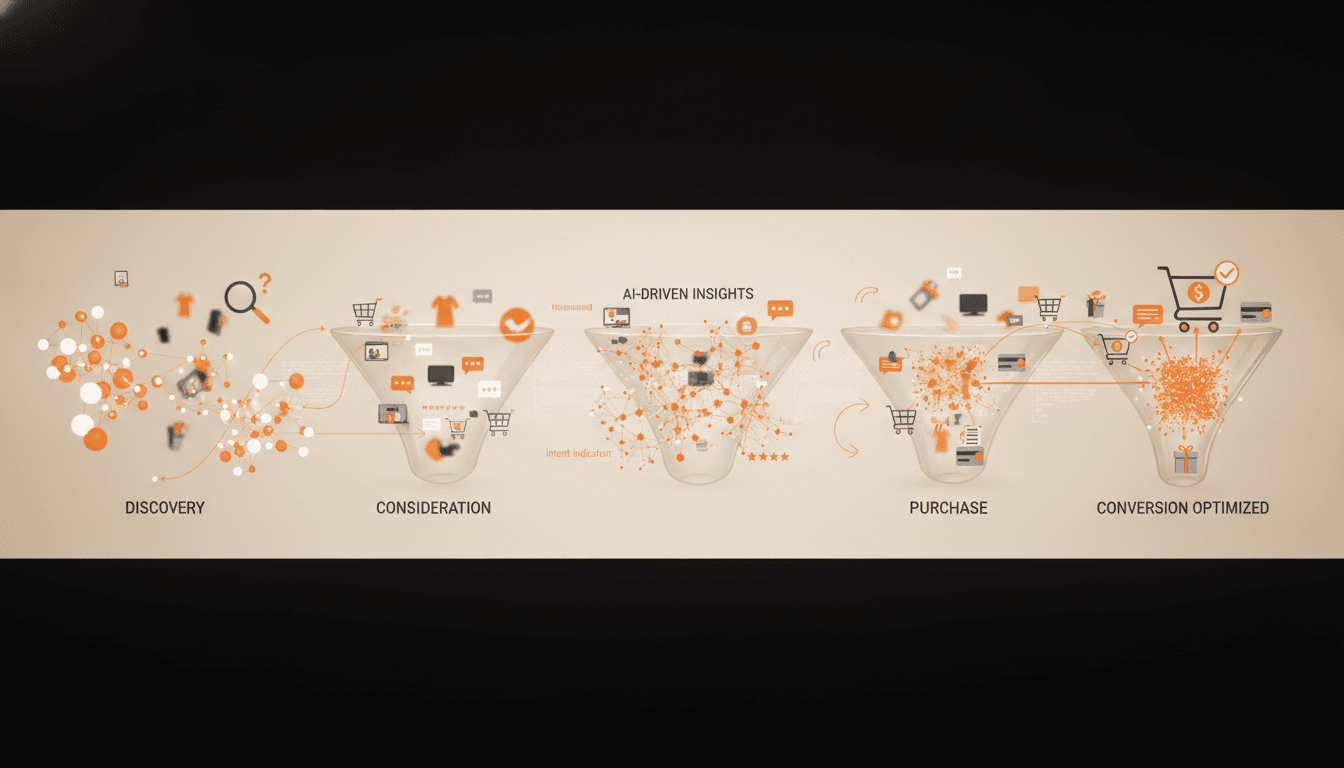
Leveraging Hexagon’s AI-Powered Competitive Analysis to Dominate High-Intent AI Shopping Results
As AI shopping assistants reshape how consumers discover products, brands face a new battleground: securing visibility in AI-driven search. Learn how Hexagon’s AI-powered competitive analysis helps you monitor rivals, identify ranking gaps, and strategically optimize your presence to capture incremental revenue and high-intent shoppers.

Leveraging Hexagon’s AI-Powered Competitive Analysis to Dominate High-Intent AI Shopping Results
As AI shopping assistants revolutionize how consumers discover products, brands face a critical new battleground: securing visibility in AI-driven search. Discover how Hexagon’s AI-powered competitive analysis empowers you to monitor rivals, uncover ranking gaps, and strategically optimize your presence—capturing incremental revenue and attracting high-intent shoppers.
[IMG: Illustration of AI shopping assistants interacting with consumers across devices]
AI-powered shopping assistants are rapidly transforming e-commerce discovery, creating an urgent challenge for brands: how to secure top positions in AI search results. Without real-time insights into your competitors’ AI rankings and product recommendations, your brand risks losing valuable high-intent traffic to rivals. Hexagon’s AI-powered competitive analysis equips you with the tools to monitor competitors, identify gaps in your AI visibility, and strategically optimize your presence—letting you outshine competitors and capture incremental revenue.
Ready to outsmart your AI shopping competitors? Book a personalized 30-minute demo with Hexagon and discover how our AI-powered competitive analysis can elevate your AI search rankings today.
Understanding the Shift: The Rise of AI Shopping Assistants and Their Impact on E-commerce Discovery
The e-commerce landscape is undergoing a profound shift as AI shopping assistants become central to how consumers discover products. By 2026, AI-initiated shopping queries are projected to make up 30% of all e-commerce product discovery—a dramatic departure from traditional search methods (Gartner, AI in Commerce Forecast). This evolution means brands can no longer rely solely on optimizing for classic search engines.
Generative AI assistants such as ChatGPT, Perplexity, and Claude now drive personalized shopping recommendations, fundamentally changing the consumer decision journey. These engines process massive datasets, user context, and intent to deliver highly targeted product suggestions. As a result, competition for visibility within AI-driven shopping results has never been fiercer.
Consumer trust in AI shopping recommendations is surging—68% of shoppers now trust AI-generated results as much as traditional search engine outputs (McKinsey, Consumer AI Shopping Report 2024). For brands, this trust underscores a critical imperative: optimize for AI-driven discovery or risk falling behind competitors who capture the lion’s share of high-intent traffic.
What Is AI Competitive Analysis and Why It’s Vital for High-Intent AI Shopping Results
AI competitive analysis is the systematic tracking and benchmarking of your brand’s—and your competitors’—visibility within generative AI engine results. Unlike traditional SEO, which focuses on static keyword rankings, AI competitive analysis monitors dynamic, context-driven product recommendations across multiple AI shopping assistants.
Without competitive AI visibility, brands face several challenges:
- Blind spots in understanding where and how competitors appear in AI recommendations
- Missed chances to intercept high-intent shoppers during AI-driven decision-making
- Delayed responses to competitors’ surges or drops in AI rankings
“In the new era of AI-driven commerce, competitive analysis is no longer optional—it’s the foundation of generative engine optimization,” explains Sarah Kim, VP of E-commerce Strategy at Hexagon. Hexagon’s AI-powered platform enables brands to:
- Track competitors’ AI search presence in real time
- Identify which products competitors are recommended for high-intent queries
- Benchmark performance against industry standards and evolving AI ranking factors
Brands leveraging Hexagon’s competitive analysis tools have boosted their AI search rankings by an average of 35% compared to direct competitors (Hexagon Internal Case Study). This competitive edge is crucial as generative engine optimization (GEO) becomes the primary lever to capture high-intent shoppers in an AI-driven landscape.
How Hexagon’s AI-Powered Competitive Analysis Reveals Your and Your Rivals’ AI Search Visibility
Hexagon’s AI competitive analysis platform offers comprehensive visibility into both your brand’s and your competitors’ performance across leading AI shopping assistants. Armed with granular, real-time data, brands can detect shifts in AI-driven product recommendations and respond strategically.
Here’s how Hexagon empowers marketing teams:
- Real-time monitoring alerts you to competitor surges, declines, and new product recommendations across ChatGPT, Perplexity, Claude, and other major AI engines (Hexagon Feature Release Notes).
- Granular insights reveal competitor trends, keyword share of voice, and AI-generated product placements, providing actionable intelligence (Hexagon Platform Overview).
- Weekly reports and visual dashboards give a clear picture of your standing in AI shopping results compared to competitors.
[IMG: Screenshot of Hexagon’s AI competitive analysis dashboard comparing multiple brands in AI shopping results]
For instance, if a rival brand suddenly gains visibility for a lucrative keyword in ChatGPT recommendations, Hexagon’s alerts immediately flag this change. Your team can then analyze the drivers—such as new content, product metadata, or pricing adjustments—and adapt your strategy accordingly.
The impact is clear: 75% of top AI shopping results are secured by brands that perform regular, deep-dive competitor analysis and rapidly optimize based on these insights (Ecommerce AI Trends Report 2024). This data-driven approach distinguishes AI shopping leaders from the rest.
Step-by-Step Guide: Monitoring Competitors’ AI Visibility Using Hexagon AI Insights
Tracking competitor AI visibility with Hexagon is straightforward yet powerful. Follow these steps to harness Hexagon’s capabilities for sustained competitive advantage:
1. Set Up Competitor Tracking Dashboards
- Define your primary competitors within the Hexagon platform.
- Select the AI shopping assistants most relevant to your industry vertical.
- Configure dashboards to monitor keyword groups and product categories tied to high-intent queries.
2. Interpret Competitor AI Ranking Trends
- Analyze week-over-week changes in competitor rankings across AI engines.
- Identify which products are most frequently recommended for your priority keywords.
- Detect patterns in AI-generated content or metadata influencing ranking performance.
3. Identify Shifts in Product Recommendations
- Leverage Hexagon’s alerting system to spot sudden spikes or drops in competitor visibility.
- Investigate whether changes stem from new product launches, content updates, or pricing strategies.
- Prioritize action when a competitor gains traction on high-value AI shopping queries.
4. Respond Swiftly to Threats and Opportunities
- Benchmark your product recommendations and rankings against competitors to uncover gaps.
- Initiate targeted optimizations in content, pricing, or keyword strategy informed by real-time competitor intelligence.
- Schedule regular reviews to proactively adapt to AI algorithm changes.
[IMG: Workflow diagram of setting up and acting on Hexagon’s AI competitor monitoring insights]
Looking ahead, consistent monitoring and rapid response are essential. As James Patel, Principal Analyst at Forrester, notes, “Brands that understand both their own and their competitors’ AI visibility are best positioned to capture high-intent shoppers using generative search.”
Ready to outsmart your AI shopping competitors? Book a personalized 30-minute demo with Hexagon to see how our AI-powered competitive analysis can transform your AI search rankings today.
Identifying AI Ranking Gaps and Leveraging Them to Capture Incremental High-Intent Traffic
Spotting and filling AI search ranking gaps is one of the most effective strategies to drive incremental growth. Hexagon’s competitive analysis pinpoints exactly where your brand is underperforming—and where competitors are gaining ground.
Here’s how to harness Hexagon’s data for maximum impact:
- Identify keywords and queries where competitors’ products are recommended but yours are absent.
- Analyze missed opportunities in AI-generated product recommendations across key assistants.
- Gain actionable insights on content, metadata, or product features to bridge these gaps.
For example, if Hexagon reveals a competitor consistently appears in Perplexity’s product suggestions for “sustainable running shoes,” while your brand does not, you can act swiftly. Update product descriptions, optimize metadata, and tailor your content to align with AI assistant preferences.
The results speak for themselves. Brands that identify and fill AI search ranking gaps with Hexagon have experienced up to 20% incremental traffic growth within 90 days (Hexagon Client Performance Data). Timely action, powered by precise competitive intelligence, yields substantial gains in high-intent traffic and revenue.
Deep-Dive Competitive Insights: Informing Your GEO Strategy for Maximum AI Search Presence
Crafting a winning generative engine optimization (GEO) strategy requires more than surface-level data. Hexagon delivers deep-dive competitive insights that inform content, keyword, and product optimization at every level.
Here’s how Hexagon’s intelligence shapes a high-impact GEO strategy:
- Refine keyword targeting by benchmarking competitor share of voice in AI shopping results.
- Align product content and metadata with signals favored by AI shopping assistants, including structured data, detailed attributes, and user-centric language.
- Employ continuous benchmarking and automated alerts to stay ahead of AI algorithm updates and competitor moves.
[IMG: Data visualization showing competitive keyword share of voice and AI assistant product recommendation overlap]
Linda Zhou, Head of AI Search at Shopify, observes, “The brands dominating AI shopping recommendations today are those who treat generative engine optimization as a competitive arms race.” Hexagon’s deep insights ensure your team is always equipped to adapt, optimize, and maintain an edge—no matter how AI shopping evolves.
Data-Driven Optimizations: Real Results From Brands Using Hexagon’s AI Competitive Analysis
The impact of Hexagon’s AI competitive analysis is evident across multiple e-commerce verticals. Brands leveraging Hexagon’s insights consistently outperform peers in AI search rankings and high-intent traffic growth.
Here are some real-world outcomes:
- Brands using Hexagon’s tools improved AI search rankings by an average of 35% compared to direct competitors (Hexagon Internal Case Study).
- Those who filled AI search ranking gaps identified by Hexagon saw up to 20% incremental traffic growth within 90 days (Hexagon Client Performance Data).
- 75% of top AI shopping results are now achieved by brands who conduct regular, deep-dive competitor analysis and rapidly optimize strategies (Ecommerce AI Trends Report 2024).
Michael Grant, Director of Growth at a leading DTC brand, shares, “Hexagon’s real-time competitor tracking provides our team with actionable insights that enable continuous improvement of our AI shopping presence.” The results are not only immediate but sustainable, helping brands maintain a competitive edge as AI search algorithms and consumer behaviors evolve.
Conclusion: Why Adopting Hexagon’s AI Competitive Analysis Is Essential for E-commerce Growth Strategists
AI-powered shopping assistants are fundamentally rewriting the e-commerce playbook. To capture high-intent shoppers and maximize revenue growth, brands must embrace proactive, data-driven GEO strategies rooted in competitive intelligence.
Hexagon’s AI-powered competitive analysis delivers the real-time insights, benchmarking, and alerting essential to monitor rivals, identify ranking gaps, and act swiftly. Looking forward, the brands that lead in AI shopping will be those that treat competitive analysis as an ongoing, strategic imperative.
Ready to outsmart your AI shopping competitors? Book a personalized 30-minute demo with Hexagon to see how our AI-powered competitive analysis can transform your AI search rankings today.
[IMG: E-commerce strategist analyzing AI search data on a Hexagon dashboard]
Hexagon Team
Published March 8, 2026