Key GEO Metrics Every Beauty Brand Should Track to Measure AI Search Success
In the age of AI-driven discovery, beauty brands must navigate new digital challenges to remain visible and competitive. This comprehensive guide explores the essential GEO metrics that empower beauty e-commerce leaders to measure—and maximize—their AI search success.
Key GEO Metrics Every Beauty Brand Should Track to Measure AI Search Success
In today’s AI-driven discovery landscape, beauty brands face unprecedented challenges to maintain visibility and outperform competitors. This comprehensive guide reveals the essential GEO metrics that empower beauty e-commerce leaders to accurately measure—and strategically maximize—their AI search success.
[IMG: Modern beauty brand digital marketing team analyzing AI search analytics dashboard]
In a digital world rapidly transformed by artificial intelligence, beauty brands must adapt to stand out in AI-powered search results. Tracking the right geo-targeted key performance indicators (GEO KPIs) can revolutionize how your brand captures AI-generated traffic, elevates conversions, and stays ahead in an increasingly competitive market. This guide unpacks the critical AI search metrics every beauty e-commerce brand should monitor to achieve measurable, sustainable growth.
Ready to elevate your beauty brand’s AI search performance with proven GEO strategies? Book a free 30-minute consultation with Hexagon today.
Understanding GEO KPIs in the Context of AI Search for Beauty Brands
The surge of AI-powered search has fundamentally reshaped how consumers discover and engage with beauty brands online. GEO KPIs—metrics tailored to geographic targeting—offer beauty marketers crucial insights into performance variations across different locations, especially within AI search contexts.
AI-driven referrals now contribute up to 18% of beauty e-commerce site traffic in the US and UK (Similarweb AI Search Impact Report). This dramatic shift means traditional SEO metrics alone no longer paint the full picture. AI algorithms and digital assistants evaluate brands based on a wider array of factors, including structured data, citation frequency, and local relevance.
Here’s how AI search metrics are redefining online visibility for beauty brands:
- Citation frequency: How often AI assistants recommend your brand.
- AI-driven traffic share: The percentage of site visits originating from AI-powered sources.
- Engagement and conversion metrics: Add-to-cart rates, dwell time, and repeat visits specifically from AI-referred users.
As Emma Zhang, Lead AI Product Manager at Google, emphasizes:
“Structured data and authoritative content form the backbone of recognition and recommendation by AI search engines.”
For instance, beauty brands that proactively optimize for AI search are 2.5x more likely to be cited as top recommendations in AI assistant queries (Hexagon Market Intelligence, 2024). This statistic highlights why monitoring the right GEO KPIs is essential.
Traditional SEO metrics—such as keyword rankings and organic traffic—remain relevant but are no longer sufficient in an AI-driven ecosystem. Beauty brands must broaden their analytics to include AI-specific signals and localized performance data for a truly comprehensive view of digital success.
[IMG: Visualization comparing traditional SEO metrics with AI search-specific GEO KPIs]
Critical GEO KPIs Every Beauty Brand Should Track
To drive measurable growth in the AI era, beauty brands must identify and continuously monitor key GEO metrics that capture both visibility and engagement within AI search environments.
1. AI Traffic Share
Measuring the proportion of site visits from AI-driven search referrals is fundamental. Currently, 18% of beauty e-commerce traffic is attributed to these sources (Similarweb AI Search Impact Report). This metric reveals how well your acquisition strategy aligns with evolving consumer discovery behaviors.
2. Citation Frequency & Share of Voice
Citation frequency—the count of times your brand is recommended by AI assistants—directly impacts your share of voice within digital ecosystems. Hexagon’s proprietary analysis shows that brands with higher citation frequency capture substantially more AI-driven traffic and conversions.
- Citation frequency = Number of AI assistant recommendations mentioning your brand
- Share of voice = Percentage of all AI recommendations in your category that feature your brand
David Stein, VP of Strategy at Similarweb, notes:
“Citation frequency in AI search is becoming as critical as traditional SERP rankings for emerging beauty brands.”
3. AI-Driven Conversion Rate
Conversion rate uplift is a tangible benefit for brands optimized for AI. Beauty companies employing AI-optimized product and content strategies have experienced a 14-20% increase in conversions (McKinsey Digital Beauty & AI Report). This KPI isolates the direct impact of AI referrals on actual purchases.
4. Engagement Metrics: Add-to-Cart Rate, Dwell Time, Repeat Visits
Engagement indicators are particularly predictive of conversion for AI-referred traffic compared to traditional organic search (Nielsen Norman Group E-commerce User Study). Key findings include:
- A 22% increase in average time on site for visitors arriving via AI recommendations versus traditional SEO (Econsultancy Beauty Analytics Study).
- Elevated add-to-cart rates and repeat visit frequency signal stronger purchase intent and brand loyalty among AI-sourced users.
How these GEO KPIs interconnect:
- AI traffic share reflects your brand’s reach within the AI search landscape.
- Citation frequency and share of voice indicate your brand’s authority and prominence.
- AI-driven conversion rate measures your effectiveness in turning AI-generated interest into sales.
- Engagement metrics guide ongoing optimization and customer retention strategies.
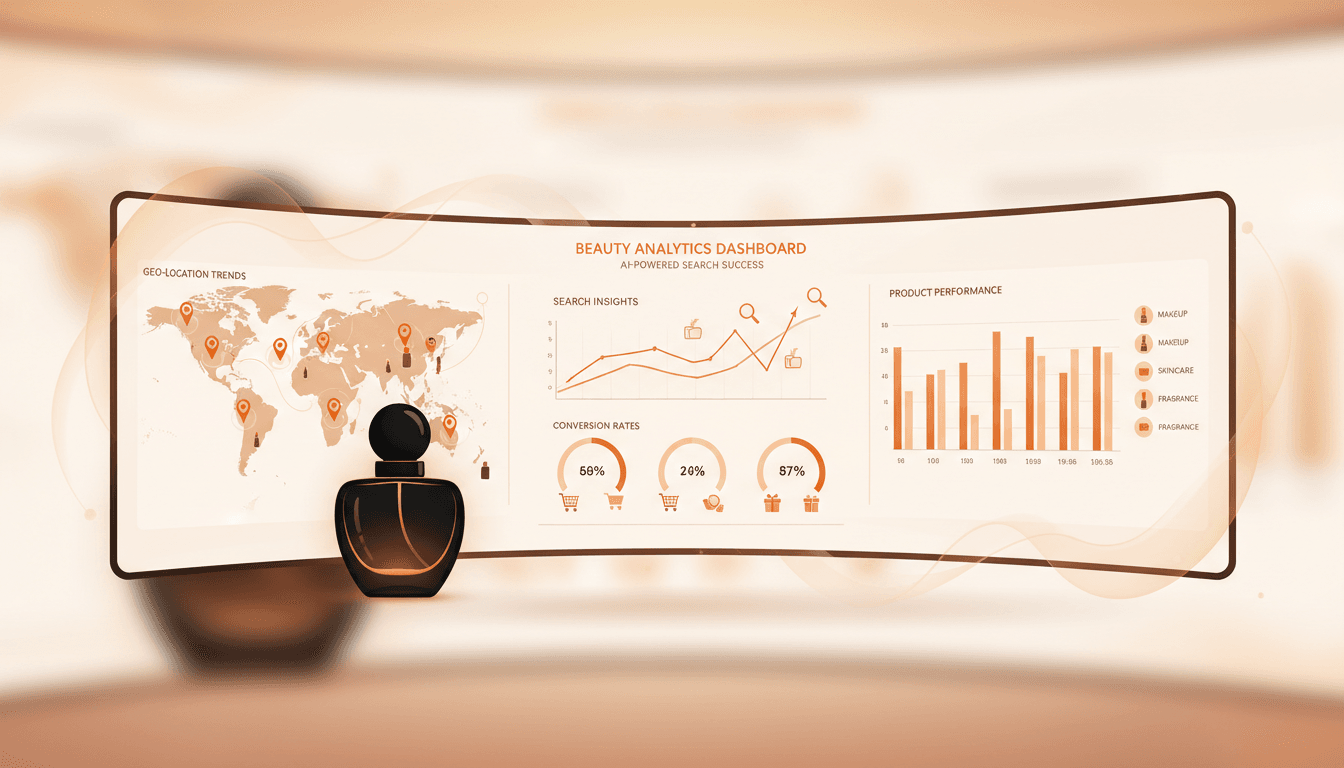
[IMG: Sample dashboard visualizing AI traffic share, citation frequency, and conversion rates for a beauty e-commerce brand]
How to Measure and Attribute AI-Driven Traffic and Conversions
Accurate measurement and attribution of AI-driven traffic require sophisticated analytics combined with precise tagging methods.
1. Identifying AI-Driven Traffic Sources
Modern analytics platforms, including Google Analytics 4 and Adobe Analytics, enable segmentation by referral source. Custom channel groupings help isolate AI-powered search engines and digital assistants from traditional traffic.
2. Implementing Referral Tagging and UTM Parameters
Applying unique UTM parameters to AI-driven sources allows brands to track customer journeys from AI recommendations through to conversion. This is especially effective when AI assistants, such as Google Assistant or ChatGPT, generate referral URLs or voice-to-web links.
- Create custom UTM tags for each AI platform or assistant.
- Use campaign parameters to differentiate between geo-targeted and broad AI referrals.
3. Setting Up Conversion Tracking for AI-Referred Visitors
Establish dedicated goal tracking to monitor purchases, add-to-carts, and other critical actions specifically stemming from AI-generated traffic. This ensures conversion data remains actionable and attributable.
4. Overcoming Attribution Challenges
AI search attribution can be complex due to opaque referral paths and privacy restrictions. To navigate these challenges:
- Leverage first-party data and session analytics to fill attribution gaps.
- Integrate CRM and analytics systems to link AI-driven leads with downstream conversions.
- Conduct regular audits of traffic sources to detect emerging AI referral patterns.
As AI search engines increasingly dominate product discovery, building robust attribution frameworks will be essential to maintaining a competitive edge.
[IMG: Flowchart illustrating AI referral tracking from voice assistant to purchase conversion]
The Importance of Citation Frequency and Share of Voice in AI Recommendations
AI assistants now serve as gatekeepers in beauty product discovery, making the brands they recommend disproportionately visible and successful.
How AI Assistants Select Brands
AI assistants evaluate structured data, user reviews, and content authority to determine which beauty brands to surface. Frequent citations in authoritative sources increase the likelihood of appearing in AI-driven results.
For example, beauty brands optimized for AI search are 2.5x more likely to be cited as top recommendations (Hexagon Market Intelligence, 2024). This boost in citation frequency directly translates into higher traffic and improved conversion rates.
The Impact of Higher Citation Frequency
Elevated citation frequency amplifies your brand’s share of voice in the competitive digital beauty space. Sophie Kim, Head of Digital Growth at L’Oréal, explains:
“AI assistants are rapidly becoming the new entry point for beauty discovery. Brands that neglect AI-driven GEO metrics risk missing the next wave of digital growth.”
Strategies to Increase Share of Voice:
- Optimize product data with precise, structured information on ingredients, benefits, and usage routines.
- Develop authoritative content that answers common beauty questions and aligns with AI assistant criteria.
- Cultivate partnerships and secure PR mentions in reputable sources frequently crawled by AI algorithms.
[IMG: Illustration of AI assistant interface showing top beauty brand recommendations]
Geo-Targeted Optimization Strategies to Boost Local AI-Driven Discovery
Geo-targeting is a powerful tool for beauty brands aiming to enhance local relevance within AI-driven search results. AI algorithms increasingly reward brands that customize content and product data for specific geographic markets.
Why Geo-Targeting Matters in AI Search
Local optimization ensures your brand appears in AI recommendations when consumers search for products or services nearby. This is crucial, as geo-targeted AI search optimization yields a 30% higher click-through rate in local beauty markets compared to non-optimized content (BrightEdge 2024 Geo AI Search Trends).
Optimizing Content and Product Data for Local Relevance:
- Integrate city and neighborhood names into product titles, descriptions, and metadata.
- Highlight local availability, in-store pickup options, and region-specific promotions.
- Use structured data (schema.org) to communicate local business details to AI algorithms.
Leveraging Structured Product Data
Detailed, authoritative structured product data covering ingredients, usage, and benefits enhances visibility across both traditional and AI search channels. Documentation from Google and OpenAI confirms that structured data is critical for AI recommendation.
Examples of Geo-Targeted AI-Optimized Campaigns:
- Launching localized influencer partnerships while tracking AI referral impact by region.
- Creating personalized landing pages for high-value geo-markets featuring AI-optimized content.
[IMG: Map visualization showing increased click-through rates in geo-targeted AI search markets]
Key Engagement Metrics That Predict Success From AI-Referred Traffic
Engagement metrics provide actionable insights into the quality of AI-driven traffic and its conversion potential.
1. Add-to-Cart Rate
A high add-to-cart rate signals strong purchase intent among visitors referred by AI. This metric is especially predictive for brands leveraging AI search, as these users tend to be further along the buying journey.
2. Dwell Time
Average time on site measures content relevance and visitor interest. Beauty brands report a 22% increase in dwell time for visitors arriving through AI recommendations compared to traditional SEO (Econsultancy Beauty Analytics Study).
3. Repeat Visits
Tracking the frequency of returning AI-sourced visitors provides insight into customer retention and loyalty. Repeat engagement often correlates with higher lifetime customer value.
These engagement metrics directly influence overall conversion performance:
- More engaged users are more likely to purchase and promote your brand.
- Analyzing engagement by geographic region uncovers localized opportunities for optimization.
[IMG: Engagement analytics dashboard highlighting add-to-cart rates and dwell time for AI-referred visitors]
Best Practices for Ongoing Monitoring and Reporting of AI Search Performance
Thriving in AI-driven search demands continuous measurement, benchmarking, and agile strategy refinement.
1. Set Up Dashboards to Track Key GEO KPIs Regularly
Implement real-time dashboards that display AI traffic share, citation frequency, engagement rates, and local market performance. Automation ensures you receive timely, actionable insights.
2. Benchmark Against Industry Standards and Historical Data
Compare your GEO KPIs to industry averages and your own past performance. This approach highlights growth opportunities and flags areas needing improvement.
3. Adjust Strategies Based on AI Search Insights
Regularly analyze performance data to fine-tune content, product listings, and geo-targeted campaigns. Agile iteration is vital as AI algorithms evolve rapidly.
4. Foster Cross-Functional Collaboration
Encourage seamless collaboration among marketing, analytics, and product teams to align on AI-focused objectives and share insights. Priya Patel, Director of Analytics at Sephora, states:
“What gets measured, gets managed. By focusing on AI-driven engagement and conversion metrics, beauty brands can align their digital efforts with how consumers actually discover and purchase products today.”
[IMG: Cross-functional team meeting with dashboard displaying AI search performance metrics]
Conclusion: Take Control of Your Beauty Brand’s AI Search Future
AI-driven search is rewriting the playbook for digital engagement in the beauty industry. By tracking critical GEO KPIs—such as AI traffic share, citation frequency, and engagement metrics—marketers gain the insights necessary to thrive in this dynamic new era.
Looking forward, brands that invest in sophisticated measurement and optimization will secure greater visibility, build stronger loyalty, and drive higher conversions. As digital assistants become the primary channel for product discovery, earning citations and recommendations from AI will define the next frontier of growth.
Ready to optimize your beauty brand’s AI search performance with expert GEO strategies? Book a free 30-minute consultation with Hexagon today.
[IMG: Confident beauty brand executive reviewing positive AI-driven performance results on a dashboard]
Hexagon Team
Published March 15, 2026