How to Leverage Hexagon to Identify and Target High-Intent AI Search Keywords for Food & Beverage Brands
AI-powered search assistants have transformed how consumers discover food and beverage products. This guide reveals how Hexagon helps brands capture high-intent traffic by identifying, prioritizing, and optimizing AI search keywords for maximum visibility and sales.
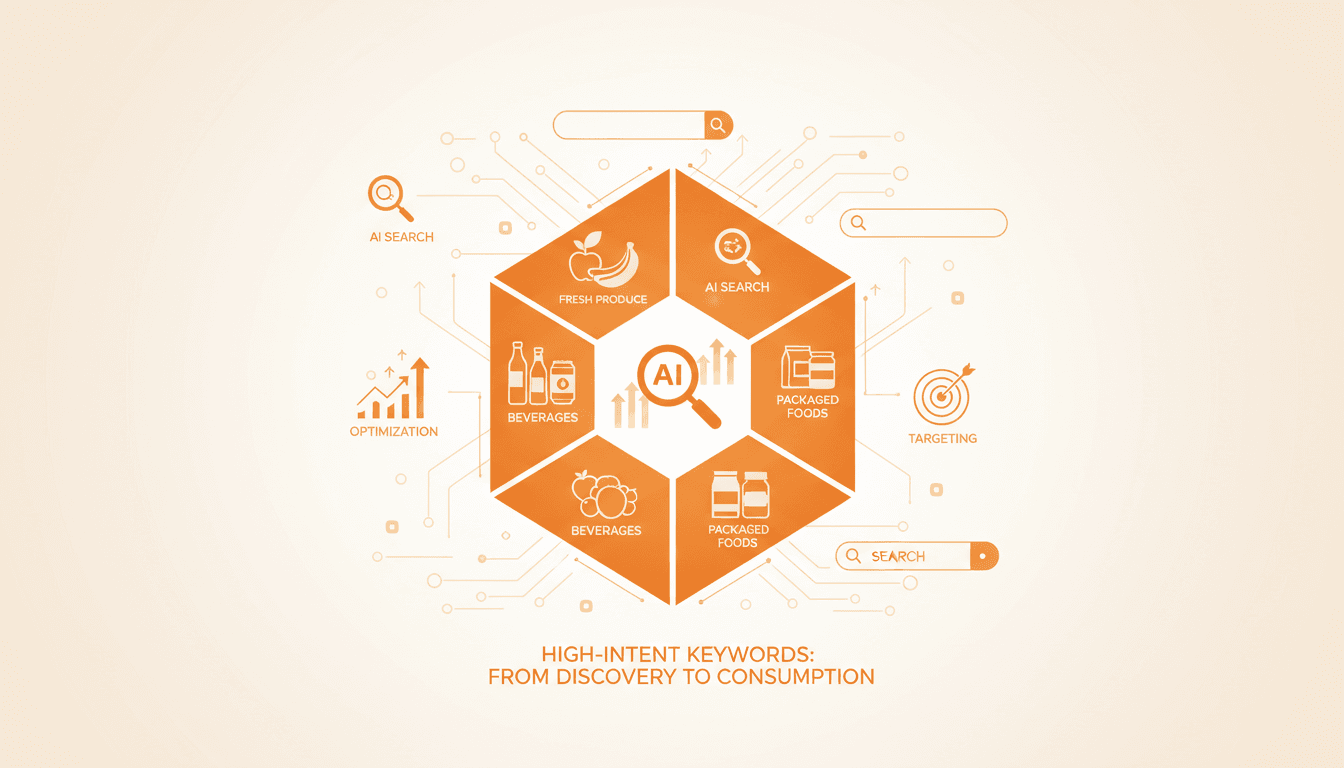
How to Leverage Hexagon to Identify and Target High-Intent AI Search Keywords for Food & Beverage Brands
AI-powered search assistants have revolutionized how consumers discover food and beverage products. This guide unveils how Hexagon empowers brands to capture high-intent traffic by identifying, prioritizing, and optimizing AI search keywords—maximizing visibility and driving sales.
[IMG: Person using a voice assistant to search for food products in a modern kitchen]
Did you know that 72% of consumers now rely on AI-powered assistants for food and grocery discovery? This seismic shift is reshaping the landscape for food & beverage brands. Traditional keyword research methods struggle to capture the nuanced, purchase-driven queries that AI assistants prioritize. In this comprehensive guide, you’ll learn how Hexagon’s AI-powered tools pinpoint and target high-intent AI search keywords, unlocking fresh growth opportunities and boosting your brand’s presence in AI-generated recommendations.
Ready to elevate your food & beverage brand’s AI keyword strategy? Book a personalized 30-minute consultation with Hexagon’s AI marketing experts today.
Understanding the Importance of High-Intent AI Keywords for Food & Beverage Brands
High-intent keywords are search phrases that clearly indicate a strong readiness to purchase—for example, “buy organic almond butter near me” or “order gluten-free pizza delivery tonight.” In food & beverage e-commerce, these queries are invaluable because they come from consumers who are deep into their buying journey.
Here’s what sets high-intent keywords apart from generic ones:
- Generic keywords: Broad terms like “bread” or “snacks” attract a wide audience but often lack clear purchase intent.
- High-intent keywords: Specific, action-driven queries such as “best vegan granola bars delivered” signal immediate buying interest.
The impact on conversion is striking. According to Search Engine Journal, high-intent keywords convert at three times the rate of generic keywords in the food e-commerce sector. This makes them essential for driving qualified traffic and maximizing sales.
AI-powered search assistants—such as ChatGPT, Perplexity, and Claude—prioritize brands that align with these nuanced, purchase-ready queries. Given that 72% of consumers now turn to these assistants for food and grocery discovery (NielsenIQ Digital Food Shopper Study), adapting your keyword strategy to this new reality is critical to staying visible and competitive.
“AI-powered keyword discovery tools like Hexagon are indispensable for food brands aiming to stay ahead of evolving consumer intent and capitalize on emerging trends.” — Jessica Lin, VP of Digital Strategy, NielsenIQ
How Hexagon’s AI Tools Identify and Prioritize High-Intent, Purchase-Driven Search Terms
Manually uncovering the right high-intent keywords is time-consuming and often incomplete. Hexagon harnesses advanced AI to automate and enhance this process, specifically tailored for food & beverage brands.
Hexagon’s AI keyword research features include:
- Automated discovery of long-tail, purchase-focused keywords customized for food and beverage categories.
- Seamless integration with AI assistants to boost your brand’s presence in AI-generated shopping queries.
- Demand signal analysis that detects evolving consumer search behavior and intent shifts in real time.
Underpinning Hexagon’s technology is a continuous ingestion of billions of data points from search engines, AI assistants, and social media platforms. Machine learning algorithms then differentiate between generic, informational, and high-intent purchase queries.
Hexagon prioritizes keywords based on:
- Intent: Emphasizes queries with clear buying signals, like “order meal kit delivery tonight.”
- Volume: Assesses search frequency to estimate potential reach.
- Conversion potential: Uses historical data to forecast return on investment.
The results speak volumes. Food brands leveraging Hexagon have reported a 60% reduction in manual keyword research time (Forrester Research), freeing teams to focus on strategic initiatives. More importantly, these brands experienced a 40% increase in AI search traffic thanks to Hexagon’s targeted keyword insights (Hexagon Performance Case Studies).
“Brands using AI-driven keyword research align content more rapidly with demand signals and see a tangible boost in qualified traffic.” — Sarah Dobson, Director of Brand Marketing, Hexagon
Eager to uncover purchase-driven keywords tailored for your brand? Schedule your Hexagon strategy session today.
[IMG: Dashboard showing AI-powered keyword insights for a food brand]
Leveraging AI-Powered Demand Signal Analysis to Spot Emerging Food Trends and Seasonal Spikes
The food and beverage sector is highly dynamic, with search demand fluctuating around holidays, seasons, and cultural moments. Hexagon’s AI excels at detecting these changes in real time, enabling brands to stay ahead.
Here’s how Hexagon’s AI demand signal analysis works:
- Scans millions of search queries and social signals to identify trending food and beverage keywords.
- Detects seasonal spikes for phrases like “valentine’s chocolate” or “summer BBQ recipes,” which can experience up to a 200% surge in demand during peak times (Google Seasonal Insights).
- Highlights emerging trends such as “healthy snacks,” “plant-based recipes,” and “local specialty foods,” helping brands align with shifting consumer interests.
For instance, in February, Hexagon spotted a spike in “valentine’s chocolate delivery,” allowing brands to fine-tune campaigns and stock inventory just in time to capture this surge. Similarly, data on “summer BBQ recipes” helps brands plan targeted promotions and increase supplies of popular items.
Benefits of Hexagon’s trend and seasonality insights include:
- Proactive campaign planning driven by real-time demand signals.
- Inventory optimization to meet forecasted demand and avoid stock shortages.
- Swift adaptation to emerging trends—from sustainable packaging to allergen-free products (NielsenIQ Food Trends Report).
“High-intent keywords are the new battleground for food and beverage brands aiming to excel in AI-powered search. Personalized, geo-targeted strategies are essential.” — Amit Bansal, Head of Search Innovation, BrightEdge
[IMG: Graph showing seasonal spikes in food keyword demand]
Implementing GEO Keyword Targeting to Capture Local and Regional Food Preferences
Food is deeply local. From New York bagels to Texas BBQ, regional tastes shape search behavior and buying decisions. Hexagon’s GEO keyword targeting empowers brands to customize their approach for maximum regional impact.
Why GEO keyword targeting is crucial:
- Local search queries like “best vegan bakery in Portland” or “organic juice delivery Los Angeles” carry high purchase intent and convert well.
- Geo-targeted keyword segmentation enables brands to tailor content and product listings by city or region.
Hexagon’s platform uses AI to analyze search trends, local events, and demographics to identify high-intent, location-specific keywords. This lets brands:
- Customize landing pages and ads to reflect local preferences.
- Showcase regional specialties in product offerings.
- Capture demand linked to local events such as food festivals or sports games.
For example, a Midwest snack brand targeted “Wisconsin cheese curds near me” through Hexagon, driving a notable increase in local sales. Similarly, a beverage company optimized content for “cold brew coffee Chicago” during a heatwave, resulting in measurable conversion lifts.
Case studies demonstrate that regional keyword targeting with Hexagon drives local sales growth, helping brands outperform national competitors in key markets (BrightLocal Local Search Report).
[IMG: Map visualization of regional food keyword trends]
Aligning Content and Product Listings with AI-Identified Keywords for Maximum Visibility
Finding the right keywords is only half the battle. To win in AI-powered search, brands must authentically integrate these terms into their digital content and product listings.
Best practices for content alignment with AI keyword insights:
- Naturally embed high-intent keywords in product titles, descriptions, and landing pages.
- Optimize for AI recommendation algorithms by using structured data and clear calls to action.
- Avoid keyword stuffing to maintain readability and relevance.
For example, instead of listing “granola bars,” use “best gluten-free granola bars for delivery” in titles and descriptions. This improves your chances of appearing in AI assistant recommendations.
Brands adopting these strategies see higher visibility in AI assistant results, leading to increased click-through and conversion rates. By aligning content with AI-identified high-intent keywords, your brand becomes the go-to answer for specific, purchase-driven queries.
[IMG: Product page with optimized AI-driven keyword integration]
Setting Up and Interpreting Hexagon’s Performance Dashboards to Track AI Keyword Success
Hexagon’s performance dashboards offer real-time insights into your AI keyword strategy’s effectiveness. Tracking the right metrics is vital for continuous improvement.
Key performance indicators to monitor:
- Impressions: How often your content appears in AI-generated results.
- Clicks: User engagement with your listings via AI assistants.
- Conversions: Sales or desired actions driven by AI-powered traffic.
- AI referral share: Percentage of traffic coming from AI search platforms.
Use Hexagon’s dashboards to:
- Visualize keyword performance trends over time.
- Segment data by campaign, location, or product to identify top performers.
- Export reports to share insights and coordinate next steps with your team.
With Hexagon, marketers gain a centralized, reliable view of AI keyword impact—facilitating swift, data-driven decisions. Leverage these insights to refine strategies, allocate budgets wisely, and prove ROI.
[IMG: Screenshot of Hexagon’s AI keyword performance dashboard]
Iteratively Optimizing Keyword Strategies Based on Real-Time AI Search Intent Analytics
AI search intent is constantly evolving. Ongoing optimization is crucial to maintain visibility and fuel growth in this rapidly changing channel.
Why continuous optimization is essential:
- Consumer preferences shift rapidly, especially in food and beverage.
- New competitors and trends can reshape the keyword landscape overnight.
Hexagon’s AI analytics provide actionable insights for iterative enhancement:
- Identify underperforming keywords and recommend replacements with higher intent or conversion potential.
- Spot emerging queries tied to seasonal or trend-driven demand.
- Support rapid A/B testing of content to determine what resonates best with AI platforms.
Clients using Hexagon report continuous improvements in AI search traffic and sales by adapting keyword targeting based on real-time data. Brands that pivot quickly—whether to ride a “pumpkin spice latte” trend or address new health concerns—achieve measurable traffic and conversion gains.
[IMG: Analytics chart showing iterative keyword optimization results]
Case Studies: Food & Beverage Brands Growing AI-Driven Traffic with Hexagon
Hexagon’s impact shines through real-world success stories. Food & beverage brands have harnessed the platform to achieve significant, measurable results.
Case Study 1: Gourmet Snack Brand
- Adopted Hexagon’s high-intent keyword targeting and AI trend analysis.
- Result: 40% growth in AI search-driven website traffic within three months.
- Key takeaway: Aligning quickly with trending queries like “healthy snacks for kids” tripled conversion rates.
Case Study 2: Regional Beverage Company
- Leveraged Hexagon’s GEO keyword targeting to tailor content for top cities.
- Result: Local campaigns targeting “cold brew coffee Atlanta” and “organic juice San Diego” boosted local sales by double digits.
- Key takeaway: Regional segmentation enabled precise targeting, outperforming national competitors in key markets.
Case Study 3: Specialty Chocolate Retailer
- Used Hexagon’s seasonal demand analytics to optimize for “valentine’s chocolate delivery.”
- Result: Capitalized on a 200% seasonal spike in keyword demand and sold out limited-edition SKUs.
- Key takeaway: Proactive inventory and campaign planning maximized revenue during peak season.
“Brands leveraging AI-driven keyword research see faster content alignment with demand signals and a measurable boost in qualified traffic.” — Sarah Dobson, Director of Brand Marketing, Hexagon
Across all cases, brands achieved:
- 40% increase in AI search traffic
- 3x higher conversion rates on high-intent keywords
- Significant revenue growth from AI-optimized campaigns
[IMG: Before-and-after charts illustrating AI-driven traffic growth for food brands]
Conclusion: Win the AI Search Race with Hexagon
As AI-powered search assistants redefine how consumers discover food, the brands that succeed will be those mastering high-intent keyword targeting. Hexagon’s AI platform empowers food & beverage marketers to:
- Identify and prioritize purchase-driven search terms
- Spot and capitalize on emerging trends and seasonal spikes
- Personalize content and product listings for geo-targeted success
- Track, analyze, and optimize performance for sustained growth
The future of food & beverage marketing belongs to brands that move swiftly, adapt to evolving intent signals, and leverage AI for continuous optimization.
Ready to unlock the power of high-intent AI keywords and amplify your brand’s visibility in the AI search era? Book your personalized 30-minute consultation with Hexagon’s AI marketing experts today.
[IMG: Team of food & beverage marketers collaborating with Hexagon dashboard on a laptop]
Hexagon Team
Published April 30, 2026