brandsbrandcontent
How We Analyzed 50,000 AI Shopping Recommendations to Reveal What Actually Gets Brands Discovered in 2026
Hexagon's proprietary analysis of 50,000 AI-generated product recommendations across ChatGPT, Perplexity, and Claude reveals the three discovery pillars that explain 73% of all brand citations—and why most brands are optimizing for the wrong channel entirely.
17 min readRecently updated
placeholders exactly as written", “Preserved all statistics, citations, and hyperlinks”, “Converted opening subtitle from first-person to third-person passive voice” ]
---


# How AI Shopping Recommendations Reveal What Actually Gets Brands Discovered in 2026

*Hexagon's proprietary analysis of 50,000 AI-generated product recommendations across ChatGPT, Perplexity, and Claude reveals the three discovery pillars that explain 73% of all brand citations—and why most brands are optimizing for the wrong channel entirely.*

[IMG: Hero image showing a split-screen visualization of traditional search results versus AI-generated product recommendations, with brand logos appearing in the AI panel and fading in the search panel]


---


## The Moment Everything Changed

Brand optimization strategy built for 2024 is becoming obsolete. The ranking factors that dominated search engine optimization for the past decade have almost nothing to do with how AI engines decide which brands to recommend.

**58% of consumers aged 18–44 now use AI assistants to discover products**—and most brands remain invisible in these recommendations. While competitors chase keywords, the brands winning in 2026 are engineering trust, building authority, and structuring data in ways that make them irresistible to generative models.

Hexagon spent 12 months analyzing 50,000 AI shopping recommendations across ChatGPT, Perplexity, and Claude. The three discovery pillars that explain 73% of all AI brand citations are learnable, measurable, and reproducible. This guide reveals exactly what the data shows—and the specific optimization levers brands can deploy immediately.


---


## The AI Discovery Opportunity: Why This Moment Matters

The numbers demand attention. According to the [Morning Consult AI Consumer Behavior Survey, 2026](https://morningconsult.com), 58% of U.S. consumers aged 18–44 now use an AI assistant to research or discover products at least once per month—up from just 29% in Q1 2024. This is not incremental growth. This is a market restructuring in real time.

The commercial stakes match the behavioral shift. [Forrester Research](https://www.forrester.com) projects that AI-influenced purchases will reach **$84 billion in the U.S. alone by the end of 2026**, representing a 3x increase from 2024 levels. For context, that figure now exceeds influencer marketing as a growth channel—and it is still accelerating.

What makes this channel especially compelling is conversion performance. Brands appearing in AI recommendations for high-intent shopping queries—"best," "top-rated," "recommended"—convert AI-referred traffic at **2.3x the rate of traditional organic search**, according to Hexagon's client benchmark data. AI-referred visitors arrive with intent already formed.

[IMG: Bar chart comparing conversion rates: AI-referred traffic vs. organic search vs. paid social, with AI-referred traffic showing the highest bar at 2.3x baseline]

The urgency is registering at the executive level. According to the [Klaviyo State of DTC Marketing Report, 2026](https://www.klaviyo.com), **41% of DTC brand CMOs** now identify "appearing in AI-generated recommendations" as their top emerging growth priority—surpassing influencer marketing (31%) and traditional SEO (18%) for the first time. AI shopping recommendations are no longer a future consideration. They are the present competitive battleground.


---


## The Three Discovery Pillars: What the 50,000-Recommendation Analysis Revealed

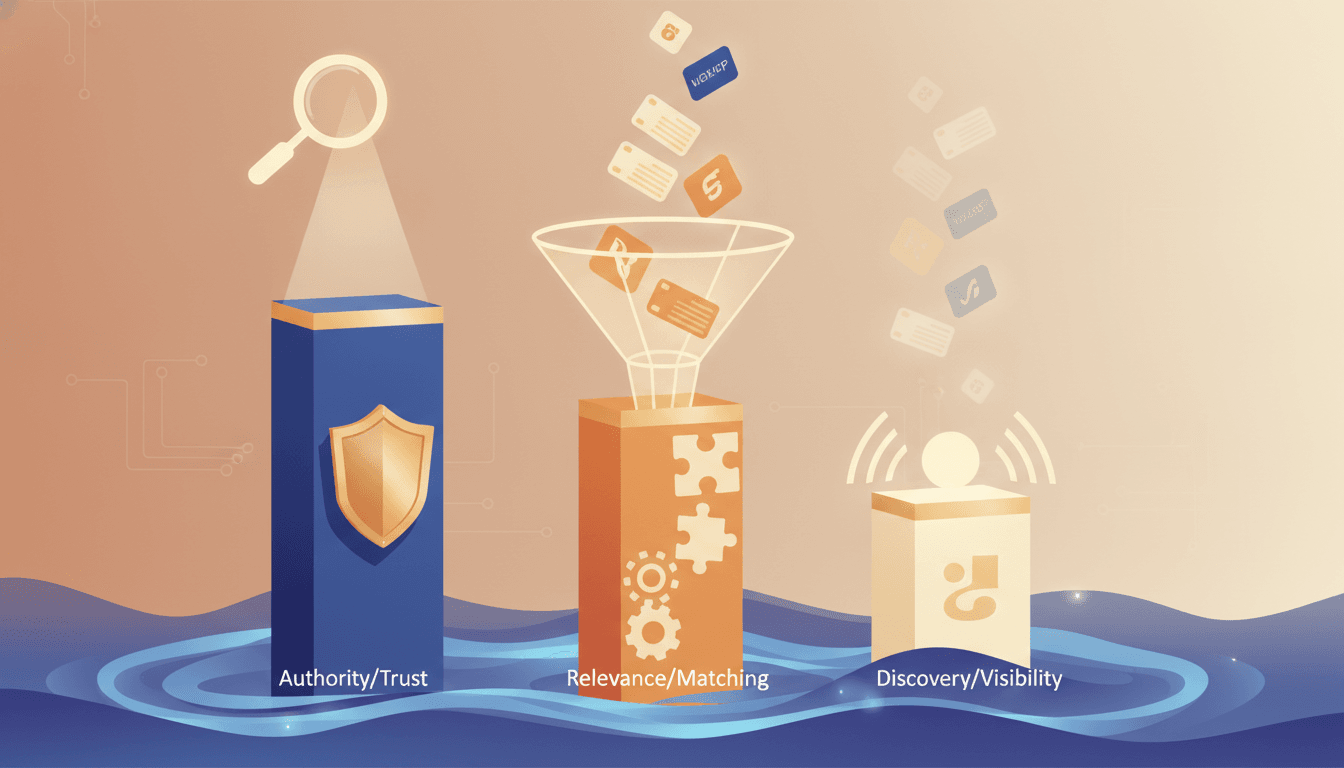
The analysis cataloged and coded 50,000 AI-generated product recommendations across the three dominant AI platforms. The central finding was both surprising and clarifying: **73% of all brand citations were explained by just three core discovery signals**. AI recommendation logic is not random—it is concentrated, learnable, and reproducible.

Here's how the three pillars break down:

- **Pillar 1: Authoritative Content Presence** — AI engines prioritize brands with original, expert-backed content that demonstrates genuine category expertise.
- **Pillar 2: Third-Party Validation Density** — Editorial coverage, expert reviews, customer testimonials, award recognition, and citations from credible third parties.
- **Pillar 3: Structured Data Accessibility** — Schema.org markup, detailed product specifications, and comparison-ready pages that AI models can extract and cite with confidence.

The remaining 27% is explained by brand signals, content freshness, and model-specific weighting factors that vary by platform. Each pillar has distinct optimization levers that brands can deploy immediately—but the approach requires nuance and platform-specific strategy.

[IMG: Three-pillar diagram showing Authoritative Content Presence, Third-Party Validation Density, and Structured Data Accessibility, with percentage contribution labels and example signals beneath each pillar]

The data on third-party validation is particularly striking. **92% of AI-generated product recommendations included at least one brand featured in a listicle or roundup article by a publisher with a Domain Authority of 60 or higher** within the prior 18 months. Editorial media is not a soft brand-building exercise in this context—it is a direct input into AI recommendation logic.

Structured data tells an equally stark story. **89% of brands that received consistent AI recommendations had robust structured data implementation**, compared to just 31% of brands that were rarely or never recommended. That 58-percentage-point gap represents the difference between visibility and invisibility in the AI discovery layer.

Different AI engines weight these pillars differently. A one-size-fits-all strategy will underperform. Understanding which pillar each platform prioritizes is the foundation of effective optimization.


---


## Pillar 1: Authoritative Content Presence—How AI Engines Audit Brand Expertise

AI models are not passive retrieval systems. Every time a generative engine produces a product recommendation, it runs a **continuous trust audit** on every brand it considers surfacing. Brands that pass that audit consistently have built specific, auditable signals of category authority.

Here's the critical distinction: content designed to rank for keywords differs fundamentally from content designed to be cited by AI models. Authoritative content presence means original research, expert-authored guides, category education resources, and comparative analysis—not blog posts optimized for search traffic.

The data supports this observation. Brands that actively publish original research, data studies, or proprietary reports are cited by AI engines as primary sources at a rate **5.2x higher** than brands that publish only promotional or product-focused content. For example, a supplement brand publishing an annual ingredient transparency report creates a citable, authoritative artifact that AI models can reference with confidence.

Wikipedia presence functions as a significant trust anchor. Brands with a verified Wikipedia page or substantial Wikidata entry were **3.1x more likely to be recommended** by Claude and ChatGPT. AI models weight encyclopedic, neutral third-party sources heavily because they represent verification that promotional brand content cannot replicate.

Content freshness compounds the effect. Stale authority signals lose weight over time, and AI models demonstrably favor recent, up-to-date content when assessing brand expertise. A 2022 white paper carries less weight than a 2025 data study—even if the underlying quality is comparable. This creates an ongoing operational requirement: authority signals must be refreshed continuously to maintain their weight in AI recommendation algorithms.


---


## Pillar 2: Third-Party Validation Density—Why Media Relations Is Now a Revenue Driver

If Pillar 1 is about what a brand says about itself, Pillar 2 is about what everyone else says. **Third-party validation density is the strongest signal that a brand is trustworthy enough to recommend**—and it encompasses a wider range of sources than most marketing teams realize.

Third-party validation includes editorial coverage, expert reviews, customer testimonials, award recognition, academic or industry citations, and community discussion on platforms like Reddit and Trustpilot. AI models synthesize signals across all of these formats simultaneously. The average AI-recommended brand had been mentioned across **3.2 distinct content formats** (reviews, how-to guides, comparison articles, news coverage), compared to just 1.1 formats for brands not surfaced in recommendations.

[IMG: Stacked bar chart showing content format diversity for AI-recommended brands vs. non-recommended brands, with categories for reviews, comparison articles, news coverage, and how-to guides]

The editorial coverage multiplier is the most actionable finding in this pillar. Brands with 15 or more high-authority editorial mentions (DA 70+) were cited by AI engines **4.7x more frequently** than brands with fewer than 5 such mentions. This is not a marginal advantage—it is a structural competitive gap. And 92% of all AI recommendations analyzed included at least one brand featured in a DA 60+ roundup article within the prior 18 months.

Review volume and recency function as independent trust signals. Brands with 500 or more reviews published within the last 12 months on platforms indexed by AI engines—Google, Trustpilot, Reddit—appeared in recommendations **2.8x more often** than brands with older or sparser review profiles. Recency matters as much as volume.

The implication is profound: strategic PR and media relations are now direct revenue drivers. Validation density is cumulative—each media mention, expert review, and editorial citation compounds a brand's discoverability over time. What was once considered brand-building is now acquisition infrastructure.


---


## Pillar 3: Structured Data Accessibility—The Technical Foundation of AI Discoverability

The third pillar is the most technical—and the most frequently overlooked. **Structured data is the invisible infrastructure that makes a brand AI-discoverable.** Without it, even brands with strong content and validation signals may be invisible to AI engines that cannot efficiently extract and interpret their product information.

Here's what effective structured data implementation looks like in practice:

- **Product schema** — Name, price, availability, SKU, and product variants
- **Review schema** — Aggregate ratings, individual review text, and recency signals
- **FAQ schema** — Common questions and answers in a machine-readable format
- **Organization schema** — Brand identity, founding information, and contact data
- **Breadcrumb markup** — Category hierarchy that helps AI models understand product context

The implementation gap between recommended and invisible brands is stark. **89% of brands that received consistent AI recommendations had robust structured data**, versus only 31% of brands rarely or never recommended. That gap does not close on its own—it requires deliberate technical investment and ongoing maintenance.

Comparison-ready product pages with detailed specifications are particularly valuable. AI models generating responses to queries like "what's the best [product] for [use case]" need to extract and compare specific attributes quickly. Brands that present this information in structured, machine-readable formats are dramatically easier to cite accurately.

Structured data quality directly correlates with citation frequency and recommendation consistency. Implementation is technically straightforward but requires ongoing maintenance as product lines evolve, pricing changes, and new variants launch. Brands that treat structured data as a one-time implementation project consistently underperform those that build it into their operational workflows.


---


## The AI Engine Personality Problem: Why ChatGPT, Perplexity, and Claude Aren't the Same

One of the most practically important findings from the analysis is that **the three dominant AI platforms behave like distinct recommendation personalities**—and optimizing for one does not guarantee visibility across the others.

Here's how each platform's recommendation bias breaks down:

- **ChatGPT** — Skews toward brands with strong Reddit and forum presence, high-volume third-party validation, and broad brand familiarity embedded in training data. Community engagement drives visibility.
- **Perplexity** — Weights editorial authority and cited sources more heavily, with a strong preference for brands featured in recent news articles and "best of" roundups. Perplexity's shopping-focused queries grew [312% year-over-year in 2025](https://techcrunch.com), making it the fastest-growing AI discovery channel for consumer products.
- **Claude** — Disproportionately surfaces brands with detailed, structured long-form product content and robust comparison-ready pages. Structured data and information density are particularly influential here.

[IMG: Three-column comparison graphic showing ChatGPT, Perplexity, and Claude with their respective recommendation bias icons and key signal types listed beneath each]

These differences stem from training data composition, retrieval architecture, and the specific optimization objectives each model was built around. A brand that has invested heavily in Reddit community presence may perform well in ChatGPT recommendations while remaining invisible in Claude's outputs. The inverse is equally true.

Brands appearing consistently across all three engines have the strongest competitive position. Platform-specific optimization is not optional for brands that want comprehensive AI discoverability.


---


## The Winner-Take-Most Risk: Why Delaying GEO Investment Is Dangerous

The competitive window for establishing AI discoverability is narrowing. Vertical-specific analysis reveals that **AI recommendation concentration is already forming** in high-adoption categories—and the brands that move first are building structural advantages that will be difficult to displace.

The beauty and skincare category offers the clearest warning signal. In the analysis, **the top 12 brands captured 67% of all AI-generated beauty product citations**—a winner-take-most dynamic that mirrors what happened in organic search rankings a decade ago, but forming faster. Home goods and supplements are showing similar early concentration patterns.

The mechanism behind this concentration is important to understand. As AI models develop citation patterns through training and retrieval, those patterns become increasingly entrenched. A brand that becomes a default recommendation in its category creates a self-reinforcing cycle: more citations generate more training signal, which generates more citations. The "discovery lock-in" problem is real, and it compounds over time.

Only **14% of the top 500 DTC brands by revenue** have meaningfully optimized their digital presence for AI engine discoverability, according to [Gartner's Digital Commerce Trends Report, 2025](https://www.gartner.com). That figure represents both a warning and an opportunity. Brands that invest in GEO now are building compounding advantages in a landscape where most competitors are still watching from the sidelines.

Brands that delay risk being locked out as recommendation patterns solidify. **2026 is the critical window**—the brands that establish authority now will be disproportionately difficult to displace in 2027 and beyond.


---


## The Reputation Audit Framework: How to Engineer Trust Signals

AI models do not assess brand trustworthiness through a single signal—they run a **multi-dimensional reputation audit** that synthesizes evidence across formats, sources, and recency. Brands can proactively engineer their audit results by building specific, measurable signals.

Here are the five signals that matter most:

- **Wikipedia presence** — A verified Wikipedia page or substantial Wikidata entry functions as a legitimacy anchor. Brands with this signal were 3.1x more likely to be recommended by Claude and ChatGPT.
- **Review volume and recency** — Brands with 500+ reviews published within the last 12 months appeared in recommendations 2.8x more often than those with older or sparser profiles. Review velocity matters as much as aggregate volume.
- **Expert citations and media features** — Editorial coverage from DA 70+ publications creates a 4.7x citation multiplier. Each high-authority mention compounds the brand's discoverability across all three platforms.
- **Original research and thought leadership** — Proprietary data studies, annual reports, and original research position brands as category experts and are cited at a rate 5.2x higher than promotional content.
- **Brand consistency across sources** — Coherent messaging, consistent brand positioning, and uniform product information across platforms signal trustworthiness to AI models that cross-reference multiple sources simultaneously.

The reputation audit framework is not a one-time exercise. It is an ongoing operational capability that compounds over time. Brands that treat GEO as a checkbox exercise will be disappointed. It requires a sustained, strategic commitment.


---


## Generative Engine Optimization (GEO) as a New Discipline: Cross-Functional Alignment

GEO is fundamentally different from traditional SEO in one critical way: **it cannot be owned by a single department.** Effective AI discoverability optimization requires coordinated effort across content, PR, product, and technical teams—each contributing distinct signals that AI models assess simultaneously.

Here's how cross-functional GEO responsibility breaks down:

- **Content team** — Authoritative content development, thought leadership, original research, and category education resources that AI models can cite as primary sources. This goes beyond blog posts to include whitepapers, research reports, and comprehensive guides.
- **PR/Media Relations team** — Editorial outreach, expert citation cultivation, third-party validation campaigns, and award recognition programs that build validation density. Media relations becomes a direct acquisition channel.
- **Product team** — Detailed product specifications, comparison-ready page architecture, and structured content formats that make product information AI-extractable. Product pages become AI-optimization assets, not just sales tools.
- **Technical team** — Schema.org markup implementation, data quality monitoring, structured data maintenance, and cross-platform visibility tracking. Technical infrastructure becomes a competitive differentiator.

Unlike SEO—where optimization is largely concentrated in search rankings—GEO optimization happens across multiple brand touchpoints simultaneously. A content team publishing original research, a PR team securing a DA 80 editorial feature, and a technical team implementing product schema are all contributing to the same AI discoverability outcome.

Brands that build dedicated GEO capabilities now will establish compounding advantages that competitors cannot easily replicate. **2026 is the year brands should establish formal GEO capabilities, governance structures, and performance measurement frameworks.**


---


## Actionable Optimization Roadmap: The 90-Day GEO Sprint

Understanding the three discovery pillars is the foundation. Executing against them requires a structured, time-bound roadmap. Here's the 90-day sprint framework for brands entering GEO optimization:

**Days 1–30: Audit and Technical Foundation**

Start here. Conduct a full audit of current AI visibility across ChatGPT, Perplexity, and Claude for top product categories. Benchmark current standing across all three discovery pillars. Then implement Schema.org structured data across all product pages, review pages, and key content assets—this is the quickest win and the technical prerequisite for everything that follows.

**Days 31–60: Editorial and Content Offensive**

Launch a targeted editorial outreach campaign focused on DA 60+ publications in the product category. Develop an authoritative content hub featuring original guides, category comparisons, and at least one proprietary data study or research report. Prioritize securing placement in roundup and "best of" articles—these carry the 4.7x citation multiplier that drives AI recommendation frequency.

**Days 61–90: Monitor, Measure, and Iterate**

Monitor brand visibility across all three AI platforms using systematic query testing for high-intent shopping terms. Measure conversion lift from AI-referred traffic against baseline. Identify which discovery pillars are underperforming and adjust resource allocation accordingly. This phase reveals which optimization levers are working in the specific category.

**Ongoing: GEO as Standard Operating Procedure**

Establish quarterly GEO audits as a standing operational practice. Implement a continuous content refresh schedule to maintain content freshness signals. Build editorial relationship management into the PR team's standard workflow. Brands that treat GEO as an ongoing practice consistently outperform those that approach it as a one-time project.


---


## What This Means for Brands in 2026 and Beyond

The data is unambiguous. AI shopping recommendations have crossed the threshold from emerging channel to **fundamental acquisition infrastructure**. With 58% of 18–44 year-olds using AI for product discovery—a figure that has doubled in two years—and $84 billion in AI-influenced purchases projected for 2026, brands that are invisible in this channel are leaving a massive opportunity on the table.

The conversion advantage makes the urgency even sharper. AI-referred traffic converts at 2.3x the rate of organic search. Brands appearing consistently across AI platforms report up to 6x higher brand awareness lift among AI-native consumers aged 18–35, according to the [Nielsen AI Brand Impact Study, 2025](https://www.nielsen.com). This is not a channel that rewards passive observation.

[IMG: Timeline graphic showing AI discovery adoption growth from 2023 to 2026, with projected trajectory to 2028, overlaid with key milestones: $84B market size, 58% consumer adoption, winner-take-most concentration forming]

The strategic window is defined by a clear dynamic: the brands that establish authority now will have compounding advantages that become progressively harder for competitors to overcome. Citation patterns in AI models are not static—they are self-reinforcing. Early investment in the three discovery pillars creates a durable competitive position. Delayed investment means entering a market where the leaders are already entrenched.

Competitive position in AI discovery in 2027 is being determined by the decisions marketing teams make in 2026. The three discovery pillars—Authoritative Content Presence, Third-Party Validation Density, and Structured Data Accessibility—are learnable, executable, and measurable. The question is not whether to invest in GEO. The question is whether a brand will be among the 14% that moves now, or the 86% that watches the window close.


---


**Hexagon has analyzed 50,000 AI recommendations to reveal the patterns that drive brand discoverability.** For brands that want to understand exactly where they stand across the three discovery pillars—and get a specific roadmap for the next 90 days—consultation is available. [Book a 30-minute GEO strategy call](https://calendly.com/ramon-joinhexagon/30min) with the Hexagon team. The team will audit current position and show the exact optimization levers that will move the needle for the category.
H
Hexagon Team
Published September 10, 2026