How Voice Search Is Shaping the Future of AI-Powered E-Commerce Shopping
Voice search now powers 27% of all AI shopping queries, signaling a transformative shift in online retail. Discover why voice-optimized AI is the new battleground for e-commerce brands, and how a strategic GEO voice approach can drive higher recommendations, conversions, and local visibility.
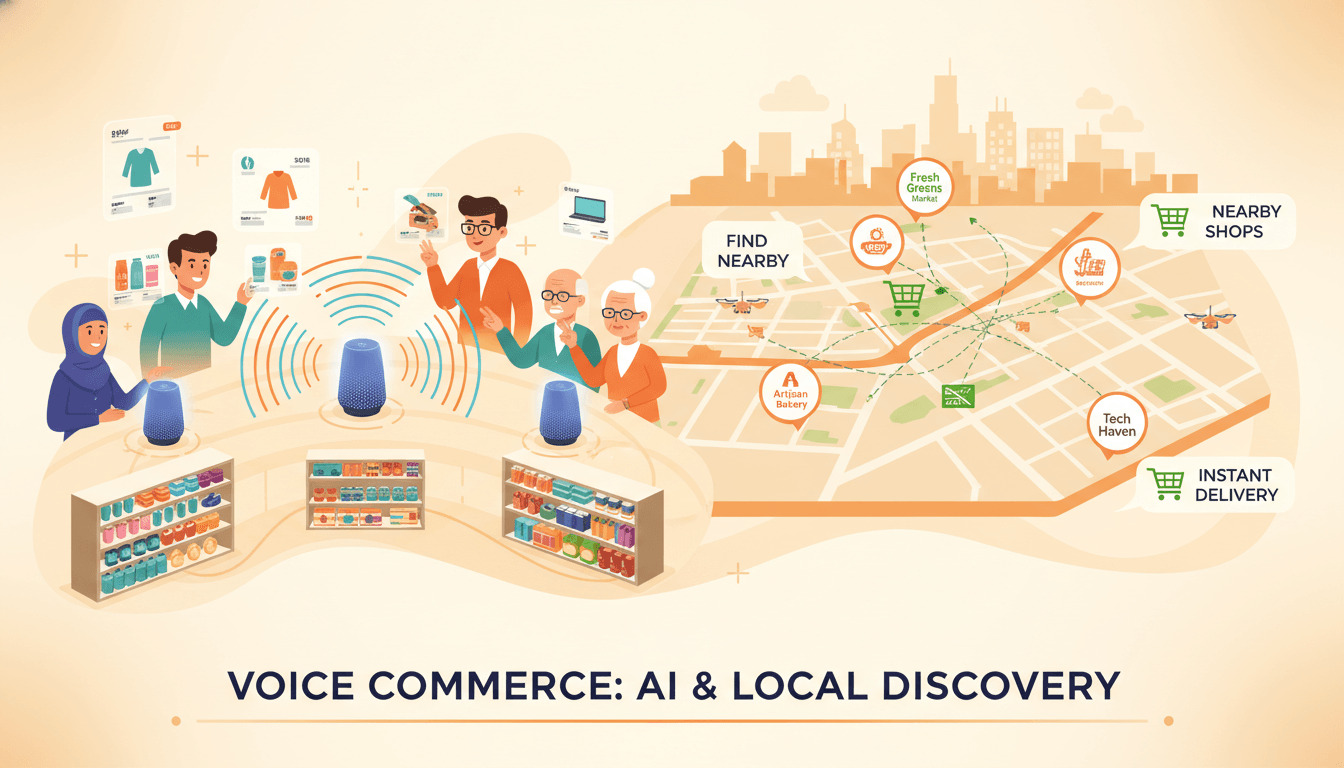
How Voice Search Is Shaping the Future of AI-Powered E-Commerce Shopping
Voice search now powers 27% of all AI shopping queries, signaling a profound transformation in online retail. Discover why voice-optimized AI is the new battleground for e-commerce brands—and how a strategic GEO voice approach can elevate recommendations, conversions, and local visibility.
[IMG: Shoppers using smart speakers and smartphones for voice-assisted online shopping]
Did you know that 27% of all AI shopping queries are now powered by voice search? As smart speakers and voice assistants become everyday essentials in homes worldwide, e-commerce brands that overlook voice optimization risk missing out on substantial AI-driven recommendations and conversions. This comprehensive guide delves into how voice search is revolutionizing AI-powered shopping—and how your brand can stay ahead with a savvy GEO voice strategy.
Ready to future-proof your e-commerce brand with AI-powered voice search optimization? Book a free 30-minute strategy session with Hexagon today to unlock your GEO voice strategy and boost AI-driven conversions.
Understanding the Impact of Voice Search on AI in E-Commerce
Voice search has evolved from a novel feature into a core channel for product discovery in today’s digital marketplace. The AI Voice Commerce Report 2024 reveals that 27% of all AI shopping queries are now powered by voice search, a figure that continues to climb alongside rapid adoption. This trend is especially strong among Gen Z and Millennials, with over 50% using voice assistants at least once a week for product discovery or purchases (NRF Consumer Report 2024).
[IMG: Global map showing smart speaker and voice assistant adoption rates]
The surge in smart speaker and mobile voice assistant usage is fueling this growth. Global smart speaker adoption is projected to hit 500 million units by 2025 (Statista), firmly establishing voice as a mainstream shopping interface. Satya Nadella, CEO of Microsoft, sums it up perfectly: “Voice search is not just a convenience—it’s fundamentally changing how consumers interact with brands and discover products. For e-commerce, optimizing for voice is now table stakes.”
Voice search queries are distinct from typed searches in several ways. They tend to be conversational, longer, and three times more likely to include local intent (BrightLocal Voice Search Study 2023). This natural, conversational style challenges AI recommendation engines to interpret user intent, context, and location far more dynamically than traditional search. For instance, a shopper might say, “Where can I buy running shoes near me with same-day pickup?” instead of typing “running shoes store.”
Key impacts of voice search on AI in e-commerce include:
- An increasing share of AI-driven shopping queries: 27% and growing
- Expanded reach: Driven by 500 million expected smart speaker units globally
- Conversational, geo-focused queries: Three times more likely to include local intent
- Younger demographics leading adoption: Over 50% of Gen Z and Millennials using voice assistants weekly
The takeaway? E-commerce brands must align their AI strategies with the realities of voice-driven shopping to stay visible and competitive.
How AI Voice Shopping Assistants Recommend Products
Today’s voice shopping experiences rely on generative AI models that excel at understanding natural language and user context. When a shopper interacts with a voice assistant, the AI interprets not only the words but also the intent, context, and even the user’s past behaviors.
[IMG: Diagram of AI assistant processing a voice shopping query and surfacing product recommendations]
Generative AI, powered by large language models, delivers highly personalized and context-aware shopping experiences. Voice technology analyst Brian Roemmele observes, “As generative AI models mature, the ability to answer natural-language voice queries with personalized, context-rich recommendations will define the winners in e-commerce.” These advanced models analyze and synthesize:
- Structured product data: Including price, category, availability, and attributes
- Product reviews and ratings: Summarized to highlight key features or potential drawbacks
- User context: Such as purchase history, location, time of day, and personal preferences
Here’s a typical interaction flow:
- The user issues a natural, often detailed query (e.g., “Find me the best noise-cancelling headphones under $200 available for pickup nearby”).
- The AI parses the request, extracting product category, price range, and location.
- It cross-references structured product data and reviews to shortlist relevant items.
- Contextual signals like previous searches or purchases further refine the recommendations.
- The assistant delivers personalized, conversational responses—often summarizing reviews or offering comparisons.
According to Gartner’s Emerging Tech Report 2024, AI shopping assistants now routinely use generative models to summarize product reviews and highlight relevant features in their responses. This is crucial because conversational AI models interpret 70% of voice queries as longer, more natural-language questions compared to typed searches (Google AI Research).
For brands, this means optimizing product data, reviews, and content for voice-driven, context-rich AI interpretation is no longer optional—it’s essential for securing visibility in voice-first recommendations.
Why Optimizing for Voice-Based AI Queries Is Critical for E-Commerce Brands
Brands that have embraced voice search optimization are already seeing substantial benefits. Hexagon data insights reveal a 20% higher AI-driven recommendation rate for brands optimized for voice search. Practically, this means these brands’ products appear more frequently in AI shopping assistant recommendations triggered by voice queries.
[IMG: Side-by-side comparison chart of AI recommendation rates for voice-optimized vs. non-optimized brands]
The reasons for this advantage are straightforward:
- Conversational, FAQ-style content: Voice assistants prioritize content that directly answers common voice queries (“What’s the best laptop for graphic design under $1,000?”).
- Rich metadata and structured data: Detailed, well-marked-up product information enables AI to parse and recommend products accurately.
- Local SEO and GEO-specific keywords: Since voice search queries are three times more likely to be locally focused, optimizing for location-based intent is critical (BrightLocal Voice Search Study 2023).
Jessica Lee, Director of AI Strategy at Hexagon, explains: “Our data shows a strong correlation between structured product data, geo-optimization, and increased visibility in voice-based AI recommendations.”
For example, a brand that enriches product pages with locally relevant keywords, conversational copy, and comprehensive FAQs is far more likely to be recommended when a customer asks, “Where can I buy eco-friendly cleaning products near me?”
Key benefits for voice-optimized brands include:
- 20% higher AI recommendation rate: More frequent appearances in AI-driven voice shopping results (Hexagon data insights)
- 15% increase in conversion rates: AI-optimized product descriptions tailored for voice significantly boost conversions (Hexagon case studies)
- Enhanced local discovery: Better alignment with the threefold greater likelihood of geo-focused voice queries
Additionally, product pages featuring structured data, rich FAQs, and conversational copy consistently rank higher in voice search recommendations (Search Engine Journal Voice Optimization Guide 2024). As AI assistants increasingly manage complex purchase journeys end-to-end, brands that neglect voice optimization risk being sidelined in the evolving AI-powered shopping landscape.
Implementing a GEO Voice Strategy to Capture Local Voice Commerce Opportunities
The local dimension of voice search cannot be overlooked. With voice queries three times more likely to be locally focused (BrightLocal Voice Search Study 2023), a robust GEO voice strategy is essential for e-commerce brands aiming to capture in-market shoppers.
[IMG: Illustration showing a shopper using a voice assistant to find local stores or products]
Here’s how brands can build a winning GEO voice strategy:
- Target local and geo-specific keywords: Integrate phrases like “near me,” neighborhood names, and city-specific terms throughout product pages and landing pages.
- Optimize Google My Business and local directories: Ensure listings are accurate, complete, and include voice-friendly descriptions to boost visibility in local voice searches.
- Leverage structured data markup: Use schema.org and other markup standards to highlight location, business hours, and product availability—simplifying AI assistants’ task of surfacing local results.
For example, a coffee shop chain could optimize for queries like “best oat milk latte near Union Square” or “coffee shops open now in Brooklyn.” By aligning content with the natural language and intent behind voice searches, brands dramatically increase their chances of being recommended by AI voice assistants.
The payoff is substantial: Brands investing in GEO voice optimization consistently outperform competitors in local voice commerce visibility and conversions. As voice search grows in both volume and sophistication, this localized approach will become even more critical.
Best Practices for AI Voice Shopping Optimization
Thriving in the era of voice-driven AI commerce requires ongoing commitment to continuous optimization and adaptation. Leading brands follow a set of best practices to ensure their product data, content, and user experience align perfectly with how AI voice assistants operate.
[IMG: Checklist or flowchart outlining voice optimization best practices for e-commerce brands]
Key best practices include:
- Create conversational, natural language content: Use phrases, questions, and answers that reflect how customers naturally speak to voice assistants. Emphasize long-tail keywords and full-sentence queries.
- Leverage generative AI tools: Regularly update and tailor product descriptions, reviews, and FAQs to keep pace with trends, customer language, and new product features.
- Incorporate comprehensive FAQ sections: Proactively address common voice search questions—such as “How long does shipping take?” or “Is this product available for pickup?”—directly on product pages.
- Use analytics to monitor voice search performance: Track which queries drive traffic and conversions, then refine your strategy based on these insights.
- Optimize structured data and metadata: Ensure all product information is meticulously marked up for easy AI parsing, covering availability, pricing, local store data, and more.
Aparna Chennapragada, VP of Google Shopping, highlights, “AI shopping assistants are quickly becoming the new front door for e-commerce. Brands that adapt their content for natural, conversational voice queries will gain a significant edge.”
Continuous improvement is crucial. Testing, analytics, and adaptation must be ongoing as voice and AI shopping trends evolve—what works today may require refinement tomorrow. By embedding voice-first optimization at the heart of your digital strategy, you position your brand to lead in the AI-powered commerce landscape.
Preparing for the Future: Trends in Voice Search and AI-Powered E-Commerce
Looking forward, the influence of voice search on e-commerce is poised to intensify. With global smart speaker units expected to reach 500 million by 2025, the voice commerce ecosystem will welcome millions of new shoppers, many demanding seamless, conversational shopping experiences (Statista).
[IMG: Futuristic depiction of AI-powered voice assistants in a smart home e-commerce scenario]
Advances in generative AI will drive even more natural and personalized voice interactions. Brian Roemmele of Voice First Labs notes, “As generative AI models mature, the ability to answer natural-language voice queries with personalized, context-rich recommendations will define the winners in e-commerce.” This means AI voice assistants will not only understand shoppers’ requests—they’ll anticipate needs, offer smarter suggestions, and manage entire purchase journeys.
To stay competitive, e-commerce brands should:
- Invest in GEO voice strategies: Local intent will remain a dominant force in voice search.
- Adopt agile, AI-first content approaches: Use generative AI to keep product pages and FAQs fresh, relevant, and conversational.
- Monitor and respond to emerging trends: As AI models evolve, so too must the best practices for visibility and conversion.
The future of e-commerce is conversational, personalized, and powered by AI. Brands embracing these trends now will build lasting competitive advantages and deepen customer loyalty.
Conclusion: Turn Voice-First AI Into Your E-Commerce Advantage
Voice search is fundamentally reshaping how consumers discover, evaluate, and purchase products online. With 27% of AI shopping queries already voice-powered and smart speaker adoption on track to hit 500 million units globally by 2025, the opportunity is unmistakable. Brands that optimize for voice—especially with a GEO-first strategy—enjoy higher recommendation rates, improved conversions, and greater local visibility.
Key takeaways: takeaways
- Voice search is here to stay: It’s ushering in a new era of AI-powered commerce.
- Optimization is essential: Structured data, conversational content, and local focus deliver clear, measurable results.
- Agility wins: Continuous improvement and adaptation to evolving AI and voice trends will separate market leaders from laggards.
“Voice search is not just a convenience—it’s fundamentally changing how consumers interact with brands and discover products. For e-commerce, optimizing for voice is now table stakes.” — Satya Nadella, CEO, Microsoft
Ready to future-proof your e-commerce brand with AI-powered voice search optimization? Book a free 30-minute strategy session with Hexagon today to unlock your GEO voice strategy and boost AI-driven conversions.
[IMG: Happy e-commerce brand team reviewing analytics after successful voice optimization]
Hexagon helps leading brands harness the power of AI and voice to drive growth in the digital era. Discover how our team can help you capture the future of commerce—one voice query at a time.
Hexagon Team
Published March 9, 2026