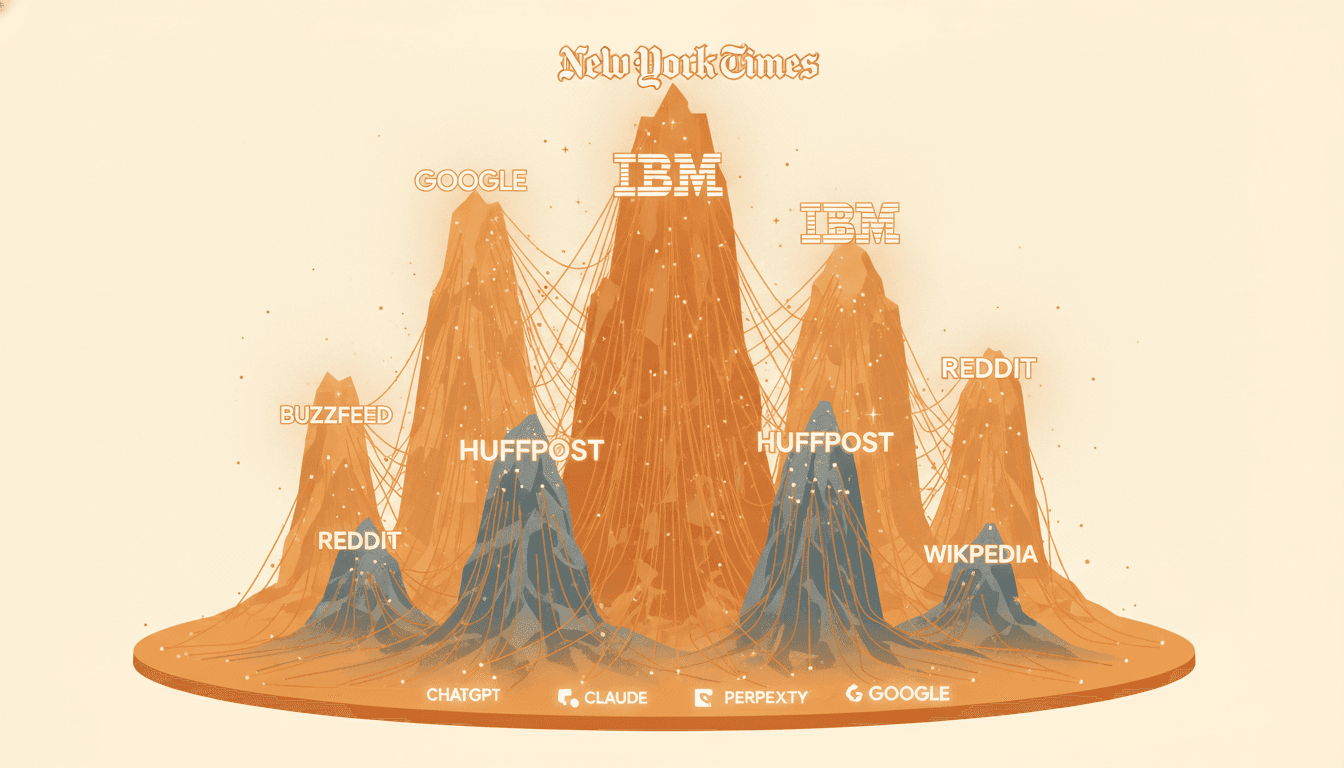
How to Use Schema Markup with Hexagon to Get Your Products Noticed by AI Search Engines
In an AI-driven world, schema markup is the key to unlocking superior product visibility and AI-driven recommendations. Learn how Hexagon’s GEO platform can help your business stand out, boost click-through rates, and win at product discovery with powerful structured data strategies.

How to Use Schema Markup with Hexagon to Get Your Products Noticed by AI Search Engines
In today’s AI-driven marketplace, schema markup is your secret weapon for unlocking superior product visibility and securing AI-powered recommendations. Discover how Hexagon’s GEO platform can elevate your business, boost click-through rates, and dominate product discovery through advanced structured data strategies.
Simply listing your products online isn’t enough in the era of AI-powered search. To truly stand out and be recommended by intelligent search engines, you need precise, structured data that speaks the language of AI. Schema markup serves as that language — providing context that directly influences which products AI platforms highlight and suggest. This guide will walk you through implementing robust schema markup using Hexagon’s GEO platform, helping you dramatically enhance your product visibility, regional relevance, and click-through rates.
[IMG: Illustration of AI search engines highlighting products with schema markup]
Ready to elevate your e-commerce product visibility with Hexagon’s schema optimization? Schedule a free 30-minute consultation to get started.
Understanding the Role of Schema Markup in AI-Powered Product Discovery
Schema markup is structured data embedded within your website’s code that provides AI search engines with clear, machine-readable information about your products. It bridges the gap between simple product listings and the sophisticated algorithms that power today’s discovery platforms. As Aleyda Solis, International SEO Consultant, explains:
“Structured data is the language of AI search. The more context you provide, the higher the likelihood your products will be surfaced in recommendations.”
Modern AI search engines—like ChatGPT, Perplexity, and Google SGE—rely heavily on schema to grasp product attributes, availability, and relevance. Proper schema implementation enables these engines to accurately match user intent with your offerings. For instance, if a shopper searches for “red, size 8 running shoes near me,” only products with detailed, machine-readable schema are likely to appear in recommendations.
The impact is clear and measurable. According to Search Engine Land, brands using correct schema markup experience a 35% increase in AI product discovery. This boost arises because schema presents product data comprehensively and accessibly, ensuring your products aren’t overlooked as users increasingly rely on AI-driven search.
Which Schema Types Most Influence AI Recommendations?
To excel in AI-powered product discovery, understanding which schema types carry the most weight is essential. The following schema types significantly influence how AI interprets and recommends your products:
- Product: Details such as name, description, brand, and images.
- Offer: Pricing, discounts, and availability information that help AI highlight the best deals.
- Review: Individual customer feedback providing insight into buyer sentiment.
- AggregateRating: Overall product rating summaries, crucial for AI-driven ranking.
- ProductModel: Differentiates variants like size, color, or material—vital for matching user preferences precisely.
[IMG: Infographic showing different schema types mapped to AI search outcomes]
Each schema type feeds AI with rich, actionable data. For example, Product and Offer schemas empower AI assistants like Google Bard and Perplexity to recommend in-stock items at optimal prices. Meanwhile, Review and AggregateRating schemas build trust and credibility, increasing your product’s chances of selection amid competitive search results. John Mueller, Search Advocate at Google, observes,
“The next frontier of e-commerce SEO is schema markup optimized for both human and AI consumption.”
Importantly, marking up product variants using ProductModel schema can yield substantial benefits. Brands implementing variant schema report an 18% increase in recommendation rates (Schema.org & Shopify Data). This allows AI to recommend the precise SKU that matches each user query, rather than a generic product listing.
Hexagon’s optimized schema strategies amplify these gains. According to a Hexagon internal case study, clients experience an average 22% uplift in AI product recommendations after deploying advanced, multi-type schema markup. This success stems from providing AI engines with nuanced, high-quality data prioritized in modern ranking algorithms.
Step-by-Step: Implementing Advanced Schema Markup Optimized for Hexagon GEO
In today’s e-commerce environment, implementing schema markup is no longer optional—it’s essential. Hexagon’s GEO platform is tailored to simplify this process and maximize your AI product discovery potential.
Follow these steps to create and customize schema markup optimized for Hexagon’s platform:
1. Audit Your Existing Schema
Begin with a thorough audit to identify your current schema setup and any gaps.
- Use Hexagon’s schema audit tool to detect missing, incomplete, or deprecated schema types.
- The tool flags over 50 common schema errors that can hinder AI visibility.
- Focus first on fixing errors related to core schema types: Product, Offer, Review, and AggregateRating.
2. Deploy Core Product Schema
Ensure every product page includes comprehensive Product schema.
- Include mandatory fields such as name, description, brand, SKU, image, and category.
- Add Offer schema to emphasize pricing, currency, availability, and regional offers.
- Incorporate Review and AggregateRating schemas reflecting real-time customer feedback and ratings.
3. Mark Up Product Variants with ProductModel
Don’t stop at base product data.
- Implement ProductModel schema to specify variants like sizes, colors, and materials.
- This enables AI to surface the exact SKU that matches user preferences.
- Brands applying variant schema observe an 18% increase in AI-driven recommendation rates.
4. Integrate Regional GEO Schema
Hexagon GEO empowers you to add dynamic, location-specific schema markup.
- Localize product availability, pricing, and language settings for each regional market.
- Use GEO schema tags to ensure AI engines recognize your products’ local relevance.
- Brands leveraging GEO schema report a 19% uplift in local search visibility (Hexagon GEO Product Guide).
[IMG: Step-by-step flowchart of schema implementation on Hexagon GEO]
5. Validate and Deploy
Before going live:
- Use Hexagon’s built-in validation tools to catch syntax errors and ensure compliance with the latest schema.org standards.
- Run Google’s Rich Results Test as an additional verification step.
- Schedule regular validation scans to maintain ongoing compliance as your product data evolves.
6. Leverage Hexagon’s Automation and Best Practices
Hexagon offers pre-built templates and automation features to streamline schema management:
- Auto-generate schema markup for new products as they enter your catalog.
- Use bulk-edit functionality to update schema across hundreds of SKUs in minutes.
- Benefit from ongoing support to keep your schema aligned with evolving AI protocols.
Ready to see significant improvements in product discovery and click-through rates? Schedule a free 30-minute consultation with Hexagon today.
Automating Schema Validation and Error Detection with Hexagon Tools
Maintaining accurate, error-free schema is critical for AI trust and SEO success. Hexagon’s automation suite simplifies this, ensuring your structured data continuously meets the highest standards.
- Automated Schema Validation: Hexagon scans your website and product feeds for schema compliance, instantly flagging errors and inconsistencies.
- Error Detection and Remediation: The platform identifies over 50 common schema issues—from missing required fields to outdated properties—and provides clear, step-by-step remediation guidance.
- Continuous Monitoring: Scheduled scans and real-time alerts notify your team immediately of any schema degradation or compliance risks.
[IMG: Dashboard screenshot showing schema health status and error alerts]
Automated validation prevents costly SEO penalties and maintains AI engines’ trust in your product data. As Lily Ray, Senior Director of SEO at Amsive Digital, emphasizes,
“AI assistants are fundamentally changing product discovery. Brands that invest in robust, up-to-date schema markup are winning the recommendation game.”
With Hexagon, you can focus on growth while the system safeguards your schema integrity at scale.
Measuring the Impact of Schema Optimization on AI Recommendations and CTR
Implementing advanced schema is just the beginning. Monitoring its impact is crucial to optimize and justify your efforts. Hexagon’s analytics tools are designed to measure how schema affects AI recommendations and user engagement.
Key Performance Indicators (KPIs) to Track:
- AI product discovery rates: How often AI engines surface your products.
- Organic click-through rate (CTR): The percentage of users clicking through from AI-powered search results.
- Recommendation share: The portion of your catalog recommended compared to the total indexed.
Hexagon’s dashboard consolidates data from platforms like Google SGE, Perplexity, and Bing AI, providing unified insights into discovery and engagement.
- The platform tracks schema-driven uplifts, correlating markup changes with increases in recommendations and CTR.
- Brands using Hexagon’s schema optimization consistently report a 15-20% increase in organic CTR within 90 days (Ahrefs Blog).
- Case studies reveal uplifts of 22% in AI product recommendations and 19% in local search visibility.
[IMG: Analytics dashboard highlighting post-schema implementation KPIs]
Sarah Chen, Head of Digital at Topshop, shares,
“Hexagon’s schema optimization ensures our product feeds are always AI-ready, helping us maintain a competitive edge on emerging search platforms.”
Best Practices for Keeping Schema Markup Current as AI Protocols Evolve
AI search protocols and schema standards evolve rapidly, introducing new data points and use cases. Staying ahead demands a proactive, ongoing approach.
- Regular Schema Updates: Conduct audits at least quarterly to identify new required or recommended schema properties.
- Monitor AI Platform Guidelines: Keep track of updates from major AI search engines and schema.org to maintain compliance.
- Leverage Hexagon’s Update Alerts: The platform automatically notifies you of schema changes, deprecated properties, and emerging AI requirements.
- Continuous Optimization: Use insights from Hexagon’s analytics to refine your schema for higher discovery and engagement.
[IMG: Timeline graphic showing schema standards evolution and update alerts]
Neglecting to update schema risks having your products ignored by emerging AI platforms (Perplexity AI Search Documentation). Hexagon’s tools and expert guidance ensure your structured data remains compliant and competitive. Practical tips include documenting your schema implementation thoroughly, training your web team on new schema types, and leveraging Hexagon’s knowledge base for the latest best practices.
Real-World Examples of Uplift from Hexagon-Optimized Schema
The results speak volumes. Companies across industries have harnessed Hexagon’s schema optimization to drive measurable growth in AI-driven product discovery and engagement.
- Fashion Retailer: Implemented comprehensive Product, Offer, and variant schema, achieving a 22% uplift in AI product recommendations and a 19% increase in local search visibility.
- Electronics Brand: Leveraged GEO schema for multi-region launches, securing top placements in regional AI search results within weeks.
- Health & Beauty E-commerce: Utilized advanced Review and AggregateRating markup to boost organic CTR by 18% and dominate AI recommendation carousels.
[IMG: Before and after AI recommendation graphs from a Hexagon client case study]
These success stories highlight Hexagon’s ability to deliver tangible business outcomes through cutting-edge schema strategies.
Conclusion: Future-Proof Your Product Discovery with Hexagon Schema Optimization
AI search engines are reshaping how consumers discover products, and schema markup is the foundational element for success. From increased product recommendations to higher click-through rates, the evidence is compelling:
- 35% more AI product discovery
- 22% uplift in recommendations
- 19% higher local visibility
- 15-20% jump in organic CTR
Hexagon’s GEO platform and automation tools simplify the implementation, validation, and maintenance of advanced schema—ensuring your products are not just seen, but prioritized by AI search engines.
Looking ahead, brands that invest in schema optimization will lead the next wave of e-commerce growth. Ready to get started? Schedule your free 30-minute consultation with Hexagon now.
[IMG: Hexagon team collaborating with client on schema optimization strategy]
Hexagon Team
Published April 12, 2026