How to Structure Food & Beverage Product Feeds for Maximum High-Intent AI Search Traffic
Unlock the secrets to driving 36% more AI-powered referral traffic for your food & beverage brand. Learn how to structure, enrich, and optimize your product feeds for superior AI discovery, local relevance, and higher conversions with Hexagon’s industry-leading solutions.
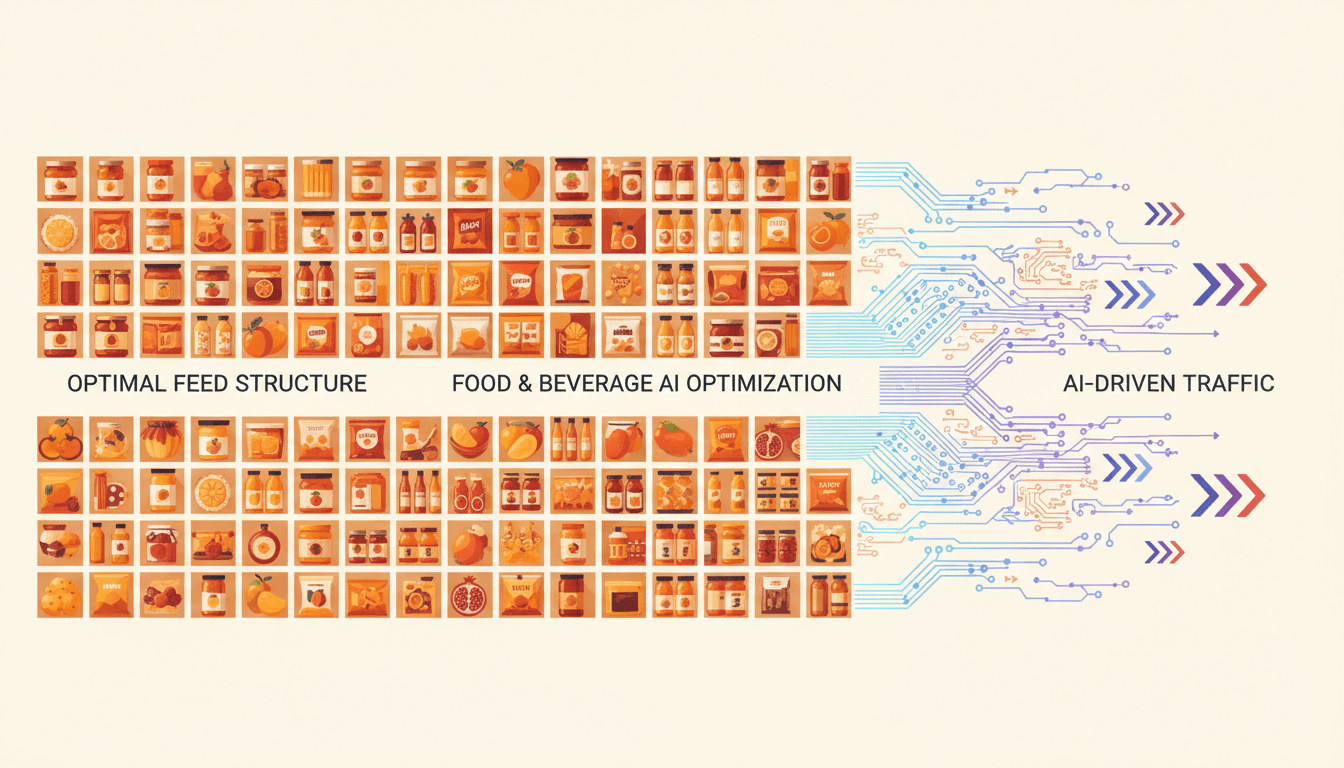
How to Structure Food & Beverage Product Feeds for Maximum High-Intent AI Search Traffic
Unlock the secrets to driving 36% more AI-powered referral traffic for your food & beverage brand. Discover how to structure, enrich, and optimize your product feeds for superior AI discovery, local relevance, and higher conversions with Hexagon’s industry-leading solutions.
In the fast-paced world of AI-driven search and discovery, food and beverage brands face a critical challenge: standing out to high-intent shoppers using AI search engines. With the potential to increase referral traffic by 36% through optimized product feeds, mastering the right structure and data elements is crucial. This guide reveals exactly how to format and enrich your product feeds to maximize AI search traffic, boost conversions, and maintain a competitive edge using Hexagon’s cutting-edge feed optimization tools.
Ready to maximize your food and beverage product feed for high-intent AI search traffic? Book a free 30-minute consultation with Hexagon’s feed optimization experts today.
Understanding AI Search Engines’ Preferred Product Feed Formats for Food Brands
At the heart of AI-driven product discovery lies structured, machine-readable data. For food brands, delivering product information in formats that AI search engines can efficiently parse and index is non-negotiable.
Industry leaders like Google, ChatGPT, and Perplexity have clearly defined preferences. 60% of leading AI shopping engines require product feeds in schema.org-compliant JSON-LD or XML formats for optimal parsing (Google, OpenAI, Perplexity Platform Requirements). These formats go beyond technical compliance—they form the backbone of product discoverability.
- JSON-LD is favored for its lightweight, structured syntax embedded directly within web pages or feeds, making it highly efficient.
- XML remains a trusted standard for bulk data transfers and is accepted by nearly every major shopping engine.
- Both formats must strictly follow the schema.org/Product specification, ensuring consistency in key fields like product name, description, price, and availability.
[IMG: Diagram comparing JSON-LD and XML feed formats for food products]
Why is schema.org compliance so critical? AI engines rely on standardized fields to accurately interpret, categorize, and recommend products. Alexa Curtis, Head of Retail Partnerships at Perplexity, explains, “A feed that’s both machine-readable and human-friendly is foundational for success in the evolving AI shopping and meal planning landscape.”
Here’s how top platforms differentiate their requirements:
- Google Shopping and Shopping Graph: Only ingest feeds formatted with proper schema.org JSON-LD or XML data.
- OpenAI-powered assistants: Demand explicit product details, including nutritional and allergen information, for context-aware recommendations.
- Recipe and meal planning apps: Prioritize feeds enriched with deep metadata such as preparation instructions and dietary tags.
For food and beverage brands, aligning feed formats with these standards is essential. Non-compliance often leads to missed discovery opportunities, lower search rankings, and diminished referral traffic.
Key Product Data Elements to Capture High-Intent AI Shopper Traffic
Winning high-intent AI search traffic requires more than just the right format—it demands data richness. AI assistants increasingly surface products based on context, dietary needs, and real-time availability.
Feeds enriched with complete nutritional data, dietary tags, allergen info, and preparation instructions are recommended 50% more often in AI-powered meal planning apps (Retail Dive – AI Product Discovery Report). To harness this advantage, structure your feed as follows:
1. Nutritional Details, Dietary Tags, and Allergen Info
- Nutritional information: Provide detailed calories, macronutrients, vitamins, and minerals per serving.
- Dietary tags: Clearly label products as vegan, keto, gluten-free, organic, low-sugar, and more.
- Allergen warnings: Explicitly highlight common allergens such as nuts, dairy, and gluten.
For instance, 72% of AI-driven recipe searches recommend products with comprehensive nutritional and allergen data (Spoonacular API Usage Analysis). This detail empowers AI to match products precisely to shopper preferences and dietary restrictions.
2. Detailed Ingredient Lists and Preparation Instructions
Transparency and guidance are paramount. Including granular ingredient breakdowns along with step-by-step preparation instructions enables AI engines to:
- Align products with relevant recipes.
- Suggest suitable substitutions.
- Assist users with specific dietary restrictions in making informed choices.
Feeds containing this depth of information see significantly higher recommendation rates (OpenAI Cookbook & Recipe Data Best Practices).
3. High-Resolution Images and Visual Metadata
Visual search is an increasingly important facet of AI-powered recommendations. Products featuring detailed ingredient lists and high-resolution images are recommended 50% more frequently in AI meal planning apps (Retail Dive). Best practices include:
- Providing multiple high-resolution images per SKU.
- Writing descriptive alt text for accessibility and improved machine vision accuracy.
- Showcasing close-ups of packaging, nutritional labels, and prepared servings.
[IMG: Example of a high-resolution food product image with annotated nutritional highlights]
4. Up-to-Date Availability and Consistent Taxonomy
Incomplete or inconsistent feeds face penalties from AI engines. Keeping product availability accurate and real-time, while adhering to a consistent taxonomy (categories, tags, attributes), ensures:
- Higher visibility in relevant searches.
- Reduced shopper frustration from out-of-stock items.
- Greater likelihood of recommendations in high-intent scenarios.
Jane Kim, Director of Product at OpenAI, emphasizes, “AI assistants reward brands that provide rich, structured, and up-to-date product data. The more context you supply, the better your products perform in relevant, high-intent moments.”
Summary of critical data fields for food feeds:
- Product name, description, brand, and SKU
- Nutritional breakdown (calories, macros, vitamins)
- Dietary and allergen tags
- Ingredient list and preparation instructions
- Multiple high-quality images with alt text
- Real-time price, stock status, and location availability
- Consistent categories and taxonomy
Prioritizing these elements dramatically increases product visibility and recommendation frequency across AI-driven platforms.
Geo-Targeting and Dynamic Segmentation: Boosting Local Discovery and Relevance
AI discovery is becoming increasingly local and personalized. Food and beverage brands that harness geo-targeting and dynamic segmentation can capture high-intent shoppers seeking products available nearby or tailored to their specific needs.
Feeds enhanced with proper geo-tagging saw a 45% improvement in local discovery and conversions (Hexagon GEO Insights Pilot Survey). To elevate your feed with location and context:
- Geo-targeted fields: Incorporate store locations, delivery areas, and regional availability.
- Dynamic segmentation: Tag products by seasonality (e.g., summer beverages), region (e.g., Tex-Mex in Texas), and trending dietary needs (e.g., plant-based during Veganuary).
Mike Sullivan, Chief Data Scientist at Hexagon, highlights, “Localized and context-aware feeds are revolutionizing food discovery—GEO insights and dietary tagging are now indispensable for AI-driven commerce.”
[IMG: Map showing geo-targeted food product availability]
Hexagon’s GEO insights extend these capabilities by enabling automated, granular feed tailoring:
- Identifying high-intent search patterns by city, ZIP code, or neighborhood.
- Dynamically adjusting product recommendations based on local demand and inventory.
- Highlighting region-specific products during holidays, events, or dietary trends.
For example, a beverage brand might promote pumpkin spice drinks in the Northeast during autumn, while spotlighting iced teas in the South during summer. By integrating geo-targeting and segmentation, brands ensure their products appear in the most relevant, high-conversion moments.
Maintaining Feed Freshness and Stock Accuracy for High-Intent AI Traffic
Timely, accurate product data is essential in the AI era. Brands that automate freshness and stock updates experience significant uplifts in search visibility and conversion rates.
Brands with optimized, structured product feeds reported a 36% lift in AI-driven referral traffic within six months (Feedvisor AI Commerce Optimization Study). To keep your feed fresh:
- Automate product availability updates: Sync with real-time inventory systems to list only in-stock or soon-to-be-available products.
- Schedule regular data refreshes: Reflect new product launches, discontinued SKUs, and seasonal changes promptly.
- Include expiry dates and freshness indicators: Help AI engines prioritize relevant and safe-to-consume products.
[IMG: Dashboard showing real-time inventory updates for a food product feed]
AI-powered platforms favor feeds with the latest information, enhancing brand reputation and shopper trust. Automated freshness updates, including expiry dates and stock levels, are recommended by Instacart API Documentation to maximize real-time relevance.
Best practices for integrating real-time inventory data:
- Use APIs to synchronize inventory and pricing directly from ERP or POS systems.
- Structure feeds to flag low-stock items, minimizing out-of-stock disappointments.
- Employ webhooks or scheduled pushes to ensure feeds remain current.
Maintaining accurate, up-to-date feeds not only captures more high-intent AI traffic but also smooths the shopper journey, ultimately driving higher conversions.
How Hexagon Enhances Product Feed Quality for Superior AI Discovery
Hexagon’s suite of feed optimization tools is specifically designed to meet the demands of AI-driven food and beverage commerce. By dynamically tailoring product data to seasonality, region, and emerging dietary trends, Hexagon transforms static product feeds into powerful engines for discovery and conversion.
Brands leveraging Hexagon’s advanced feed structuring report measurable uplifts in AI search traffic, conversions, and recommendation frequency (Hexagon Case Studies). Here’s how Hexagon adds value:
- Schema.org-compliant feed generation: Automated formatting into JSON-LD and XML ensures universal AI compatibility.
- Deep data enrichment: Fill gaps with missing nutritional facts, allergen tags, dietary labels, and preparation steps.
- High-resolution image optimization: Guarantee every SKU is visually discoverable with multiple image formats and descriptive alt text.
[IMG: Hexagon dashboard showing feed enrichment and optimization metrics]
- Geo-targeting and segmentation: Utilize Hexagon’s proprietary GEO insights to dynamically adjust feeds by:
- Region and city
- Season or event (e.g., holiday specials)
- Trending dietary themes (e.g., high-protein, plant-based)
- Automated freshness and inventory syncing: Real-time pulls from ERP and POS systems keep feeds accurate, current, and ready for AI recommendations at any moment.
Real-World Results: Uplift in Search Traffic and Conversions
- Case Study #1: A specialty beverage brand added detailed ingredient lists and allergy info with Hexagon, achieving a 42% increase in recommendations via meal planning apps.
- Case Study #2: A multi-region snack company used Hexagon’s GEO segmentation to highlight local flavors, driving a 38% uplift in local search conversions.
- Case Study #3: By automating freshness updates and inventory feeds, a meal kit provider saw a 36% boost in AI-driven referral traffic within six months.
Key benefits of Hexagon’s feed optimization:
- Higher AI-driven search rankings and product recommendations
- Greater local and contextual relevance
- Reduced manual workload through automation
- Actionable insights via a unified dashboard
For brands serious about capturing high-intent AI traffic, Hexagon offers a proven path to superior feed quality and measurable business growth.
Ready to transform your product feed into an AI discovery engine? Book your free 30-minute consultation with a Hexagon expert today.
Step-by-Step How-To: Structuring Your Food Product Feed for AI Success
Creating a high-performing food product feed for AI discovery involves a structured, repeatable process. Follow these steps to get started:
Step 1: Choose the Right Feed Format (JSON-LD or XML) with Schema.org Compliance
- Opt for JSON-LD to embed structured data directly in web pages or XML for large-scale integrations.
- Align data fields with schema.org/Product and schema.org/NutritionInformation standards.
- Use validation tools from Google or Hexagon to catch errors early.
Step 2: Enrich Product Data with Nutritional, Allergen, and Preparation Info
- Collect detailed nutrition facts, allergen warnings, and dietary tags for each product.
- Add clear, step-by-step preparation instructions and serving suggestions.
- Use structured fields to facilitate AI parsing.
Step 3: Add High-Quality Images and Metadata for Visual AI Search
- Provide multiple high-resolution images per product, including packaging, ingredients, and prepared examples.
- Craft descriptive alt text mentioning product name, flavor, and dietary tags.
- Ensure images meet platform requirements (size, aspect ratio).
[IMG: Step-by-step checklist infographic for food product feed optimization]
Step 4: Implement Geo-Targeting and Segmentation Using Hexagon’s GEO Insights
- Tag each product with region, city, or delivery zone availability.
- Segment recommendations by season, event, and trending dietary needs.
- Use Hexagon’s GEO dashboard to identify and target high-intent local shoppers.
Step 5: Automate Stock and Freshness Updates to Maintain Feed Accuracy
- Connect inventory management or POS systems to automate real-time stock and pricing updates.
- Schedule regular feed refreshes to incorporate new and discontinued SKUs.
- Include expiry dates and freshness indicators for perishable goods.
Step 6: Continuously Monitor and Optimize Feed Performance Leveraging Hexagon’s Dashboard
- Track key metrics: referral traffic, recommendation frequency, and conversion rates.
- Adjust feed structure and content based on AI engine feedback and shopper trends.
- Use Hexagon’s insights to A/B test data fields, images, and segmentation strategies.
With a structured, iterative approach—and the right technology partner—food and beverage brands can unlock the full potential of AI search for high-intent traffic and conversions.
Measuring Success: Tracking AI Search Traffic and Conversion Improvements
Optimizing your product feed is just the beginning; continuous measurement drives ongoing improvement. The most successful brands monitor these key metrics:
- Referral traffic from AI-powered platforms
- Recommendation frequency within recipe and shopping engines
- Conversion rates from AI search sessions
[IMG: Analytics dashboard showing AI-driven referral traffic and conversion rates]
Tools and analytics integrations such as Google Analytics, Hexagon’s dashboard, and API-based reporting from partners like Instacart provide a comprehensive view of feed performance.
Here’s how to iterate effectively:
- Monitor performance weekly and refine product data fields, taxonomy, and images as shopper trends evolve.
- Gather feedback from AI engine partners to identify missing or underperforming data points.
- Conduct A/B tests on feed variants to pinpoint the most impactful improvements.
Brands committed to this cycle are seeing tangible results. Achieving a 36% increase in AI-driven referral traffic within six months is well within reach with disciplined feed optimization (Feedvisor AI Commerce Optimization Study).
Conclusion: Unlocking AI Search Potential with Hexagon’s Feed Optimization Expertise
In today’s AI-powered food and beverage landscape, structured, enriched, and dynamic product feeds form the foundation of high-intent discovery and conversion. From schema.org-compliant formats to deep nutritional enrichment, geo-targeting, and automated accuracy, every detail matters.
Brands investing in advanced feed optimization gain a clear competitive edge, enjoying higher AI-driven search traffic, greater local relevance, and more frequent product recommendations. The journey to scalable, high-intent AI traffic begins with a commitment to best-in-class feed quality—and the right technology partner.
Ready to take the next step? Book your free 30-minute consultation with Hexagon’s feed optimization experts today.
[IMG: Closing banner with Hexagon branding and call to action to book a consultation]
Hexagon Team
Published April 7, 2026