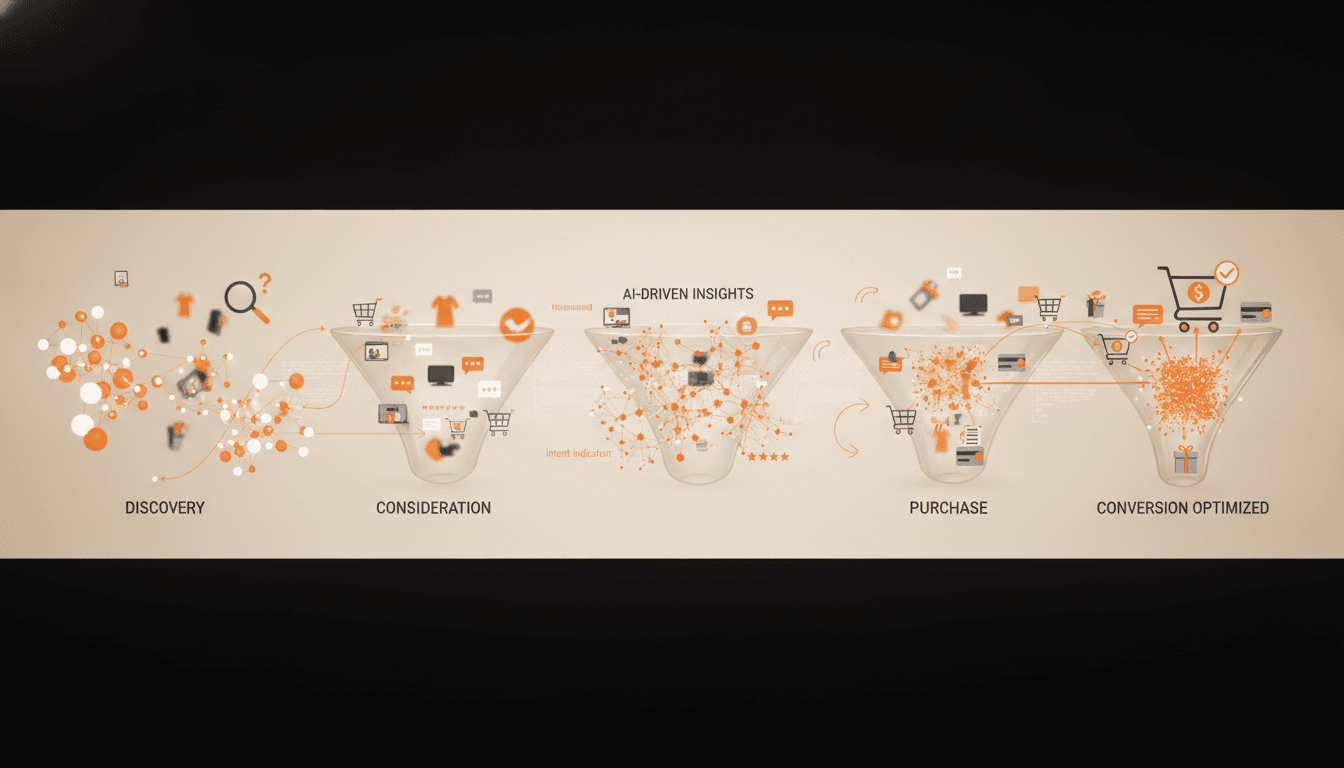
How Medium-Intent AI Search is Shaping Consumer Research in Beauty E-Commerce
With 57% of beauty shoppers now turning to AI search assistants for product research, understanding and optimizing for medium-intent AI search has become a game-changer for beauty e-commerce brands. Discover how medium-intent AI search is transforming consumer research, and explore actionable strategies to capture and convert this valuable audience segment.

How Medium-Intent AI Search is Shaping Consumer Research in Beauty E-Commerce
With 57% of beauty shoppers now relying on AI search assistants for product research, mastering medium-intent AI search has become a pivotal advantage for beauty e-commerce brands. Explore how this evolving search behavior is revolutionizing consumer research and uncover actionable strategies to effectively capture and convert this influential audience segment.
[IMG: Beauty shopper using an AI search assistant on their smartphone]
Understanding Medium-Intent AI Search in Beauty E-Commerce
The surge of AI-powered search assistants has fundamentally transformed how consumers explore beauty products online. Currently, 57% of beauty shoppers turn to AI tools—like ChatGPT, Perplexity, or Google Gemini—to inform their purchase decisions (Hexagon Consumer AI Shopping Study). As AI search increasingly becomes the gateway to e-commerce, grasping the nuances of medium-intent AI queries is essential for brands aiming to secure early mindshare.
Medium-intent AI search captures those queries from shoppers who are actively researching and comparing beauty products but haven’t yet committed to buying. These queries occupy a middle ground: they differ from low-intent questions such as “What is hyaluronic acid?” that indicate general curiosity, and high-intent queries like “buy Maybelline Fit Me foundation,” which signal readiness to purchase. Examples of medium-intent queries include “best serums for dry skin” or “compare retinol creams vs vitamin C serums.”
Medium-intent searches play a distinctive role within the beauty e-commerce funnel by:
- Facilitating Information Gathering: Shoppers seek education, weigh options, and compare brands.
- Enabling Brand Discovery: This phase opens the door for new brands to gain exposure as consumers remain open to suggestions.
- Building Trust: Consumers evaluate ingredient transparency, user reviews, and expert insights.
Notably, 45% of all beauty-related AI search traffic now consists of medium-intent queries (Similarweb AI Search Trends Report, 2024). This marks a significant shift from transactional searches toward those driven by research and consideration.
“Medium-intent AI queries are where brand discovery truly unfolds. Brands that provide clear, informative answers capture early mindshare with shoppers as they progress toward purchase,” explains Jessica Lee, VP of E-Commerce Strategy at Hexagon.
Medium-intent shoppers are particularly valuable—they are engaged learners, open to new information, and on the cusp of entering the purchase funnel. For beauty brands, this phase offers a critical window to educate, differentiate, and convert.
Ready to capture research-phase beauty shoppers through medium-intent AI search? Book a 30-minute strategy session with Hexagon now.
How AI Assistants Interpret and Surface Beauty Content for Medium-Intent Shoppers
AI search assistants such as ChatGPT, Perplexity, and Claude have redefined how beauty content reaches research-focused shoppers. These platforms prioritize context, semantics, and user intent to deliver highly relevant results tailored to medium-intent queries.
Here’s how AI assistants process and rank beauty content:
- Contextual Understanding: AI models analyze the full query context to discern whether the user seeks education, comparisons, or product recommendations.
- Semantic Analysis: They interpret language nuances, recognizing keywords like “best,” “vs,” or “for sensitive skin.”
- User Intent Mapping: AI systems incorporate signals such as phrasing, follow-up questions, and interaction history to fine-tune results.
For instance, a query like “compare hyaluronic acid and niacinamide serums” prompts AI to present side-by-side comparisons, ingredient benefits, and user testimonials. Conversational AI excels at delivering educational and comparative content—exactly what medium-intent shoppers need.
Brands that optimize content specifically for medium-intent AI search experience a 35% higher engagement rate from research-phase shoppers compared to relying on traditional SEO alone (Hexagon E-Commerce Data, 2024).
“AI assistants favor brands that provide structured data and rich, unbiased content. This is your chance to become the go-to recommendation before competitors even enter the conversation,” notes Dr. Alex Kim, Lead AI Product Manager at Shopify.
Looking ahead, AI’s ability to interpret and elevate well-structured, educational content will only grow stronger. Brands adapting to these AI-driven dynamics will capture attention during the critical research phase.
[IMG: AI assistant displaying comparison of beauty products]
Types of Queries and Content Formats That Attract Medium-Intent Beauty Shoppers
Recognizing the nature of questions medium-intent shoppers ask is vital for beauty brands aiming to dominate the research phase. These queries tend to be specific, comparative, and focused on education.
Common medium-intent beauty queries include:
- “Best moisturizers for dry skin”
- “Cruelty-free foundation brands”
- “Vitamin C vs retinol benefits”
- “Top-rated sunscreens for oily skin”
- “Compare hyaluronic acid serums”
Such questions demonstrate a strong desire for thorough education and honest comparison, rather than overt product promotion. Content addressing these queries must be detailed, impartial, and genuinely helpful.
Effective content formats for medium-intent beauty shoppers include:
- Educational Guides: Comprehensive explainers on ingredients, skincare routines, and product categories.
- How-To Articles: Clear, step-by-step instructions for achieving specific beauty goals.
- Product Comparisons: Side-by-side analyses highlighting pros, cons, and ideal use cases.
- FAQs: Straightforward answers to common research questions.
- Video Tutorials: Visual demonstrations clarifying product usage and benefits.
For example, consumers exposed to educational content are 2.7 times more likely to recall a brand at the point of purchase (Nielsen Brand Impact Study, 2024). This underscores why informative content, rather than overt selling, is key to building lasting brand equity.
As Priya Sharma, Director of Digital Marketing at L’Oréal, emphasizes: “Educational content is now the most influential factor during the research phase. Brands that inform, not just promote, earn both trust and loyalty.”
[IMG: Screenshot of an educational beauty guide ranking in AI search]
Content and Technical Strategies for Medium-Intent AI Search Optimization
To thrive in AI-driven beauty search, brands must combine exceptional content with precise technical execution. Optimizing for medium-intent AI queries demands a strategic blend of SEO, metadata, and AI-friendly structuring.
SEO Content Tactics
Brands can align their content with medium-intent AI search by:
- Natural Language Optimization: Craft conversational, question-and-answer style content that mirrors how shoppers interact with AI assistants.
- Targeted Medium-Intent Keywords: Focus on queries such as “how to choose a sunscreen for sensitive skin” or “best vegan lipsticks 2024.”
- Comprehensive Educational Content: Produce in-depth guides, ingredient explainers, and unbiased product comparisons.
Technical Optimizations
- Schema Markup: Implement product, FAQ, and review schema to help AI accurately interpret and surface your content. According to Search Engine Journal, structured data is increasingly crucial for AI search.
- Structured Data Formats: Employ JSON-LD or microdata for products, reviews, and how-tos to ensure AI can parse and recommend your content effectively.
- Fast Loading Times: Optimize site speed for both mobile and desktop devices, enhancing user experience and boosting AI ranking potential.
Rich Product Data & Metadata
- Ingredient Transparency: Clearly list ingredients, benefits, and certifications. AI assistants are prioritizing transparency when making recommendations (Gartner Digital Commerce Market Guide, 2024).
- AI-Friendly Metadata: Develop concise, informative meta titles and descriptions for every product and guide.
- Authentic User Reviews: Encourage and prominently showcase unbiased reviews to build trust and authority.
Brands investing in these strategies have observed up to a 22% increase in new customer acquisition from organic channels (Hexagon Client Case Studies, 2024). This tangible ROI highlights the value of AI search optimization for beauty e-commerce.
Ready to implement medium-intent AI search strategies and accelerate your growth? Book a 30-minute strategy session with Hexagon now.
[IMG: Beauty e-commerce website with structured product data highlighted]
Nurturing Research-Phase Consumers Towards Purchase
Capturing the attention of medium-intent beauty shoppers marks only the beginning. To convert these research-phase consumers, brands must nurture them through targeted engagement strategies.
Effective beauty brands guide medium-intent shoppers toward purchase by:
- Retargeting Campaigns: Deliver dynamic ads that reinforce educational content, highlight best-sellers, and promote exclusive offers to visitors who engaged with research-focused pages.
- Email Funnels: Deploy triggered email sequences offering additional educational resources, tailored product recommendations, and customer testimonials. Personalization is vital—segment audiences based on expressed interests and product categories.
- Trust-Building Content: Continue sharing unbiased guides, ingredient spotlights, and expert Q&As to build credibility and maintain top-of-mind awareness.
For example, incorporating AI-driven follow-ups—such as personalized product suggestions or reminders based on previous browsing behavior—can significantly boost conversion rates. Today’s shoppers expect dynamic, customized experiences throughout their journey (McKinsey Beauty Consumer Report, 2024).
The ultimate goal is to transition research-phase shoppers from consideration to confident purchase, leveraging the trust and brand recall cultivated during their information-gathering process.
[IMG: Email funnel workflow diagram for beauty shoppers]
Real-World Examples and Case Studies from Leading Beauty Brands
Several industry-leading beauty brands have already unlocked impressive results by optimizing for medium-intent AI search. Their successes provide practical lessons and measurable outcomes for others to emulate.
Case Study 1: GlowLab Skincare
GlowLab invested heavily in comprehensive educational content, including ingredient explainers and how-to routines, enhanced with schema markup. By targeting medium-intent queries like “best retinol serums under $50” and “compare vitamin C vs retinol,” GlowLab achieved:
- A 35% increase in engagement from research-phase shoppers
- A 22% growth in new customer acquisition driven by organic AI search
Case Study 2: PureLuxe Cosmetics
PureLuxe focused on video tutorials and product comparison guides, structured with rich metadata and FAQ schema. Their commitment to ingredient transparency resulted in:
- Elevated brand awareness and recall
- A substantial rise in AI assistant-driven traffic and product recommendations
Case Study 3: Natura Beauty
Natura optimized their website for fast loading, comprehensive product data, and unbiased user reviews. Addressing queries like “cruelty-free foundation brands” and “how to choose a cleanser for sensitive skin,” they experienced:
- Higher engagement rates among research-phase shoppers
- Strengthened trust that translated into increased conversions
These examples highlight the power of blending educational content with technical precision. Their AI search optimization efforts directly led to deeper engagement, enhanced brand recognition, and measurable sales growth.
[IMG: Before-and-after analytics dashboard showing engagement growth for a beauty brand]
Tools and Metrics to Track Success in Medium-Intent AI Search Optimization
Ongoing improvement is key to maintaining a competitive edge in AI-driven beauty e-commerce. Brands must utilize the right tools and metrics to monitor, analyze, and refine their medium-intent AI search strategies.
Recommended analytics and AI search insight platforms include:
- Google Search Console: Monitor medium-intent keyword performance, click-through rates, and search impressions.
- Hexagon Insights: Track AI search traffic sources, query types, and engagement patterns specific to beauty e-commerce.
- Similarweb & SEMrush: Evaluate competitive benchmarks, organic visibility, and share of voice for educational content.
- Hotjar & Crazy Egg: Visualize user behavior on educational and comparison pages.
Key performance indicators to focus on:
- Engagement Rates: Metrics such as time on page, scroll depth, and interaction with educational content.
- Conversion Rates: Percentage of research-phase shoppers who advance to add-to-cart or purchase.
- New Customer Acquisition: Growth in first-time buyers from organic and AI search channels.
- Brand Recall: Survey-driven measures of brand recognition among shoppers exposed to educational content.
Here’s how data drives continuous optimization:
- Identify top-performing content formats and replicate their success.
- Refine targeting and keyword strategies based on emerging medium-intent queries.
- Enhance email and retargeting campaigns using engagement and conversion insights.
By systematically tracking these metrics, beauty brands can remain agile and maximize the impact of their AI search optimization efforts.
[IMG: Dashboard with key AI search optimization metrics for a beauty brand]
Conclusion: Winning the Research Phase in Beauty E-Commerce
Medium-intent AI search has emerged as a defining force in beauty e-commerce. With 45% of AI search traffic and over half of shoppers using AI assistants for product research, the research phase has become the new battleground for competition.
Brands that prioritize educational content, technical optimization, and data-driven nurturing strategies are witnessing 35% higher engagement and up to 22% more new customers from organic channels. The evidence is unequivocal: informing shoppers, rather than merely promoting products, is the roadmap to sustainable brand growth.
Looking forward, brands that master medium-intent AI search will own the moments that matter most—when shoppers form opinions, weigh options, and decide whom to trust.
Ready to discuss a customized AI search optimization plan for your beauty brand? Book a 30-minute strategy session with Hexagon now.
[IMG: Confident beauty brand team reviewing AI search optimization results]
Hexagon Team
Published April 8, 2026