How AI Search Engines Use Customer Reviews to Power E-Commerce Recommendations
93% of consumers say online reviews influence their purchasing decisions—discover how AI search engines transform this feedback into powerful, personalized e-commerce recommendations and how your brand can optimize reviews for the AI-driven future.
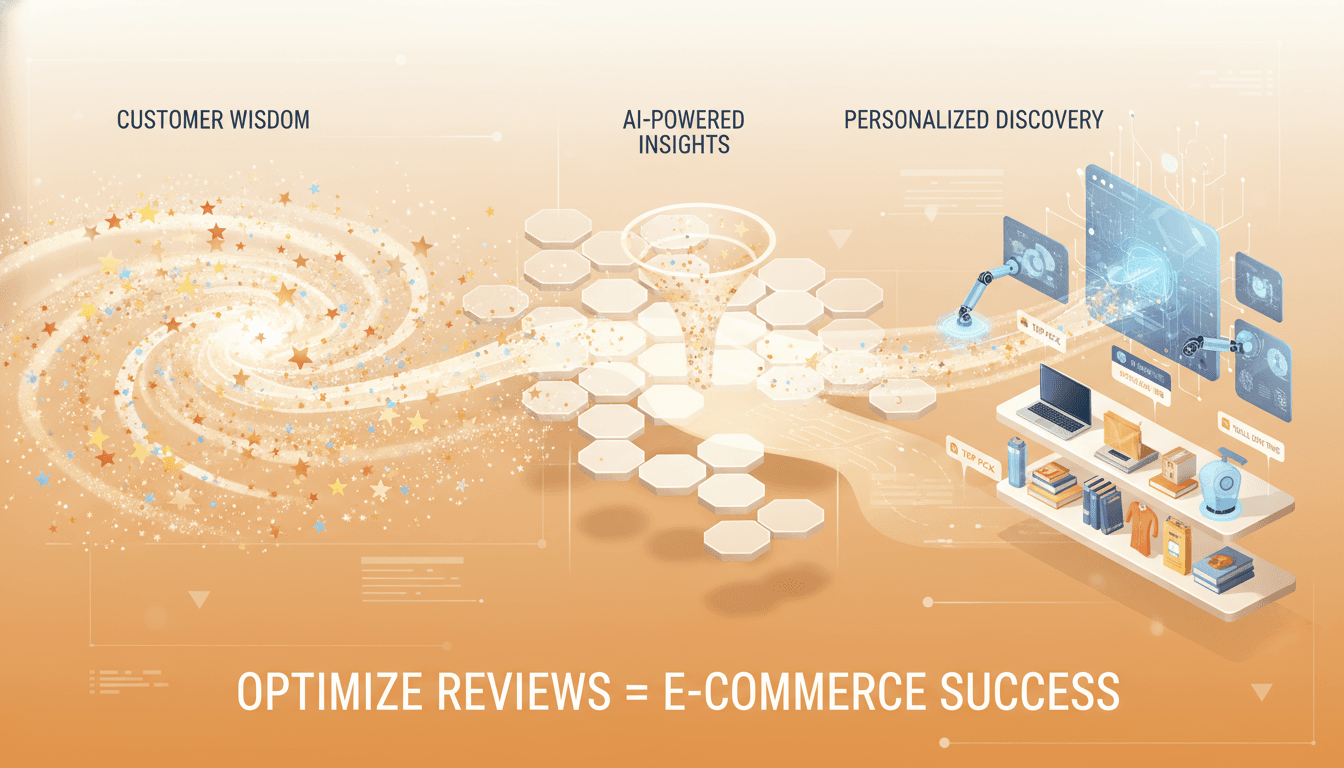
How AI Search Engines Use Customer Reviews to Power E-Commerce Recommendations
93% of consumers say online reviews influence their purchasing decisions—discover how AI search engines transform this feedback into powerful, personalized e-commerce recommendations and learn how your brand can optimize reviews for the AI-driven future.
[IMG: AI interpreting customer reviews on an e-commerce platform]
Did you know that 93% of consumers say online reviews influence their purchasing decisions? Today, AI sits at the core of interpreting this vast feedback, delivering smarter, more personalized product recommendations than ever before. In this comprehensive guide, we’ll dive into how AI search engines analyze customer reviews to elevate e-commerce visibility and conversions—and how your brand can strategically optimize reviews to thrive in the era of generative AI.
Ready to unlock the full potential of your customer reviews for AI-powered e-commerce success? Book a free 30-minute consultation with Hexagon’s AI marketing experts today.
Understanding How AI Analyzes Customer Reviews for E-Commerce Recommendations
The surge of user-generated content has made customer reviews a goldmine for e-commerce brands. Artificial Intelligence (AI), leveraging Natural Language Processing (NLP) and sentiment analysis, is reshaping how these reviews are decoded and applied.
AI-powered systems use NLP to extract sentiment, product attributes, and user intent from unstructured review text. According to McKinsey & Company, this enables recommendation engines to look beyond star ratings and tap into the nuanced language customers use to share their experiences. As Dr. Fei-Fei Li, Professor of Computer Science at Stanford University, explains, “AI doesn’t just count stars—it reads between the lines, interpreting the nuance and context of customer reviews to surface trustworthy product recommendations.”
Here’s a closer look at the process:
- Sentiment Analysis: AI algorithms assess the tone and emotion in reviews, identifying whether feedback is positive, negative, or neutral.
- Theme & Attribute Extraction: Machine learning models detect keywords, recurring themes, and specific product features, as emphasized by Harvard Business Review.
- Continuous Learning: With each new review, AI refines its models, improving accuracy in understanding customer sentiment and preferences.
However, 65% of AI product recommendation errors arise from insufficient or unstructured customer review data (Forrester Research). This highlights the critical need for comprehensive, well-structured reviews to optimize AI recommendation performance.
Furthermore, 25% of all AI-driven e-commerce recommendations hinge directly on customer review sentiment and content (Statista). Generative AI engines like ChatGPT and Perplexity actively weigh user-generated content—including reviews—when ranking and recommending products (OpenAI Developer Blog).
Employing sentiment analysis can boost the accuracy of AI-based product recommendations by up to 20% (Gartner). Constantly evolving, AI models utilize vast datasets to better interpret context, sarcasm, and emerging consumer trends.
In essence, AI’s sophisticated interpretation of customer reviews fuels not only enhanced product recommendations but also sharper insights into shifting consumer needs. Brands embracing these technologies position themselves ahead in the fiercely competitive e-commerce landscape.
[IMG: Visualization of AI analyzing review text with highlighted keywords and sentiment scores]
Why Customer Reviews Are Critical for AI Search Visibility and Trust
Customer reviews serve as more than social proof—they are foundational data points that AI-powered search and recommendation engines rely on. Products rich in authentic reviews earn higher priority, gaining enhanced visibility and consumer trust.
Here’s how reviews impact AI search and conversions:
- Trust Signals: Generative AI systems interpret review sentiment as a key trust indicator, affecting both rankings and the likelihood of inclusion in product recommendations (Google AI Blog).
- Ranking Influence: Reviews featuring detailed, descriptive language and specific product insights are more likely to be surfaced in AI-driven search results (BrightLocal).
- Conversion Rates: 78% of e-commerce marketers report improved conversion rates after adopting AI-optimized review strategies (Salesforce Shopping Index).
The link between reviews and consumer trust is unmistakable. 93% of consumers say online reviews affect their buying decisions (Podium State of Reviews). For brands, this means the quality and authenticity of reviews directly influence sales and reputation.
AI amplifies the power of customer feedback—it doesn’t operate in isolation. Therefore, cultivating and managing a robust review ecosystem aligned with AI priorities is essential. Brands that do so will sustain growth in both search visibility and customer trust.
[IMG: E-commerce product listing with highlighted customer reviews and trust badges]
Techniques to Optimize Customer Reviews for Generative AI Engines
In today’s AI-driven marketplace, brands must optimize customer reviews for both human readers and machine understanding. Structured, detailed, and diverse reviews have become the new currency for generative AI search engines.
Here’s how to maximize the impact of your reviews:
- Length & Specificity: Encourage comprehensive reviews that include precise product details. AI favors rich, descriptive language (BrightLocal).
- Diversity of Language: Varied expressions and unique phrasing help AI models better interpret and categorize product strengths and customer sentiment (Moz).
- Recency: Recent reviews carry more weight, reflecting the current product quality and customer experience.
- Consistent Updates: Prompt customers to update or add reviews over time to maintain relevance for AI search algorithms.
- Structured Data: Implementing schema markup enables AI to quickly parse and interpret review content, enhancing product discoverability.
For instance, brands that use structured, detailed reviews report a 40% increase in product discovery from generative AI search (Gartner). The next wave of e-commerce growth belongs to brands that master structuring user reviews for both human and AI comprehension, as Brian Solis of Salesforce emphasizes.
Actionable steps to optimize for AI engines include:
- Using review schema to clearly tag reviewer names, dates, product attributes, and ratings.
- Encouraging customers to mention specific product features or real-life use cases.
- Regularly auditing reviews for diversity, freshness, and depth of information.
Structured, authentic customer feedback is becoming the backbone of generative AI product discovery. Brands must prioritize review quality alongside quantity, as Tamar Yehoshua, Chief Product Officer at Slack, highlights.
Looking forward, investing in structured review strategies will deliver higher organic traffic and more prominent placement in AI-powered search results.
[IMG: Example screenshot of a product review with schema markup and highlighted key phrases]
Best Practices for Encouraging Authentic, Detailed Customer Feedback
Collecting meaningful, actionable reviews is both an art and a science. Here’s how brands can motivate customers to leave high-quality feedback that benefits AI engines and future shoppers alike.
- Prompt & Timing: Send post-purchase follow-ups when the experience is still fresh. Automated emails or SMS messages sent 3-7 days after delivery yield the highest response rates.
- Incentivize Ethically: Offer small incentives—like loyalty points or discounts—for detailed reviews. Always be transparent about incentives to preserve authenticity and trust.
- Ask Specific Questions: Guide customers with prompts such as “What did you like most about this product?” or “How did this product solve your problem?” to draw out richer feedback.
- Make It Easy: Reduce friction in the review process. Mobile-friendly forms, one-click star ratings, and optional photo uploads all boost participation.
To foster a review-friendly environment:
- Publicly acknowledge and thank reviewers.
- Highlight top reviews on product pages to set expectations for detail.
- Educate customers on how their feedback helps future buyers.
By focusing on authenticity and simplifying the review process, brands build a reservoir of high-quality data that AI engines can trust and leverage for superior recommendations.
[IMG: Customer receiving a post-purchase review request via mobile notification]
Managing Fake and Low-Quality Reviews to Protect AI Trust Signals
Fake or spammy reviews can skew AI sentiment analysis and erode the integrity of e-commerce recommendations. To maintain trust and accuracy, brands must actively monitor and moderate their review ecosystems.
Here’s how to protect your review trust signals:
- AI-Driven Filtering: Employ AI tools that flag suspicious, duplicate, or inauthentic reviews by analyzing reviewer behavior, language patterns, and posting frequency (Trustpilot Transparency Report).
- Manual Moderation: Combine automated detection with human oversight to verify flagged reviews and ensure fair, ethical moderation.
- Transparency: Clearly communicate review policies and moderation processes to customers, fostering trust and compliance.
Low-quality reviews—such as single-word responses or generic praise—may be discounted by AI models, reducing product visibility in recommendations. Encourage detailed, genuine feedback to counteract this.
For example, some brands implement tiered visibility, showcasing only verified, substantive reviews on product pages. This approach protects AI trust signals and reassures prospective buyers of the authenticity of your review ecosystem.
As AI’s influence grows, ethical moderation and transparency will remain critical pillars for sustaining consumer confidence and effective recommendations.
[IMG: Dashboard with AI-powered review moderation tools screening for fake reviews]
Implications of AI Transparency in Review Weighting for E-Commerce Strategy
As AI-driven platforms become more transparent about their ranking algorithms, understanding how reviews are weighted is increasingly vital for e-commerce strategy. Brands must align their content and solicitation efforts with these evolving standards.
Common AI weighting factors include:
- Recency: Newer reviews carry more influence in product rankings.
- Depth & Specificity: Detailed, informative feedback is prioritized over generic comments.
- Reviewer Credibility: Verified purchasers and frequent contributors often have greater impact.
This AI transparency empowers brands to focus on the review elements that matter most. For example, knowing that recency and specificity drive rankings helps determine how and when to prompt customers for feedback.
To align your strategy:
- Train customer service teams to request detailed, timely reviews.
- Audit existing reviews to identify gaps in depth or diversity.
- Monitor AI platform updates to stay ahead of algorithm changes.
Brands that proactively adapt to AI transparency requirements will maintain a competitive edge in search visibility and conversion rates.
[IMG: Diagram showing AI weighting factors for e-commerce product reviews]
Case Studies: Brands That Boosted Sales and Visibility with AI-Optimized Reviews
Real-world examples showcase the power of AI-optimized review strategies. Leading brands have leveraged advanced review analysis to enhance recommendations, increase conversions, and build stronger customer trust.
For instance:
- Outdoor Gear Retailer: By implementing structured review schema and encouraging detailed customer feedback, the company achieved a 22% increase in organic traffic from AI-powered search engines and a 31% boost in product discovery.
- Beauty Brand: Launching an AI-driven post-purchase review campaign focused on specific product attributes led to an 18% rise in conversion rates and a 14% increase in returning customers.
- Electronics Marketplace: Using AI moderation tools to filter fake and low-quality reviews resulted in a 13% improvement in average product ratings and higher placement in generative AI recommendations.
Across industries, 78% of e-commerce marketers report higher conversion rates after adopting AI-optimized review strategies (Salesforce Shopping Index). The takeaway: investing in authentic, structured, and regularly updated reviews yields measurable gains in both sales and visibility.
[IMG: Before-and-after metrics dashboard showing increased sales from AI-optimized reviews]
Future Trends: The Evolving Role of Generative AI and User-Generated Content in E-Commerce
Looking ahead, generative AI will further revolutionize how customer reviews shape e-commerce recommendations. AI-powered engines are beginning to create summaries and highlight key insights from vast volumes of reviews—saving shoppers time while amplifying the voice of past customers.
Emerging trends include:
- AI-Generated Summaries: Platforms will produce concise, sentiment-driven summaries from hundreds of reviews, streamlining product discovery.
- Deeper Personalization: AI will match individual shopper preferences with nuanced review content for hyper-personalized recommendations.
- Review Integration: User-generated content—including photos and videos—will be analyzed alongside text to provide a holistic view of customer experience.
To prepare, brands should encourage rich, multi-format reviews and remain agile as AI algorithms evolve. Success will come to those who treat customer feedback as a strategic asset—not just a checkbox.
[IMG: Mockup of AI-generated review summary and highlights on a product page]
Conclusion
Customer reviews have always influenced purchasing decisions, but in the era of AI-driven e-commerce, their impact is exponentially greater. From sophisticated sentiment analysis to transparent algorithmic weighting, brands that master review optimization unlock higher visibility, trust, and conversion rates.
Ready to optimize your customer reviews for AI-powered e-commerce success? Book your free 30-minute consultation with Hexagon’s AI marketing experts today.
Stay ahead of the curve—make your customer reviews the engine of your brand’s AI-powered growth.
[IMG: Team of marketers reviewing AI-powered analytics dashboard for customer reviews]
Hexagon Team
Published May 10, 2026