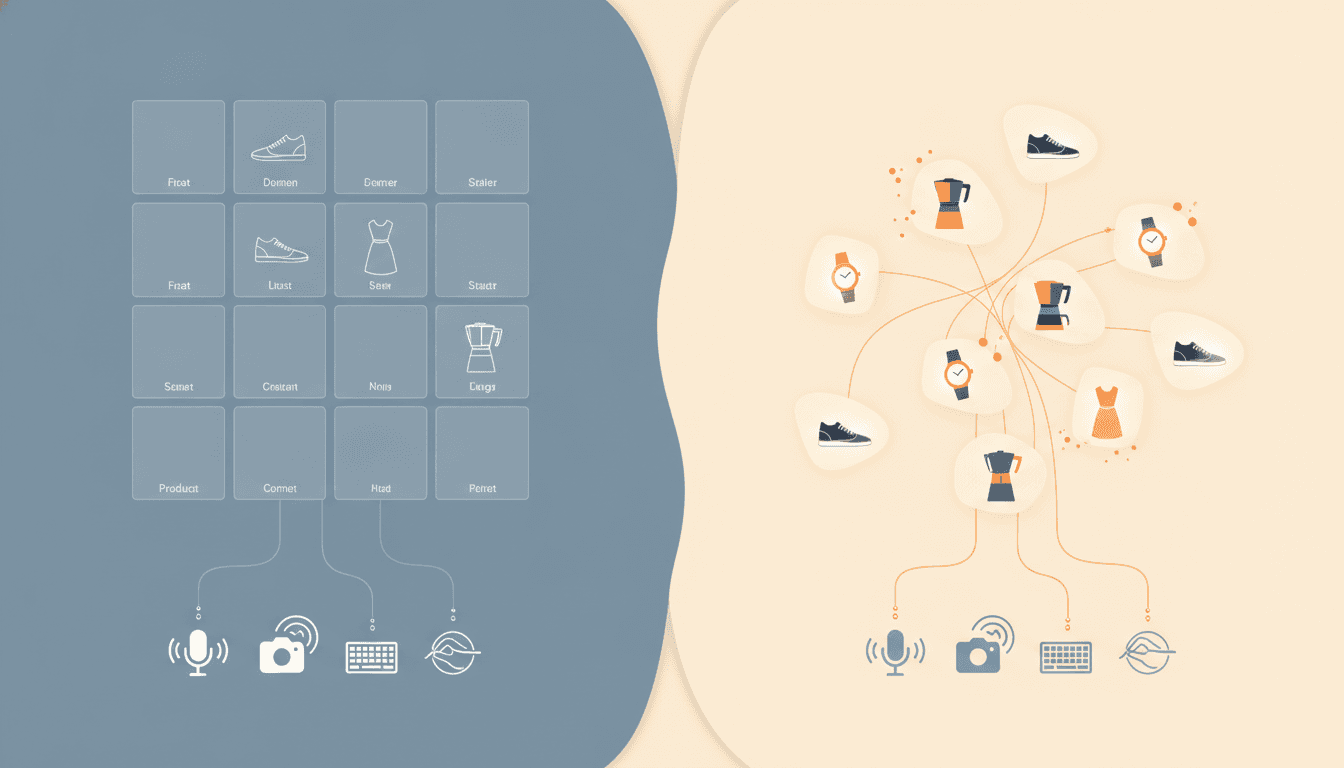
How AI Search Engines Analyze and Prioritize E-Commerce Product Content: A Complete Guide
Discover how AI search engines interpret, rank, and recommend e-commerce products—and what your brand can do to optimize content for AI-driven discovery, higher rankings, and increased conversions.

How AI Search Engines Analyze and Prioritize E-Commerce Product Content: A Complete Guide
Unlock the secrets behind how AI search engines interpret, rank, and recommend e-commerce products—and discover actionable strategies your brand can use to optimize content for AI-driven discovery, higher rankings, and increased conversions.
In today’s digital marketplace, 67% of shoppers start their product searches using AI-powered assistants (Insider Intelligence). This shift makes understanding how AI search engines analyze and rank e-commerce product content not just beneficial—but absolutely essential. Yet many brands find themselves struggling to adapt their content strategies to this rapidly evolving AI-driven environment. This comprehensive guide will unravel the inner workings of AI search engines, reveal the key factors that influence product recommendations, and provide you with proven tactics to optimize your product content—helping you stand out and convert more customers.
Are you ready to transform your e-commerce product content for the AI era? Book a free 30-minute consultation with our AI marketing experts to receive tailored strategies designed specifically for your brand.
How AI Search Engines Analyze E-Commerce Product Content
AI search engines have revolutionized how consumers discover products online. Unlike traditional search engines that rely heavily on keyword matching, AI-powered systems employ sophisticated technologies such as natural language understanding (NLU) and computer vision to analyze every facet of your product content.
Natural Language Understanding (NLU):
- AI uses NLU to interpret product titles, descriptions, and specifications beyond mere keywords.
- This enables the algorithms to grasp context, user intent, and subtle nuances in language.
- As a result, AI can connect users with relevant products even when their search terms don’t exactly match the product text.
For instance, a shopper searching for “eco-friendly running shoes” might be shown products made with sustainable materials or manufactured using green processes—even if those exact phrases don’t appear in the product listing.
Computer Vision for Image and Video Analysis:
- AI applies computer vision to evaluate product images and videos, identifying attributes like color, shape, logos, patterns, and packaging details.
- This capability allows AI to match visual cues from user-uploaded photos or searches with catalog items, enhancing relevance.
[IMG: AI-powered computer vision analyzing product images for color, style, and brand]
Multimodal Analysis:
- AI combines insights from both textual content (descriptions, specs) and visual data (images, videos) to form a holistic understanding of each product.
- This multimodal approach ensures rankings reflect not just written information but also how the product actually appears.
- The result? More precise, context-aware product recommendations tailored to each user’s query.
“AI-powered search engines are fundamentally changing how consumers discover products, moving from keywords to context and intent.” — Satya Nadella, CEO, Microsoft
Structured Data’s Role:
- An impressive 90% of top-performing e-commerce sites utilize structured data to boost product visibility in AI search (BrightEdge).
- Structured data gives AI explicit, machine-readable details about product attributes, vastly improving analysis and matching accuracy.
Looking forward, brands that invest in rich, well-structured product content—both textual and visual—will enjoy greater discoverability and higher conversion rates. AI now acts as the crucial gatekeeper connecting your products with potential customers.
The Role of Structured Data Markup in AI-Powered Product Discovery and Ranking
Structured data markup, especially via Schema.org, forms the backbone of effective AI-powered product discovery. By embedding structured data, you enable AI systems to precisely extract and interpret essential product attributes.
Here’s how structured data transforms your product’s visibility:
- Schema.org markup explicitly defines what each product is, detailing price, availability, review ratings, and more.
- This clarity allows products to be indexed more accurately and appear as rich snippets in search results, significantly enhancing visibility and click-through rates.
- Additionally, structured data supports advanced AI features such as voice search compatibility and intelligent product recommendations.
“Structured data is the foundation of how Google AI understands and ranks products in search results.” — John Mueller, Search Advocate, Google
Key schema types every e-commerce site should implement:
- Product: Captures core details like name, images, brand, and description.
- Offer: Communicates pricing, discounts, and stock availability.
- Review: Highlights user-generated feedback and testimonials.
- AggregateRating: Provides an overall rating derived from multiple reviews.
[IMG: Visual example of correct Schema.org markup for an e-commerce product page]
With 90% of top-performing e-commerce sites leveraging structured data (BrightEdge), adopting these markups is a non-negotiable best practice. Missing or incomplete structured data can render your products invisible to AI search engines, costing you valuable discovery opportunities.
User Behavior and Engagement Metrics Influencing AI Product Recommendations
AI search engines don’t just analyze static product listings—they continuously learn from user behavior and engagement signals. This dynamic feedback loop enables AI to personalize recommendations and adjust rankings in real time, delivering highly relevant product suggestions.
Here’s how AI models incorporate behavioral data:
- Browsing and Purchase History: AI tracks individual user journeys, noting which products are viewed, purchased, or revisited.
- Interaction Patterns: Metrics like click-through rate (CTR), dwell time, and add-to-cart actions are factored directly into ranking algorithms.
Key statistics:
- 58% of AI-powered product recommendations are influenced by user browsing and purchase history (Shopify Plus).
- AI-driven recommendations can boost conversion rates by 35% (McKinsey & Company).
“AI systems analyze a complex mix of content, metadata, and behavioral data to predict what products will be most relevant for each individual shopper.” — Sucharita Kodali, VP, Principal Analyst, Forrester
Personalization at Scale:
- AI tailors product suggestions to each shopper’s unique preferences by analyzing their engagement data.
- This means two users searching for “wireless headphones” might see completely different product results based on their prior interactions and purchase histories.
[IMG: Visualization of AI analyzing user engagement metrics for personalized product recommendations]
Brands that actively monitor and optimize for user engagement metrics—such as CTR, add-to-cart rates, and time on page—gain a significant competitive advantage. AI-powered personalization isn’t just about displaying more products; it’s about showing the right products at the right moment, driving higher conversions and fostering customer loyalty.
Differences Between AI-Powered and Traditional Keyword-Based Search Ranking
Traditional search engines primarily matched keywords in product listings with user queries and used backlinks as trust signals. While this method worked well in the past, it falls short in today’s complex e-commerce environment.
Here’s how AI-powered search engines break the mold:
- Semantic Understanding and Context: AI models use NLU to interpret user intent and contextual meaning, moving well beyond literal keyword matching (OpenAI Research).
- Multimodal Data Integration: AI combines text and image data for a richer, more accurate product match.
- Dynamic Ranking: AI adjusts rankings in real time based on user behavior, inventory changes, and trending products (Gartner).
For example, a traditional search might show any product with “red dress” in the title, regardless of actual color in the images. In contrast, AI search engines analyze both textual and visual data to ensure results are visually and contextually accurate.
Key differences include:
- Traditional: Relies on keyword presence, backlinks, and static ranking factors.
- AI-powered: Prioritizes user intent, semantic analysis, and live data from user interactions and inventory.
- AI dynamically re-ranks products to highlight those in stock or trending based on recent activity.
“Personalized recommendations powered by AI can drive up to a 35% increase in e-commerce conversions by delivering the right products to the right users at the right time.” — Brian Walker, Chief Strategy Officer, Bloomreach
[IMG: Side-by-side comparison of keyword-based search results vs. AI-powered semantic search results]
Looking ahead, brands that embrace AI-driven semantic and multimodal search capabilities will outperform competitors still relying on outdated keyword strategies.
The Importance of Product Reviews and Ratings as Trust Signals in AI Ranking
Trust is a cornerstone of e-commerce purchasing decisions, and AI search engines rely heavily on product reviews and ratings as critical trust signals. Authentic customer feedback not only influences shoppers but also directly impacts how AI ranks and recommends products.
Here’s how reviews and ratings affect AI-driven rankings:
- Trustworthiness Assessment: AI weighs both the quantity and quality of reviews to evaluate product credibility.
- Higher Visibility for Top-Rated Products: Items with higher ratings and positive reviews are more likely to appear near the top of AI-powered search results.
- Sentiment Analysis: AI analyzes the tone of reviews to differentiate genuine praise from complaints or issues.
“Product reviews and ratings are increasingly used by AI systems as trust signals to influence ranking and recommendation.” (NielsenIQ)
Key statistics:
- 70% of consumers trust product recommendations more when accompanied by user reviews and ratings (NielsenIQ).
- AI’s sentiment analysis can detect and filter fake or low-quality reviews, ensuring only trustworthy content influences rankings.
For example, a product with hundreds of detailed, positive reviews will generally outrank similar items with fewer or mixed reviews—even if all other ranking factors are equal.
[IMG: Display of product listings highlighting user reviews and star ratings]
Encouraging authentic customer feedback and actively responding to reviews signals trustworthiness to both users and AI algorithms. This practice is a powerful lever to improve both ranking and conversion rates.
How Visual Search and Multimodal Analysis Are Shaping E-Commerce Discovery
Visual search is rapidly reshaping how consumers find products online. AI’s ability to analyze and understand images opens exciting new avenues for product discovery and engagement.
Here’s how AI-powered visual search operates:
- Image Recognition: AI examines uploaded photos for color, shape, style, and other visual features, then matches them to similar products in the catalog.
- Integration with Text Search: Multimodal analysis allows users to combine text queries with images for more precise results (e.g., “like this shirt, but blue”).
- Enhanced Product Discovery: Brands leveraging visual search often see higher engagement as users find products matching their style or inspiration more easily.
For example, Google and Amazon both utilize AI-driven visual search, enabling shoppers to upload photos and discover visually similar items (TechCrunch). Leading fashion and furniture retailers have successfully adopted visual AI search to reduce friction and inspire purchases.
[IMG: User uploading a photo to an e-commerce site and receiving visually similar product recommendations]
Moving forward, brands that pair high-quality images with detailed metadata and support visual search capabilities will capture more intent-driven shoppers and maintain a competitive edge.
Best Practices for E-Commerce Brands to Optimize Product Content for AI Search Engines
Optimizing your product content for AI search engines is crucial for boosting visibility, engagement, and conversions. The following best practices reflect strategies used by top-performing e-commerce brands.
- Implement Comprehensive Schema.org Markup: Include detailed structured data on every product page covering Product, Offer, Review, and AggregateRating schemas.
- Use Clear, Descriptive, and Natural Language: Craft product titles and descriptions that mirror how real customers search and speak.
- Incorporate High-Quality Images: Provide multiple, high-resolution images for each product, with relevant alt text and metadata to support AI analysis.
- Encourage Customer Reviews: Actively solicit reviews and engage with customer feedback to build trust and improve AI ranking signals.
- Monitor User Engagement Metrics: Track CTR, add-to-cart rates, and dwell time, using these insights to refine your product content continually.
- Leverage AI-Driven Tools: Regularly audit and optimize your product content using AI-powered analytics and optimization platforms.
Remember, 90% of top-performing e-commerce sites use structured data to enhance product visibility in AI search (BrightEdge). Following these best practices ensures your products are discoverable, trusted, and prioritized by AI search engines.
[IMG: Checklist infographic of best practices for AI search optimization in e-commerce]
Ready to elevate your e-commerce product content for AI search engines? Book a free 30-minute consultation with our AI marketing experts to get personalized strategies tailored to your brand’s unique needs.
Conclusion
AI search engines are fundamentally transforming the e-commerce landscape, shifting from simple keyword matching to sophisticated, context-driven product discovery. Brands that understand and adapt to these changes—by leveraging structured data, optimizing for user behavior, prioritizing reviews, and embracing multimodal analysis—will position themselves for superior visibility, trust, and conversion.
Looking ahead, the greatest competitive advantage will belong to those who continuously refine their product content in harmony with evolving AI capabilities. Don’t leave your product discovery to chance—make AI search engines work proactively for your business.
Ready to unlock the full potential of AI-driven product discovery? Book your free 30-minute consultation with Hexagon’s experts today.
[IMG: Closing image of a successful e-commerce team reviewing AI-powered analytics and celebrating increased sales]
Hexagon Team
Published April 25, 2026