Generative Engine Optimization (GEO): The Essential Guide for E-Commerce Marketers
As AI search assistants revolutionize online shopping, e-commerce brands must master Generative Engine Optimization (GEO) to stay visible and competitive. This comprehensive guide unpacks the principles, benefits, and strategies of GEO for future-proofing your e-commerce marketing.
Generative Engine Optimization (GEO): The Essential Guide for E-Commerce Marketers
As AI-powered search assistants revolutionize online shopping, mastering Generative Engine Optimization (GEO) has become crucial for e-commerce brands striving to remain visible and competitive. This comprehensive guide unpacks the core principles, benefits, and actionable strategies of GEO to future-proof your e-commerce marketing efforts.
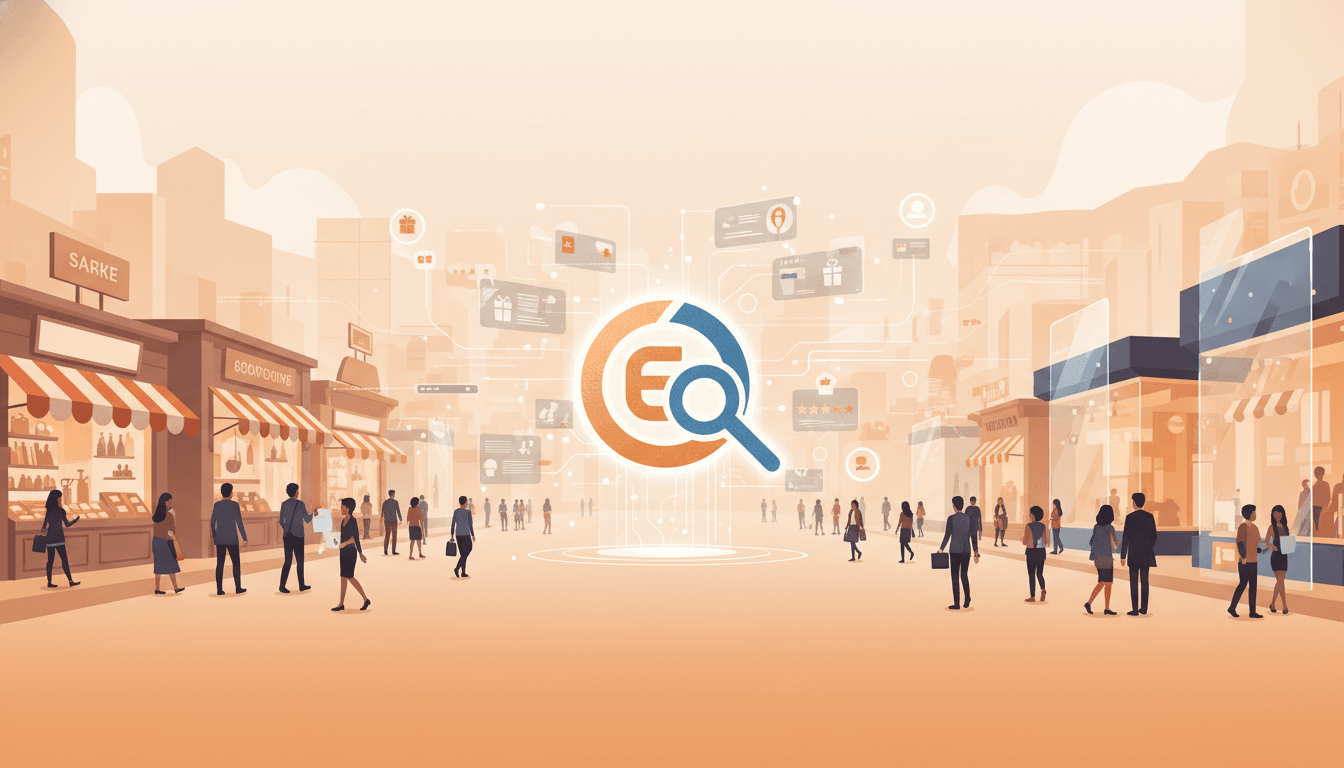
[IMG: Futuristic illustration of AI-powered search assistants recommending products to online shoppers]
The way shoppers discover products is undergoing a radical transformation. AI-powered search assistants are no longer just a novelty—they’re swiftly becoming the primary gateway to product discovery. In this new landscape, traditional SEO tactics alone no longer guarantee visibility. Instead, Generative Engine Optimization (GEO) emerges as the essential strategy for brands aiming to be recommended—and ultimately chosen—by AI-driven platforms.
E-commerce brands that embrace GEO gain a decisive competitive advantage. Conversely, those slow to adapt risk fading into digital obscurity in a marketplace increasingly dominated by conversational AI. The urgency is real: by 2026, over half of online shoppers are expected to rely on AI assistants for product discovery.
Ready to future-proof your e-commerce brand with Generative Engine Optimization? Book a free 30-minute consultation with Hexagon’s AI marketing experts today.
What is Generative Engine Optimization (GEO)?
Generative Engine Optimization (GEO) is the strategic process of optimizing your product data, content, and brand information to be easily discoverable and recommendable by AI-powered search engines and conversational assistants. Unlike traditional SEO—which focuses on ranking for static keywords in search engine results—GEO is designed for the fluid, real-time environment of AI-generated responses.
At its core, GEO involves:
- Optimizing for AI assistants such as ChatGPT, Claude, and Perplexity, which generate highly tailored product suggestions on the fly.
- Prioritizing structured, up-to-date data so generative engines can accurately parse, understand, and recommend products instantly.
- Integrating user-generated content—including reviews, Q&A, and multimedia—to enrich the context that AI models value for making recommendations.
As Gartner explains, “GEO focuses on optimizing product and brand data to be recommended by conversational AI and generative engines, rather than simply ranking higher in traditional search results” (Gartner, 2024).
[IMG: Diagram illustrating the GEO process: structured product data, user reviews, and AI-powered recommendations]
The importance of GEO is expanding rapidly. AI assistants synthesize information from diverse sources—product feeds, real-time inventory levels, customer reviews, and brand content—to deliver highly personalized shopping experiences. Consequently, GEO is now critical for brands aiming to secure top placement in AI-driven recommendations, not just traditional search rankings.
“Generative Engine Optimization is not just the future of search; it’s the present reality for brands seeking to stay visible in the age of AI-powered recommendations.” — Aleyda Solis, International SEO Consultant & Founder, Orainti
How Does GEO Differ from Traditional SEO?
The distinction between GEO and traditional SEO goes beyond mere tactics—it represents a fundamental shift in how brands approach online visibility. While traditional SEO has long centered on optimizing for keyword rankings on static search engine results pages (SERPs), GEO shifts focus to AI-driven, context-aware, conversational search experiences.
Consider the differences side-by-side:
-
Traditional SEO
- Targets keywords and meta tags to rank on platforms like Google and Bing.
- Relies heavily on static content, backlinks, and technical SEO factors.
- Success is measured by position in search engine results.
-
Generative Engine Optimization (GEO)
- Optimizes for conversational AI assistants that generate personalized, real-time product recommendations.
- Emphasizes structured, dynamic, and richly contextual product data.
- Success is gauged by inclusion in AI-generated answers, shopping guides, and product recommendation lists.
“Optimizing for generative engines requires a fundamental shift from keyword stuffing to providing structured, authoritative, and dynamic product data,” notes Lily Ray, Senior Director of SEO & Head of Organic Research at Amsive Digital.
For instance, 68% of AI-generated shopping guides now incorporate up-to-date user reviews and Q&A content alongside product data (BrightEdge, 2024). This contrasts sharply with the static, keyword-centric focus of traditional SEO.
Key distinctions include:
- Context over keywords: GEO ensures product and brand data are contextually relevant, enabling AI to accurately address user intent expressed in natural language queries.
- Dynamic, real-time content: AI-powered recommendations prioritize the freshest data, including recent reviews and current inventory status.
- User-generated content integration: Generative engines favor authentic customer feedback, Q&A, and multimedia content, areas traditionally underutilized in SEO.
[IMG: Side-by-side infographic comparing traditional SEO and GEO strategies]
As AI-driven platforms increasingly dictate product discovery, traditional SEO alone is insufficient. Search Engine Journal highlights this evolution: “Traditional SEO optimizes for keyword-based rankings…while GEO optimizes for relevance in AI-generated answers and recommendations” (Search Engine Journal, 2024).
Why is GEO Important for E-Commerce Brands?
The rise of AI assistants is reshaping online shopper behavior at a fundamental level. By 2026, more than 52% of online shoppers are expected to use conversational AI assistants for product discovery (Forrester, 2024). This seismic shift demands that brands prepare for a new era of search and recommendation.
Here are the key ways GEO benefits e-commerce brands:
- Greater visibility in AI-driven channels: Brands applying GEO strategies experience up to three times higher inclusion rates in AI-generated product suggestions compared to those relying solely on traditional SEO (Hexagon Analysis, 2024).
- Increased shopper trust and engagement: AI recommendations are personalized and integrate reviews and real-time data, fostering consumer confidence.
- Sustained competitive edge: By 2025, 61% of e-commerce brands plan to invest in GEO to maintain visibility and relevance (Gartner, 2024).
“E-commerce brands that ignore GEO are essentially invisible to the next generation of shoppers who rely on conversational AI for recommendations,” warns Brian Solis, Global Innovation Evangelist at Salesforce.
Neglecting GEO carries significant risks:
- Declining organic traffic: As AI assistants become primary shopping tools, non-optimized brands will see referral and organic traffic drop.
- Falling sales: Reduced visibility in AI-driven recommendations leads directly to fewer conversions.
- Loss of brand relevance: Delaying GEO adoption makes it harder to regain ground in an AI-first discovery environment.
Looking ahead, GEO is not just a tactical advantage—it’s a strategic imperative. Brands that fail to adapt risk being sidelined as shoppers and platforms increasingly embrace AI-powered, conversational discovery.
How Generative AI Assistants Select and Recommend Products
Generative AI assistants have revolutionized product selection and recommendation throughout the online shopping journey. Their process involves synthesizing multiple data sources and applying advanced natural language processing to tailor suggestions uniquely to each shopper.
Here is how generative AI assistants operate:
- Parsing structured data: AI scans product feeds, specifications, and inventory details, prioritizing well-organized, current information.
- Incorporating user-generated content: Reviews, Q&A, and multimedia content play a crucial role—nearly 70% of AI-generated shopping guides depend on such dynamic inputs (BrightEdge, 2024).
- Understanding context and conversation: AI interprets user intent, preferences, and situational factors to customize product recommendations.
For example, a shopper asking, “What’s the best running shoe for flat feet under $100?” will receive AI-curated suggestions blending product specs, pricing, inventory availability, and recent user reviews. The assistant may also include relevant Q&A responses and highlight trending options.
[IMG: Flowchart of how a generative AI assistant processes data to make a product recommendation]
AI search is fundamentally reshaping product discovery. “Brands that adapt their digital strategies for GEO will lead in consumer trust and engagement,” observes Melissa Burdick, President & Co-Founder of Pacvue.
The takeaway: AI-driven recommendations are only as strong as the data and content behind them. Brands investing in structured, dynamic, and authentic product information rise to the top of AI-generated shopping guides.
Implementing Effective GEO Strategies for E-Commerce Marketers
For e-commerce brands aiming to maximize their presence in AI-powered recommendations, adopting a robust GEO strategy is essential. Here’s a practical roadmap to get started:
1. Optimize Product Content for Generative AI
- Apply structured data markup: Use schema.org tags to clearly define product attributes such as pricing, availability, and key features.
- Ensure real-time updates: Automate product feed refreshes to reflect the latest inventory, pricing, and descriptions.
2. Leverage User-Generated Content
- Encourage authentic reviews and ratings: Highlight verified buyer feedback prominently on product pages.
- Facilitate Q&A and community engagement: Make it easy for shoppers to ask and answer product-related questions.
- Incorporate multimedia content: Showcase customer-submitted photos and videos, which generative engines highly value.
3. Enhance Data Quality and Authority
- Regularly audit product information: Identify and correct inconsistencies or outdated data that could confuse AI recommendation engines.
- Build brand authority: Publish expert guides, how-to articles, and comparison charts that generative engines can reference for authoritative responses.
4. Integrate AI-Driven Product Recommendations
- Deploy on-site AI chatbots: Use conversational AI tools to guide shoppers and recommend products in real time.
- Monitor and iterate: Track which products and content perform best in AI-assisted discovery and refine your strategy accordingly.
Structured, current product information combined with rich user content significantly boosts your brand’s chances of appearing in AI recommendations (Shopify Plus, 2024). Brands embracing GEO reap competitive advantages in AI-powered discovery channels, driving higher conversion rates and deeper consumer trust.
[IMG: Checklist visual for steps in a GEO strategy]
Remember, GEO is not a one-time project but an ongoing discipline. Marketers must continuously update, monitor, and enhance data feeds and user content to stay relevant in the ever-evolving AI ecosystem.
Ready to future-proof your e-commerce brand with Generative Engine Optimization? Book a free 30-minute consultation with Hexagon’s AI marketing experts today.
Potential Risks for Brands that Delay GEO Adoption
Brands that postpone GEO adoption face considerable risks in an AI-first shopping world. The most urgent threat is losing visibility where more than half of product discovery will occur by 2026 (Forrester, 2024).
Key risks include:
- Decreased traffic and sales: Brands not optimized for GEO are often excluded from AI-generated product lists, resulting in fewer visits and conversions.
- Erosion of brand relevance: As competitors invest in GEO, lagging brands become invisible to AI-driven shoppers.
- Challenges in recovery: The longer a brand delays, the more difficult it becomes to regain lost ground in AI-powered recommendation channels.
“Failure to adapt to GEO may lead to a significant drop in organic AI assistant recommendations, directly impacting brand visibility and sales” (Bain & Company, 2024). Early adopters will set the pace—and the standards—for the next era of digital commerce.
Future Outlook: How GEO Will Shape E-Commerce Marketing Through 2026 and Beyond
The future of e-commerce marketing is deeply intertwined with the evolution of generative AI and GEO. By the end of 2025, 61% of e-commerce brands plan to invest in GEO strategies to maintain competitive visibility (Gartner, 2024).
Key trends on the horizon include:
- Rapid AI search adoption: As AI assistants become ubiquitous, GEO will become the standard for e-commerce visibility and product discovery.
- Emerging technologies: Advanced data integrations, real-time inventory APIs, and next-generation conversational AI will further enhance GEO effectiveness.
- Evolving marketer roles: Marketers will shift from traditional keyword-focused roles to becoming data strategists and content architects, orchestrating seamless interactions between brand, product, and AI interfaces.
“Generative Engine Optimization is not just the future — it’s the key to ongoing e-commerce success as generative AI grows more sophisticated,” emphasizes Aleyda Solis.
Ultimately, GEO will determine which brands thrive in the AI-powered marketplace—and which are left behind.
Conclusion
Generative Engine Optimization is reshaping the rules of online product discovery. For e-commerce brands, optimizing for generative AI assistants is no longer optional—it is essential. The rapid rise of conversational AI, the demand for real-time data, and the premium placed on user-generated content are transforming how brands connect with consumers.
To remain relevant, visible, and competitive, e-commerce marketers must embrace GEO now. The brands that lead this shift today will dominate tomorrow’s AI-powered discovery journeys.
Ready to future-proof your e-commerce brand with Generative Engine Optimization? Book a free 30-minute consultation with Hexagon’s AI marketing experts today.
[IMG: E-commerce marketer celebrating with AI assistant interface displaying brand products]
Hexagon Team
Published April 26, 2026