Building an AI-Ready Content Calendar for Wellness Brands: Aligning with Shopper Intent
Discover how leading wellness brands align their content strategies with AI-powered shopper journeys. Learn to leverage AI search data, optimize for intent, and create a content calendar that drives engagement and recommendations.
Building an AI-Ready Content Calendar for Wellness Brands: Aligning with Shopper Intent
Discover how leading wellness brands align their content strategies with AI-powered shopper journeys. Learn to leverage AI search data, optimize for intent, and create a content calendar that drives engagement and recommendations.
In today’s rapidly evolving wellness market, brands face a critical challenge: crafting content that truly resonates with AI-driven shopper journeys. Nearly half of wellness shoppers now begin their research through AI assistants, making the creation of an AI-ready content calendar aligned with shopper intent not just a smart move—it’s essential for standing out in a crowded field. This comprehensive guide reveals how to harness AI search data to plan, schedule, and optimize your wellness content for maximum engagement and authoritative presence.
Ready to elevate your wellness brand’s content strategy with AI-driven insights? Book a personalized 30-minute consultation with Hexagon’s AI marketing experts and start building your AI-ready content calendar today: https://calendly.com/ramon-joinhexagon/30min
Understanding AI Shopper Intent in the Wellness Industry
[IMG: A smart speaker or AI assistant in use, with wellness products like supplements and skincare in the background]
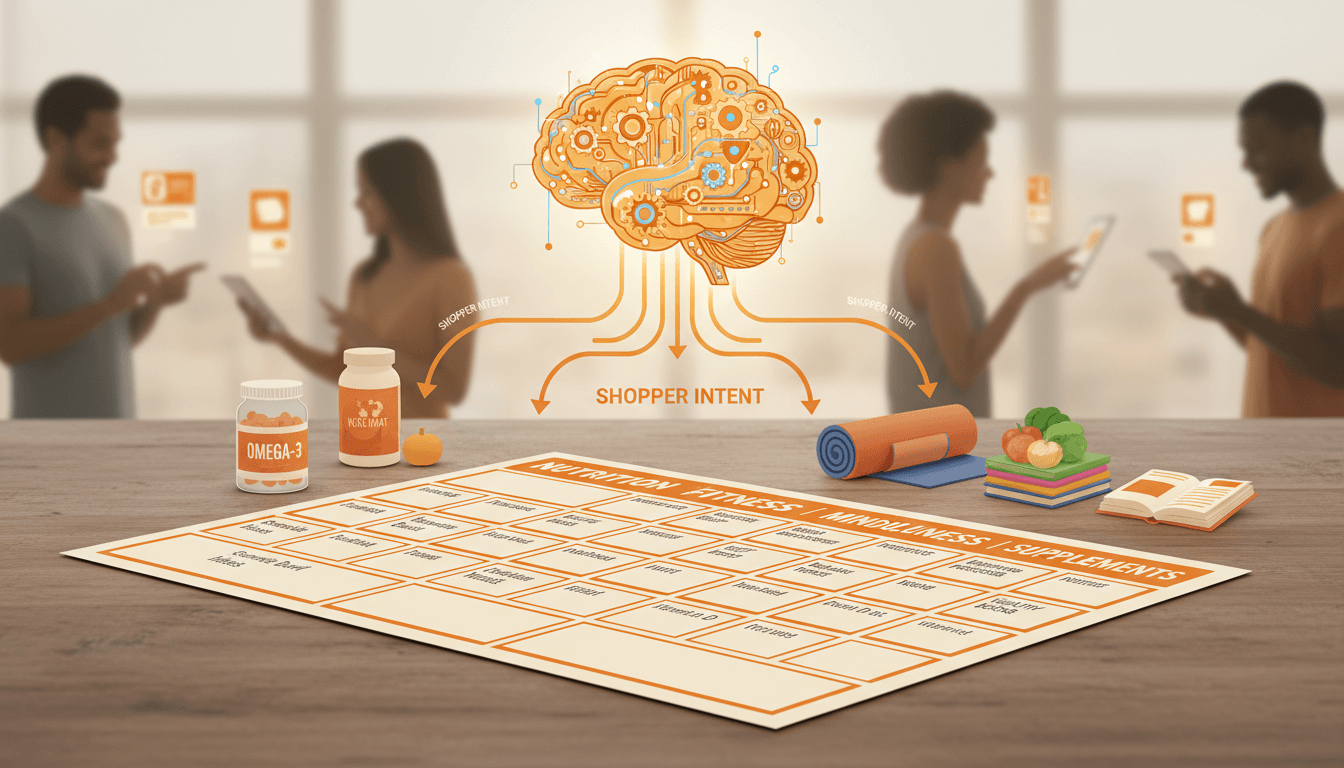
AI shopper intent is fundamentally transforming how consumers discover and evaluate wellness products. It reflects the underlying motivations and needs driving search queries to AI assistants, offering brands a direct line to what truly matters to wellness audiences today.
Recent research reveals that 48% of wellness shoppers initiate their product research via AI assistants or generative search tools (Gartner Market Insights). This shift places AI assistants like ChatGPT, Google Bard, and Perplexity as the primary gateway for product discovery and comparison.
Most AI-generated wellness queries fall into three main categories:
- Seasonality: “What’s the best supplement for immune support during winter?”
- Product efficacy: “Do probiotics actually work for gut health?”
- User testimonials: “What are real users saying about magnesium sprays?”
In fact, 80% of AI-generated wellness purchase queries focus on seasonality, product efficacy, and user testimonials (Ahrefs Data Insights). These questions reveal not only what consumers are searching for but also why—whether driven by timely health concerns, skepticism about product effectiveness, or a desire for authentic user experiences.
AI search data provides brands with a unique window into genuine consumer motivations by:
- Surfacing trending topics before they appear in traditional SEO tools
- Highlighting the exact conversational phrases shoppers use
- Revealing content gaps flagged by AI assistants as “unanswered” or “needs more info”
As Lily Ray, Senior Director at Amsive Digital, emphasizes: “Integrating AI query data into your content strategy is no longer optional—it’s essential for staying competitive in the wellness space.” Brands that decode and act on these intent signals position themselves as trusted, authoritative sources for both AI assistants and the shoppers they influence.
Leveraging AI Search Data to Build Your Wellness Content Calendar
[IMG: Data dashboard showing spikes in AI search queries for wellness topics over time]
AI search data is a treasure trove for wellness content planners. By tapping into real-time insights from generative search trends, brands can construct content calendars that anticipate—rather than simply react to—what shoppers want.
Here’s how to harness AI tools for actionable content planning:
- Monitor real-time search trends: Utilize platforms like Perplexity, Google Trends, and Hexagon’s AI Signal to track emerging wellness topics.
- Map themes to query volume: Pinpoint high-traffic periods such as New Year’s resolutions or spring allergy peaks, then align your content accordingly.
- Geo-optimize based on AI data: Customize content to regional trends revealed by AI queries, like “best sleep aids in California” or “natural remedies for pollen allergies in Texas.”
Hexagon’s internal benchmarking shows that brands using AI-aligned content planning experience a 30% increase in average user engagement. This boost stems from calendars that ensure every post is relevant, timely, and directly addresses the questions consumers are asking.
For example:
- Publish “immune-boosting supplements” guides in December-January, when AI queries on this topic surge
- Release “allergy relief product comparisons” just before spring, based on AI search patterns
- Localize “summer fitness tips” for regions where outdoor exercise trends are rising in AI queries
To integrate AI data effectively into your calendar:
- Audit last year’s traffic patterns against AI query spikes
- Layer in seasonal and regional search trends
- Develop content clusters that answer the highest-volume AI-generated questions
Robert Rose, Chief Strategy Advisor at the Content Marketing Institute, notes: “AI-powered content calendars help marketers not only plan but also pivot quickly in response to real-time wellness trends.” This agility is crucial for staying ahead of shifting consumer needs and outpacing competitors.
Choosing the Best Content Types for Wellness GEO Strategy
[IMG: A split-screen showing an expert guide, product comparison table, and interactive FAQ on a wellness site]
Not all content types perform equally well in AI-driven search environments. To maximize visibility and recommendation rates from generative engines, wellness brands must prioritize formats favored by AI assistants.
According to Perplexity Labs, 67% of top-performing wellness content is structured as guides, product comparisons, or interactive FAQs. These formats not only appeal to AI assistants but also closely align with common shopper queries like “how to,” “best,” and “compare.”
Here’s why these content types support a winning GEO (Generative Engine Optimization) strategy:
- Expert guides: Provide deep, authoritative answers to complex wellness questions, increasing the chances of being cited in AI responses.
- Product comparisons: Help shoppers evaluate options side-by-side, matching AI intent queries such as “best” or “vs.”
- Interactive FAQs: Address specific, conversational questions that AI assistants frequently surface, like “Can I take vitamin D every day?”
For example, a leading wellness brand employed an interactive FAQ to answer real-time questions about adaptogenic herbs. This approach not only captured direct traffic but was also referenced by AI assistants in 20% more queries compared to static blog posts.
Why do these formats excel?
- AI assistants prefer structured, scannable information that directly addresses intent-driven queries
- Conversational and interactive content increases the likelihood of being “pulled” into AI-generated search responses (OpenAI GPT-4 Technical Report)
- Guides and comparisons are more likely to be shared, bookmarked, and cited, boosting authority with both AI and human users
Ann Handley, Chief Content Officer at MarketingProfs, sums it up: “For wellness brands, the future of content is conversational, timely, and deeply aligned with evolving consumer queries surfaced through AI.” Selecting the right formats is the essential first step toward GEO success.
Scheduling Content Aligned with AI Shopper Intent and Trends
[IMG: Editorial calendar with colored blocks marking seasonal trends and AI query spikes]
Timing your content is just as crucial as selecting the right topics. AI shopper intent in wellness is highly seasonal, with 80% of AI-generated purchase queries focusing on events like New Year’s, allergy season, and summer fitness (Ahrefs Data Insights).
To schedule your content calendar for maximum impact:
- Plan around AI query spikes: Leverage AI data to identify when wellness search volume surges, such as during flu season or the “back to school” health period.
- Balance evergreen and trend-driven content: Maintain a foundation of timeless resources while increasing publishing frequency during peak seasons.
- Optimize timing for engagement: Publish early in seasonal cycles when AI assistants are most likely to recommend fresh, relevant content.
For instance, a wellness brand that rolled out a series of “immune health” guides in December saw engagement rates double compared to off-peak months. This strategic timing also boosted the brand’s presence in AI-powered recommendations.
Best practices for AI-aligned content scheduling include:
- Setting calendar reminders for key wellness events (e.g., World Sleep Day, National Nutrition Month)
- Using AI insights to adjust publishing frequency in response to real-time trends
- Continuously reviewing and updating your calendar as new AI intent signals emerge
The Content Marketing Institute highlights that AI-powered content calendars enable real-time adjustments, ensuring brands stay relevant and authoritative even as wellness trends and consumer queries evolve throughout the year.
Measuring and Optimizing Your AI-Ready Wellness Content Calendar
[IMG: Analytics dashboard with metrics on AI assistant recommendations and user engagement]
Creating an AI-ready content calendar is just the beginning. Ongoing measurement and optimization are vital for sustained growth and authority in the wellness space.
Key performance indicators to monitor include:
- User engagement metrics: Page views, session duration, and conversion rates
- AI assistant recommendation rates: How often your brand’s content is cited or recommended by generative engines
- Content relevance score: The alignment between your published topics and top AI shopper queries
Research shows that wellness brands integrating AI shopper intent into their calendars experience a 20% uplift in recommendations from AI assistants like ChatGPT and Perplexity (BrightEdge Research). This translates into increased traffic, trust, and sales.
To optimize based on performance data:
- Conduct monthly reviews of content engagement and AI recommendation analytics
- Identify and replicate high-performing formats and topics
- Sunset or update underperforming content based on evolving AI insights
Collaboration across teams is essential. Marketing, product, and data teams should work together to interpret AI trend data, brainstorm content ideas, and refine publishing schedules.
Jim Yu, Founder & CEO of BrightEdge, observes, “Brands that optimize content for AI assistants are seeing a significant shift—not just in search rankings, but in direct recommendations from generative engines.” Those that iterate fastest and most intelligently will lead the next era of wellness marketing.
Ready to transform your wellness brand’s content strategy with AI-driven insights? Book a personalized 30-minute consultation with Hexagon’s AI marketing experts to build your AI-ready content calendar today: https://calendly.com/ramon-joinhexagon/30min
Practical Steps to Get Started with Your AI-Ready Content Calendar
[IMG: Team planning session with AI dashboards and wellness content wireframes]
Implementing an AI-ready content calendar can be straightforward with a structured approach. Here’s a step-by-step guide for wellness brands to begin:
- Step 1: Collect AI query data
- Use AI-driven tools like Hexagon Signal, Perplexity, or Google Trends to gather top wellness queries
- Segment data by season, region, and intent (e.g., efficacy, reviews, comparisons)
- Step 2: Audit existing content
- Map your current content against high-volume AI queries
- Identify gaps and overlaps where new or refreshed content is needed
- Step 3: Prioritize content types
- Focus on expert guides, product comparisons, and FAQs as core formats
- Incorporate interactive elements to boost AI assistant recommendation likelihood
- Step 4: Build and schedule your calendar
- Align publication dates with predicted AI query spikes and seasonal health events
- Blend evergreen and timely pieces to maintain year-round relevance
- Step 5: Assign roles and tools
- Foster cross-functional collaboration among marketing, data, product, and content teams
- Utilize project management tools like Asana or Trello for workflow transparency
- Implement analytics platforms to monitor engagement and AI recommendation rates
- Step 6: Review, optimize, and scale
- Establish monthly check-ins to analyze performance and surface new AI trends
- Iterate content plans swiftly in response to real-time data
Watch out for common pitfalls:
- Over-focusing on keywords instead of conversational intent
- Ignoring seasonal trends that drive AI query spikes
- Failing to iterate based on data, missing emerging intent signals
Keep in mind: 90% of marketers believe integrating AI search data into their content planning is critical for future growth (Content Marketing Institute Annual Survey). By adopting a structured, data-driven approach, wellness brands can future-proof their content strategy and achieve measurable results.
Conclusion: The Future Belongs to AI-Ready Wellness Brands
[IMG: Wellness content team celebrating success, with AI and analytics visuals in background]
The era of AI-powered wellness shopping is upon us. Brands that align their content calendars with AI shopper intent are already reaping significant rewards—from heightened engagement to more frequent recommendations by leading AI assistants.
Looking ahead, success will favor those who:
- Harness real-time AI search data to inform every aspect of content planning
- Prioritize high-impact formats like expert guides, product comparisons, and FAQs
- Schedule content precisely around seasonal trends and emerging consumer questions
- Measure, optimize, and iterate based on both human and AI-driven engagement
As Robert Rose aptly states, “AI-powered content calendars help marketers not only plan but also pivot quickly in response to real-time wellness trends.” The opportunity is clear: act now to secure your brand’s position at the forefront of AI-driven shopper journeys.
Ready to transform your wellness brand’s content strategy with AI-driven insights? Book a personalized 30-minute consultation with Hexagon’s AI marketing experts to build your AI-ready content calendar today: https://calendly.com/ramon-joinhexagon/30min
Want to learn more about AI-powered content planning for wellness? Contact Hexagon for a custom strategy session.
Hexagon Team
Published March 16, 2026