Agentic Commerce: How Autonomous AI Shopping Agents Are Revolutionizing E-Commerce
Autonomous AI shopping agents are transforming e-commerce, shifting how brands compete for visibility and sales. Discover why agentic commerce is reshaping the buyer journey, how to prepare, and actionable strategies to future-proof your e-commerce brand for the AI-driven future.

Agentic Commerce: How Autonomous AI Shopping Agents Are Revolutionizing E-Commerce
Autonomous AI shopping agents are transforming e-commerce, fundamentally changing how brands compete for visibility and sales. Explore why agentic commerce is reshaping the buyer journey, how to prepare your brand, and actionable strategies to future-proof your e-commerce business for an AI-driven future.
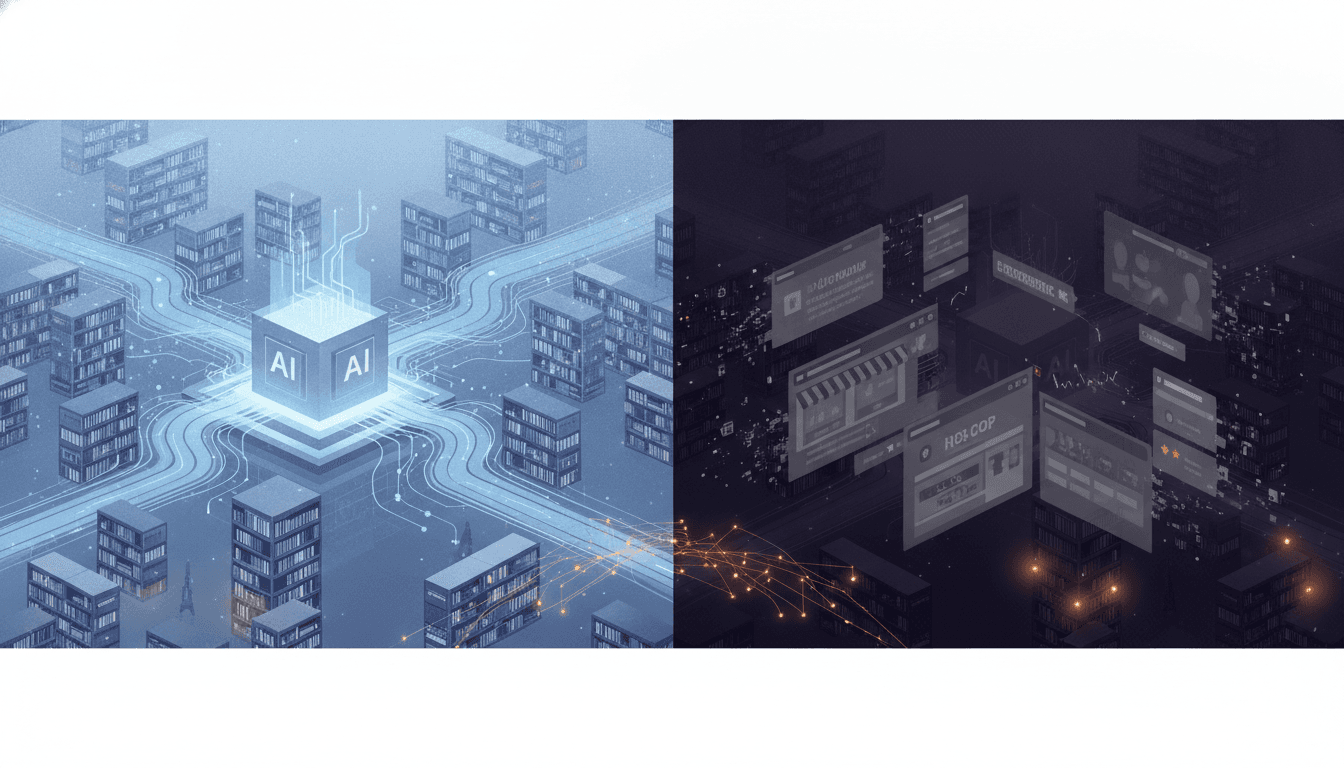
[IMG: Illustration of a digital AI shopping agent comparing products across multiple online stores]
Picture a future where customers no longer browse your online store themselves. Instead, they deploy AI-powered shopping agents that autonomously find, compare, and purchase products on their behalf. This is agentic commerce—a rapidly emerging frontier that is reshaping the entire e-commerce landscape. With projections estimating that by 2030, 35% of global online purchases will be made by autonomous AI agents, understanding and preparing for this shift is crucial for any e-commerce brand striving to stay competitive and visible to the next generation of buyers.
Ready to future-proof your e-commerce brand for agentic commerce? Schedule a personalized consultation with Hexagon’s AI marketing experts to unlock your autonomous AI shopping strategy. Book your 30-minute session now.
What Is Agentic Commerce and Why It Matters
Agentic commerce marks a fundamental transformation in online retail. Here, autonomous AI agents perform end-to-end shopping tasks independently. These agents discover products, compare prices and reviews, make purchasing decisions, and complete checkouts—all without human intervention. According to McKinsey & Company, agentic commerce harnesses AI to execute complex shopping journeys with unprecedented speed, efficiency, and personalization at scale.
Unlike traditional e-commerce, where human shoppers directly interact with web interfaces, agentic commerce relies on machine-to-machine communication. The customer’s AI agent, equipped with preferences, budget constraints, and ethical guidelines, scans vast product catalogs in seconds, evaluating thousands of options based on data quality, trust signals, and real-time availability.
The key principles defining agentic commerce are:
- Autonomy: AI agents operate independently on behalf of users, reducing the need for manual decisions.
- Personalization: Agents customize choices according to individual preferences, shopping history, and ethical considerations.
- Efficiency: AI agents can analyze and compare more options in seconds than humans could in hours.
Recent research underscores the urgency of this shift. Gartner’s “Forecast: Agentic Commerce 2030” report projects that by 2030, 35% of global online purchases will be executed by autonomous AI agents. Meanwhile, a Pew Research Center study found that 70% of U.S. consumers are open to entrusting repeat online purchases to trusted AI agents.
“In agentic commerce, the AI is the new customer. Brands must optimize not just for human eyes, but for machine understanding and trust.” — Andrew Ng, Founder, DeepLearning.AI
Major technology companies—including OpenAI, Google, and Amazon—are heavily investing in agentic commerce platforms and APIs. This growing ecosystem signals a new competitive landscape where brands must ensure their products are discoverable not only by people but by intelligent agents as well.
How Autonomous AI Shopping Agents Operate and Disrupt the Buyer Journey
Autonomous AI shopping agents operate by ingesting user preferences, analyzing product databases, and making optimized purchase decisions. Their process includes:
- Parsing structured product data alongside real-time inventory feeds.
- Weighing factors such as price, quality, delivery speed, and sustainability.
- Cross-referencing trusted reviews and brand policies for risk assessment.
- Completing transactions through integrated payment and checkout APIs.
[IMG: Diagram of traditional versus AI agent-driven buyer journey]
This fundamentally disrupts the classic buyer journey. Traditionally, human customers would research, compare, and purchase products manually—often spending hours browsing and deliberating. In the agentic commerce model, AI agents autonomously handle these steps, delivering recommendations and executing purchases with minimal friction.
For instance, a customer might instruct their AI agent to “find the best running shoes under $100 made with eco-friendly materials and offer fast shipping.” The agent rapidly reviews thousands of listings, checks verified reviews, compares prices, and selects the optimal option—all within seconds.
The impact is profound:
- Increased efficiency: AI agents eliminate the need for manual comparison shopping.
- Personalized experiences: Agents tailor purchases to nuanced user profiles.
- Higher purchase frequency: Automated repeat purchases boost customer lifetime value.
Supporting this trend, a Pew Research Center study found that 70% of U.S. consumers would trust AI agents to handle recurring purchases. This signals a major behavioral shift—brands must now compete for inclusion in the shortlists generated by AI agents, not just human shoppers.
Market Forecast and Economic Impact of Agentic Commerce
The economic potential of agentic commerce is staggering. McKinsey & Company projects that by 2030, autonomous AI shopping agents will mediate $1.3 trillion in annual global transactions. This market is growing rapidly as consumers and businesses alike recognize the value of AI-driven efficiency and personalization.
Industry analyses highlight several key trends:
- The number of brands integrating with AI shopping agent platforms is accelerating, particularly in sectors like electronics, groceries, and household essentials.
- Early adopter brands report significant uplifts in conversion rates and average order values driven by seamless agent integration.
According to Forrester’s “E-Commerce Innovation Survey,” 82% of e-commerce innovation managers believe that optimizing for AI agents will be as important as traditional SEO by 2026. This consensus reflects the reality: brands that adapt now will dominate the next era of online retail.
[IMG: Graph showing projected growth of agentic commerce transaction value through 2030]
Early successes are already evident. Retailers piloting agentic commerce programs report measurable ROI, with up to 40% higher product inclusion rates when providing structured data and real-time inventory feeds. As the ecosystem matures, these competitive advantages will only increase.
Technical Foundations: What E-Commerce Brands Need to Enable Agentic Commerce
To fully participate in agentic commerce, e-commerce brands must adopt new technical standards. Structured data and machine-readable content have become prerequisites for discoverability by AI agents.
The essential building blocks include:
- Structured data (schema.org): Tagging product listings with standardized schema enables AI agents to accurately parse attributes like price, availability, and specifications.
- Real-time inventory feeds: Providing up-to-date stock levels and dynamic pricing ensures agents recommend only purchasable products.
- Trust signals: Verified reviews, transparent return policies, and security badges help agents assess brand trustworthiness.
- API integrations: Seamless APIs enable agents to access product data, pricing, and checkout processes in real time.
Brands that supply structured data and real-time inventory have experienced a 40% increase in product inclusion rates for AI agent recommendations, according to Shopify Plus. This direct correlation between technical readiness and sales potential makes data optimization indispensable.
Transparency and data quality are equally critical. “The winners of the next e-commerce era will be those who make their products easy for AI agents to find, understand, and trust,” notes Sucharita Kodali, VP and Principal Analyst at Forrester.
Looking ahead, brands lagging in technical integration risk losing visibility as consumers increasingly rely on AI agents for shopping decisions. Ensuring your site is ready for agentic commerce is an investment in future-proofing your sales channels.
Ready to future-proof your e-commerce brand for agentic commerce? Schedule a personalized consultation with Hexagon’s AI marketing experts to unlock your autonomous AI shopping strategy. Book your 30-minute session now.
Generative Engine Optimization (GEO) Strategies for Agentic Commerce Visibility
Generative Engine Optimization (GEO) is quickly becoming a core discipline for e-commerce brands in the agentic era. GEO focuses on optimizing product content and metadata to maximize visibility and selection by autonomous AI agents—similar to how SEO targets human search queries.
Eli Schwartz, author of Product-Led SEO, explains, “Optimizing for AI agents requires a shift from classic SEO to what we call Generative Engine Optimization, or GEO—ensuring your data is machine-actionable.”
Key GEO tactics include:
- Machine-readable content: Employ clean, structured markup and standardized schema to improve product data parsing.
- Conversational copywriting: Craft product descriptions that clearly state features, benefits, and differentiators for natural language understanding by AI.
- AI-friendly metadata: Utilize rich snippets and detailed attributes to provide agents a comprehensive picture of each item.
- Alignment with generative AI paradigms: Tailor content for AI models that synthesize, compare, and recommend products rather than merely retrieving results.
GEO enhances discoverability by:
- Increasing inclusion: AI agents favor listings with comprehensive, up-to-date, and well-structured data.
- Improving ranking: Products optimized with GEO are more likely to appear in agent-generated recommendations.
- Building trust: Clear policies, verified reviews, and transparent data foster confidence in agent decision-making.
According to Forrester, 82% of e-commerce innovation managers now prioritize AI agent optimization on par with SEO. Effective GEO strategies directly impact sales by ensuring your products are surfaced, understood, and selected by the new “customers”—autonomous shopping agents.
Actionable Steps for E-Commerce Brands to Prepare for Agentic Commerce
Adapting to agentic commerce demands a clear, actionable roadmap. Here’s how e-commerce brands can begin preparing today:
- Audit your structured data: Confirm all product listings use current schema.org markup for attributes like price, availability, and specifications.
- Enhance inventory management systems: Implement real-time inventory and dynamic pricing feeds accessible via APIs.
- Integrate with agentic commerce APIs: Provide seamless, machine-accessible endpoints for product, pricing, and order processing.
- Develop machine-friendly content: Write concise, clear, and consistent product descriptions optimized for AI understanding.
- Strengthen trust signals: Highlight verified customer reviews, transparent policies, and security certifications prominently.
- Train internal teams: Stay ahead by educating staff on AI trends, GEO best practices, and evolving agentic commerce standards.
[IMG: Checklist of key steps e-commerce brands can take to prepare for agentic commerce]
Brands that supply optimized data feeds and real-time inventory information see higher inclusion and sales from AI agents, as multiple case studies confirm. Preparing now positions your brand ahead of the 2030 agentic commerce growth curve—a critical competitive advantage as autonomous shopping becomes mainstream.
Early deployments already demonstrate results:
- Up to 40% increase in product inclusion in agent recommendations.
- Boosted conversion rates and customer retention through automated, personalized shopping.
- Streamlined operations and reduced cart abandonment thanks to agent-driven checkouts.
Looking forward, continuous adaptation is essential. As AI agent frameworks and generative models evolve, so must your optimization strategies and technical infrastructure.
Ready to future-proof your e-commerce brand for agentic commerce? Schedule a personalized consultation with Hexagon’s AI marketing experts to unlock your autonomous AI shopping strategy. Book your 30-minute session now.
Early Case Studies and Deployments of Agentic Commerce in Retail
Agentic commerce is not a distant concept—it’s happening now across multiple retail verticals. Early adopters are already realizing measurable benefits and surfacing valuable lessons for the industry.
For example, leading online marketplaces in consumer electronics and groceries have integrated AI shopping agents to assist users with routine purchases. These deployments reveal:
- 20-30% uplift in repeat purchase frequency: Automated agents streamline reordering, driving higher customer retention.
- Improved conversion rates: Personalized, data-driven recommendations from agents create more efficient shopping journeys and reduce friction at checkout.
- Critical importance of trust signals and data quality: Brands with transparent policies and verified reviews are favored by AI agents.
[IMG: Case study snapshots of brands using AI shopping agents]
Sarah Guo, Founder and Managing Partner at Conviction, observes, “Agentic commerce is not a distant future—it’s happening now in pilot programs across major retail platforms.”
Case studies also highlight common challenges:
- Maintaining data accuracy and freshness to prevent agent drop-offs.
- Integrating with multiple agentic commerce APIs and platforms.
- Educating internal teams on new optimization and technical requirements.
The overarching lesson: brands that invest early in structured data, trust signals, and agent-ready APIs are best positioned to win as agentic commerce scales.
Future Trends and Innovations in Agentic Commerce and AI Decision Frameworks
Looking ahead, the agentic commerce landscape is poised for rapid innovation. Several emerging trends and technologies will further transform how AI shopping agents operate and how brands engage with this new paradigm.
Key developments include:
- Multi-agent collaboration: AI agents increasingly coordinate to bundle purchases, compare cross-platform deals, and optimize collective buying outcomes.
- Advanced personalization: Next-generation agents leverage user data, contextual signals, and generative AI to deliver even more precise recommendations.
- Evolving AI decision frameworks: Agents employ multi-criteria optimization, balancing factors such as cost, quality, sustainability, and delivery speed, as detailed in MIT Technology Review.
Ethical considerations are also coming into sharper focus. The ongoing development of AI transparency and control mechanisms is vital to enhance consumer trust and meet regulatory requirements. As generative AI becomes integral to product discovery and purchase decisions, brands must ensure their data and policies align with responsible AI practices.
Integration with other AI-driven marketing and sales channels—such as conversational commerce, voice assistants, and programmatic advertising—will further blur the lines between traditional and agentic commerce.
To stay ahead, brands should:
- Monitor multi-agent platform developments and adapt integration strategies.
- Invest in AI transparency and ethical guidelines.
- Continuously update GEO and structured data practices as generative models evolve.
“In agentic commerce, the AI is the new customer. Brands must optimize not just for human eyes, but for machine understanding and trust.” — Andrew Ng
Conclusion: Positioning Your Brand for the Agentic Commerce Revolution
Agentic commerce is redefining e-commerce at every level—from buyer journeys to technical requirements and optimization strategies. Proactive preparation is no longer optional. Brands that prioritize data readiness, trust signals, and Generative Engine Optimization will secure their place in the new AI-driven marketplace.
Continuous innovation and adaptation will be vital as AI shopping agents become the primary channel for online purchases. By investing in the foundational elements of agentic commerce today, your brand will thrive in the autonomous shopping era.
Ready to future-proof your e-commerce brand for agentic commerce? Schedule a personalized consultation with Hexagon’s AI marketing experts to unlock your autonomous AI shopping strategy. Book your 30-minute session now.
[IMG: Futuristic shopping interface showing AI agents interacting with product listings and data feeds]
Hexagon Team
Published March 6, 2026