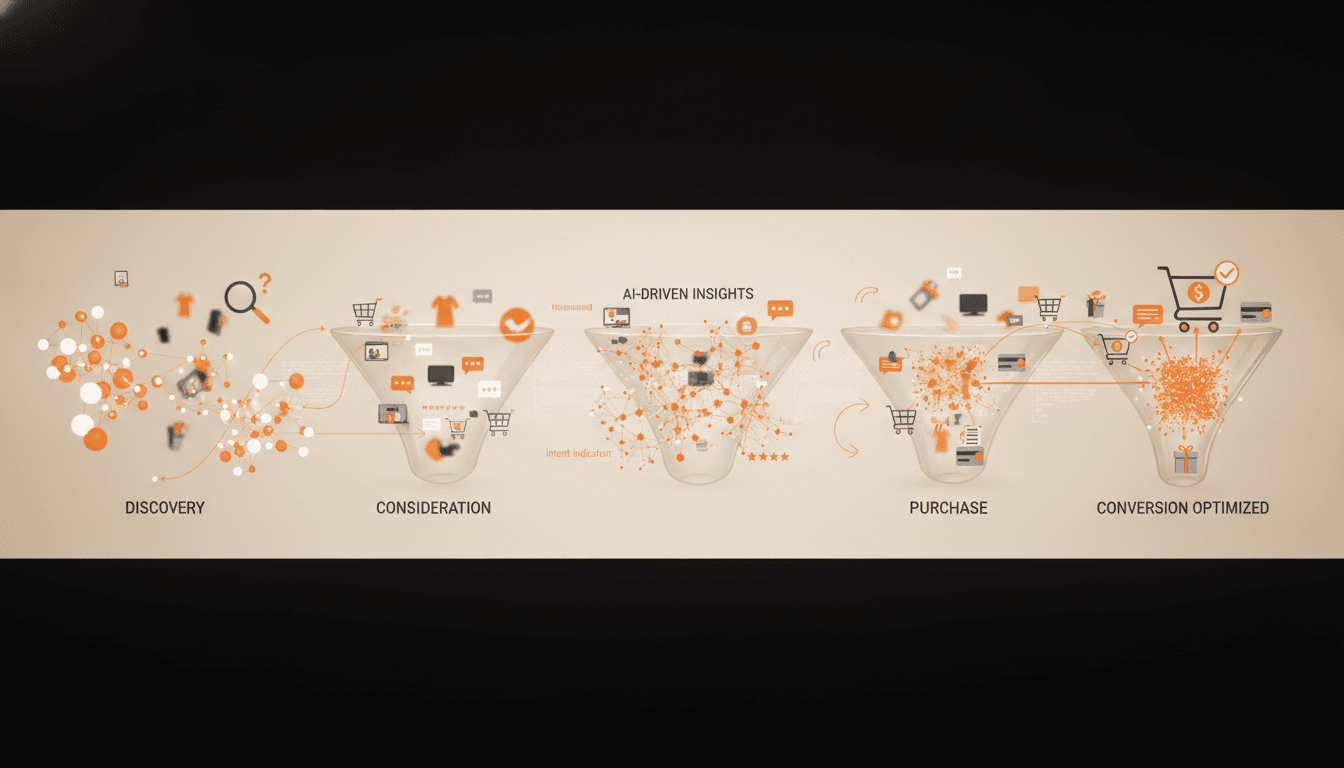
Advanced Keyword Strategies to Capture Medium Intent AI Shoppers in Fashion E-Commerce
Unlock advanced, data-driven keyword strategies to target medium intent AI shoppers in fashion e-commerce. Discover how GEO insights and AI-powered tools can drive search visibility, boost conversions, and future-proof your SEO approach.

Advanced Keyword Strategies to Capture Medium Intent AI Shoppers in Fashion E-Commerce
Unlock cutting-edge, data-driven keyword strategies tailored to target medium intent AI shoppers in fashion e-commerce. Learn how leveraging GEO insights alongside AI-powered tools can amplify your search visibility, boost conversions, and future-proof your SEO approach.
Nearly half of AI-driven fashion e-commerce traffic stems from medium intent keywords. This highlights a crucial opportunity: understanding how these shoppers search and refining your keyword strategy accordingly is essential for success. In this comprehensive guide, Hexagon unveils advanced techniques that merge AI keyword research with GEO strategies—empowering your fashion brand to dominate AI search results and convert audiences on the cusp of purchase.
Fashion brands face a pivotal challenge: capturing the attention of shoppers who are actively researching, comparing options, and ready to buy. By harnessing the latest AI-powered keyword research combined with precise location-based targeting, marketers can position products directly before high-converting audiences at exactly the right moment.
Eager to advance your fashion brand’s AI search strategy? Book a free 30-minute consultation with Hexagon’s AI marketing experts today.
Understanding Medium Intent AI Shoppers in Fashion E-Commerce
Medium intent AI shoppers have emerged as the linchpin of fashion e-commerce growth. These users are more engaged than casual browsers but haven’t yet reached the final purchase stage. They actively research options, compare products, and remain open to influence at critical decision points.
Unlike high intent shoppers who enter precise queries like “buy black leather boots size 8” or low intent browsers using broad searches such as “2024 fashion trends,” medium intent shoppers exhibit nuanced, investigative behavior. Their queries often blend product, style, price, and location, for example: “best summer dresses under $100” or “eco-friendly sneakers in NYC.”
Key statistics underscore their importance:
- 45% of AI-driven fashion e-commerce traffic originates from medium intent keywords [Hexagon Internal Analytics].
- 65% of fashion shoppers use location-based queries on mobile devices [Statista Mobile Shopping Behavior].
Typical search patterns include:
- Use of comparison-driven modifiers such as “best,” “affordable,” or “where to buy.”
- Combining product attributes with contextual details like city, season, or ethical considerations.
- Expectation that AI-powered search engines will deliver personalized options aligned with their preferences and location.
Addressing this segment is crucial for boosting conversions. As Lily Ray, Senior Director of SEO at Amsive Digital, explains, “Medium intent keywords are the sweet spot for AI-driven commerce—they capture shoppers who are actively researching, comparing, and ready to be influenced.” Fashion brands that successfully engage this audience enjoy stronger engagement metrics and higher sales conversion rates.
[IMG: Shopper researching fashion products on a mobile device, with AI-powered suggestions displayed]
Identifying and Mapping Medium Intent Keywords for Fashion Brands
Shifting from generic targeting to a nuanced, contextual approach is essential when recognizing and mapping medium intent keywords. These keywords typically reflect a combination of product type, style, price, location, and ethical values.
Examples include:
- “Best sustainable denim jackets 2024”
- “Affordable vegan boots in Los Angeles”
- “Where to buy plus size cocktail dresses online”
- “Trendy men’s sneakers under $150 NYC”
Medium intent keywords often feature:
- Modifiers like “best,” “affordable,” “where to buy,” alongside style-specific or occasion-related phrases.
- Location, price range, or ethical factors serving as integral intent signals.
To create an effective keyword map for fashion e-commerce:
- List semantic variations: Incorporate long-tail phrases that reflect real shopper language (e.g., “eco-friendly swimwear Miami”).
- Group keywords by user intent: Organize terms according to product categories, styles, or content themes.
- Develop topical clusters: Support each product or category page with related blog posts, guides, and FAQs addressing these nuanced queries.
Semantic keyword mapping has become indispensable. Danny Sullivan, Google’s Public Liaison for Search, notes, “Semantic depth and topical coverage are fundamental for ranking on AI-powered search engines—broad keyword lists are no longer enough.” Brands adopting this approach achieve better alignment between searcher needs and site content, resulting in higher visibility and engagement.
[IMG: Keyword mapping diagram showing medium intent keywords, semantic clusters, and fashion product categories]
Leveraging AI-Powered Keyword Research Tools for Faster Discovery
The speed of keyword discovery has accelerated dramatically thanks to AI-powered research tools. For fashion marketers, these technologies have become indispensable—cutting research time by over 50% compared to traditional manual methods [Moz State of SEO Report].
Here’s how leading AI keyword tools revolutionize the process:
- Rapid analysis: Instantly process billions of queries to uncover medium intent opportunities competitors might miss.
- Semantic clustering: Identify keyword groups that capture the full range of shopper questions and comparisons.
- Trend detection: Detect emerging search behaviors—such as sustainability or inclusivity—in real time.
AI-driven platforms like SEMrush, Ahrefs, and Hexagon’s proprietary solutions enable brands to:
- Discover hidden keyword opportunities using advanced filters for modifiers, location, style, and price.
- Map semantic relationships to craft content that aligns with AI assistants’ ranking criteria.
- Continuously update keyword targets based on live trend data and evolving shopper behavior.
Rand Fishkin, Co-founder of SparkToro, emphasizes, “Brands that incorporate AI-powered keyword research into their workflow adapt faster and see measurable increases in AI search visibility.” Seamless integration of these insights into content calendars, product descriptions, and landing page strategies is critical for sustained success.
Ready to elevate your fashion brand’s AI search strategy? Book a free 30-minute consultation with Hexagon’s AI marketing experts today.
[IMG: Fashion marketer using an AI keyword research dashboard with highlighted semantic clusters]
Integrating GEO Keyword Strategies for Localized AI Search Optimization
GEO keyword strategies have become essential, as 65% of fashion shoppers use location-based queries on mobile devices [Statista Mobile Shopping Behavior]. AI assistants and search engines increasingly prioritize localized content, especially for fashion brands targeting urban, style-savvy audiences.
To implement effective GEO keyword strategies:
- Incorporate location-specific modifiers: Add city, neighborhood, or event-based terms to product titles, meta descriptions, and on-page content (e.g., “summer dresses Chicago,” “bridal gowns Soho NYC”).
- Optimize for mobile and voice search: Structure site architecture and content to match how consumers search on the go, including conversational phrases like “where to buy eco-friendly sneakers near me.”
- Localize content themes: Publish blog posts, lookbooks, and guides focused on local trends, store openings, or season-specific style advice.
The benefits are both immediate and measurable:
- A 30% increase in AI search rankings has been observed when using GEO-focused keywords [BrightLocal Local Consumer Review Survey].
- Enhanced local brand visibility and increased foot traffic for omnichannel retailers.
- Stronger engagement from shoppers ready to purchase within their area.
Aleyda Solis, International SEO Consultant, highlights, “Geo-targeted keyword strategies are critical in fashion e-commerce, especially as AI assistants prioritize localized content for mobile and voice searches.” By combining GEO tactics with medium intent targeting, brands capture both the contextual relevance and urgency that define today’s shopper behavior.
[IMG: Map overlay highlighting local search queries for fashion products in a major city]
Optimizing Site Structure and Content for Medium Intent Queries
A well-designed site structure is vital to support semantically rich, medium intent keyword targeting. Fashion e-commerce brands must ensure their websites are technically sound and content-rich to meet evolving AI ranking standards.
Best practices include:
- Hierarchical organization: Categorize products into clearly defined groups and subgroups, each targeting specific medium intent phrases.
- Optimized product pages: Integrate AI-driven keyword insights into product titles, descriptions, and metadata, emphasizing features that match shopper queries (e.g., “best organic cotton t-shirt for summer NYC”).
- Content layering: Complement core product pages with related blog articles, buying guides, and FAQs that address comparison and research-focused questions.
To maximize content relevance and engagement:
- Embed AI keyword strategies across all content types—not just landing pages.
- Frequently update category and product copy with trending medium intent terms identified by AI tools.
- Use FAQs to capture conversational, research-driven queries such as “Is vegan leather durable?”
Brands adopting these optimizations report a 2x increase in content relevance and user engagement [SEMrush Fashion Industry Trends]. AI search engines like Perplexity and Claude now favor brands offering comprehensive, semantically rich content, making these practices essential for competitive advantage.
[IMG: Example of a fashion e-commerce site with optimized product, category, and FAQ content]
Monitoring, Measuring, and Iterating on AI and GEO Keyword Strategies
Sustained success requires continuous measurement to keep keyword strategies competitive and effective. Leading fashion brands track the performance of both medium intent and GEO-based keywords using sophisticated analytics platforms.
Key metrics to monitor include:
- Search visibility: Track rankings and SERP features for target keywords.
- Conversion rates: Evaluate how effectively medium intent keywords drive purchases or leads.
- Engagement metrics: Analyze time on site, bounce rates, and click-through rates to assess content relevance.
- Ranking improvements: Observe how quickly AI and GEO strategies translate into upward search result movement.
To stay ahead:
- Leverage AI-powered trend data to detect shifts in shopper behavior, adjusting keyword targets in real time.
- Regularly audit and refresh site content to reflect the latest medium intent and local search patterns.
- Benchmark performance against competitors to uncover new opportunities and address gaps.
Brands that adapt keyword strategies based on AI insights and trend data achieve 25% faster ranking improvements [Ahrefs SEO Fashion Case Study]. This agile, data-driven approach guarantees sustained visibility and conversion growth.
[IMG: Analytics dashboard showing fashion e-commerce keyword performance and improvement trends]
Best Practices for Fashion Brands to Rank Higher in AI-Driven Search Environments
Looking forward, fashion brands must blend advanced keyword research with localized GEO strategies to excel in AI-driven search landscapes. Maximize ranking potential by:
- Prioritizing medium intent keywords: Target queries that indicate active research and comparison, beyond mere purchase intent.
- Leveraging AI-powered tools: Incorporate these platforms into daily workflows for faster, smarter keyword discovery and semantic mapping.
- Enriching content semantically: Build topical clusters and comprehensive coverage for each product category.
- Implementing GEO targeting: Optimize every site layer for local and mobile search, particularly to engage high-converting urban shoppers.
- Monitoring and iterating: Use analytics and trend data to maintain agility and competitiveness.
Avoid common pitfalls such as:
- Relying only on broad, non-contextual keywords.
- Neglecting to update content with fresh AI and GEO insights.
- Overlooking location-based intent, especially in mobile search contexts.
Hexagon’s expertise and proprietary tools empower fashion brands to stay ahead of AI search trends. By combining deep keyword intelligence with actionable workflow integrations, brands can consistently rank higher, engage more shoppers, and convert at scale.
Conclusion
Medium intent AI shoppers represent the most lucrative—and complex—segment driving fashion e-commerce growth. By adopting advanced keyword strategies that integrate AI-powered research with GEO targeting, brands can effectively capture this vital audience and deliver measurable results.
Key takeaways: takeaways
- Embrace semantic, medium intent keyword mapping to align deeply with shopper needs.
- Utilize AI keyword tools to accelerate discovery and maintain continuous optimization.
- Localize content through GEO strategies to maximize search rankings and mobile engagement.
Ready to transform your fashion brand’s AI search strategy? Book a free 30-minute consultation with Hexagon’s AI marketing experts today.
[IMG: Fashion e-commerce team celebrating improved AI search rankings and conversions]
Hexagon Team
Published March 27, 2026