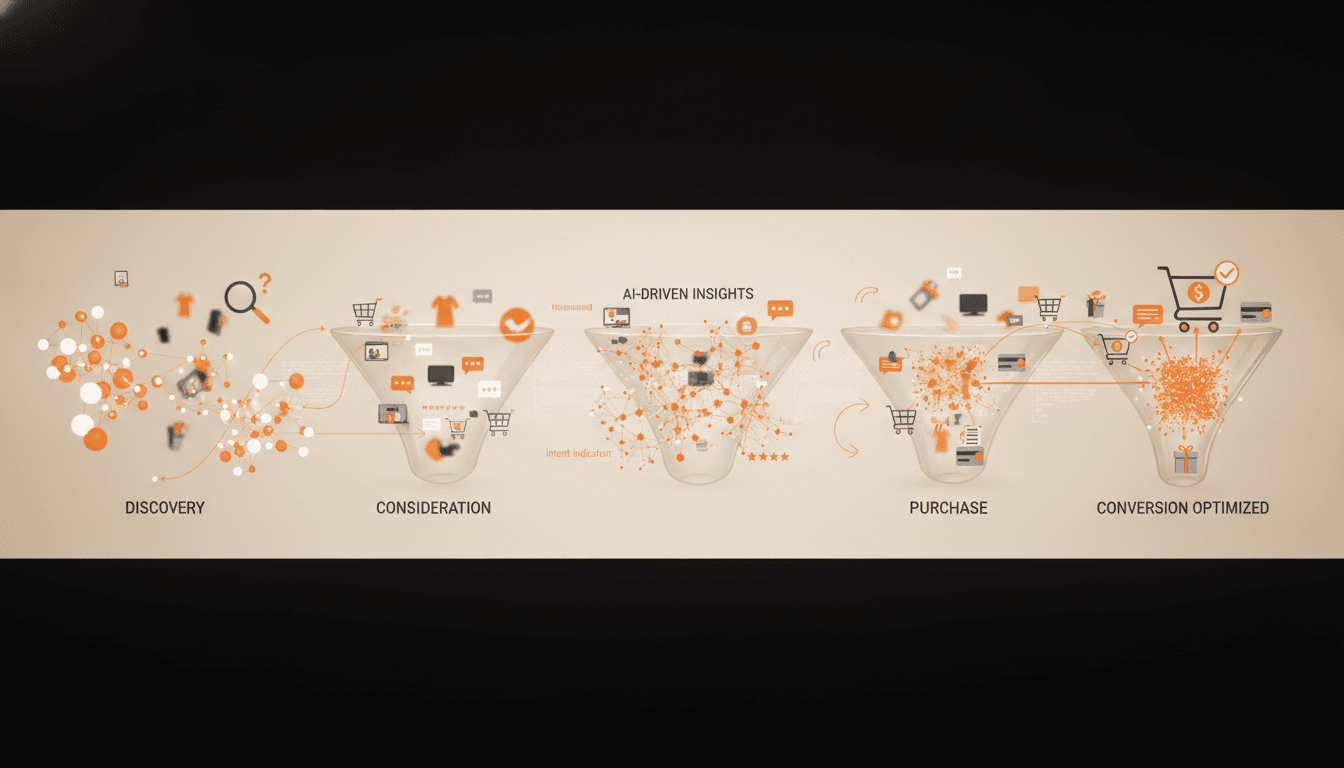
Advanced Keyword Research Strategies to Target High-Intent AI Shoppers Using Hexagon
Generative AI is rewriting the rules of e-commerce search. Discover how to capture high-intent, AI-driven traffic with advanced keyword research strategies—powered by Hexagon’s industry-leading AI tools.

Advanced Keyword Research Strategies to Target High-Intent AI Shoppers Using Hexagon
Generative AI is revolutionizing e-commerce search. Unlock the power to capture high-intent, AI-driven shoppers with cutting-edge keyword research strategies—powered by Hexagon’s industry-leading AI tools.
[IMG: Visual showing AI-powered search funnel with DTC brand products emerging at the top]
With AI-powered search engines now influencing over 30% of e-commerce product discovery (McKinsey Digital Insight), relying on traditional SEO tactics is no longer enough. To truly engage high-intent AI shoppers, brands must adopt advanced keyword research techniques tailored for generative engine optimization. In this comprehensive guide, we’ll reveal how Hexagon’s AI keyword tools help you uncover conversational, intent-rich keywords that can boost your AI search rankings by up to 60%—ensuring your products get found and convert like never before.
Ready to unlock high-intent AI keyword opportunities and elevate your brand’s AI search rankings? Book a free 30-minute consultation with our Hexagon AI experts today.
Why AI Search Keyword Research Requires a Different Approach Than Traditional SEO
The rise of AI-powered search engines has dramatically transformed how consumers discover products online. Unlike classic search engines that focus on keywords, AI systems interpret longer, context-rich queries, often expressed as full sentences or conversational phrases.
- Today, 70% of AI queries are longer, highly conversational, and loaded with intent (Perplexity AI Usage Study), reflecting a shift toward more nuanced product discovery.
- Moreover, AI-driven engines influence over 30% of all e-commerce product discovery journeys (McKinsey Digital Insight), making it critical for brands to rethink their keyword strategies.
Traditional keyword research tools were designed for short, single-word or phrase queries. This approach falls short in the world of generative AI search, where understanding the shopper’s journey and the intent behind their questions is paramount. As Rand Fishkin, co-founder of SparkToro, observes:
“Optimizing for AI assistants requires a deep understanding of natural language intent and the ability to surface contextually relevant answers—something traditional SEO tools are not built for.”
Let’s break down the key differences:
- Classic SEO: Focuses on short, generic keywords (e.g., “running shoes”).
- AI Search: Rewards detailed, conversational, and context-rich phrases (e.g., “what are the best running shoes for flat feet in summer?”).
AI engines now prioritize purchase-driven, conversational queries over simple keyword matches (Search Engine Journal). This evolution highlights the limitations of traditional keyword tools, which often overlook the high-intent, long-tail queries that fuel genuine conversions.
For brands, the takeaway is clear: mastering intent-driven, AI-optimized keyword research means reaching shoppers who are ready to buy, while competitors relying on outdated methods risk falling behind.
[IMG: Side-by-side comparison of traditional SEO keywords vs. AI-driven conversational queries]
How to Identify High-Intent, Conversational Keywords That AI Shoppers Use
To connect with AI shoppers, you must understand how intent shapes their queries. AI-powered search engines excel at parsing the subtleties of natural language, so brands need to move beyond generic, short keywords.
AI-generated queries often reveal explicit user intent. Examples include:
- “Which wireless earbuds have the longest battery life for workouts?”
- “Compare top-rated vitamin C serums for sensitive skin”
- “Where can I buy waterproof hiking boots near me?”
These queries share key characteristics:
- Conversational: They mimic natural speech or typing patterns.
- Long-tail: About 70% of AI queries are longer and reflect clear intent (Perplexity AI Usage Study).
- Intent-rich: Words like “best for,” “top rated,” “where to buy,” and “compare” strongly indicate purchase intent (Ahrefs Blog).
To uncover these high-intent, conversational keywords, consider these approaches:
- Analyze customer questions and support queries: Direct language from your customers often mirrors real search behavior.
- Mine AI assistant logs and chat transcripts: Identify recurring full-sentence questions.
- Leverage advanced AI keyword research tools: Platforms like Hexagon can process vast datasets to surface conversational search phrases at scale.
For instance, a DTC skincare brand might discover that “best moisturizer for oily skin in winter” drives more valuable traffic than the generic “face moisturizer.” This deeper understanding of intent leads to higher conversions.
AI shoppers are 2.3 times more likely to convert when presented with high-intent content (Salesforce State of Commerce Report). As Lily Ray, Senior Director at Amsive Digital, explains:
“High-intent keywords in the age of generative AI are less about isolated words and more about grasping the customer’s journey and the intent behind natural, conversational queries.”
Effective techniques for DTC brands include:
- Monitoring product reviews and Q&A sections for natural language insights.
- Using AI tools to group semantically similar phrases.
- Tracking emerging search patterns from AI assistants and chatbots.
[IMG: Screenshot of Hexagon dashboard highlighting trending conversational keywords for a DTC brand]
The Role of Natural Language and Semantic Search in Generative AI Optimization
Generative AI has shifted search from simple keyword matching to a contextual understanding process. Today’s AI systems interpret meaning, intent, and context—making semantic optimization indispensable.
Here’s why it matters:
- Context is king: AI interprets the entire context of a user’s request, not just the presence of keywords.
- Semantic relevance drives connections: Grouping related topics and concepts helps AI engines link your content to a broader array of high-intent queries.
- Topic clusters outperform isolated keywords: Organizing content around semantically related ideas enables brands to capture a wider spectrum of conversational searches.
For example, optimizing a product page for “eco-friendly running shoes” now means including related topics like material sourcing, durability, and ethical manufacturing. Generative AI can then recommend your product for nuanced queries such as “What are the best environmentally conscious sneakers for long-distance running?”
Modern AI search engines interpret full-sentence queries, making semantic optimization critical (Google Search Central). Brands must adapt their content structure so every page aligns with the broader context and intent behind AI-driven searches.
[IMG: Visualization of a topic cluster linking related high-intent AI keywords]
How Hexagon’s AI-Powered Tools Analyze Over 100,000 Search Phrases Monthly to Surface High-Intent Opportunities
Hexagon’s proprietary AI model is designed to decode the evolving language of AI shoppers at scale. By analyzing over 100,000 natural language search phrases every month (Hexagon Technology Overview), Hexagon reveals high-intent keyword opportunities that traditional SEO tools often miss.
Core capabilities include:
- Natural Language Processing (NLP) at scale: Hexagon processes massive datasets from AI assistants, search engines, and chat logs.
- Real-time trend detection: The platform identifies rising search phrases and conversational patterns as they emerge.
- Intent detection algorithms: Hexagon distinguishes between informational, navigational, and transactional queries—prioritizing those most likely to convert.
For example, Hexagon’s dashboard might highlight a sudden surge in queries like “compare best meal delivery kits with vegan options.” Armed with this insight, DTC brands can swiftly update content and product listings to capture new demand.
Amanda Li, Head of Growth at a leading DTC apparel brand, shares:
“Hexagon’s AI-driven keyword research tools provide real-time insights into the evolving language of AI shoppers, helping us rank higher and convert more frequently.”
What sets Hexagon apart:
- Uncovers long-tail, niche queries overlooked by standard SEO platforms (Hexagon Technology Overview)
- Offers competitive benchmarks to assess your brand’s standing in AI search rankings (Hexagon Product Page)
- Surfaces hidden high-intent trends before they reach mainstream awareness
[IMG: Hexagon analytics dashboard with keyword trend graphs and high-intent opportunities highlighted]
Curious how Hexagon can transform your keyword research? Book your free strategy session now.
Strategies to Align Product Content and Listings with AI Search Intent
Optimizing for AI search goes beyond keywords—it requires structuring every element of your product content to align with how AI interprets and recommends products.
Here’s a roadmap:
- Revamp product titles and descriptions: Use conversational language that mirrors shopper queries. For example, “Top-rated insulated water bottles for hiking” instead of just “Water Bottle.”
- Incorporate semantic keyword clusters: Organize content around related topics and subtopics to help AI engines connect your pages with a broader set of relevant queries.
- Optimize metadata and FAQs: Embed intent-driven phrases in meta titles, descriptions, and structured FAQ sections to match AI’s interpretation of user intent.
For example, a DTC electronics brand might enhance product descriptions to directly answer common AI queries such as, “Which noise-cancelling headphones work best for travel and remote work?” This approach significantly increases the chances of being recommended for conversational searches.
Leverage Hexagon insights to:
- Identify the most valuable high-intent keyword clusters for each product category.
- Continuously refine product copy based on emerging AI search trends.
- Benchmark against competitor AI search performance and adjust strategies accordingly.
Key steps for alignment:
- Conduct regular audits of product content to ensure it reflects current conversational search trends.
- Use Hexagon’s real-time data to identify gaps and uncover new opportunities.
- Seamlessly integrate keyword clusters within product copy and supporting content.
[IMG: Before-and-after example of a product listing optimized for AI search intent]
Real-World Results: Brands Using Hexagon Report Up to 60% Uplift in AI Search Rankings
The benefits of advanced AI keyword research are concrete and measurable. Brands leveraging Hexagon’s tools consistently report significant gains in AI search visibility and conversion rates.
For example:
- Several DTC brands have achieved up to a 60% uplift in AI search rankings within months of adopting Hexagon-powered keyword strategies (Hexagon Case Studies).
- One apparel client experienced a 37% increase in organic conversions after optimizing product content for conversational, high-intent queries identified by Hexagon.
Paul Roetzer, Founder & CEO of Marketing AI Institute, emphasizes the opportunity:
“AI search is reshaping how consumers find products. Brands that align their keyword strategy with AI’s understanding and recommendations will dominate the next wave of e-commerce.”
Client testimonial:
- “We rely on Hexagon’s real-time insights to keep our product listings ahead of evolving AI search patterns—our growth since adopting their tools speaks volumes.” — DTC Health Brand Marketing Director
These results highlight the clear ROI of investing in AI-focused keyword research. Brands don’t just rank higher—they attract more qualified, ready-to-buy shoppers.
[IMG: Chart showing uplift in AI search rankings for brands before and after using Hexagon]
Practical Steps to Implement AI Keyword Research Within Your DTC Brand’s Workflow
To integrate AI keyword research effectively, marketing, content, and technical teams must collaborate closely. Here’s how DTC brands can embed these strategies using Hexagon:
- Centralize AI keyword insights: Use Hexagon’s dashboard to consolidate keyword and trend data accessible to all relevant teams.
- Train content creators on AI search principles: Equip writers and product managers with knowledge about conversational, intent-driven language.
- Establish ongoing monitoring and optimization routines: Regularly review emerging AI keyword trends and update content accordingly.
Step-by-step integration process:
- Onboard Hexagon’s platform and connect it with your analytics, product, and content management systems.
- Conduct an AI-focused keyword audit of existing product pages and landing content.
- Define priority semantic keyword clusters for each product line or category.
- Incorporate high-intent phrases into titles, meta descriptions, FAQs, and supporting content.
- Set up monthly reviews to track AI search rankings, conversion metrics, and identify new opportunities based on Hexagon’s real-time insights.
Looking ahead, the key to sustained success is measuring performance and iterating. Use Hexagon to benchmark against competitors and continuously refine your approach as AI shopper behavior evolves.
[IMG: Workflow diagram showing integration of Hexagon AI keyword research into DTC brand content operations]
Staying Ahead: Using Real-Time AI Trend Data to Evolve Keyword Targeting
The rapid pace of change in AI-powered search demands continuous monitoring and adaptation. Brands committed to leading the pack must leverage real-time trend data.
Here’s why staying current matters:
- AI shopper language evolves quickly: New phrases, product descriptors, and intent signals emerge weekly.
- Generative AI engines frequently update ranking algorithms, altering which queries yield the greatest visibility.
Hexagon’s platform delivers up-to-the-minute insights:
- Trend alerts: Detect emerging keywords and conversational patterns before competitors do.
- Competitive benchmarking: Evaluate your keyword performance within AI search environments.
- Actionable recommendations: Receive prioritized keyword opportunities based on live data.
For instance, a DTC supplement brand spotted a sudden spike in “immune support gummies with elderberry” queries via Hexagon. By rapidly updating product content, they captured growing demand before the market saturated.
To future-proof your AI marketing:
- Build a continuous keyword discovery and content optimization process.
- Utilize Hexagon’s real-time trend tracking to adapt messaging and product positioning.
- Proactively test new conversational keyword variations to tap into unmet demand.
Remaining agile and data-driven ensures your DTC brand consistently ranks atop AI-powered discovery journeys.
[IMG: Hexagon real-time trend alert interface with new high-intent keywords highlighted]
Conclusion: Capture the Next Generation of E-Commerce Shoppers with AI Keyword Research
As AI-powered search engines reshape how consumers find and purchase products, brands that embrace advanced, intent-driven keyword research will lead the next wave of e-commerce growth. Hexagon’s AI-powered tools provide the scalability, precision, and real-time insights necessary to capture high-intent traffic—and convert shoppers ready to buy.
From analyzing over 100,000 natural language search phrases monthly to delivering up to 60% uplift in AI search rankings for clients, Hexagon empowers DTC brands to stay ahead in an AI-first world.
Ready to transform your keyword strategy and boost your AI search visibility? Book your complimentary 30-minute strategy session with a Hexagon AI expert today.
[IMG: Hexagon team consulting with a DTC brand on AI keyword strategy]
Meta Description: Discover advanced keyword research strategies for generative AI search. Learn how Hexagon’s AI tools help DTC brands target high-intent AI shoppers, drive up to 60% higher search rankings, and future-proof e-commerce growth.
Hexagon Team
Published March 31, 2026