Why Amazon Is Blocking 47 AI Bots — and What It Means for the Future of Product Discovery
Amazon just told 47 AI bots to stay out. At the same time, it built an AI agent that walks into competitors' websites and buys their products. If that sounds like a contradiction, that is because it is one — and it reveals the most important strategic tension in commerce today.

Why Amazon Is Blocking 47 AI Bots — and What It Means for the Future of Product Discovery
Last updated: March 2026
Amazon just told 47 AI bots to stay out. At the same time, it built an AI agent that walks into competitors’ websites and buys their products. If that sounds like a contradiction, that is because it is one — and it reveals the most important strategic tension in commerce today.
The world’s largest online retailer is simultaneously building walls and tunnels. It is blocking OpenAI, Google, Meta, and Huawei from reading its product pages while quietly deploying its own AI to complete purchases on brands’ websites without their permission. The message is clear: Amazon wants to be the only AI that shops — everywhere.
This is not just an Amazon story. It is a preview of how every retailer, marketplace, and brand will have to navigate the next decade of commerce.
The 47 Bots Amazon Blocked
In late 2025, Amazon expanded its robots.txt file — the standard web directive that tells automated crawlers which pages they can and cannot access — to block 47 distinct AI bots. The list reads like a roll call of the most powerful technology companies on the planet:
- OpenAI: ChatGPT-User and OAI-SearchBot, the crawlers that power ChatGPT Shopping and its new instant checkout feature
- Google: Multiple AI-specific crawlers beyond the standard Googlebot
- Meta: AI training and research bots tied to Facebook, Instagram, and WhatsApp
- Huawei: AI crawlers associated with the Chinese tech giant’s search and recommendation systems
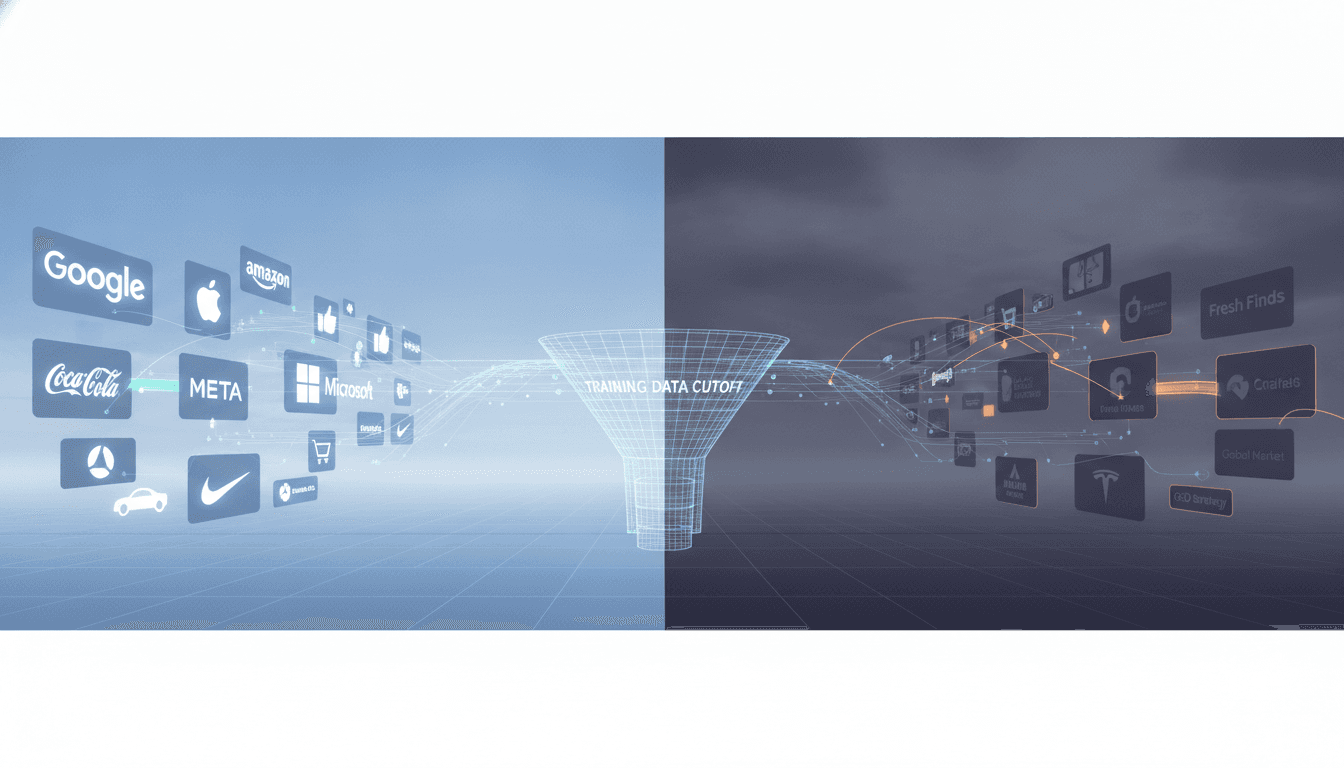
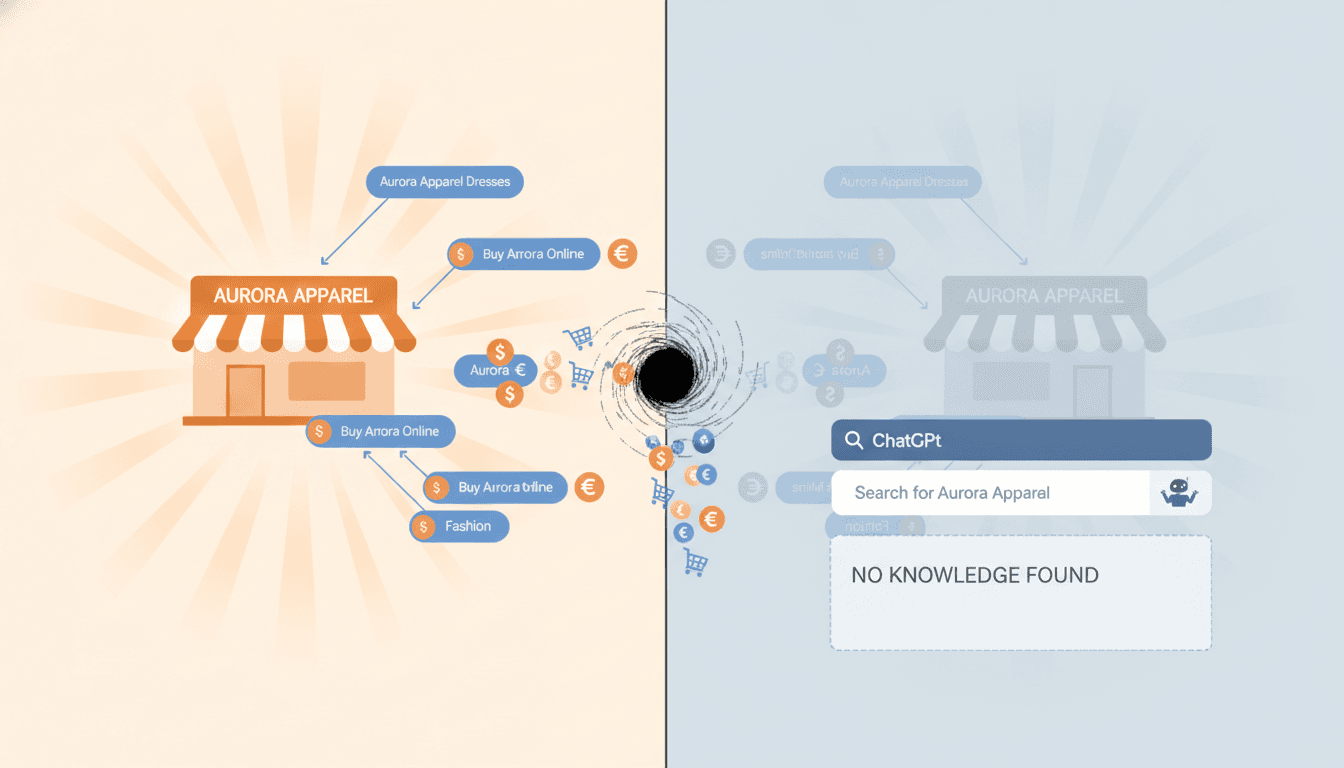
The result is immediate and sweeping. ChatGPT can no longer read Amazon product pages, prices, specifications, or customer reviews. Any AI shopping assistant that relied on scraping Amazon’s catalog to generate recommendations is now flying blind.
There is one important caveat: robots.txt is a voluntary standard. It is not legally binding, and bots can technically ignore it. But major AI companies have so far respected these directives, partly out of legal caution and partly because violating them would invite the kind of lawsuit Amazon can easily afford to file.
What makes this even more interesting is what Amazon chose not to block. Its subsidiaries — Zappos, Shopbop, and Woot — remain open to AI crawlers. Amazon appears to be running a controlled experiment: measuring whether AI-driven traffic to these smaller properties generates enough value to justify eventually reopening the gates on its main marketplace.
Why Amazon Built the Wall
The conventional explanation is data protection. Amazon’s product catalog — over 300 million listings with real-time pricing, detailed reviews, and availability data — is one of the most valuable datasets in commerce. Letting competitors ingest that data to power rival shopping agents would be handing them ammunition for free.
But the deeper reason is more existential. Amazon is watching consumer behavior shift in real time, and the numbers are alarming.
Traffic from AI platforms to US e-commerce sites surged 4,700% year-over-year in 2025, according to Adobe. ChatGPT alone now accounts for more than 20% of Walmart’s referral traffic, per Digiday. These are not marginal gains. They represent a fundamental reordering of how consumers discover and buy products.
For Amazon, which has spent two decades building the world’s most sophisticated product discovery and recommendation engine, the threat is clear. If consumers start asking ChatGPT or Google Gemini “what running shoes should I buy” instead of searching on Amazon, the entire flywheel — search, discovery, advertising, Prime membership — starts losing momentum.
Amazon’s CEO has publicly noted that most external AI shopping agents fail on personalization because they lack accurate real-time pricing, reliable delivery estimates, and sufficient purchase history. Blocking those agents from accessing Amazon’s data ensures they continue to fail — at least when it comes to recommending Amazon products.
Amazon’s Own AI Play: Rufus and the $10 Billion Bet
While blocking external agents, Amazon has been pouring resources into its own. Rufus, Amazon’s generative AI shopping assistant, has grown from a simple Q&A chatbot in early 2024 into a full conversational shopping companion embedded across the Amazon app.
The scale is staggering:
- 250 to 300 million customers have used Rufus
- Monthly active users grew 149% year-over-year; total interactions grew 210%
- Customers who engage with Rufus are 60% more likely to purchase during that session
- Evercore ISI projects Rufus will generate over $10 billion in incremental annual sales
Rufus does not just answer questions. It rewrites product titles and descriptions in real time, personalizing them based on each customer’s shopping history, wishlists, and even Alexa interactions. A second evaluator model verifies accuracy before anything is displayed. It can automatically add items to cart, set price alerts, and auto-purchase when a target price is met.
For context, Amazon’s recommendation engine — the “customers who bought this also bought” system that predates the AI era — already drives 35% of Amazon’s total sales. Rufus is the next evolution of that engine, and it is designed to do something no external AI agent can: combine conversational intelligence with Amazon’s proprietary purchase history for hundreds of millions of customers.
For sellers on Amazon, this shift has immediate consequences. Traditional keyword-stuffed product listings are losing relevance. Rufus understands semantic meaning and buyer intent, not just keyword matches. If your product does not appear in Rufus’s first few conversational responses, it may never be considered. The era of AI optimization (AIO) has replaced search engine optimization (SEO) as the primary lever for product visibility.
“Buy for Me”: Amazon’s Most Disruptive Move
If Rufus is Amazon’s defensive AI play, “Buy for Me” is the offensive one — and it may be the most aggressive move in Amazon’s history.
Launched in beta in April 2025, Buy for Me lets Amazon customers purchase products from other brands’ websites without ever leaving the Amazon app. The customer sees an Amazon-style product page, confirms shipping and payment through Amazon’s familiar checkout, and then Amazon’s AI agent autonomously completes the transaction on the third-party brand’s website.
The feature started with 65,000 products at launch and scaled to over 500,000 by November 2025. It is built on Amazon Bedrock and powered by Amazon Nova and Anthropic’s Claude models.
The backlash was immediate. Brands discovered their products listed on Amazon without consent. Some retailers only found out when strange orders began arriving from Amazon-linked email addresses. CNBC, Modern Retail, and GeekWire all reported significant pushback from online retailers who accused Amazon of scraping their sites without permission — the very same behavior Amazon is blocking others from performing on its own site.
Amazon claims it does not collect a commission on Buy for Me purchases, at least for now. But the strategic intent is unmistakable: Amazon is positioning itself as a universal shopping layer, the default interface for all online commerce, not just its own inventory. McKinsey projects that agentic commerce could generate $1 trillion in US retail revenue by 2030. Amazon wants to be the front door to as much of that as possible.
Alexa+ Goes Free with Prime
The third pillar of Amazon’s AI commerce strategy arrived in February 2026 when Alexa+, the AI-upgraded version of Alexa, became available to all Alexa-enabled devices — free for Amazon Prime members.
The timing was not accidental. At CES in January 2026, Amazon launched Alexa.com, bringing its voice assistant to web browsers for the first time. In February, it announced a deal to integrate OpenAI’s models into Alexa+, combining Amazon’s commerce infrastructure with state-of-the-art conversational AI.
Early results suggest the bet is paying off. Users tripled their shopping activity with Alexa+ compared to the original Alexa. Conversations increased two to three times, and recipe usage — which drives grocery commerce through Whole Foods and Amazon Fresh — grew five-fold.
Alexa+ now integrates with Ticketmaster, Uber, Expedia, OpenTable, and a growing list of third-party services. The goal is to own the conversational commerce entry point in the home, competing with Google Assistant and Apple Intelligence for the position of default AI assistant.
By bundling Alexa+ with Prime at no additional cost, Amazon is making a calculated trade: short-term margin compression in exchange for locking hundreds of millions of households into an AI shopping agent that routes purchases through Amazon’s ecosystem.
The Competitive Dilemma: Block Agents or Embrace Them?
Amazon’s block-and-build strategy exposes a dilemma that every major retailer now faces. As CNBC reported in December 2025, the choice looks like this:
Block AI agents and you protect your data, your customer relationships, and your advertising revenue. But you risk becoming invisible to a growing segment of consumers who shop through AI-first interfaces. If ChatGPT cannot recommend your products because it cannot read your catalog, those consumers will buy from someone else.
Embrace AI agents and you gain access to a new, rapidly growing traffic channel. But you cede control of the customer relationship. When an AI agent recommends your product, the consumer’s loyalty is to the agent, not to your brand. You become a supplier behind an intermediary — the same position many brands already resent about selling on Amazon itself.
There is no clean answer. Amazon, with its massive scale and proprietary logistics network, can afford to block external agents because it has built its own. Most retailers cannot.
Walmart’s Opposite Bet
While Amazon builds walls, Walmart has thrown the doors open — and the early results are striking.
ChatGPT now drives over 20% of Walmart’s referral traffic, making it one of the largest new traffic sources the retailer has ever seen. Walmart is an active participant in Google’s Universal Commerce Protocol, with over 20 global partners. It has integrated with ChatGPT Shopping, Perplexity, and Microsoft Copilot.
Walmart’s logic is straightforward: it cannot out-build Amazon on proprietary AI, so it will out-distribute by being available wherever AI agents are shopping. If consumers increasingly discover products through conversational AI rather than direct retailer search, Walmart wants to be in every agent’s recommendation set.
Target, Best Buy, The Home Depot, Macy’s, and Etsy have taken similar positions, hedging by joining every major AI shopping platform simultaneously. The pattern is clear: outside of Amazon, the dominant retail strategy is openness.
What This Means for Merchants
For brands and merchants — especially those selling on Amazon — the implications are profound and urgent.
If you sell on Amazon, your product’s visibility increasingly depends on Rufus. Traditional keyword optimization is giving way to AI optimization. Rich, detailed, conversational product content that addresses specific buyer intents (“best running shoes for flat feet on pavement”) now matters more than keyword density. Products with comprehensive structured data appear in AI-generated shopping recommendations three to five times more frequently than those without it.
If you sell outside Amazon, the window is open but closing. AI agents query structured product feeds, not websites. Merchants who have invested in Google Merchant Center feeds, schema.org markup, and protocol adoption (UCP, ACP) report an average 22% increase in AI-attributable revenue within 90 days. Those who have not made these investments are increasingly invisible to the fastest-growing shopping channel in a decade.
If you sell on both, you are navigating a split reality. On Amazon, you optimize for Rufus. Off Amazon, you optimize for every other AI agent by making your product data as rich, structured, and accessible as possible. Brand protection becomes critical in both contexts — AI agents find the cheapest seller instantly, making unauthorized resellers an existential threat.
The broader pattern is that the discovery funnel is compressing. In the old model, a consumer might browse dozens of products across multiple sessions before purchasing. In the AI model, an agent surfaces three to five recommendations based on a conversational prompt. If your product is not in that initial set, the sale is lost.
The Product Discovery Paradigm Shift
What Amazon’s actions reveal — perhaps more clearly than anything else in the market — is that product discovery is undergoing its most significant transformation since the invention of the search engine.
The shift has three dimensions:
From search to conversation. Consumers are replacing keyword queries with natural language requests. “Breathable formal wear for a beach wedding” is not a search query; it is a conversation starter. Semantic search converts these requests into vector embeddings that match conceptual meaning, not just keywords. Stores with semantic search see up to 30% higher conversions. Users complete purchase tasks 158% faster with AI-powered search compared to traditional keyword search.
From browsing to delegation. Seventy percent of consumers now say they are comfortable with AI making purchases on their behalf. Thirty-four percent of US shoppers have already used an AI agent for purchase decisions. By 2028, Google projects that 15 to 25% of all online transactions will be initiated by AI agents. This is not a niche behavior — it is becoming mainstream.
From websites to feeds. AI agents do not crawl websites in real time. They query pre-indexed structured product data from feeds, APIs, and knowledge graphs like Google’s Shopping Graph, which indexes over 50 billion product listings with more than 2 billion updates per hour. Products that agents cannot “see” — those lacking structured data, feeds, or protocol support — are effectively invisible. Unlike traditional SEO, where partial optimization still yields some traffic, agentic commerce is more binary: you are in the agent’s dataset, or you are not.
The Bigger Picture
Amazon blocking 47 AI bots is not an isolated defensive maneuver. It is a signal that the largest player in e-commerce believes the future of shopping will be mediated by AI agents — and it intends to be the only one that matters.
The global agentic AI market is projected to grow from roughly $5 billion in 2024 to $200 billion by 2034, a 40% compound annual growth rate. CB Insights has mapped over 90 companies in the agentic commerce landscape alone. Visa, Mastercard, Stripe, and PayPal are all building agent-specific payment infrastructure. Google, OpenAI, Microsoft, and Meta are racing to become the default shopping interface.
In this environment, Amazon’s dual strategy — blocking competitors’ agents while building its own and extending them to competitors’ websites — is rational. Whether it is sustainable is another question. If consumers adopt open AI agents faster than Amazon can lock them into Rufus and Alexa+, the wall may end up keeping Amazon’s products out of the conversation rather than keeping competitors’ agents out of its data.
The next twelve months will determine whether the future of commerce looks like Amazon’s walled garden or Walmart’s open field. For merchants, the safest strategy is to prepare for both.
Frequently Asked Questions
What exactly did Amazon block in its robots.txt?
Amazon added 47 AI-specific bot identifiers to its robots.txt file, including OpenAI’s ChatGPT-User and OAI-SearchBot, Google’s AI crawlers, Meta’s AI bots, and Huawei’s crawlers. This prevents these bots from accessing Amazon product pages, pricing data, specifications, and customer reviews. Standard search engine crawlers like Googlebot (for regular search indexing) remain unaffected.
Can AI bots just ignore Amazon’s robots.txt?
Technically, yes. The robots.txt standard is voluntary and not legally enforceable on its own. However, major AI companies have so far respected these directives. Violating them would risk lawsuits under computer fraud statutes and damage the trust relationships these companies are building with publishers and retailers across the web.
How does Amazon’s “Buy for Me” feature work?
Buy for Me lets Amazon customers purchase products from third-party brand websites without leaving the Amazon app. Amazon’s AI agent — powered by Amazon Nova and Anthropic’s Claude — navigates the brand’s website, adds the item to cart, enters shipping and payment information, and completes the checkout. The customer sees an Amazon-style interface throughout. Amazon currently claims no commission on these purchases.
What should Amazon sellers do differently now that Rufus drives discovery?
Shift from keyword optimization to AI optimization. Write detailed, conversational product descriptions that address specific buyer intents. Ensure all product attributes (materials, dimensions, use cases, compatibility) are populated in structured data. Invest in high-quality images and verified customer reviews. Monitor how Rufus surfaces your products by testing conversational queries related to your category.
Is Walmart’s open strategy actually working?
By available metrics, yes. ChatGPT now drives over 20% of Walmart’s referral traffic, representing one of the fastest-growing traffic sources in Walmart’s history. Walmart has integrated with every major AI shopping platform — ChatGPT, Google AI Mode, Perplexity, and Microsoft Copilot — and has joined Google’s Universal Commerce Protocol alongside over 20 other major retailers.
How can merchants who do not sell on Amazon prepare for AI-driven product discovery?
Focus on three areas. First, ensure your product data is complete and semantically rich — populate all attributes, write natural language descriptions, and include use-case context. Second, submit feeds to Google Merchant Center and implement schema.org JSON-LD markup on all product pages. Third, adopt commerce protocols like Google’s Universal Commerce Protocol (UCP) or OpenAI’s Agentic Commerce Protocol (ACP). Merchants who have fully optimized their feeds and implemented UCP report an average 22% increase in AI-attributable revenue within 90 days.
Will Amazon eventually open its marketplace to external AI agents?
Amazon’s subsidiaries — Zappos, Shopbop, and Woot — remain open to AI crawlers, suggesting Amazon is evaluating the tradeoffs. If AI-driven traffic proves valuable enough, and if blocking agents causes Amazon products to lose visibility in the broader AI shopping ecosystem, Amazon may selectively reopen access. For now, the walled-garden approach remains the official strategy.
Hexagon Team
Published March 8, 2026