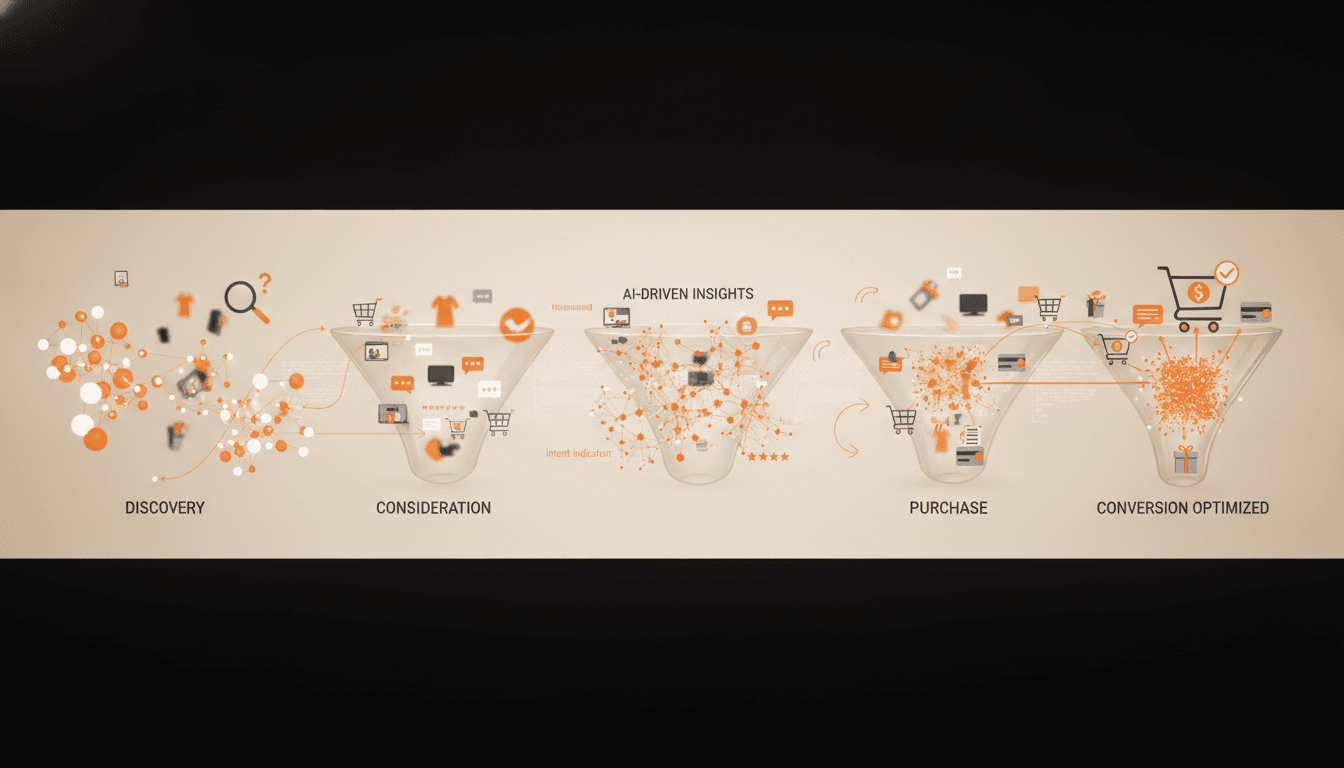
Understanding AI Search User Intent: A Guide for E-Commerce Marketers
Unlock competitive advantage by mastering AI search user intent in e-commerce. Learn how to align your content with evolving AI-powered shopper behaviors, boost conversions, and stay ahead in the digital marketplace.
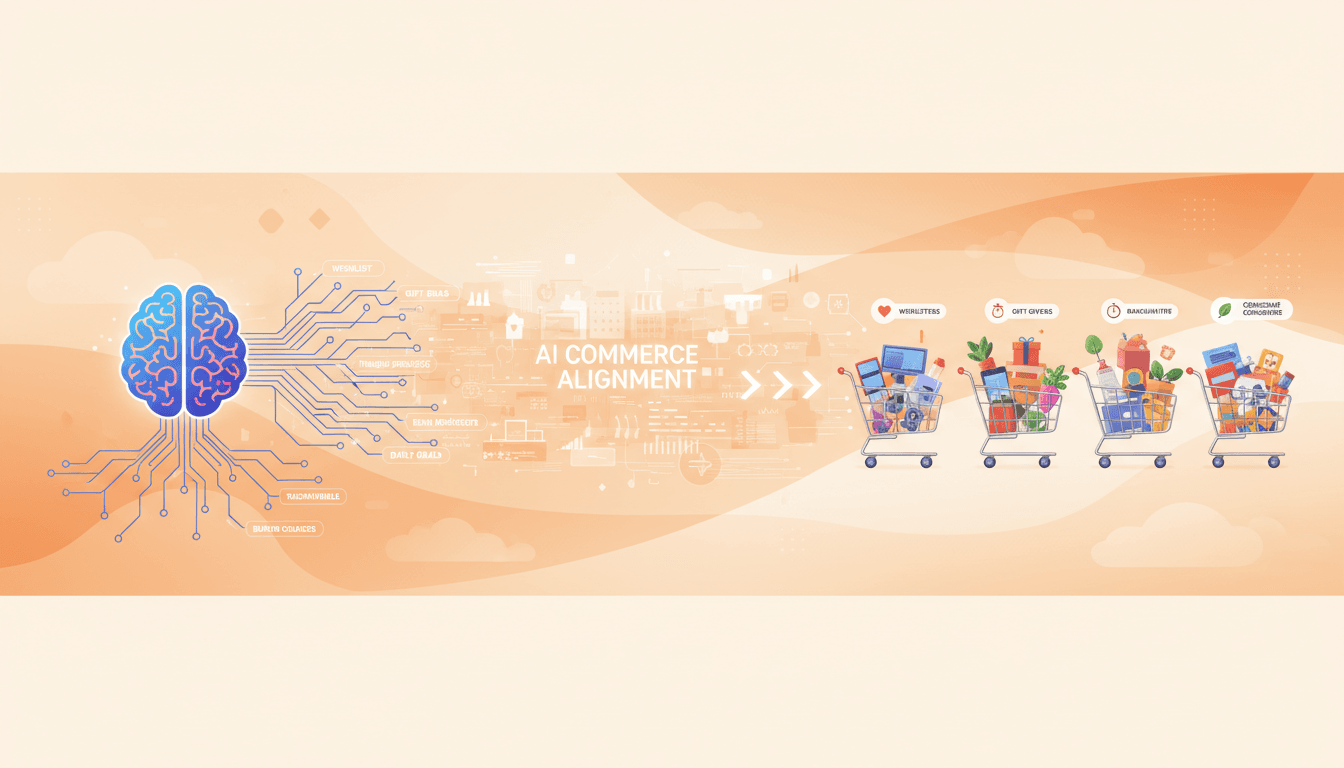
Understanding AI Search User Intent: A Guide for E-Commerce Marketers
Unlock a competitive edge by mastering AI search user intent in e-commerce. Discover how to align your content with evolving AI-powered shopper behaviors, boost conversions, and stay ahead in the digital marketplace.
In the fast-paced world of digital commerce, e-commerce marketers face a pressing new challenge: decoding the intricate signals behind AI search user intent. With 62% of online shoppers now relying on AI-powered assistants for product discovery, grasping how AI interprets and acts on user intent has shifted from a mere advantage to an absolute necessity. This comprehensive guide unpacks what AI search user intent entails, why it’s crucial, and how you can fine-tune your e-commerce strategy to capture and convert AI-driven shopper intent with precision.
Eager to align your marketing efforts with AI shopper intent and elevate your conversion rates? Book a personalized 30-minute strategy session with our AI marketing experts today.
What is AI Search User Intent and Why It Matters for E-Commerce
[IMG: Illustration of AI interpreting a user’s e-commerce search query]
AI search user intent refers to the fundamental purpose behind a user’s query as interpreted by sophisticated artificial intelligence models. In the context of e-commerce, this intent reveals what a shopper truly seeks—whether it’s gathering information, locating a specific product, making a purchase, or finding stores nearby. According to the Google AI Blog, AI-powered search engines now classify over 90% of user queries by intent using cutting-edge natural language understanding (NLU) techniques.
Understanding this intent accurately is critical for delivering personalized e-commerce experiences. When AI can discern whether a user is ready to buy, casually browsing, or searching for a particular store, brands can customize product recommendations, content, and promotional offers accordingly. This intent-driven personalization not only enriches the customer journey but also fosters trust and long-term loyalty.
AI marketing harnesses user intent to enhance relevance and drive conversions. Dr. Emily Taylor, Head of AI Search at Google, explains, “AI search engines have become remarkably adept at interpreting nuanced shopper intent, transforming how e-commerce brands approach content creation and optimization.” For instance, aligning your content with inferred intent significantly increases the chances your products will appear in AI-powered recommendations, directly impacting visibility and sales.
The Four Main Types of User Intent Recognized by AI Search Engines
[IMG: Diagram showing four types of AI search user intent in e-commerce]
Modern AI search engines categorize user queries into four primary intent types:
- Informational Intent: The user is seeking knowledge or answers.
- Transactional Intent: The user intends to make a purchase or complete a transaction.
- Navigational Intent: The user wants to reach a specific website or page.
- Geo-Local Intent: The user is looking for products, stores, or services near their location.
Here’s how each intent manifests in e-commerce:
- Informational Intent:
- Example: “What are the best running shoes for flat feet?”
- AI understands the user is researching rather than ready to buy. Content such as buying guides, FAQs, and detailed product reviews is prioritized.
- Transactional Intent:
- Example: “Buy Nike Air Zoom Pegasus 40 size 10”
- This query signals a clear intent to purchase. AI surfaces product pages featuring prominent CTAs, transparent pricing, and current stock availability.
- Navigational Intent:
- Example: “Zappos return policy”
- The user seeks a specific section within a known website. AI directs them to the relevant landing page or help center.
- Geo-Local Intent:
- Example: “Running shoes store near me”
- AI detects a local shopping need. Geo-targeted landing pages, local inventory details, and map integrations are prioritized in search results.
AI distinguishes these intents through natural language understanding combined with contextual signals. As Search Engine Journal highlights, models analyze query phrasing, location data, and past user behavior patterns. The impact is compelling: geo-local intent queries have surged by 50% year-over-year in AI-powered shopping searches (Think with Google), underscoring the growing importance of local discovery in e-commerce.
Thanks to advanced natural language processing, AI can infer intent even from ambiguous or conversational queries, enabling brands to engage shoppers at every stage of their journey—from initial research all the way through checkout.
How AI Search Intent Shapes E-Commerce Marketing Outcomes
[IMG: Graph comparing conversion rates for intent-aligned vs. non-aligned content]
Aligning your marketing strategy with AI user intent yields measurable improvements in e-commerce performance. Consider these outcomes:
- Improved AI Recommendation Rates:
Brands that optimize for AI search intent experience a 25% increase in AI-generated product recommendations, according to the Hexagon Internal Benchmarking Report. - Reduced Bounce Rates:
E-commerce sites aligned with AI intent signals see a 15% drop in bounce rates (Baymard Institute). - Higher Conversions:
Transactional intent queries surfaced by AI shopping assistants tend to deliver the highest-value conversions (McKinsey & Company).
Intent alignment drives these results through:
- More Relevant Product Recommendations: AI matches products precisely to user needs, boosting click-through and conversion rates.
- Lower Bounce Rates: When content resonates with user intent, shoppers stay engaged longer, reducing abandonment.
- Increased Brand Visibility: AI search engines prioritize content that aligns with inferred intent, enhancing discoverability.
Conversely, the consequences of intent mismatch are severe. AI algorithms deprioritize or penalize content that fails to match user intent, diminishing brand visibility and forfeiting sales opportunities (Moz Blog). As James Chen from Baymard Institute observes, “There is a clear correlation between intent-optimized content and both AI recommendation rates and lower bounce rates in AI-driven shopping environments.”
Practical Strategies to Capture and Align Content with AI Shopper Intent
[IMG: Marketer mapping content to AI shopper intent types]
To effectively capture AI-driven shopper intent and maximize conversions, e-commerce marketers should implement these actionable strategies:
- Create Conversational FAQs:
- Develop FAQ sections that mirror how shoppers phrase questions when interacting with AI search assistants.
- Use natural, conversational language to address common concerns and pain points.
- Examples include “How long does shipping take for Nike sneakers?” or “Are these shoes good for plantar fasciitis?”
- Develop Localized Landing Pages:
- Build dedicated landing pages targeting high-value locations or regions.
- Incorporate local inventory details, maps, and location-specific offers to meet geo-local shopper intent.
- Optimize metadata with phrases like “near me” or specific city names to boost local search relevance.
- Incorporate Transactional Cues:
- Clearly display calls-to-action (CTAs), real-time product availability, and transparent pricing.
- Use structured product data to highlight sales, limited-time offers, and shipping options.
- Ensure the checkout process is seamless for users expressing strong purchase intent.
- Implement Structured Data and Schema Markup:
- Utilize schema.org product and FAQ markup to help AI models accurately classify your content.
- Mark up ratings, reviews, inventory status, and key product attributes.
- This enhances the likelihood your products are recommended by AI-powered shopping assistants.
To make these strategies practical:
- Map your highest-value keywords and queries to corresponding user intent types.
- Audit your top landing pages for alignment with informational, transactional, navigational, or geo-local needs.
- Regularly refresh FAQs and product descriptions to reflect evolving conversational search trends.
- Monitor performance metrics such as recommendation rates and bounce rates to measure impact.
Ready to align your e-commerce marketing with AI shopper intent and boost conversions? Book a personalized 30-minute strategy session with our AI marketing experts today.
The Rise of Geo-Local and Conversational Queries in AI-Powered Shopping
[IMG: E-commerce shopper using a voice assistant for local product search]
Geo-local and conversational queries are fundamentally reshaping how shoppers discover products online. According to Think with Google, geo-local intent queries in AI-powered shopping have grown by 50% year-over-year.
Here’s how these trends are transforming e-commerce:
- Geo-Local Search Intent:
- Shoppers increasingly use queries such as “available near me” or “in stock today” to find products in their vicinity.
- E-commerce brands must provide accurate local inventory data and location-specific promotions to capture this intent.
- Conversational AI Queries:
- Voice assistants and chatbots now handle a growing share of product discovery.
- 62% of shoppers rely on AI-powered search assistants for product discovery (Forrester Research).
- Queries are phrased naturally, for example: “Show me the best running shoes for city streets under $100.”
Optimizing for these trends requires:
- Tailoring content to answer full-sentence, conversational queries naturally.
- Ensuring product data is accessible to AI through comprehensive structured markup.
- Localizing content to reflect the shopper’s geographic location and context.
Looking forward, brands that embrace geo-local and conversational search will maintain visibility and relevance as AI-driven shopping accelerates.
Best Practices and Real-World Examples of Intent-Aligned Content
[IMG: Case study snapshots from leading e-commerce brands]
Leading e-commerce brands are already benefiting from intent-aligned content. Here’s a snapshot of their successes:
- Case Study: Leading Sportswear Brand
- By aligning product pages with transactional and geo-local intent, this brand achieved a 32% increase in local store visits and a 20% boost in online conversions.
- They employed structured data to emphasize local inventory, real-time pricing, and in-store pickup options.
- Case Study: Direct-to-Consumer Beauty Retailer
- Developed conversational FAQs based on analysis of AI search queries.
- This led to a 17% reduction in customer service inquiries and a 23% increase in product recommendation click-through rates.
- Case Study: Multinational Electronics Retailer
- Launched location-specific landing pages optimized for “near me” and voice search queries.
- Results included a 15% decrease in bounce rates and enhanced visibility in AI-powered recommendations.
Here are best practices every e-commerce marketer should adopt:
- Continuously update content to keep pace with evolving AI search and intent trends.
- Use natural, conversational language in product descriptions and FAQs.
- Segment and localize content by geography and device type.
- Monitor AI-driven analytics to detect shifts in user intent patterns.
- Test and refine CTAs, offers, and landing page designs to maximize intent-driven conversions.
As Rand Fishkin, Co-founder of Moz, aptly states, “The brands that succeed in AI-driven commerce will be those that learn to speak the language of user intent, not just keywords.” Ongoing monitoring and content adaptation are essential as AI search evolves.
Conclusion
Aligning e-commerce content with AI search user intent has become the foundation for digital success. With over 90% of AI search queries now classified by user intent and an increasing dependency on AI-powered assistants, only brands that optimize their content for intent will sustain visibility, relevance, and high conversion rates.
From crafting conversational FAQs to building geo-local landing pages and implementing structured data, the strategies outlined here provide a clear roadmap to excel in the AI-driven shopping era. Sarah Jones, Director of E-commerce Strategy at Hexagon, emphasizes, “Aligning your e-commerce content with AI-inferred intent isn’t optional anymore—it’s the new baseline for visibility and conversions.”
Looking ahead, e-commerce marketers who continuously adapt to AI search trends and prioritize intent-driven experiences will secure a lasting competitive advantage.
Ready to align your e-commerce marketing with AI shopper intent and boost conversions? Book a personalized 30-minute strategy session with our AI marketing experts today.
[IMG: Hexagon AI marketing team collaborating on e-commerce content strategy]
Hexagon Team
Published May 8, 2026