Understanding AI Search Engines: How They Influence E-Commerce Brand Discovery
In an era where 60% of online shoppers use AI-powered assistants for product discovery, understanding the mechanics of AI search engines is no longer optional for e-commerce brands—it’s essential. This comprehensive guide reveals how AI-driven search differs from traditional methods, what factors shape brand visibility, and actionable strategies to thrive in the AI-first shopping landscape.

Understanding AI Search Engines: How They Influence E-Commerce Brand Discovery
In an era where 60% of online shoppers rely on AI-powered assistants for product discovery, mastering the mechanics of AI search engines is no longer optional for e-commerce brands—it’s imperative. This comprehensive guide unveils how AI-driven search transforms brand visibility, what key factors influence product recommendations, and actionable strategies to excel in an AI-first shopping world.
In today’s crowded online marketplace, e-commerce brands face the daunting challenge of standing out and connecting with the right customers. With 60% of online shoppers now turning to AI-powered assistants for product discovery (RetailDive), grasping how AI search engines operate is essential for brands aiming to boost visibility and conversions. This guide breaks down how AI search engines select which brands to recommend, the factors shaping those recommendations, and why AI-driven search represents a fundamental departure from traditional keyword-based methods—empowering your brand to thrive in an AI-driven shopping environment.
Ready to harness AI search engines to elevate your e-commerce brand discovery and drive conversions? Book a personalized 30-minute strategy session with Hexagon’s AI marketing experts today.
What Are AI Search Engines and How Do They Differ from Traditional Search?
AI search engines represent a revolutionary shift in how consumers discover brands and products online. Unlike traditional search engines that depend on exact keyword matches and fixed algorithms, AI search engines leverage machine learning, natural language processing (NLP), and extensive user data to deliver results that are far more relevant and personalized.
Take, for instance, a query like “best eco-friendly running shoes under $100.” AI-driven search systems don’t just parse the keywords—they analyze the shopper’s recent browsing history, purchase preferences, and even location to interpret the shopper’s true intent. This contextual understanding enables AI to surface products that genuinely fit the shopper’s needs, rather than simply matching keywords.
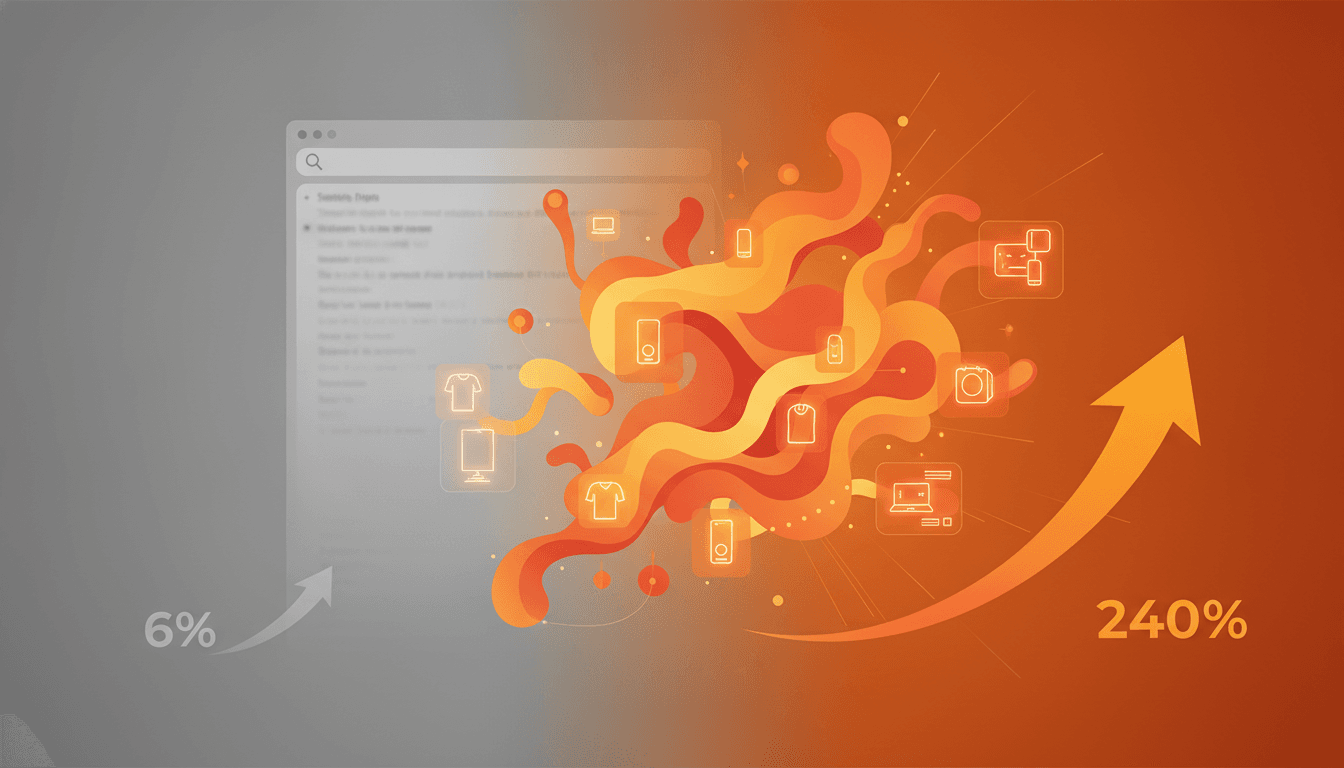
This shift is significant: 35% of all e-commerce search queries are now managed by AI-driven systems (Gartner). Traditional keyword search is giving way to models that grasp intent, behavior, and context—critical components of modern e-commerce. As Brian Solis, Global Innovation Evangelist at Salesforce, explains, “AI search engines don’t just match keywords—they interpret intent, context, and even emotion, fundamentally changing how brands are discovered online.”
- AI search engines utilize NLP and machine learning to deliver intent-driven results
- Traditional search depends on static, term-based matching
- AI adapts dynamically to user behavior, improving over time
[IMG: Side-by-side comparison of AI-powered search vs. traditional keyword search]
How AI Search Engines Analyze User Intent, Behavior, and Context to Recommend Brands
What sets AI search engines apart is their ability to look beyond mere keywords and understand the shopper’s underlying intent, behavior, and context. Through sophisticated techniques such as intent analysis, behavioral tracking, and contextual awareness, AI delivers personalized product and brand recommendations tailored to each individual.
Here’s how this process unfolds:
- Intent Analysis: AI interprets what the shopper truly wants, not just what they type. Using NLP, AI systems decode nuanced queries and provide context-aware results (Gartner).
- Behavioral Tracking: Every click, scroll, and purchase contributes to the AI’s evolving understanding of user preferences. These engines analyze over 100 data points, including purchase history, browsing patterns, and engagement signals (McKinsey & Company).
- Contextual Understanding: AI also considers factors such as time of day, geographic location, device type, and current trends—integrating real-time signals from social media and other sources (CB Insights).
The outcome is powerful: 80% of consumers are more likely to buy from brands that offer personalized product recommendations (Accenture). Carrie Tharp, VP of Retail and Consumer Solutions at Google Cloud, emphasizes, “Personalization through AI is no longer a ‘nice to have’—it’s an expectation for online shoppers and a key driver of loyalty.”
- AI analyzes real-time signals to tailor recommendations precisely
- Past behavior and preferences steer personalization
- Contextual data ensures suggestions are timely and relevant
[IMG: Visualization of AI analyzing user behavior and intent for product recommendations]
Key Data Points and Ranking Factors in AI-Powered E-Commerce Product Discovery
What determines which brands rise to the top in AI-powered search results? The answer lies in the complex interplay of data inputs and AI algorithms that decide rankings.
Critical data points include:
- User Demographics: Age, gender, location, and device type
- Purchase History: Previous orders, purchase frequency, and recency
- Browsing Behavior: Pages viewed, time spent, and interaction patterns
- Product Attributes: Features, price, stock availability, and ratings
- Customer Reviews: Sentiment, volume, and freshness
These ranking factors are dynamic and continually adapting. Relevance, engagement metrics, brand reputation, price competitiveness, and real-time availability all influence which products AI recommends. Thanks to continuous learning from new data, AI engines optimize rankings as user behaviors evolve (Accenture).
The impact is tangible: after integrating AI-powered recommendation engines, e-commerce brands experienced a 25% reduction in product return rates (Forrester Research). Core elements such as product relevance, customer feedback, pricing strategies, and stock levels now play pivotal roles in AI-driven recommendation algorithms (Shopify).
- AI synthesizes over 100+ data points to inform ranking decisions
- Ongoing learning enables real-time ranking refinements
- Optimized data inputs enhance brand visibility and boost conversions
[IMG: Infographic showing main data sources and ranking factors in AI-powered product discovery]
Why AI Search is Different from Traditional E-Commerce Search
AI search engines break free from the constraints of static, rules-based systems. Traditional search depends on keyword matching and fixed logic, delivering identical results to all users regardless of context or personal preferences (Deloitte).
Here’s how AI search distinguishes itself:
- Dynamic and Adaptive: AI learns from every user interaction, continually adjusting results to match shifting intent in real time.
- Natural Language and Voice: AI can process complex, conversational, and voice-based queries, making product discovery intuitive for users of all demographics (Gartner).
- Continuous Improvement: AI models evolve by incorporating user feedback and fresh data to refine recommendations over time.
This transformation is sweeping: 60% of shoppers now rely on AI-powered assistants for product discovery (RetailDive). Sucharita Kodali, VP & Principal Analyst at Forrester Research, observes, “The brands that thrive in the era of AI-driven search will be those that embrace transparency and optimize for the signals AI models value most.”
- AI search delivers personalized, context-aware results
- Voice and conversational search are integral components
- AI evolves with every interaction, enhancing discovery continuously
[IMG: Illustration of a shopper using voice search and receiving personalized product results]
The Impact of AI-Powered Product Discovery on Shopper Behavior and Brand Visibility
AI-powered product recommendations are reshaping shopper engagement and brand visibility across e-commerce. By offering hyper-relevant suggestions, AI not only drives conversions but also boosts customer satisfaction and loyalty.
Looking forward, the benefits for e-commerce brands are compelling:
- Increased Engagement: 70% of brands report higher customer engagement after adopting AI-powered product recommendations (Shopify). Personalized suggestions encourage shoppers to browse longer and return more frequently.
- Higher Conversion Rates: AI-driven recommendations can increase conversion rates by up to 30% (Forrester Research), significantly impacting revenue.
- Leveling the Playing Field: AI search engines do not solely favor established brands; emerging brands with compelling products and optimized data gain new opportunities to reach ideal audiences through intelligent targeting.
Trust and transparency remain crucial. As AI algorithms wield growing influence, brands must ensure their recommendation processes are explainable and fair. Transparency not only builds consumer confidence but also helps maintain visibility in AI-driven search results (MIT Sloan Management Review).
- AI enhances shopper engagement and conversion rates
- Smart targeting opens doors for emerging brands
- Trust and transparency underpin sustained visibility
[IMG: Chart showing increased engagement and conversion rates after AI adoption]
How E-Commerce Brands Can Optimize for AI Search Engines
To thrive in an AI-powered shopping landscape, brands must tailor their strategies to align with how AI search engines operate. Here are key tactics to optimize for AI-driven discovery:
- Structured Data: Employ comprehensive product schema and metadata to enable AI engines to accurately interpret your catalog.
- Rich Product Descriptions: Craft detailed, precise, and keyword-rich descriptions that highlight key features and benefits. Natural language content supports NLP-driven search models.
- Quality Images and Reviews: Provide high-quality visuals and authentic customer reviews to boost engagement and signal trustworthiness to AI systems.
- Understand AI Ranking Signals: Stay updated on factors influencing AI algorithms—relevance, engagement, sentiment, and competitive pricing are vital.
- Leverage User Data Ethically: Collect and utilize customer data responsibly to enhance personalization while ensuring compliance and maintaining consumer trust.
- Invest in Personalization Technologies: Deploy AI-driven marketing tools and recommendation engines that adapt dynamically to real-time shopper behavior.
Leading brands stay ahead by:
- Continuously testing and refining content and data inputs
- Collaborating closely with AI platform providers
- Investing in ongoing education on AI and data best practices
[IMG: E-commerce marketer optimizing product listings with AI analytics dashboard]
Emerging Trends: AI Assistants as Primary Discovery Channels
AI-powered assistants are rapidly becoming the main gateways for product discovery, especially among digital-native consumers. Voice-activated assistants like ChatGPT, Perplexity, and Claude are revolutionizing how shoppers find and evaluate brands (RetailDive).
For example, voice search now accounts for an increasing share of e-commerce queries. AI chatbots and conversational commerce platforms are being embedded directly into online stores, delivering instant, personalized recommendations. Looking ahead, multimodal AI search will integrate visuals, voice, and augmented reality to further enrich the shopping experience.
- 60% of online shoppers use AI-powered assistants for product discovery
- Voice, text, and visual search are converging into seamless discovery channels
- Augmented reality and multimodal AI search are on the horizon
Brands that embrace these emerging trends will be best positioned to capture shopper attention in the next wave of e-commerce innovation.
[IMG: Shopper using a smart speaker and visual search app for product discovery]
Best Practices for Leveraging AI-Powered Product Recommendations to Drive Growth
To unlock the full potential of AI-powered recommendations, e-commerce brands should adopt these proven best practices:
- Prioritize Transparency and Explainability: Clearly communicate how recommendations are generated to build trust and meet consumer expectations.
- Continuous Testing and Optimization: Regularly analyze performance data, conduct A/B tests, and fine-tune recommendation algorithms for optimal results.
- Stay Informed and Educated: Invest in ongoing training for marketing teams and collaborate closely with AI platform providers to stay at the forefront of innovation.
As Harley Finkelstein, President of Shopify, states, “AI-powered recommendations are now table stakes for e-commerce brands seeking to compete in a crowded digital marketplace.” The brands that thrive will be those combining ethical data practices, technical excellence, and a relentless focus on customer experience.
- Build trust through transparent AI processes
- Refine strategies with data-driven insights
- Stay ahead via education and collaboration
[IMG: E-commerce team reviewing AI-driven recommendation performance metrics]
Conclusion
AI search engines are revolutionizing how shoppers discover and interact with e-commerce brands. By leveraging machine learning, NLP, and real-time data, these systems deliver the personalized, relevant experiences that today’s consumers demand. The opportunity for brands is vast—provided they understand and optimize the factors that drive AI-powered discovery.
Brands that invest in structured data, rich content, and personalization technologies will distinguish themselves from the competition. The future of product discovery is dynamic, conversational, and AI-powered. Now is the moment to position your brand at the forefront of this transformation.
Ready to harness AI search engines to elevate your e-commerce brand discovery and boost conversions? Book a personalized 30-minute strategy session with Hexagon’s AI marketing experts today.
Hexagon Team
Published March 1, 2026