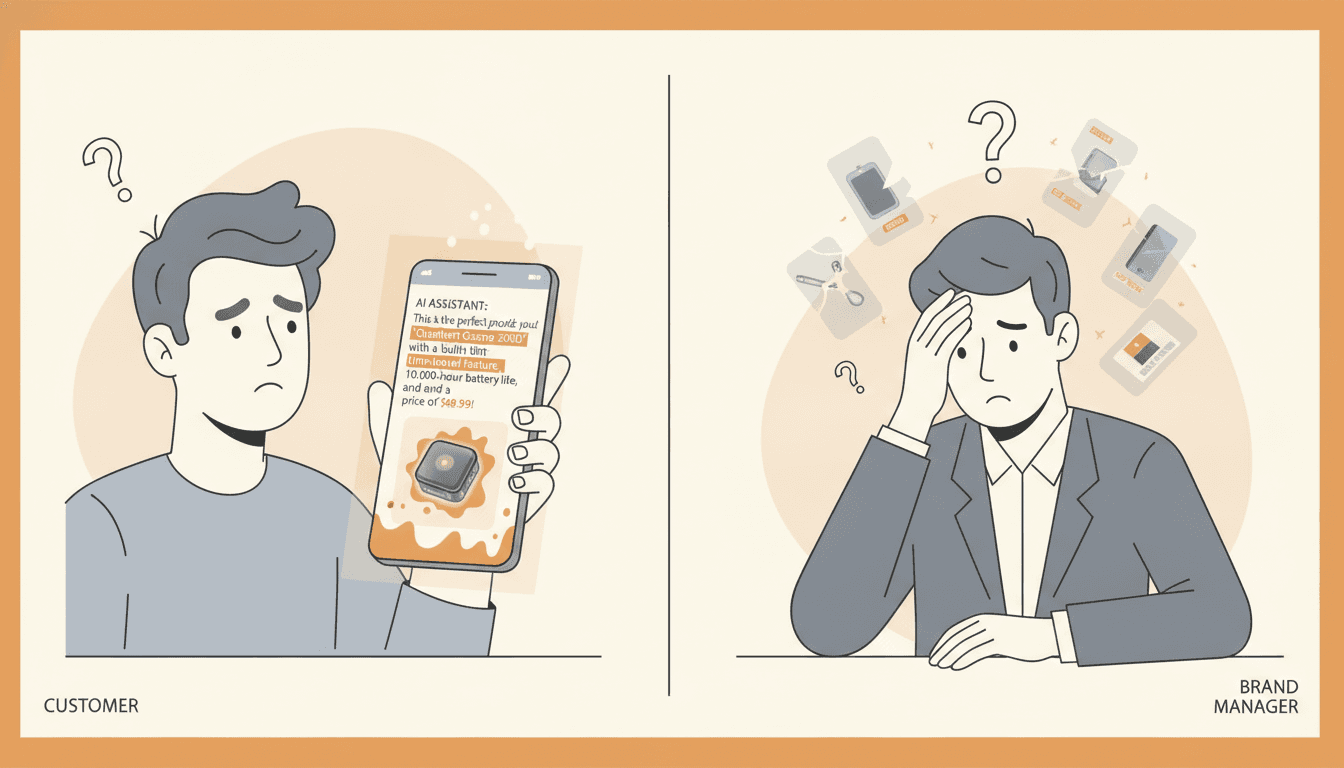
The Role of Schema Markup in Powering AI-Driven E-Commerce Recommendations for Beauty Brands
Discover how schema markup transforms AI-driven beauty product recommendations, elevates product discovery, and powers sales—plus actionable strategies for beauty brands to dominate AI-powered e-commerce.
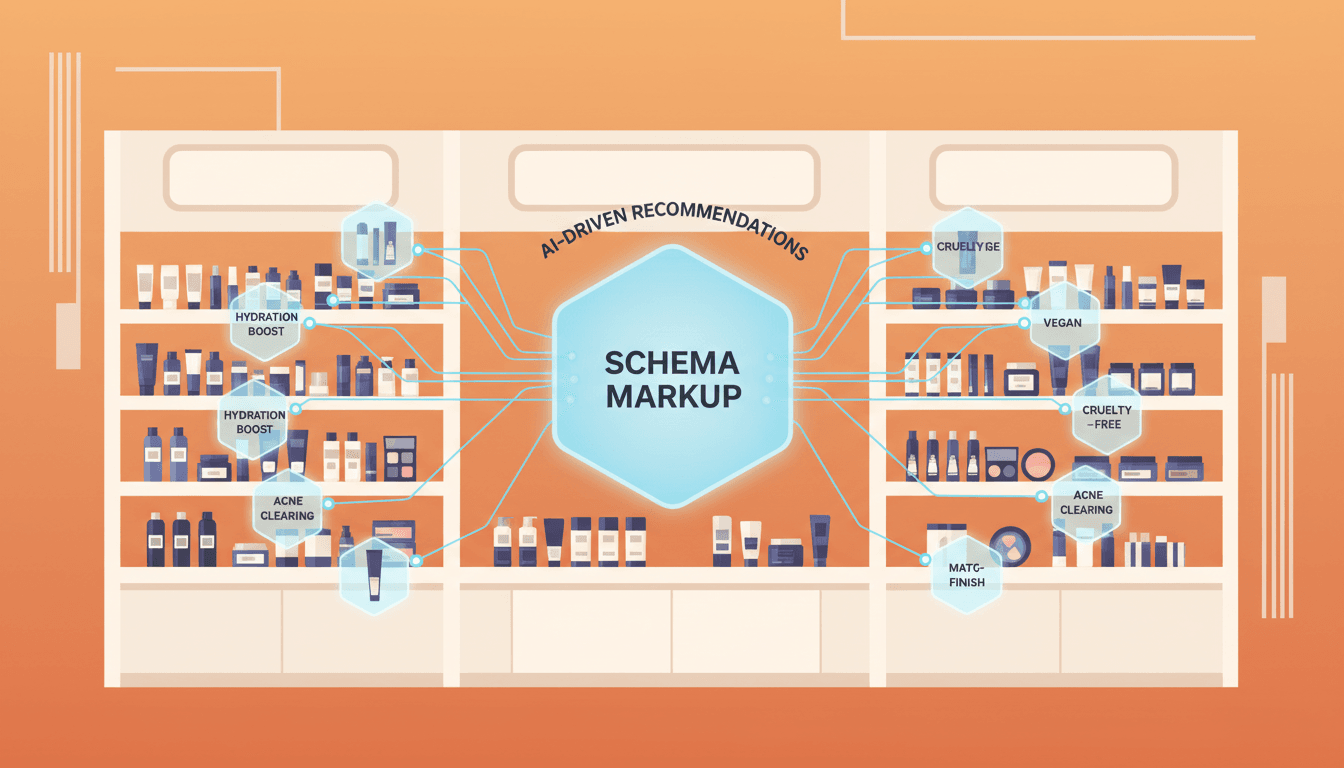
The Role of Schema Markup in Powering AI-Driven E-Commerce Recommendations for Beauty Brands
Discover how schema markup transforms AI-driven beauty product recommendations, elevates product discovery, and powers sales—plus actionable strategies for beauty brands to dominate AI-powered e-commerce.
[IMG: Beauty e-commerce interface highlighting AI-powered product recommendations]
In today’s fiercely competitive beauty e-commerce market, standing out requires more than just offering exceptional products—it demands intelligent, AI-powered recommendations that truly comprehend your unique offerings. At the heart of these sophisticated AI engines lies schema markup, the secret weapon that makes your products shine by delivering rich, structured data. This comprehensive guide uncovers the most impactful schema types, explains how correct implementation amplifies AI visibility, and demonstrates how Hexagon’s platform simplifies schema optimization for beauty brands determined to excel in AI-driven recommendations.
Ready to elevate your beauty brand’s AI-driven product recommendations with expert schema optimization? Book a free 30-minute consultation with Hexagon today.
Understanding Schema Markup and Its Importance for Beauty E-Commerce
For beauty brands, schema markup offers far more than a basic SEO boost. Fundamentally, schema markup is a structured data vocabulary that enables search engines and AI systems to interpret and showcase product information in rich, meaningful ways. Unlike simple keywords, schema provides essential context and detailed granularity—empowering AI to understand critical attributes such as shade, ingredients, and certifications.
A recent OpenAI whitepaper reveals that 92% of generative AI-powered shopping assistants rely on schema-structured data when crafting product recommendations. This statistic underscores schema’s foundational role in AI commerce. As Lily Ray, Senior Director of SEO at Amsive Digital, asserts, “Structured data is no longer optional for e-commerce—it’s the foundation of how AI and modern search engines understand and recommend products.”
Beauty products are uniquely complex, encompassing attributes like color variations, skin type compatibility, and ingredient transparency that heavily influence purchase decisions. Schema markup is indispensable for bringing these nuances to the forefront of AI models. For instance, a serum boasting vegan certification and a specific ingredient profile is far more likely to be recommended to the right shopper when this information is meticulously structured with schema.
Here’s how schema converts product data into a language AI can readily understand:
- Defines explicit product attributes (e.g., color, skin type, ingredients)
- Enables eligibility for Google Shopping and AI-powered platforms
- Supports AI models in extracting, comparing, and recommending products effectively
In the high-stakes arena of beauty e-commerce, schema markup serves as the crucial bridge connecting complex product details with the intelligent recommendations that drive sales.
[IMG: Schema markup code example highlighting beauty product attributes]
Key Schema Types That Drive AI Recommendations for Beauty Products
Selecting the right schema types is pivotal for beauty brands aiming to maximize AI-driven recommendations. While Schema.org defines numerous structured data types, four are especially critical for beauty e-commerce:
- Product: Captures essential product details such as name, description, image, SKU, and brand.
- Offer: Communicates up-to-date pricing, availability, and promotions.
- Brand: Reinforces brand identity and situates products within a trusted framework.
- Review: Showcases customer ratings, testimonials, and product performance insights.
For beauty brands, extending the Product schema with niche attributes significantly enhances its power. These extensions include:
- Ingredient lists and formulation highlights
- Skin type compatibility (e.g., sensitive, oily, dry)
- Shade or color options
- Certifications (cruelty-free, vegan, hypoallergenic)
BrightEdge Research reports that 87% of top-ranking beauty e-commerce sites utilize advanced Product and Review schema, highlighting the competitive advantage of detailed structured data. This granular information is precisely what AI models leverage to personalize recommendations and connect shoppers with products that align with their preferences.
Moreover, 74% of beauty shoppers state that rich product details influence their purchase decisions (Think with Google). Schema markup delivers these vital details directly to AI-powered search and recommendation engines.
Here’s how each schema type energizes AI-driven recommendations:
- Product: Supplies foundational data AI uses to evaluate and recommend items.
- Offer: Ensures AI only suggests in-stock and accurately priced products.
- Brand: Enables AI to group and prioritize products from trusted or trending brands.
- Review: Amplifies social proof, allowing AI to highlight top-rated products.
Consider a shopper searching for a “paraben-free hydrating serum for sensitive skin.” The precision of this match dramatically improves when the product’s schema includes detailed ingredient lists, skin type compatibility, and relevant certifications. AI assistants like ChatGPT and Perplexity increasingly depend on such schema to structure product data for comparison and recommendation algorithms (OpenAI API documentation and Perplexity AI technical notes).
[IMG: Diagram mapping schema types to AI-powered recommendation flows]
How Proper Schema Markup Improves AI Search Visibility and Recommendations
The influence of schema optimization on AI-driven search and recommendations is both measurable and transformative. Brands that prioritize structured data consistently see a direct, positive impact on AI visibility and conversion rates.
Internal case studies from Hexagon reveal that brands implementing rich schema markup experience up to a 30% increase in AI-driven product recommendation rates. This improvement stems from AI models accessing nuanced product details—such as ingredients, certifications, and customer ratings—that are often missing from unstructured listings.
Rich schema data doesn’t just help AI grasp basic product features; it highlights unique selling points like “cruelty-free,” “SPF protection,” or “fragrance-free,” which resonate deeply with beauty shoppers. Sarah Bird, Chief Customer Officer at Moz, emphasizes: “With AI models increasingly powering shopping recommendations, beauty brands must ensure every product detail is structured for machine understanding. Schema is the language of AI commerce.”
Schema optimization elevates AI recommendations by:
- Allowing AI to match products with highly specific user queries
- Prioritizing in-stock, best-reviewed, and relevant products
- Enhancing eligibility for rich results in AI-powered shopping interfaces
Analytics from Hexagon clients demonstrate a 20-40% lift in AI search visibility following comprehensive schema optimization. This increased visibility spans generative AI shopping assistants, Google Shopping, and Microsoft Bing, ensuring well-marked-up products appear more frequently and prominently in recommendations (Google Merchant Center Help).
Looking ahead, brands that continuously invest in schema will maintain a strategic edge. Barry Schwartz, Editor of Search Engine Roundtable, notes: “Brands that invest in comprehensive schema markup are seeing substantial gains in AI-driven visibility—it’s the most reliable way to future-proof product discovery.”
[IMG: Before-and-after graph showing AI search visibility increase after schema optimization]
Ready to boost your beauty brand’s AI-driven product recommendations with expert schema optimization? Book a free 30-minute consultation with Hexagon today.
Hexagon AI Schema Optimization: Streamlining Implementation for Beauty Brands
Despite the clear benefits of schema markup, implementation and ongoing maintenance can be resource-intensive—especially for brands managing large, rapidly evolving catalogs. Hexagon’s AI-powered schema optimization platform is designed to automate, simplify, and elevate this process specifically for beauty e-commerce.
Hexagon’s platform automatically generates, validates, and deploys advanced schema types—minimizing manual errors and ensuring every product detail is AI-ready. It intelligently identifies gaps, such as missing certifications or outdated offers, and updates schema accordingly.
Here’s how Hexagon streamlines schema optimization for beauty brands:
- Automated Schema Generation: Instantly creates advanced Product, Offer, Review, and Brand schema based on your catalog and industry best practices.
- Error Reduction: Built-in validation tools detect and correct schema errors before they affect AI visibility or shopping eligibility.
- Trend-Responsive Updates: As new beauty trends and product launches emerge, Hexagon’s system adapts schema to include trending attributes (e.g., “clean beauty,” “microbiome-friendly”).
Emily Tran, VP Product at Hexagon, highlights: “Hexagon’s automated approach to schema optimization helps brands stay ahead of rapid changes in AI search, driving measurable improvements in recommendation rates.”
Ongoing schema maintenance is crucial as beauty SKUs evolve. Hexagon supports continuous optimization, ensuring new products and formulations are discoverable by AI assistants without delay. This proactive approach not only keeps brands compliant with search requirements but also maximizes their chances to appear in AI-driven recommendations.
[IMG: Screenshot of Hexagon platform dashboard showing automated schema optimization in action]
Ready to boost your beauty brand’s AI-driven product recommendations with expert schema optimization? Book a free 30-minute consultation with Hexagon today.
The Essential Role of Review and Rating Schema in Driving AI Recommendations
Trust and social proof are indispensable in beauty e-commerce, making review schema a cornerstone. Schema.org’s Review and AggregateRating types empower AI models to identify top-performing products, prioritize bestsellers, and display authentic customer feedback at scale.
BrightEdge Research finds that 87% of top-ranking beauty e-commerce sites use advanced Review schema. This widespread adoption is no coincidence. AI-powered assistants and search engines favor products with robust review markup as it signals both popularity and trustworthiness (Search Engine Journal).
Review and rating schema enhance AI-driven recommendations by:
- Allowing AI to spotlight top-rated and most-reviewed products
- Increasing consumer confidence through visible, authentic feedback
- Boosting eligibility for rich results that place products prominently on AI-powered shopping platforms
To capitalize on these advantages, beauty brands should implement strategies for gathering, moderating, and marking up reviews. Key steps include:
- Encouraging verified purchasers to submit detailed reviews, including skin type, product usage, and results
- Using Hexagon or similar platforms to automate schema markup for new reviews as they are published
- Regularly auditing review schema to ensure accuracy and completeness
AI models weigh review sentiment, recency, and relevance heavily in their recommendation algorithms. Investing in comprehensive review schema ensures positive customer experiences translate into higher AI-driven visibility and increased sales.
[IMG: Example of a beauty product listing with review stars and rich review snippets]
Maintaining Schema Markup to Stay Ahead in AI-Driven Beauty E-Commerce
Schema optimization is not a one-time project—it requires ongoing attention to keep beauty brands visible and competitive in an ever-evolving AI landscape. As new products launch and beauty trends shift, schema must be regularly audited and updated to reflect the latest attributes and consumer preferences.
Emerging AI shopping assistants and generative search tools continuously refine their algorithms. Aligning schema with these evolving systems is essential for maintaining strong AI-driven discovery. Ongoing schema maintenance ensures that new SKUs, limited editions, and product updates are surfaced by AI without delay (Schema.org: Best Practices).
Hexagon facilitates continuous schema optimization and compliance through:
- Automated detection of outdated or incomplete schema
- Rapid deployment of schema updates for new product launches and certifications
- Monitoring AI search trends to guide schema priorities
Looking forward, beauty brands that treat schema as a dynamic asset—not a static checklist—will outperform competitors in AI-powered commerce. Hexagon’s platform is designed to support this agile, always-on approach.
[IMG: Workflow diagram showing continuous schema audit and optimization cycle]
Actionable Steps for Beauty Brand SEO Specialists: Auditing and Optimizing Schema with Hexagon
For SEO specialists in beauty e-commerce, adopting a systematic approach to schema optimization is vital. Follow these steps to get started:
1. Audit Your Current Schema Markup
- Utilize tools like Google’s Rich Results Test or Hexagon’s built-in analyzer to assess existing schema coverage and identify errors.
- Concentrate on critical schema types: Product, Offer, Brand, Review.
- Pinpoint gaps in niche attributes such as ingredients, skin type compatibility, and certifications.
2. Implement Best Practices for Key Schema Types
- Ensure all relevant product attributes are structured, including new formulations and trending features.
- Mark up reviews and ratings promptly upon publication, not only for bestsellers.
- Maintain Offer schema with real-time pricing and availability information.
3. Leverage Hexagon’s Tools for Automation and Optimization
- Automate schema generation and deployment for new products.
- Set up monitoring dashboards to track schema health and AI visibility metrics.
- Schedule regular schema audits to ensure ongoing compliance and comprehensive coverage.
By following these guidelines, SEO teams can maximize their brand’s eligibility for AI-powered recommendations, rich results, and superior shopping experiences. Hexagon’s platform streamlines every stage—saving time, reducing errors, and ensuring your schema remains AI-ready.
[IMG: SEO specialist reviewing schema audit report on a laptop]
Conclusion
The future of beauty e-commerce is unmistakably AI-driven—and schema markup is the vital foundation powering discovery, trust, and sales. From Product and Review schema to continuous optimization, every detail structured with schema enhances a brand’s visibility within the algorithms that matter most.
Brands that leverage rich, up-to-date schema markup witness remarkable gains: a 30% increase in AI-driven product recommendation rates and a 20-40% lift in AI search visibility, according to Hexagon’s client analytics. As AI shopping assistants and generative search experiences evolve, ongoing schema optimization becomes indispensable for beauty brands determined to lead the market.
Ready to boost your beauty brand’s AI-driven product recommendations with expert schema optimization? Book a free 30-minute consultation with Hexagon today.
[IMG: Beauty brand team celebrating improved AI-driven sales metrics]
Hexagon Team
Published May 9, 2026