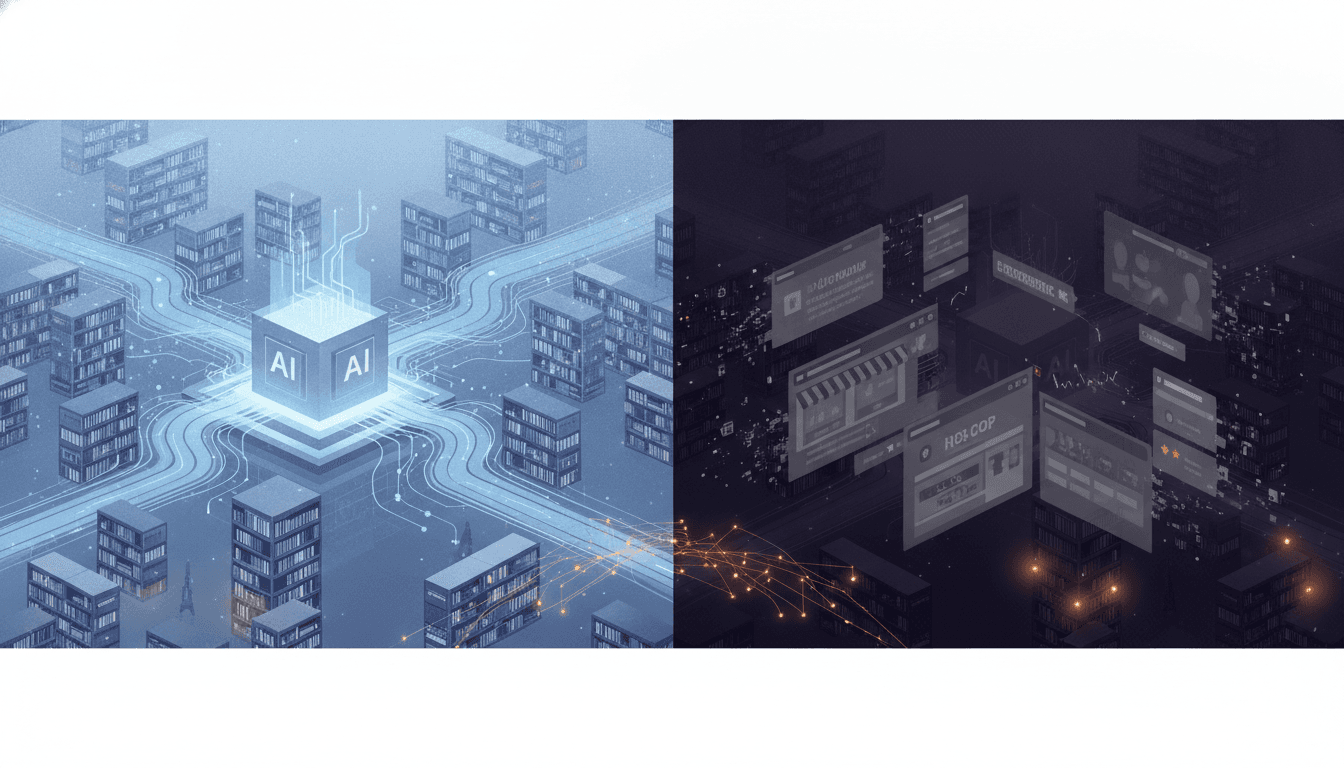
The AI Shopping Funnel: How Consumers Buy Through AI
Artificial Intelligence is revolutionizing online shopping by delivering personalized, efficient, and trusted purchase experiences. Learn how the AI shopping funnel is reshaping the e-commerce landscape—and what brands must do to stay ahead.
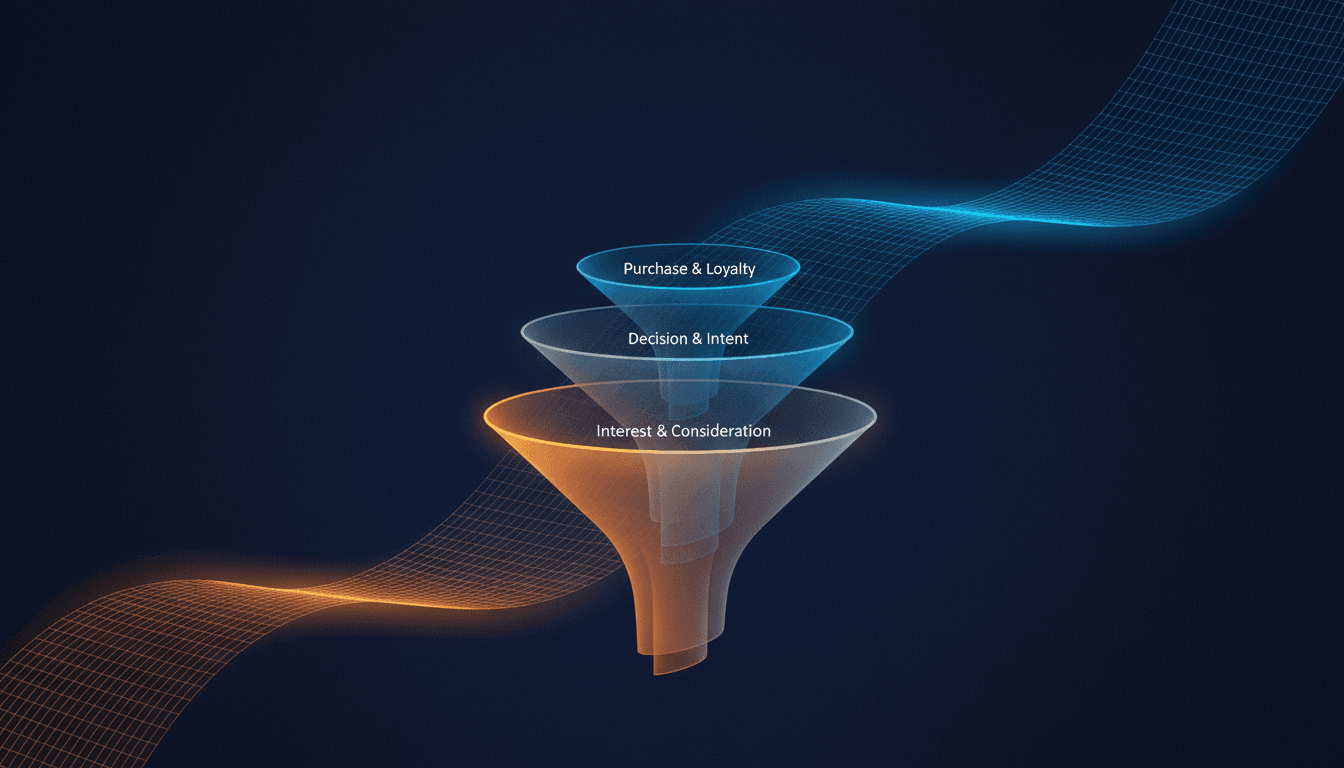
The AI Shopping Funnel: How Consumers Buy Through AI
Artificial Intelligence is revolutionizing online shopping by delivering personalized, efficient, and trusted purchase experiences. Discover how the AI shopping funnel is transforming the e-commerce landscape—and what brands must do to stay ahead in this rapidly evolving market.
[IMG: Shoppers interacting with AI-powered shopping assistants on multiple devices]
Artificial Intelligence is fundamentally reshaping the way consumers shop online. With 44% of shoppers using AI assistants for product recommendations and 63% trusting these AI suggestions as much as human advice, grasping the concept of the AI shopping funnel is critical for brands aiming to thrive in today’s competitive environment. This comprehensive guide unpacks how AI revolutionizes the consumer journey—from initial intent to final purchase—and explores what this means for e-commerce success.
Ready to fine-tune your AI shopping funnel and dramatically boost your conversions? Book a free 30-minute consultation with our AI marketing experts today.
What Is the AI Shopping Funnel and How Does It Differ from Traditional Funnels?
[IMG: Diagram comparing traditional and AI-powered shopping funnels]
The AI shopping funnel introduces a groundbreaking approach to how consumers discover, evaluate, and buy products online. Unlike the traditional, linear funnel, this new model is dynamic, data-driven, and personalized at every interaction.
Traditional marketing funnels guide consumers through broad, predefined stages:
- Awareness
- Consideration
- Decision
- Purchase
These stages typically rely on mass messaging and static segmentation, lacking the nuance of real-time context and consumer intent. The AI shopping funnel, however, is fluid and continuously adapts to each shopper’s unique behavior.
Here’s how AI revolutionizes the funnel:
- Real-time Data Integration: AI continuously analyzes user behavior, preferences, and intent signals, enabling instant adjustments to messaging and product recommendations.
- Personalization at Scale: AI engines curate product selections tailored to individual shoppers by leveraging historical data alongside current session context.
- Frictionless Path to Purchase: Automated assistants guide consumers seamlessly through every step, eliminating barriers and minimizing drop-off.
According to McKinsey & Company, 35% of e-commerce traffic is influenced by AI recommendation engines. The modern AI funnel typically consists of these interconnected stages:
- Query & Intent
- AI Curation
- Evaluation & Personalization
- Seamless Purchase
Together, these elements anticipate shopper needs and deliver exactly what consumers want—when, where, and how they want it. As Brian Solis, Global Innovation Evangelist at Salesforce, observes:
“AI assistants are redefining the shopping journey, making it more intuitive, conversational, and tailored to individual preferences.”
Stages of the AI-Powered Consumer Journey: From Intent to Purchase
[IMG: Flowchart showing AI-powered consumer journey stages]
To truly understand the AI-powered consumer journey, we must examine each stage and the distinct role AI plays. The path from intent to purchase is now faster, more relevant, and increasingly automated.
1. Awareness
AI shopping assistants, voice interfaces, and recommendation engines have become the new gateways for product discovery. Rather than initiating a manual search, consumers often engage with AI that predicts their needs based on:
- Past purchases
- Browsing history
- Demographic data
For instance, AI shopping assistants are frequently the first point of contact, gradually replacing traditional search engines in product discovery (Forrester Research). Brands maintaining structured product data and positive reviews enjoy a stronger position in these AI-driven recommendations.
2. Consideration
In the consideration phase, AI elevates the shopping experience by:
- Curating product lists aligned with real-time user intent
- Utilizing predictive analytics to highlight the most relevant options
- Delivering contextual content, including reviews and ratings
Personalization is the linchpin at this stage. AI assistants harness user data to deliver hyper-relevant suggestions that increase engagement and foster trust (Deloitte Digital).
3. Decision
AI accelerates the decision-making process by:
- Providing side-by-side product comparisons
- Offering tailored discounts or incentives
- Addressing objections through conversational interfaces
Karen Webster, CEO of PYMNTS.com, explains, “The AI-powered purchase path eliminates friction points, enabling brands to capture intent and drive faster conversions.”
4. Purchase
AI ensures a seamless checkout experience through:
- Conversational commerce interfaces
- One-click or voice-activated payments
- Automated form filling and transaction processing
The impact is impressive: 40% of AI-driven purchases are completed in under 10 minutes (Baymard Institute). This efficiency far surpasses traditional e-commerce paths, which often struggle with cart abandonment and cumbersome steps.
The Role of Personalization and Data in AI-Driven Recommendations
[IMG: Data visualization of personalized product recommendations]
Personalization lies at the heart of the AI shopping funnel. AI systems process vast volumes of consumer data to refine and tailor every product suggestion.
Here’s how AI leverages data for powerful recommendations:
- Behavioral Analysis: Tracking clicks, search queries, and purchase history to anticipate shoppers’ next desires.
- Real-Time Processing: Algorithms adapt instantly to new inputs, keeping recommendations relevant even as user intent shifts.
- Contextual Awareness: Considering device type, location, time of day, and other variables to optimize the shopping experience.
The results speak volumes: 63% of consumers trust AI-generated product recommendations as much as or more than human suggestions (PwC Consumer Intelligence Series). This growing confidence stems from the relevance and timeliness of AI-powered suggestions.
For brands, AI personalization delivers significant advantages:
- Increased user engagement and repeat visits
- Higher conversion rates by reducing decision fatigue
- Stronger customer loyalty through tailored experiences
Looking forward, real-time data processing will become even more sophisticated. Jessica Young, Editor-in-Chief of Digital Commerce 360, notes,
“Brands that prioritize AI discoverability and seamless integration into AI shopping assistants are best positioned for growth in the next wave of e-commerce.”
How AI Assistants Influence Product Discovery and Brand Visibility
[IMG: Consumer using a voice assistant and chatbot to discover products]
AI assistants—including chatbots, virtual agents, and voice interfaces—are now pivotal in how consumers find and interact with brands online.
Here’s how AI enhances product discovery and brand visibility:
- Chatbots: Deliver instant, conversational responses to queries, guiding shoppers toward the most relevant products.
- Voice Assistants: Facilitate hands-free discovery, allowing users to find and purchase products using natural language commands.
- Virtual Shopping Assistants: Provide tailored suggestions based on preferences, purchase history, and real-time context.
With 44% of online shoppers having used an AI assistant for product recommendations in the past year (Statista), AI adoption is entering the mainstream, directly influencing decision-making and brand exposure.
Brands optimizing product feeds and maintaining strong customer reviews are more likely to be favored by AI assistants, making data quality and structured information crucial for standing out in AI-driven ecosystems.
The convergence of voice and chat-based AI is accelerating fast, with over 50% of digital shoppers using both modalities during their purchase journey (Salesforce State of the Connected Customer). As Satya Nadella, Chairman & CEO of Microsoft, puts it:
“The future of the consumer journey is conversational, and AI is at the center of that transformation.”
The Impact of AI on Conversion Rates and Average Order Value
[IMG: Graph showing increase in conversion rates and order value with AI]
AI significantly boosts both conversion rates and average order value (AOV) in e-commerce. Using upselling and cross-selling strategies, AI assistants maximize the value of every customer interaction.
Here’s how AI drives these improvements:
- Personalized Upselling: Recommending higher-value or complementary products based on real-time data.
- Optimized Purchase Paths: Streamlining navigation and minimizing friction to increase conversions.
- Dynamic Offers: Tailoring discounts and bundles to individual shoppers, thereby raising AOV.
The data confirms these gains:
- 20% increase in average order value when AI assistants are integrated into the customer journey (Accenture)
- E-commerce brands optimizing for AI discoverability experience a 15-35% increase in conversion rates from AI-driven traffic (Hexagon Customer Case Studies)
AI’s real-time data analysis ensures each shopper follows the most effective path to purchase. For brands, this translates into higher revenue per visitor and better ROI on marketing investments.
Best Practices for E-Commerce Brands to Optimize for AI-Driven Purchase Paths
[IMG: E-commerce team collaborating on AI-driven strategy]
To unlock the full potential of the AI shopping funnel, brands must adopt a strategic, data-driven mindset. Here are essential best practices:
- Adopt AI Recommendation Engines: Integrate AI-powered product suggestion tools to deliver personalized experiences at scale.
- Leverage Customer Data Ethically: Use first-party and zero-party data thoughtfully to refine recommendations, always prioritizing privacy and transparency.
- Implement Conversational Commerce: Deploy AI chatbots and voice assistants to craft seamless, interactive shopping journeys.
- Monitor and Refine with AI Analytics: Continuously analyze performance data to optimize product feeds, content, and user flows.
- Enhance Product Data Quality: Maintain structured, up-to-date product listings enriched with positive reviews to improve AI discoverability.
- Test and Iterate: Utilize A/B testing and machine learning feedback loops to fine-tune AI models and recommendation strategies.
As AI capabilities evolve, e-commerce brands must stay agile and proactive. Those prioritizing personalization, frictionless interactions, and data-driven optimization will capture more value from every customer.
Ready to optimize your AI shopping funnel and boost conversions? Book a free 30-minute consultation with our AI marketing experts today.
Emerging Trends: Voice Commerce, Conversational Checkout, and Direct Purchasing via AI
[IMG: Shopper completing a purchase using a smart speaker]
AI is powering a wave of innovation in online shopping, with three trends gaining particular momentum:
- Voice Commerce: Increasingly, consumers use smart speakers and voice assistants to search for, compare, and buy products. As user comfort and voice recognition accuracy improve, voice-enabled shopping is set to grow rapidly.
- Conversational Checkout: Shoppers can now complete purchases through chat or voice interactions instead of traditional forms, reducing friction and cart abandonment—especially on mobile devices.
- Direct Purchasing via AI Platforms: AI assistants are capable of completing transactions directly within messaging apps or voice interfaces, eliminating extra steps and keeping consumers engaged.
For example, Gartner reports that AI assistants can now finalize transactions independently, reducing friction and drop-off in the purchase funnel. As conversational commerce matures, it is projected to reach $135 billion in global sales by 2026 (Juniper Research). The outcome is a faster, more convenient, and highly engaging shopping experience.
Future Outlook: How AI Will Continue to Evolve the Consumer Shopping Journey
[IMG: Futuristic depiction of AI-driven shopping experience]
Looking forward, AI promises to deliver even more personalized and immersive shopping experiences. Hyper-personalization will harness advanced analytics and predictive modeling to anticipate consumer needs before they arise.
Expect innovations such as:
- Immersive Shopping Interfaces: AI-driven augmented reality (AR) and virtual reality (VR) will allow consumers to visualize products in real-world contexts.
- Proactive Assistance: AI will initiate conversations, offering suggestions and reminders tailored to life events or seasonal needs.
- Seamless Omnichannel Experiences: Integration across devices and platforms will create a truly unified and frictionless shopping journey.
For brands, these advances mean higher customer lifetime value, deeper loyalty, and greater operational efficiency. Those investing in robust AI strategies today will be best positioned to lead tomorrow’s e-commerce landscape.
Conclusion
The AI shopping funnel is fundamentally transforming how consumers buy online. With 44% of shoppers relying on AI assistants for recommendations and 63% trusting AI as much as human advisors, the shift is unmistakable. Brands embracing AI-driven personalization, optimizing for discoverability, and delivering frictionless experiences will enjoy higher conversion rates and stronger customer loyalty.
The time to act is now. Ready to optimize your AI shopping funnel and boost conversions? Book a free 30-minute consultation with our AI marketing experts today. Let Hexagon help you lead in the era of intelligent commerce.
[IMG: Confident e-commerce leader reviewing AI marketing performance dashboard]
Hexagon Team
Published February 6, 2026