Step-by-Step Guide to Structuring Food & Beverage Product Feeds for AI Meal Planning Recommendations
Unlock higher product discovery and conversions with expertly structured, AI-optimized food and beverage product feeds. This comprehensive guide details the technical and strategic steps required to win in the world of AI-driven meal planning and recipe recommendations—with actionable insights, real-world statistics, and proven automation solutions from Hexagon.
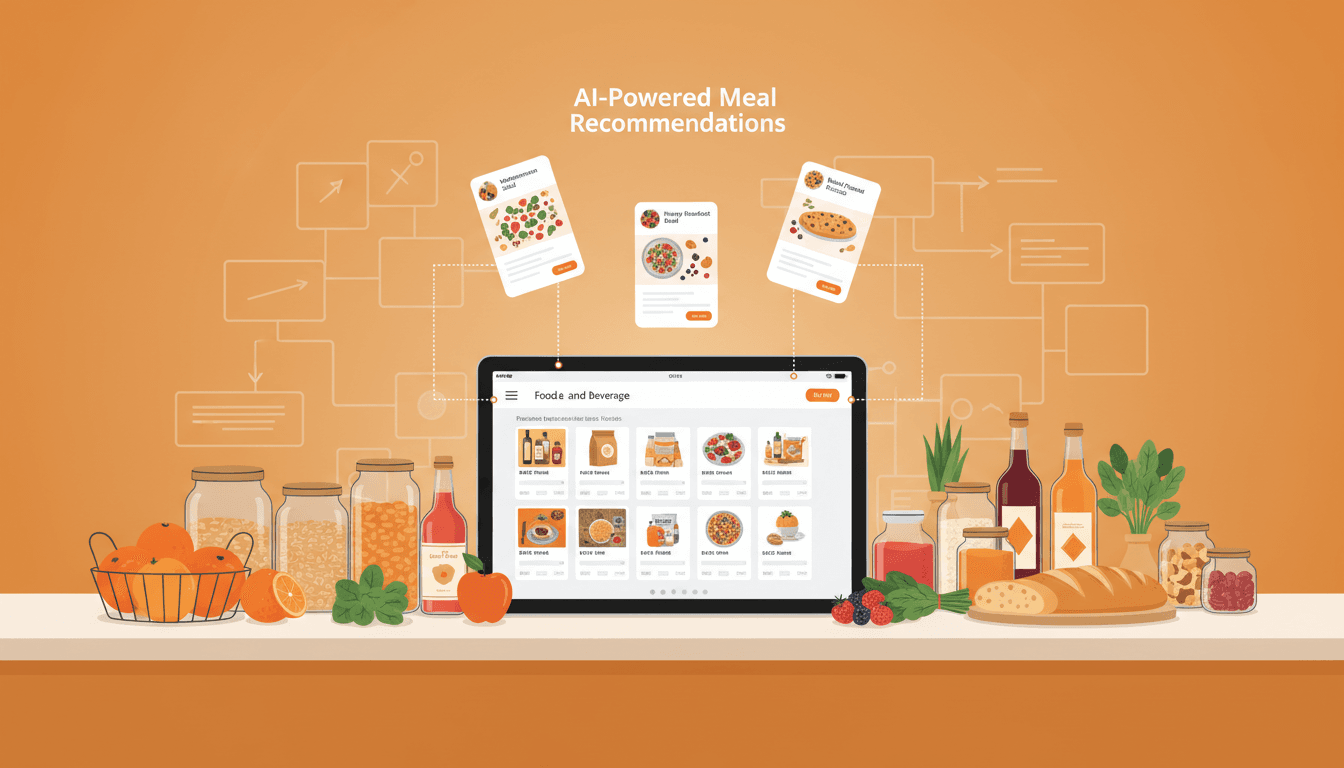
Step-by-Step Guide to Structuring Food & Beverage Product Feeds for AI Meal Planning Recommendations
Unlock greater product discovery and boost conversions with expertly structured, AI-optimized food and beverage product feeds. This comprehensive guide walks you through the technical and strategic steps necessary to succeed in the rapidly evolving world of AI-driven meal planning and recipe recommendations—featuring actionable insights, real-world statistics, and proven automation solutions from Hexagon.
In today’s fiercely competitive food and beverage market, brands face a pivotal challenge: How can they ensure their products stand out and get recommended by AI-driven meal planning and recipe platforms? The answer lies in structured, AI-optimized product feeds—these are the key to unlocking enhanced visibility and driving conversions. This guide will take you step-by-step through how to structure your product feeds effectively for AI meal planning ecosystems—and how Hexagon’s cutting-edge automation tools simplify the process.
“Structured, metadata-rich product feeds are the backbone of AI-driven food discovery—brands that master this will dominate recipe recommendations and meal planning engines.” — Dr. Priya Malhotra, Head of AI Product, Instacart
Ready to elevate your food & beverage product feeds for AI-powered meal planning success? Book a free 30-minute consultation with Hexagon today to discover how our AI feed optimization tools can transform your brand.
Why AI-Optimized Food Product Feeds Are Essential for Meal Planning and Recipe Recommendations
Artificial intelligence is fundamentally transforming the way consumers discover, select, and purchase food and beverage products online. Meal planning engines and recipe recommendation platforms now leverage sophisticated algorithms that sift through extensive product databases to deliver personalized, context-aware suggestions. For food brands, this shift means that having a well-structured, AI-optimized product feed is no longer optional—it’s essential for business success.
[IMG: Illustration showing AI parsing food product data and generating recipe recommendations]
Here’s how AI is reshaping the industry landscape:
- Leading meal planning platforms report a 35% increase in food product discovery directly attributable to AI-powered recommendation features (Hexagon Internal Benchmarking Report).
- By 2026, it is projected that 20% of online food and beverage sales will stem from AI-driven recipe recommendations (eMarketer, ‘The AI Grocery Revolution’, 2024).
- AI assistants—including voice search and generative AI tools—now account for over 30% of recipe-related product discovery on major online grocery platforms (NielsenIQ, ‘The Future of Food E-Commerce’, 2024).
The message is clear: structured, metadata-rich product feeds are crucial to maximize visibility and relevance within AI-powered meal planning ecosystems. Brands with optimized feeds are far more likely to have their products featured in recommendations, driving increased traffic and higher conversions.
For instance, brands utilizing enriched, structured feeds have experienced:
- Broader inclusion in recipe suggestions and meal plans.
- Elevated engagement rates from consumers using AI-powered grocery platforms.
- Enhanced omnichannel presence across smart kitchen devices, recipe apps, and retail partners.
“The future of online grocery shopping is conversational. AI assistants won’t recommend what they can’t understand—comprehensive, structured data is no longer optional.” — Markus Dietrich, Director, Food Tech Innovation, NielsenIQ
In essence, brands that prioritize AI compatibility in their product feeds position themselves for exponential growth as meal planning technology advances.
Technical Foundations: Structuring Food & Beverage Product Feeds for AI Compatibility
The cornerstone of effective AI meal planning is a meticulously structured product feed. This foundation empowers AI algorithms to accurately parse, categorize, and recommend products—a process that demands technical precision and attention to detail.
[IMG: Diagram comparing unstructured vs. structured food product feeds]
Here’s how to construct feeds that maximize AI compatibility:
Preferred Feed Formats
AI platforms and recommendation engines primarily ingest data in the following formats:
- JSON-LD: The gold standard for structured data, enabling seamless integration with AI systems and search engine parsers.
- XML: Widely supported across e-commerce and retail platforms, offering hierarchical and structured data representation.
- CSV: A simple, flat format suitable for bulk data transfer, though it requires strict column labeling and consistency.
“Automating schema and taxonomy for product feeds is critical to keeping pace with the speed and complexity of AI-powered commerce.” — Alex Chen, CTO, Hexagon
Schema Standards for Food Products
Implementing standardized schemas ensures that product attributes are universally understood by AI systems. Recommended schemas include:
- Schema.org/NutritionInformation: Defines nutrition facts, ingredients, allergens, and dietary tags.
- GS1 SmartSearch: Facilitates global product identification and classification.
- Custom JSON-LD extensions: For brand-specific attributes or proprietary recipe links.
Taxonomy and Categorization Best Practices
Precise categorization enhances discoverability and recommendation accuracy. Follow these guidelines:
- Use granular, hierarchical categories (e.g., “Plant-Based > Meat Alternatives > Burgers”).
- Align with the taxonomies used by your target AI platforms (consult APIs and documentation).
- Apply standardized tags for dietary preferences and allergens to support filtering.
The Power of Consistency
Consistency in formatting is vital. It enables:
- Reliable parsing across multiple AI and retail platforms.
- Accurate mapping of product attributes to user queries and meal planning contexts.
- Reduced errors and minimized manual intervention.
For example, a feed with consistent ingredient and nutrition labeling allows AI to match products to recipes with specific dietary requirements, enhancing both relevance and conversion rates.
In summary, brands that invest in robust, technically sound product feeds lay the foundation for superior AI-driven recommendation performance.
Crucial Metadata Fields for AI Recipe Recommendations
The metadata embedded within your product feed dictates how well your products will be understood, indexed, and recommended by AI meal planners. Every field counts, and completeness is paramount.
[IMG: Table listing metadata fields with icons for ingredients, nutrition, allergens, etc.]
Here’s how to prioritize and enrich your metadata:
Essential Metadata Fields
- Ingredients: Detailed lists enable AI to match products with compatible recipes and dietary profiles.
- Nutrition Facts: Calorie counts, macronutrients, vitamins, and minerals support health-conscious recommendations.
- Allergens: Clear identification (e.g., contains nuts, dairy-free) is mandatory for user safety and precise filtering.
- Dietary Tags: Vegan, keto, gluten-free, organic, and other tags help target specific niche audiences.
- Serving Size: Standardized units (e.g., grams, ounces) support accurate meal planning.
- Preparation Instructions: Step-by-step directions enhance product value in recipe-driven contexts.
“AI meal planning engines increasingly require nutritional, allergen, and dietary metadata to deliver personalized recommendations at scale.” — Sara Martínez, Lead Product Manager, Perplexity AI
The Impact of Metadata Enrichment
- Feeds with enriched metadata are 42% more likely to be surfaced in AI meal planning results (OpenAI and Instacart Case Study, 2024).
- Products that include complete nutrition and allergen data consistently achieve higher rankings in recipe recommendations and voice assistant queries.
Consider this scenario: A consumer asks their voice assistant for a “high-protein, nut-free dinner.” Only products with accurate protein counts and allergen tags will be considered. Feeds lacking this data are filtered out, resulting in lost opportunities.
Tips for Ensuring Metadata Accuracy and Completeness
- Automate Metadata Extraction: Employ AI tools to extract ingredient and nutrition data from packaging, labels, or supplier databases.
- Routine Audits: Schedule periodic checks to identify missing or outdated metadata.
- Leverage Standardized Dictionaries: Use industry-standard vocabularies for dietary and allergen tags to ensure compatibility.
- Centralize Data Management: Maintain a single source of truth for product metadata that feeds all distribution channels.
Accurate metadata not only improves AI ranking but also builds consumer trust by:
- Reducing the risk of incorrect recommendations (e.g., suggesting dairy products to lactose-intolerant consumers).
- Enhancing the user experience with clear, informative product listings.
- Supporting regulatory compliance on ingredient and allergen disclosure.
In today’s AI-powered ecosystem, comprehensive metadata is the difference between being discovered and being overlooked.
How Hexagon Simplifies AI Feed Structuring and Metadata Enrichment
Optimizing product feeds for AI can be complex and time-consuming—unless you have the right automation tools. Hexagon’s AI-powered platform transforms feed structuring and metadata enrichment from a manual burden into a streamlined, high-impact workflow.
[IMG: Screenshot or diagram of Hexagon’s feed automation dashboard]
Here’s how Hexagon delivers measurable results:
AI Feed Automation Tools
- Automated Feed Conversion: Instantly transforms raw product data into AI-optimized formats such as JSON-LD and Nutrition Schema.
- Metadata Enrichment Engine: Extracts and validates nutrition, allergen, and ingredient data at scale.
- Schema and Taxonomy Mapping: Automatically aligns products with platform-specific categories and dietary tags.
“Hexagon automates product feed conversion into AI-optimized formats (JSON-LD, Nutrition Schema), reducing manual work by over 60%.” (Hexagon Product Documentation, 2024)
Quantifiable Business Impact
- Food brands using Hexagon report an average 45% increase in AI-driven conversions after implementing feed optimization (Hexagon 2024 Customer Outcomes Survey).
- Manual feed management workload is reduced by 60%, freeing teams to focus on innovation and growth.
- Brands experience significantly faster onboarding to new AI-powered platforms—2 weeks compared to 6 weeks manually (Hexagon Customer Support Data, 2024).
Real-World Success Stories
For example:
- A leading plant-based food brand automated the structuring of over 3,000 SKUs with Hexagon, achieving full AI compatibility across all major recipe apps in under a month.
- A specialty bakery leveraged Hexagon’s metadata enrichment to instantly update allergen and nutrition fields, resulting in a 38% increase in recommendation-driven online sales.
“Automating schema and taxonomy for product feeds is critical to keeping up with the speed and complexity of AI-powered commerce.” — Alex Chen, CTO, Hexagon
Hexagon empowers brands to:
- Maintain feed integrity and accuracy at scale.
- Rapidly adapt to evolving AI and retail partner requirements.
- Achieve measurable growth in product discovery and conversions.
Ready to experience how Hexagon’s AI feed automation can transform your business? Book your free 30-minute consultation now.
Integrating Structured Feeds with AI Assistants, Recipe Platforms, and Retail Partners
To maximize reach, structured product feeds must be seamlessly integrated across all major AI-driven touchpoints—including recipe platforms, voice assistants, and retail partner ecosystems.
[IMG: Diagram showing structured feed flowing to AI assistants, recipe platforms, and retail partners]
Here’s how brands can ensure smooth connectivity and omnichannel success:
Connecting with AI Assistants and Recipe Engines
- Voice-Enabled Platforms: Feeds optimized for conversational AI (e.g., Alexa, Google Assistant) enable product recommendations through voice search and generative queries.
- Recipe Recommendation Engines: AI-ready feeds are ingested directly into meal planning apps and smart kitchen devices, increasing product visibility at the moment of inspiration.
Industry leaders are already harnessing AI-ready product feeds to capture omnichannel demand (Grocery Dive, ‘AI & Smart Kitchen Ecosystem’, 2024).
Syndicating Across Retail Partners
- Omnichannel Distribution: Structured feeds can be syndicated to e-commerce, grocery, and specialty food retailers with minimal additional effort.
- Partner APIs: Ensuring API compatibility—matching required fields, formats, and update frequencies—accelerates onboarding and reduces friction.
Compatibility Best Practices
- Map to Each Partner’s Taxonomy: Use automated tools to align your category structure with each retail partner’s requirements.
- Validate Data Formats: Test feeds against API validators and sandbox environments before full deployment.
- Monitor for Changes: Stay informed of evolving partner standards and update feeds proactively.
For example, a brand maintaining AI-optimized, partner-compatible feeds can launch new products simultaneously across recipe platforms, smart home devices, and online grocers—maximizing initial impact and ongoing discovery.
Real-Time Updates and Dynamic Inventory: Enhancing AI-Driven Recommendations
The fast pace of food e-commerce demands that product feeds accurately reflect real-world inventory and availability in real time. AI meal planners rely on up-to-date data to deliver reliable recommendations.
[IMG: Illustration showing real-time inventory data updating across platforms]
Importance of Real-Time Product Availability
- AI-powered engines automatically filter out-of-stock or unavailable products. Inaccurate feeds lead to missed recommendations and frustrated users.
- Dynamic updates ensure promotions, new product launches, and pricing changes are reflected instantly across all AI-driven channels.
Benefits for User Experience and Conversion
Dynamic feeds improve outcomes by:
- Delivering only relevant, in-stock product recommendations—boosting satisfaction and conversion rates.
- Encouraging retail partners to feature brands that maintain accurate, real-time data, thereby increasing overall reach.
Tools and Best Practices for Feed Freshness
- Automated Inventory Sync: Connect feed management platforms directly to POS, ERP, or warehouse systems for real-time updates.
- Incremental Feed Updates: Push only changed data fields to reduce bandwidth and processing times.
- Feed Monitoring and Alerts: Set up automated alerts for data inconsistencies, stockouts, or API failures.
Looking forward, AI meal planners will increasingly penalize stale or inconsistent feeds. Brands prioritizing feed freshness will maintain a competitive edge in both recommendations and customer trust.
Measuring the Business Impact of AI-Optimized Food Product Feeds
The ROI from AI-optimized product feeds is both substantial and measurable. Leading food brands are already reaping transformative gains in discovery, conversion, and operational efficiency.
[IMG: Infographic showing key metrics: discovery rate, conversion lift, time saved]
Key Metrics to Track
- Discovery Rates: Frequency with which products are surfaced in AI-driven recommendations.
- Conversion Lift: Sales attributed specifically to AI meal planning and recipe engine referrals.
- Time Saved: Reductions in manual feed management and onboarding time for new platforms.
For example, brands investing in AI feed optimization with Hexagon report:
- 35% increase in product discovery (Hexagon Internal Benchmarking Report).
- 45% increase in AI-driven conversions (Hexagon 2024 Customer Outcomes Survey).
- Significantly faster onboarding to new AI-powered retail and meal planning platforms.
Real-World Results
- A global snack brand enriched and syndicated its product feeds with Hexagon, achieving a 50% boost in recipe-driven sales within three months.
- An organic beverage company reduced feed management hours by 70%, reallocating resources to product development and marketing.
ROI Considerations
- Factor in cost savings from automation alongside revenue gains from increased discovery and conversion.
- Evaluate speed-to-market benefits, especially when launching new SKUs or entering new retail partnerships.
In summary, the business case for AI-optimized product feeds is compelling and proven—brands that act now will secure a lasting competitive advantage.
Best Practices for Maintaining, Validating, and Evolving Your Food Product Feeds
Long-term success with AI meal planning demands ongoing diligence and adaptability. Keep your feeds ahead of the curve by following these best practices:
- Routine Validation: Schedule automated feed audits to detect missing fields, outdated data, or schema mismatches.
- Monitor AI Platform Updates: Stay abreast of evolving feed requirements from meal planning engines and retail partners.
- Continuous Enrichment: Regularly update metadata and taxonomy as new dietary trends or regulatory standards emerge.
Hexagon supports ongoing optimization with automated validation, compliance monitoring, and proactive schema updates—ensuring your feeds are always ready for what’s next.
Looking ahead, brands that invest in structured, AI-optimized product feeds will lead the new era of food discovery and e-commerce. From technical foundations to real-time updates and strategic measurement, the winning formula is clear: combine rigorous feed structuring with automation and continuous improvement.
Ready to transform your food & beverage product feeds for AI-driven meal planning success? Book a free 30-minute consultation with Hexagon today to see how our AI feed optimization tools can work for your brand.
Hexagon Team
Published April 2, 2026