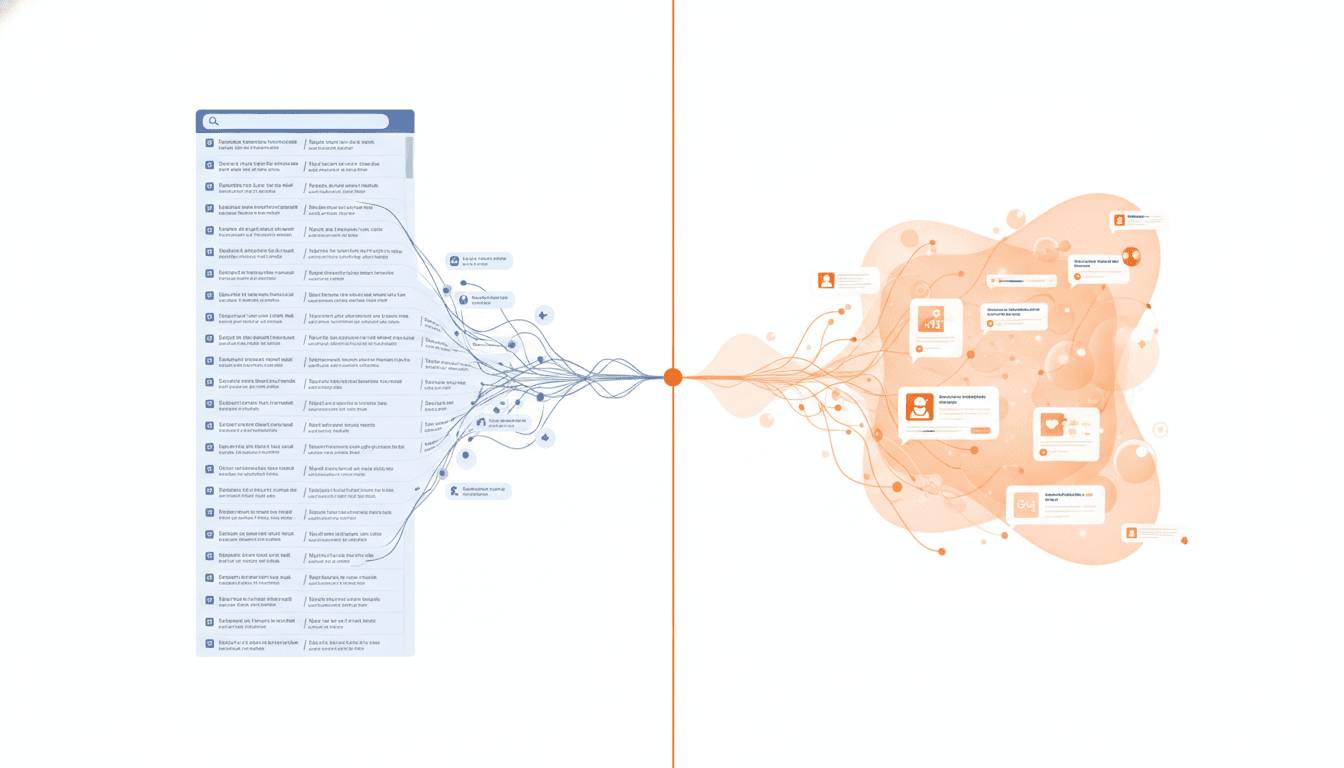
Product Feed Optimization for AI Search Engines: The Ultimate Technical Guide
Boost your product discoverability and sales by up to 40% with this expert guide on optimizing product feeds for AI-powered search engines. Learn essential technical strategies, schema markup best practices, and actionable steps to maximize your presence in the evolving e-commerce landscape.

Product Feed Optimization for AI Search Engines: The Ultimate Technical Guide
Boost your product discoverability and sales by up to 40% with this expert guide on optimizing product feeds for AI-powered search engines. Learn essential technical strategies, schema markup best practices, and actionable steps to maximize your presence in the evolving e-commerce landscape.
In today’s rapidly evolving AI-driven shopping environment, optimizing your product feed is no longer optional—it’s essential. With AI assistants like ChatGPT increasingly influencing purchase decisions, having product data that is structured, accurate, and AI-friendly can significantly enhance your product visibility and boost sales by up to 40%. This comprehensive guide walks you through the technical essentials of optimizing your product feeds using GTINs, schema markup, and other best practices tailored for AI search engines. By mastering these strategies, you’ll be equipped to stay ahead in the dynamic e-commerce ecosystem.
Ready to transform your product feed into an AI magnet?
Download Hexagon’s Free Product Feed Optimization Checklist to Ensure Your Data is AI-Ready and Maximizes Search Visibility.
Understanding the Role of GTINs and Unique Identifiers in AI Product Matching
[IMG: Visual diagram of a product feed highlighting GTIN, brand, and identifier fields]
Global Trade Item Numbers (GTINs) serve as the cornerstone for precise product recognition within today’s AI-powered commerce landscape. These unique identifiers—including UPC, EAN, and ISBN—establish a universal product language that both traditional and AI search engines rely on. As John Mueller, Search Advocate at Google, succinctly puts it, “GTINs are the universal language for product identification in AI-powered commerce. Without them, your products risk being invisible to modern search algorithms.”
Here’s why GTINs and unique identifiers are vital for enhancing AI accuracy:
- Consistent Product Recognition: Incorporating GTINs into your product feeds increases product identification accuracy by 40% in AI-driven search engines (Google Merchant Center Insights).
- Reduced Risk of Mismatches: Unique identifiers enable AI engines to distinguish between similar products, drastically minimizing errors in recommendations and search results.
- Enhanced Recommendations: AI shopping assistants depend on GTINs to match products across retailers, reliably surfacing relevant alternatives to shoppers.
Another critical factor is brand and manufacturer data. According to Google Data Quality Guidelines, feeds missing clear brand information can suffer a 25% drop in crawlability. This decrease means fewer products get indexed, cutting down their visibility in both AI-driven and traditional search.
For instance, a product feed lacking GTINs or standardized brand fields may lead AI models to misclassify products or exclude them entirely from search results. This not only limits your reach but also negatively impacts your sales potential.
To maximize discoverability:
- Always include GTIN, brand, and manufacturer information in every product entry.
- Validate that all identifiers are accurate and consistent across feeds and platforms.
- Stay updated on evolving identifier requirements as AI search protocols develop.
In summary:
Unique identifiers like GTINs form the foundation of AI product matching, driving accuracy, relevancy, and ultimately, sales performance.
Implementing and Validating Product, Offer, and Review Schema Markup
[IMG: Screenshot of a product page source code with Product, Offer, and Review schema highlighted]
Structured data has become indispensable for AI-powered search and recommendation engines. As Martha van Berkel, CEO of Schema App, highlights, “Structured data isn’t just for traditional search engines anymore—AI assistants rely on it to surface relevant product recommendations to users.” Here’s how to leverage schema markup effectively for AI-driven e-commerce.
Overview of Schema Types
- Product Schema: Captures essential product details such as name, brand, GTIN, and images.
- Offer Schema: Details pricing, availability, and conditions (e.g., new, refurbished).
- Review Schema: Contains user-generated ratings and feedback, increasingly utilized by AI models to highlight highly-rated products (OpenAI Research Blog).
Fact: 72% of top e-commerce brands employ full Product schema markup to boost AI compatibility and SEO performance (BrightEdge Research).
Step-by-Step Guide to Applying Schema Markup
-
Identify Key Product Pages
Prioritize high-traffic and high-value products. Ensure each page presents unique, comprehensive product data. -
Add Product Schema
Reference Schema.org’s Product documentation for guidelines. Include required attributes such as:nameimagedescriptionskubrandgtin8,gtin12,gtin13, orgtin14as applicable
-
Layer Offer Schema
Embed offer details within the Product schema, covering:pricepriceCurrencyavailabilityitemCondition
-
Incorporate Review Schema
AddaggregateRatingand individualreviewfields when user feedback exists. AI increasingly uses this data for conversational and contextual recommendations. -
Use JSON-LD Format
Google and most AI platforms recommend JSON-LD for easier parsing and maintenance.
Tools and Methods to Validate Schema Markup
Validation ensures your structured data is both readable and actionable by AI search engines. Recommended tools include:
-
Google Rich Results Test
Checks if your schema enables rich search results and identifies missing fields or errors. -
Schema.org Validator
Verifies full compliance with Schema.org standards, useful for complex schema and nested data.
Best Practices:
- Validate your schema after every major feed or template update.
- Monitor for deprecated properties as schema standards evolve.
- Resolve all warnings and errors before publishing or republishing pages.
Actionable Tips:
- Include all recommended fields, not just the bare minimum.
- Synchronize schema data with your backend systems and product feeds.
- Utilize schema generators or CMS plugins to scale implementation efficiently.
Hexagon Pro Tip:
Automate schema markup updates by integrating directly with your product information management (PIM) system to maintain accuracy and consistency.
Want to ensure flawless schema implementation?
Download Hexagon’s Free Product Feed Optimization Checklist to Ensure Your Data is AI-Ready and Maximizes Search Visibility.
Structuring Product Feeds with Required and Recommended Attributes
[IMG: Annotated spreadsheet or table showing product feed attributes (title, description, price, etc.)]
A well-structured product feed is the backbone of AI visibility and recommendation accuracy. Here’s how to construct a feed that AI search engines can easily interpret and prioritize.
Essential Product Feed Attributes
- Title: Concise and keyword-rich, incorporating key product details such as brand, model, and variant.
- Description: Clear, informative, and focused on unique selling points.
- Brand: Always specify, ensuring it matches your manufacturer’s registered name exactly.
- Images: High-resolution (minimum 800x800 pixels), clear, and professionally captured.
- Price: Accurate and updated regularly.
- Availability: Real-time status indicators such as in stock, out of stock, or pre-order.
How Attributes Influence AI Understanding
-
Titles and Descriptions:
AI parsing depends heavily on well-structured titles and descriptions. For example, “Nike Air Max 2024 Men’s Running Shoes – Black/White” is far more likely to be correctly indexed and matched than a generic “Men’s Shoes.” -
Brand and Identifier Fields:
Critical for cross-platform deduplication and recommendation precision. Missing or inconsistent brand/manufacturer data can reduce product crawlability by up to 25% (Google Data Quality Guidelines). -
Price and Availability:
Feeds with frequently updated pricing and inventory data enjoy a 32% higher chance of being recommended by AI assistants (Shopify Partner Research).
Best Practices for Titles and Descriptions
- Place the most important information at the beginning.
- Use natural, shopper-friendly language while avoiding filler.
- Include relevant attributes such as color, size, material, and compatibility.
Checklist for Optimized Product Feeds:
- [ ] All required fields present and accurate
- [ ] Titles and descriptions optimized for AI parsing
- [ ] Brand and GTIN fields consistently filled
- [ ] Prices and availability updated daily
- [ ] High-resolution images included
Ensuring Data Accuracy and Regular Feed Updates for Real-Time AI Recommendations
[IMG: Dashboard showing product feed update frequency and data health metrics]
In the world of AI-driven product recommendations, data accuracy and freshness are non-negotiable. AI models rely on real-time information to provide relevant suggestions to shoppers.
Here’s how to keep your product data feed in peak condition:
-
Synchronize with Inventory and Pricing Systems:
Automate synchronization to ensure product data always reflects true stock levels and prices. This is crucial, as products with updated price and availability see 32% more AI-driven recommendations (Shopify Partner Research). -
Automate Feed Updates and Error Checking:
Schedule exports and validations multiple times daily for high-velocity catalogs.- Use error monitoring tools to catch issues like missing prices or out-of-stock listings.
- Leverage APIs to update feeds directly from inventory management systems.
-
Understand the Impact of Stale Data:
Outdated or inaccurate product information reduces AI recommendation chances and can lead to delisting from search results. Major shopping engines penalize stale feeds, and customers lose trust when shown unavailable products.
Strategies for Success:
- Implement automated alerts for inventory or price discrepancies.
- Regularly audit your feed for outdated or inconsistent entries.
- Integrate Hexagon’s feed monitoring solutions for real-time insights.
Looking ahead:
Prioritizing data accuracy and frequent updates is vital to maintaining competitiveness in an AI-first shopping environment.
Preventing Common Feed Errors That Hinder AI Crawlability and Product Indexing
[IMG: Warning and error symbols overlaying a product feed spreadsheet]
Even minor feed errors can severely limit your products’ visibility on AI-powered search and shopping platforms. Here’s how to identify and resolve the most common pitfalls.
Common Mistakes to Avoid
-
Missing GTINs or Unique Identifiers:
Products lacking GTINs risk exclusion from AI-driven shopping results (Google Merchant Center Product Data Specification). -
Inconsistent Brand/Manufacturer Data:
Mismatched or incomplete brand fields can reduce crawlability by 25% (Google Data Quality Guidelines). -
Incorrect or Incomplete Schema Markup:
Errors in structured data can block indexing and prevent eligibility for rich results (W3C Data Quality Standards).
How to Identify and Fix Feed Errors
-
Run Regular Feed Audits:
Employ automated tools to detect missing or malformed fields. -
Cross-Validate Brand and Identifier Fields:
Standardize naming conventions and formats across your catalog. -
Test Schema Markup:
Validate every update using Google and Schema.org tools.
Impact of Errors on Product Indexing
-
Reduced Visibility:
Products with errors are less likely to appear in AI-driven search results, recommendations, or conversational commerce. -
Loss of Eligibility:
Incomplete or incorrect feeds risk exclusion from shopping campaigns and marketplaces. -
Customer Frustration:
Inaccurate listings can lead to abandoned carts and erode brand trust.
For example:
A missing GTIN in a popular product line could mean the difference between prime placement on AI shopping lists and complete invisibility.
Leveraging High-Quality Images and Rich Media to Enhance AI-Driven Product Discovery
[IMG: Side-by-side comparison of low-resolution and high-resolution product images]
Image quality is becoming increasingly critical for AI-driven product discovery, especially as visual search and conversational assistants gain traction.
Why Image Quality Matters:
- AI models depend on high-resolution, well-lit images to accurately identify and recommend products.
- Listings with images of at least 800x800 pixels see a 28% increase in AI-driven product selection (Adobe Digital Economy Index).
- Rich media—including 360° spins, video demos, and augmented reality previews—boost engagement and conversion rates.
Recommended Image Specs and Multimedia Types
- Resolution: Minimum 800x800 pixels; higher resolutions preferred for premium products.
- Background: Clean, uncluttered, ideally white or transparent.
- File Type: JPEG or PNG for universal compatibility.
- Aspect Ratio: Consistent across all products, typically 1:1 for most platforms.
Rich Media Enhancements:
- 360° product views provide deeper shopper engagement.
- Short videos highlight key product features.
- AR-ready assets offer immersive shopping experiences.
How Rich Media Improves AI Selection
- AI algorithms better differentiate and categorize products with clear, high-quality visuals.
- Rich images and videos increase the likelihood of selection in visual search results and conversational recommendations.
Pro Tip:
Invest in professional photography and consider using Hexagon’s image optimization suite to automate quality checks and formatting.
Monitoring and Testing Schema Markup Using Validation Tools
[IMG: Screenshot of successful schema validation in Google Rich Results Test]
Maintaining valid and up-to-date schema markup is an ongoing process essential for AI compatibility and eligibility for rich search results.
Key Validation Tools for Schema Markup
-
Google Rich Results Test:
The industry standard for verifying schema markup against Google’s requirements. -
Schema.org Validator:
Ensures compliance with the full range of schema types.
How to Interpret Validation Results
-
Passed:
Schema is correctly implemented with all required fields present. -
Warnings:
Non-critical issues; review and address to optimize performance. -
Errors:
Critical failures; products with these errors may not be indexed or shown in rich results.
Ongoing Monitoring Best Practices
- Schedule regular automated tests, particularly after bulk updates or template changes.
- Stay alert for new schema types or property deprecations as standards evolve.
- Document and resolve recurring errors promptly to maintain AI search visibility.
Looking ahead:
Proactive schema validation ensures your products remain discoverable as AI algorithms and requirements continuously advance.
Adapting to Emerging AI Shopping Protocols and Industry Best Practices
[IMG: Futuristic illustration of AI assistants interacting with product feeds]
AI search standards and protocols are evolving rapidly, reshaping how product data is interpreted and how recommendations are made. Here’s how to future-proof your product feeds and maintain a competitive edge.
Overview of Evolving AI Search Standards
-
Conversational Commerce:
AI assistants like ChatGPT and Google Bard are becoming primary shopping touchpoints, relying heavily on structured, machine-readable data. -
Enhanced Schema Requirements:
New schema types and properties are emerging to support richer product experiences and more nuanced recommendations. -
Cross-Platform Interoperability:
Consistent identifiers and standardized feeds are essential for seamless product recognition across marketplaces and social commerce channels.
How to Future-Proof Product Feeds
-
Stay Informed:
Subscribe to industry publications and standards organizations such as Schema.org and W3C. -
Engage in Professional Communities:
Join groups like the Product Feed Optimization LinkedIn Group for insights and peer support. -
Experiment and Iterate:
Pilot new schema types, media formats, and feed attributes as they emerge. Measure outcomes and adapt strategies swiftly.
Resources and Communities
- Google Merchant Center Help Community
- Schema.org Community Group
- Hexagon’s AI Marketing Insights Newsletter
For example:
Major e-commerce platforms now offer early access to next-generation AI feed features—testing these can provide a competitive advantage and inform your long-term strategy.
Conclusion: Get Ahead with AI-Ready Product Feed Optimization
AI search engines and assistants are transforming the e-commerce landscape. By embracing structured data, high-quality identifiers, comprehensive schema markup, and rigorous feed accuracy, brands can secure higher visibility, richer recommendations, and sustained growth.
As Lily Ray, Senior Director of SEO & Head of Organic Research at Amsive Digital, affirms, “Complete and accurate product feeds are foundational to being discovered and recommended by AI-driven platforms.”
Take the next step:
Download Hexagon’s Free Product Feed Optimization Checklist to Ensure Your Data is AI-Ready and Maximizes Search Visibility.
Stay ahead of the curve—optimize your product feeds today and unlock the full potential of AI-powered commerce.
Hexagon Team
Published January 31, 2026