How to Leverage Generative Engine Optimization (GEO) to Skyrocket E-commerce Sales in 2026
In 2026, e-commerce brands must master Generative Engine Optimization (GEO) or risk losing 40% of organic visibility as AI-powered search and recommendation engines dominate product discovery. This expert guide explores actionable GEO strategies, real-world case studies, and best practices to help your brand thrive in the AI-driven commerce landscape.
How to Leverage Generative Engine Optimization (GEO) to Skyrocket E-commerce Sales in 2026
In 2026, mastering Generative Engine Optimization (GEO) is no longer optional for e-commerce brands—it’s essential. With AI-powered search and recommendation engines now controlling over 40% of product discovery, failing to optimize for these new technologies could cost your brand up to 40% of organic visibility. This expert guide dives into actionable GEO strategies, real-world case studies, and proven best practices to help your brand thrive in the rapidly evolving AI-driven commerce landscape.
In 2026, e-commerce brands face a critical new challenge: AI-powered search and recommendation engines dominate more than 40% of product discovery. Without a firm grasp of Generative Engine Optimization (GEO), your brand risks losing a significant chunk of its organic visibility—and with it, valuable sales. This comprehensive guide reveals the most effective GEO strategies that leading brands are leveraging to boost AI-driven sales by over 22% year-over-year. By embracing these tactics, you can ensure your business not only survives but thrives in this AI-first era.
Ready to elevate your e-commerce sales with cutting-edge GEO strategies? Book a free 30-minute consultation with our AI marketing experts today.
What is Generative Engine Optimization (GEO) and Why It Matters in 2026
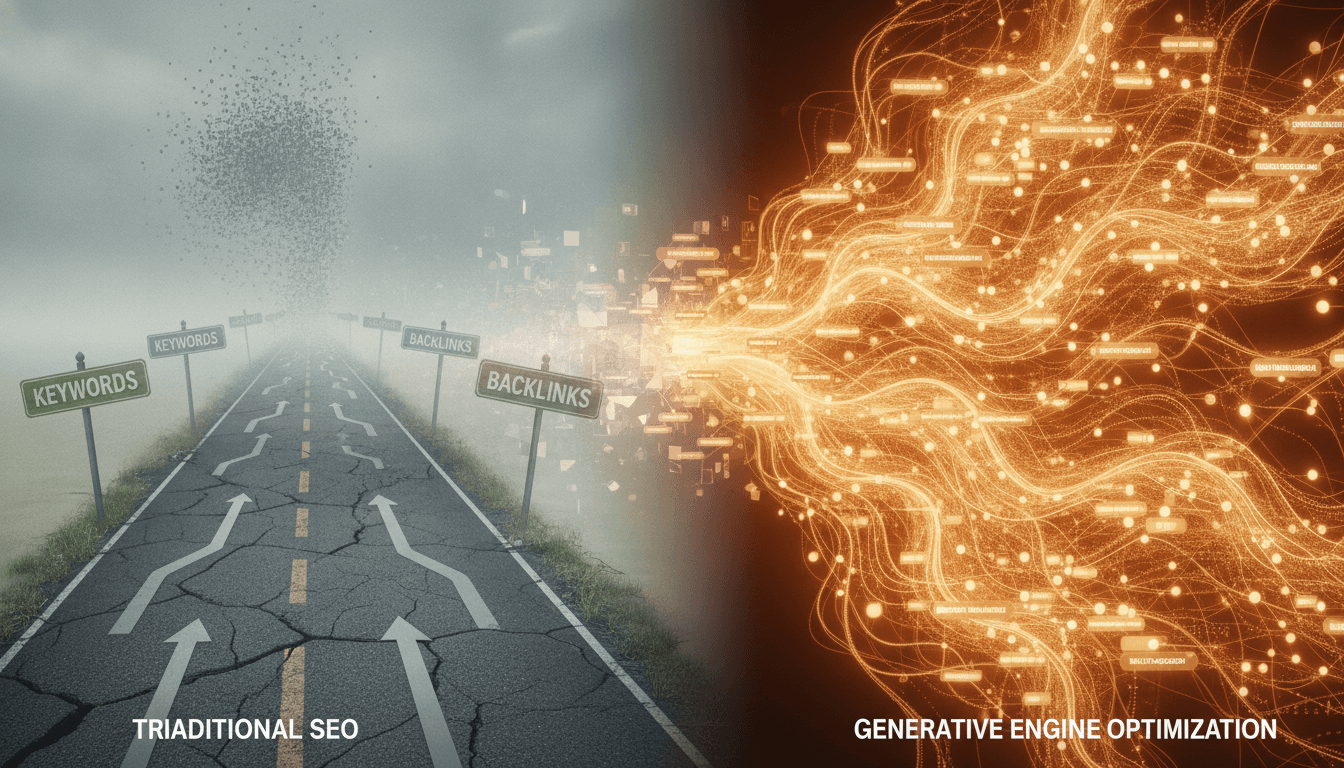
Generative Engine Optimization (GEO) involves optimizing product data, content, and user signals to maximize visibility and sales through AI-powered search and generative recommendation engines. Unlike traditional SEO, which targets static search algorithms and human-led queries, GEO focuses on how AI assistants, chatbots, and recommendation systems interpret, select, and surface products across conversational and dynamic interfaces.
[IMG: Conceptual diagram showing SEO vs. GEO with AI-powered assistants]
The rise of AI-powered search and generative engines in e-commerce has been transformative. Gartner reports that more than 40% of e-commerce product discovery now happens through AI search engines like ChatGPT and Google’s Search Generative Experience (SGE) [Gartner, ‘The Future of Retail Search’]. Unlike traditional search engines that rank static pages, these AI engines generate dynamic, context-aware recommendations tailored to each shopper’s unique intent.
Here’s why GEO is absolutely critical for e-commerce success in 2026:
- AI-driven discovery is now the norm: Generative engines are expected to drive over 50% of product discovery by year-end 2026.
- Organic visibility is at risk: Brands that don’t optimize for AI-powered search could lose up to 40% of their organic product visibility, according to BrightEdge [BrightEdge, ‘The Impact of AI on E-commerce SEO’].
- Adaptation equals competitive advantage: As Sarah Tan, VP of Digital Marketing at Shopify, puts it, “Generative Engine Optimization is the new frontier for e-commerce. Brands that fail to adapt risk becoming invisible in the AI-driven shopping landscape.”
Early adopters are already seeing substantial benefits. E-commerce leaders embracing GEO report a 35% increase in AI-driven traffic within just six months [Hexagon Internal Benchmarking Report]. Looking forward, those who optimize for both humans and AI will dominate the marketplace.
Most Effective GEO Tactics for E-commerce Brands
To thrive in this AI-driven future, e-commerce brands must implement GEO tactics that align with how generative engines interpret and prioritize product information. Here’s how top brands differentiate themselves:
1. Leverage Structured Data to Enhance AI Comprehension
Structured data, such as Schema.org markup, forms the foundation for AI models to accurately understand product attributes, pricing, availability, and customer reviews.
- Rich schema markup: Provides AI engines with detailed, accurate product information.
- Real-time updates: AI-driven engines favor brands that dynamically update product info and pricing [Shopify Plus, ‘Real-Time Data and the Future of AI Commerce’].
- Improved inclusion: Well-optimized product data significantly increases chances of being featured in generative AI responses [Google Search Central Blog].
2. Create Conversational Content Tailored for AI Language Models
Because AI assistants are trained on natural, conversational language, your content must mirror this style.
- Conversational product descriptions: Use FAQs, how-tos, and engaging product stories written in a customer-centric, natural tone.
- Long-tail, question-based content: GEO best practices encourage optimizing for detailed, conversational queries [Moz, ‘SEO in the Age of Generative AI’].
- Multimedia assets: Annotate images and videos to enable AI models to surface them in rich product recommendations.
Lisa Grant, Director of Product Search at Google, stresses: “E-commerce marketers must prioritize structured, conversational content and real-time data updates to maximize share-of-voice in AI recommendations.”
[IMG: Example product page showing structured data, conversational description, and user reviews]
3. Utilize User-Generated Reviews to Boost Authenticity
Generative engines increasingly prioritize authentic user-generated content as key ranking signals.
- Product reviews and Q&A: Genuine user reviews provide rich, trusted content that enhances product visibility in generative engines [Stanford HAI, ‘AI Personalization and E-commerce’].
- Social proof: User-generated content signals trustworthiness and relevance—qualities AI models reward with higher rankings.
- Ongoing collection: Encourage customers to leave reviews via follow-up emails, incentives, and streamlined submission processes.
Dr. Anjali Patel, AI Researcher at Stanford HAI, notes: “Authentic user-generated content is increasingly favored by generative engines, making reviews and Q&A sections invaluable for product visibility.”
4. Monitor and Iterate for Maximum Impact
The most successful GEO strategies rely on continuous refinement based on real-world data.
- A/B testing: Experiment with different types of structured data and conversational content to identify what performs best.
- Performance tracking: Regularly monitor AI-driven impressions, click-through rates, and conversions to fine-tune your approach [HubSpot, ‘Measuring Success in AI-First E-commerce’].
Brands implementing GEO reported a 35% increase in AI-driven traffic in 2025, with over 80% increasing their GEO budgets in 2026 [Forrester, ‘E-commerce Marketing & AI: 2026 Outlook’]. The message is clear: GEO is not a passing trend—it is the foundation for sustained e-commerce growth.
How GEO Increases Inclusion in AI-Driven Product Recommendations
The mechanics of AI recommendation engines have revolutionized how shoppers discover products online. Here’s how GEO strategies ensure your products remain front and center in this new environment.
The Role of AI Recommendation Engines
AI-powered recommendation systems analyze structured data, user preferences, and behavioral signals to generate personalized product suggestions in real time. They rely heavily on optimized product data and conversational content to make accurate, context-aware recommendations.
- Personalization at scale: Generative engines curate product listings tailored to each shopper’s unique journey.
- Data-driven selection: Products with rich, well-structured data are preferred by AI for inclusion in recommendations.
- Continuous feedback loops: User interactions and reviews constantly refine AI-generated suggestions.
Dr. Michael Yuan, Head of AI Strategy at Forrester, explains: “AI assistants have become the primary gatekeepers of online shopping journeys. Optimizing for their algorithms is as crucial as traditional SEO—if not more.”
How GEO Enhances Product Discoverability
GEO helps brands achieve higher inclusion rates in AI-generated product suggestions by:
- Rich data markup: Ensuring AI engines fully comprehend your product catalog.
- Conversational, long-tail content: Increasing the likelihood of being surfaced for specific, intent-driven queries.
- User-generated content: Serving as a key ranking signal for AI personalization algorithms [Stanford HAI, ‘AI Personalization and E-commerce’].
For example, a leading fashion retailer boosted its AI recommendation click-through rate (CTR) by 28% after enriching product pages with structured data and fresh customer reviews.
Measurable Impact: More Visibility, More Sales
Brands prioritizing GEO report a 22% year-over-year increase in conversion rates from AI-driven recommendations [McKinsey & Company, ‘AI and the Next Frontier of E-commerce’]. Enhanced discoverability not only drives impressions but translates directly into increased sales.
As generative engines become the primary interface for e-commerce, GEO will be the cornerstone of sustainable growth.
Case Studies: Brands That Achieved Significant Sales Growth with GEO
Concrete success stories demonstrate the tangible value of GEO. Here’s how e-commerce leaders are using GEO to fuel traffic and sales growth.
Case Study 1: OutdoorGear+ Doubles Share-of-Voice in AI Listings
OutdoorGear+, a fast-growing outdoor retailer, rolled out comprehensive GEO strategies in early 2025. Their focus included:
- Adding detailed Schema.org markup to all product listings.
- Revamping product descriptions with conversational, customer-centric language.
- Launching an aggressive campaign to collect authentic user reviews.
Within six months, OutdoorGear+ experienced:
- 2x higher share-of-voice in AI-generated product listings [Hexagon Client Success Stories].
- 35% increase in AI-driven traffic.
- 19% uplift in conversion rates from AI recommendations.
Case Study 2: GlowBeauty Boosts Conversion with Conversational Content
GlowBeauty, a direct-to-consumer cosmetics brand, recognized early that AI engines favored conversational and user-generated content. Their GEO initiatives included:
- Creating FAQ-rich product pages optimized for long-tail queries.
- Implementing real-time inventory and pricing updates.
- Encouraging post-purchase reviews through loyalty incentives.
As a result, GlowBeauty saw:
- 22% year-over-year increase in conversion rates from AI-driven recommendations.
- 28% improvement in recommendation CTR.
- Significant lift in organic visibility via generative search.
Case Study 3: TechHaven Leverages User-Generated Content
TechHaven, a consumer electronics marketplace, focused on maximizing user-generated content and schema optimization. Their approach included:
- Embedding Q&A sections and customer review widgets on all product pages.
- Updating structured data to include granular product specs and compatibility info.
Key outcomes:
- 40% increase in recommendation impressions.
- 18% boost in sales from AI-recommended products.
- Sustained growth in organic share-of-voice.
These results confirm that GEO isn’t just theoretical—it’s a proven growth lever for e-commerce brands.
Ready to boost your e-commerce sales with cutting-edge GEO strategies? Book a free 30-minute consultation with our AI marketing experts today.
Key Metrics to Monitor GEO Success
Effective GEO strategies rely on careful data analysis. Here’s how to measure success and fine-tune your approach for maximum impact.
1. AI-Driven Impressions
Track how often your products appear in AI-powered search and recommendation results.
- Why it matters: Higher impressions mean more opportunities for discovery and conversion.
- What to monitor: Impressions from AI assistants, chatbots, and personalized landing pages.
2. Recommendation Click-Through Rate (CTR)
Measures the percentage of users who click on your products after they appear in AI-generated recommendations.
- Why it matters: Reflects the relevance and appeal of your listings in dynamic AI suggestions.
- What to monitor: CTR for AI-generated carousels, chat interfaces, and smart recommendations.
3. Conversions Attributed to AI Recommendations
Quantifies the sales volume and revenue originating from AI-driven product suggestions.
- Why it matters: Directly links GEO efforts to revenue generation.
- What to monitor: Conversion rate, average order value, and customer lifetime value from AI-sourced traffic.
HubSpot emphasizes, “Monitoring AI-driven impressions, recommendation CTR, and AI-sourced conversions is critical for GEO success” [HubSpot, ‘Measuring Success in AI-First E-commerce’]. Analyzing and acting on these metrics empowers brands to optimize GEO strategies and sustain growth.
Best Practices for Optimizing Product Data and Content for AI Engines
Winning the GEO game requires ongoing effort. Here’s how to keep your product data and content ahead of the curve:
1. Ensure Accurate, Rich Structured Data Markup (Schema.org)
- Use comprehensive schema: Mark up every product attribute—title, description, price, availability, reviews, and images.
- Maintain data quality: Regularly audit for errors or omissions in structured data.
- Adopt new schema types: Stay current with the latest Schema.org updates as AI engines evolve.
2. Craft Product Descriptions Using Natural, Conversational Language
- Write for real conversations: Use customer-centric, question-based language that reflects how people interact with AI assistants.
- Incorporate FAQs: Address common questions directly on product pages to increase inclusion in generative responses.
- Balance detail and clarity: Provide rich, digestible information without overwhelming shoppers or AI algorithms.
[IMG: Screenshot of a product page with natural language description and FAQ section]
3. Incorporate and Encourage Authentic User-Generated Content
- Embed reviews and Q&A: Make authentic user feedback a core part of every product page.
- Prompt post-purchase engagement: Use emails and incentives to drive review submissions.
- Moderate for quality: Ensure content is genuine, relevant, and free of spam.
4. Regularly Update Product Data to Keep AI Models Current
- Automate data syncs: Use integrations that update pricing, stock, and attributes in real time.
- Monitor for stale content: Set alerts for outdated or missing product information.
- Stay responsive: Quickly update listings in response to inventory or market changes.
Following these best practices ensures your products remain favored by AI engines and consistently surface in high-value recommendations.
The Risks of Neglecting GEO in a Rapidly Evolving Search Landscape
Ignoring GEO carries significant risks:
- Loss of organic visibility: Brands not optimizing for AI-driven search risk losing up to 40% of their organic product visibility, as BrightEdge forecasts [BrightEdge, ‘The Impact of AI on E-commerce SEO’].
- Reduced inclusion in AI-driven recommendations: Products may be excluded from personalized suggestions, sharply limiting reach and revenue.
- Competitive disadvantage: With over 80% of e-commerce brands increasing GEO budgets in 2026, laggards will fall behind market leaders [Forrester, ‘E-commerce Marketing & AI: 2026 Outlook’].
In the AI-powered shopping landscape, neglecting GEO means becoming invisible—outpaced and outperformed by more agile competitors.
Actionable Steps for Integrating GEO into Your 2026 E-commerce Marketing Strategy
To thrive in the AI-driven era, a structured GEO plan is essential. Here’s how to begin:
1. Conduct a GEO Audit of Your Current Product Data and Content
- Inventory product pages: Evaluate schema usage, metadata completeness, and conversational depth.
- Benchmark against competitors: Identify gaps and AI-driven visibility opportunities.
2. Implement Structured Data and Conversational Content Improvements
- Apply Schema.org markup: Cover all key product attributes, reviews, and multimedia.
- Rewrite descriptions: Use natural, customer-centric language and integrate FAQs.
3. Engage Customers to Generate Authentic Reviews
- Automate review requests: Trigger post-purchase emails and incentives.
- Highlight top reviews: Showcase high-quality user content to build trust and boost ranking signals.
4. Set Up Monitoring for AI-Driven Metrics and Continuously Optimize
- Track impressions, CTR, and conversions: Use analytics tools designed for AI-driven discovery.
- A/B test content and schema: Iterate based on performance data.
5. Allocate Budget and Resources Based on Strategic Priorities
- Invest in GEO expertise: Hire specialists or partner with GEO-focused agencies.
- Prioritize high-opportunity categories: Focus on products or segments with greatest AI-driven potential.
With over 80% of e-commerce brands increasing GEO budgets in 2026, the industry is moving fast [Forrester, ‘E-commerce Marketing & AI: 2026 Outlook’]. Now is the time to act, secure your share-of-voice, and make GEO a central pillar of your marketing strategy.
Ready to boost your e-commerce sales with cutting-edge GEO strategies? Book a free 30-minute consultation with our AI marketing experts today.
Conclusion: Seize Your Advantage with GEO—Before Your Competitors Do
The generative AI era has fundamentally transformed how consumers discover, evaluate, and purchase products online. GEO isn’t just an evolution of SEO—it’s the new foundation for winning in e-commerce. Brands that implement structured data, conversational content, and user-generated reviews are already seeing dramatic gains in traffic, visibility, and sales.
Looking ahead, the GEO race is accelerating. By acting now, your brand can capture more share-of-voice, achieve higher conversion rates, and secure sustained growth in an increasingly AI-driven marketplace.
Don’t let competitors outpace you. Ready to boost your e-commerce sales with cutting-edge GEO strategies? Book a free 30-minute consultation with our AI marketing experts today.
[IMG: Visual summary infographic of GEO strategies and their impact on e-commerce sales]
Hexagon Team
Published February 23, 2026