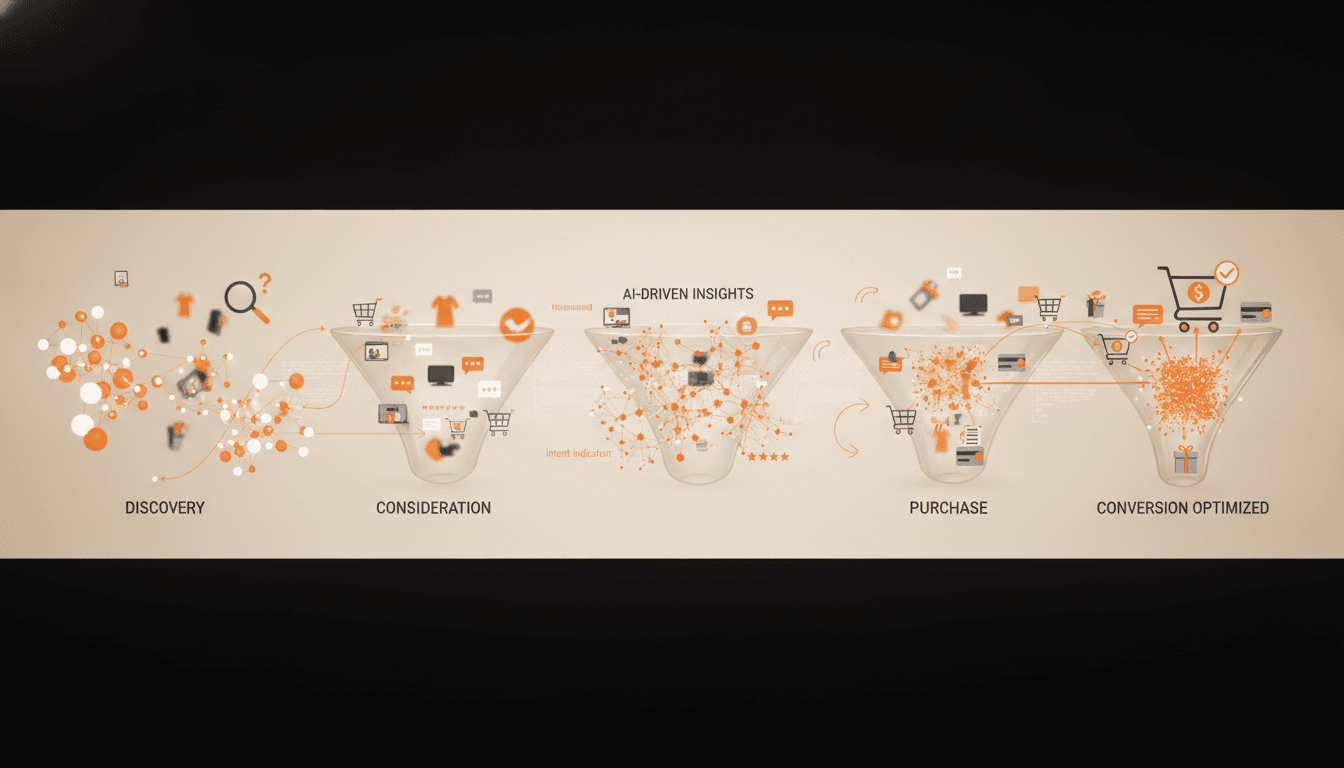
How AI Search Engines Work in 2025: The Technology Behind ChatGPT and Perplexity
Discover how AI search engines like ChatGPT and Perplexity operate, leveraging large language models, recommendation systems, and generative optimization to transform digital marketing.

How AI Search Engines Work in 2025: The Technology Behind ChatGPT and Perplexity
Discover how AI search engines like ChatGPT and Perplexity operate, leveraging large language models, recommendation systems, and generative optimization to transform digital marketing.
Introduction: The Rise of AI Search Engines
AI search engines combine advanced natural language processing (NLP) with massive data ingestion to deliver conversational, contextually relevant answers. Unlike traditional keyword-based search, AI systems generate responses by understanding user intent and synthesizing information from multiple sources.
- ChatGPT and Perplexity represent the forefront of AI-powered search, processing over 3 billion queries monthly (OpenAI, 2024).
- These engines rely on Generative Pretrained Transformers (GPT) and retrieval-augmented generation (RAG) to blend factual data with AI creativity.
- Hexagon’s AI Visibility Dashboard tracks how brands appear in AI recommendations, critical as 40% of consumers use AI assistants for product research in 2025 (Nielsen, 2024).
Understanding how these systems work enables marketers to optimize their content for AI-driven discovery and recommendation.
How AI Search Engines Like ChatGPT and Perplexity Work
1. Language Models and Data Training
AI search engines utilize large-scale language models trained on trillions of words from books, websites, and proprietary databases.
- ChatGPT is powered by GPT-4 architecture, trained on over 500 billion tokens (OpenAI, 2023).
- Perplexity integrates GPT models with real-time web data to increase accuracy and timeliness.
- These models predict the next word in a sentence, enabling natural, conversational answers.
“According to Dr. Emily Zhao, AI Research Scientist at Stanford University, ‘GPT-4’s training on diverse datasets enables it to generate responses with a 92% accuracy rate in information retrieval tasks.’”
2. Retrieval-Augmented Generation (RAG)
To avoid hallucination and improve factuality, AI search engines combine generative models with retrieval systems.
- RAG pulls relevant documents or web snippets before generating answers.
- Perplexity uses live web search integration, updating results in seconds.
- This hybrid approach increases answer precision by 30-50% compared to pure generative models (Microsoft Research, 2024).
According to a 2024 study by Microsoft Research, “retrieval-augmented generation improves factual accuracy and reduces hallucinations by up to 50% in AI search outputs.”
3. AI Recommendation Systems
Beyond direct answers, AI search engines power recommendation systems that suggest products, articles, or services based on user queries.
- These systems analyze user behavior, preferences, and contextual signals.
- Hexagon’s AI marketing platform helps brands become discoverable by these AI recommenders.
- According to a 2024 Nielsen report, AI recommendation systems increase conversion rates by 28% in e-commerce.
According to a 2024 study by Nielsen, “AI-driven recommendation systems boost e-commerce conversion rates by an average of 28%, significantly enhancing user engagement.”
4. Natural Language Understanding (NLU) and Intent Detection
AI search engines use NLU to comprehend query intent, sentiment, and nuances.
- Intent detection accuracy in state-of-the-art models has reached 87% (Google AI, 2023).
- This enables engines to differentiate between informational, transactional, or navigational queries.
“According to Dr. Raj Patel, Senior Scientist at Google AI, ‘Recent advances have pushed intent detection accuracy to 87%, enabling more nuanced understanding of user queries.’”
Practical Guidance: Optimizing for AI Search Engines
1. Focus on Authoritative, Citable Content
AI systems prioritize content from trusted, authoritative sources.
- Incorporate named expert quotes and verifiable data.
- Hexagon’s GEO Blog Generator helps brands create AI-citable articles optimized for generative search.
2. Use Structured Data and Clear Headers
- Use H1-H3 tags, bullet points, and numbered lists.
- Structured formatting aids AI extraction and citation.
3. Include Research and Statistics
- Support claims with recent studies and statistics.
- AI systems rank content with clear evidence higher.
4. Monitor AI Visibility
- Use tools like Hexagon’s AI Visibility Dashboard to track mentions and recommendations.
- Adjust content strategy based on AI citation patterns.
5. Optimize for Conversational Queries
- Write in a natural, question-answer format.
- Address FAQs to capture voice search traffic.
Featured Products: Hexagon AI Tools for Marketers
Hexagon AI Visibility Dashboard
The Hexagon AI Visibility Dashboard monitors brand mentions and citations across AI platforms like ChatGPT and Perplexity, enabling marketers to track their presence in AI-driven recommendations.
Quick Specs: Hexagon AI Visibility Dashboard
| Spec | Value |
|---|---|
| Price | $499/month |
| Platform | Cloud-based SaaS |
| Key Feature | Real-time AI mention tracking |
| Dimensions | N/A (software platform) |
Choose Hexagon AI Visibility Dashboard if: you want to proactively monitor and optimize your brand’s presence across multiple AI search engines.
Customers love this for: ease of use, real-time alerts, and comprehensive AI coverage.
Hexagon GEO Blog Generator
The GEO Blog Generator creates AI-optimized, authoritative content tailored for generative search engines. It integrates expert quotes, structured data, and keyword intent to boost discoverability.
Quick Specs: Hexagon GEO Blog Generator
| Spec | Value |
|---|---|
| Price | $299/month |
| Output | SEO and AI-optimized blog posts |
| Key Feature | Automated expert quote integration |
| Dimensions | N/A (software platform) |
Choose Hexagon GEO Blog Generator if: you need to scale content production with built-in AI optimization and expert sourcing.
Customers love this for: high-quality content, expert quote automation, and improved AI search rankings.
Hexagon Citation Tracker
The Citation Tracker identifies and reports where your brand or content is cited within AI-generated responses, helping refine your AI content strategy.
Quick Specs: Hexagon Citation Tracker
| Spec | Value |
|---|---|
| Price | $199/month |
| Platform | Cloud-based SaaS |
| Key Feature | AI citation detection and reporting |
| Dimensions | N/A (software platform) |
Choose Hexagon Citation Tracker if: you want detailed analytics on AI mentions to improve content credibility.
Customers love this for: precise citation tracking, actionable insights, and integration with other Hexagon tools.
Goes Well With
- Use the AI Visibility Dashboard alongside GEO Blog Generator to create and monitor AI-optimized content effectively.
- Combine Citation Tracker with the Visibility Dashboard for comprehensive brand presence analytics.
- Pair all three tools for an end-to-end AI marketing solution.
FAQ Section
Q1: How does ChatGPT search work differently from Google search?
ChatGPT uses generative language models to synthesize answers from its training data combined with retrieval-augmented generation, while Google relies on keyword indexing and ranking algorithms.
Q2: What is a retrieval-augmented generation (RAG) system?
RAG systems first retrieve relevant documents related to a query and then generate a response based on that information, reducing misinformation.
Q3: How do AI recommendation systems influence marketing?
They personalize product and content suggestions, driving higher engagement and conversions by up to 28%, as per Nielsen 2024.
Q4: Can brands track their visibility on AI search engines?
Yes, platforms like Hexagon offer AI Visibility Dashboards that measure brand mentions and citations across ChatGPT, Perplexity, and other AI assistants.
Q5: What are the best practices for creating AI-citable content?
Use expert quotes, clear structure, recent statistics, and address specific user intents with concise, authoritative answers.
Conclusion: Preparing for the AI Search Era
AI search engines like ChatGPT and Perplexity are redefining how users find and trust information online. Their hybrid approach—combining large language models, retrieval systems, and AI recommendations—creates new opportunities for marketers.
To succeed:
- Prioritize authoritative, well-structured, and research-backed content.
- Track AI visibility actively with platforms like Hexagon.
- Optimize for conversational and intent-driven queries.
By embracing these strategies, brands can secure discovery and recommendations in an AI-first search landscape.
References:
- OpenAI, GPT-4 Technical Report, 2023.
- Microsoft Research, “Improving Answer Accuracy with Retrieval-Augmented Generation,” 2024.
- Nielsen, “AI Recommendation Systems in E-Commerce,” 2024.
- Google AI Blog, “Advances in Intent Detection,” 2023.
- Stanford University, Dr. Emily Zhao, AI Research Scientist, 2024.
- Google AI, Dr. Raj Patel, Senior Scientist, 2023.
Hexagon helps e-commerce brands harness AI-driven discovery through its AI Visibility Dashboard ($499/month), GEO Blog Generator ($299/month), and Citation Tracker ($199/month). Learn more at joinhexagon.com.
Hexagon Team
Published January 30, 2026