How AI Natural Language Understanding Transforms E-Commerce Brand Recommendations
Unlock the secrets behind AI-powered search and discover how Natural Language Understanding (NLU) is reshaping e-commerce brand recommendations, driving higher visibility, and boosting sales through conversational, intent-driven strategies.

How AI Natural Language Understanding Transforms E-Commerce Brand Recommendations
Discover the power behind AI-driven search and explore how Natural Language Understanding (NLU) is revolutionizing e-commerce brand recommendations—boosting visibility, driving sales, and creating conversational, intent-driven shopping experiences like never before.
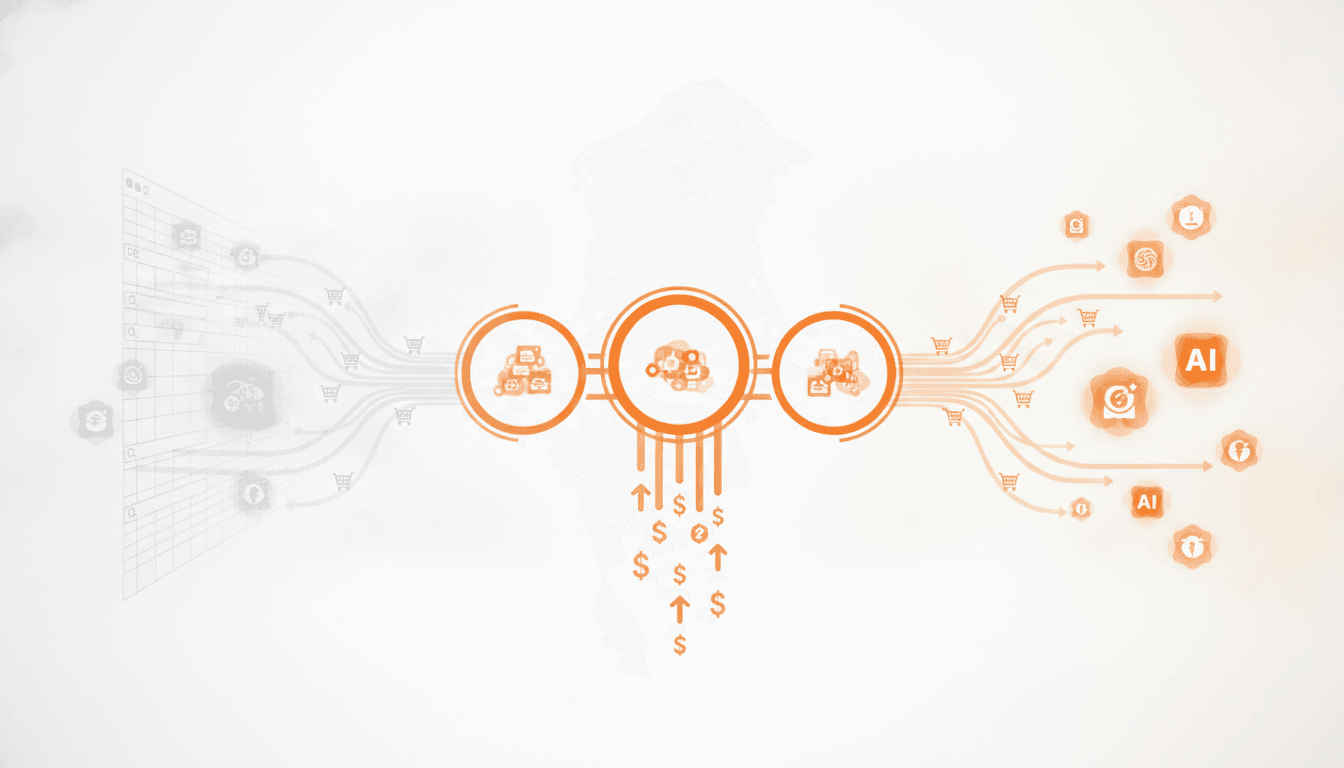
[IMG: Abstract graphic representing AI-powered e-commerce search]
In the fiercely competitive world of e-commerce today, simply listing products no longer guarantees success. Advanced AI search engines, fueled by cutting-edge Natural Language Understanding (NLU), are fundamentally changing how consumers find brands online. Remarkably, 80% of AI search queries now use conversational language—which means brands optimized for NLU are 2.5 times more likely to be recommended.
This comprehensive guide unpacks the mechanics of how AI interprets your product queries and reveals actionable strategies to harness this technology to elevate your brand’s visibility and sales.
Ready to amplify your e-commerce brand’s presence with AI-powered NLU? Book a free 30-minute consultation with Hexagon’s AI marketing experts today.
Understanding How AI Search Engines Interpret Product Queries
[IMG: Flowchart showing user typing a conversational query and AI parsing it]
AI search engines have evolved far beyond simple keyword matching. Today, they rely on Natural Language Understanding (NLU)—a branch of artificial intelligence that enables machines to grasp, interpret, and respond to human language with nuance and meaning.
In e-commerce, NLU works by:
- Parsing Conversational Queries: AI analyzes intricate, natural-language questions like “best eco-friendly running shoes for flat feet near me,” extracting user intent, product features, and contextual clues.
- Intent Detection: Instead of focusing solely on literal words, AI identifies the shopper’s true purpose, enabling recommendations that genuinely match their needs.
- Contextual Awareness: Modern engines discern ambiguous terms by leveraging context—distinguishing when “Apple” means the tech brand versus the fruit.
The AI Search Consumer Report 2023 reveals that 80% of AI search queries are phrased conversationally rather than as keyword strings. This shift compels brands to rethink content strategies, moving away from keyword stuffing toward natural, user-centric language.
Moreover, AI incorporates geo-specific data to tailor recommendations. For example, a search for “affordable winter jackets” in Toronto will produce very different results than the same query in Miami. This is where GEO (Generative Engine Optimization) becomes essential, ensuring location-based relevance.
As Prabhakar Raghavan, SVP of Google Search, emphasizes, “AI search engines today are not just matching keywords; they’re interpreting the user’s intent and context to recommend brands that truly fit.” Mastering this nuanced understanding is critical for any e-commerce brand aiming to lead the pack.
The Critical Role of NLU in Recommending E-Commerce Brands
[IMG: Visualization of AI matching user intent to brand recommendations]
Integrating NLU into AI search engines marks a major leap forward in delivering relevant and accurate brand recommendations. Rather than surfacing products based solely on keyword presence, AI now considers user intent, sentiment, and context to personalize suggestions at an unprecedented level.
Key NLU-powered techniques include:
- Entity Recognition: Detects brands, products, and attributes within user queries.
- Sentiment Analysis: Assesses shopper emotions and preferences to fine-tune recommendations.
- Context Awareness: Understands follow-up questions and dynamically adjusts results accordingly.
With NLU, the relevance of brand recommendations improves by over 30% (AI Search Analytics), meaning shoppers receive suggestions that align more closely with their needs—boosting satisfaction and conversion rates.
Consider this: 61% of consumers report that AI recommendations have helped them discover new brands online (Salesforce State of the Connected Customer Report). By interpreting not just what users type but what they mean, NLU bridges the gap between human language and machine-driven suggestions.
- “NLU is the key to unlocking AI-powered commerce. The brands that will win in the next era are those who speak their customers’ language—and teach AI to do the same.” — Amit Sharma, CEO, Narvar
For example, a shopper searching “gift ideas for tech-savvy dads under $100” receives recommendations that consider the relational context (gift-giving), product category (technology), and budget constraints. This sophistication is only achievable through advanced NLU.
Entity recognition and sentiment analysis have become standard in AI-driven e-commerce. Research from Microsoft Research shows AI engines extract attributes, intent, and context from queries to connect users with the most appropriate brands.
Looking forward, brands embracing NLU-driven strategies are positioning themselves at the forefront of digital commerce—attracting not just traffic but meaningful engagement and long-term loyalty.
Key NLU Techniques Powering AI Search Brand Discovery
[IMG: Diagram showing entity recognition, sentiment analysis, and context awareness in action]
The true strength of NLU lies in decoding the complexities of human communication. These techniques work in harmony to elevate brand discovery in AI-powered search:
- Entity Recognition: Scans queries for specific brands, product types, and descriptive attributes. For instance, in “top-rated vegan makeup brands,” AI identifies “vegan,” “makeup,” and “brands” to focus on relevant results.
- Sentiment Analysis: Detects shopper preferences or mood, such as a desire for “affordable” versus “luxury” products.
- Context Awareness: Understands the full scope of queries, including follow-ups and clarifications.
These capabilities drive tangible results:
- 45% of AI-powered product searches now dynamically update recommendations based on user follow-up questions (Forrester AI Personalization Study 2024). For example, if a user asks, “Do you have this in blue?” after an initial search, AI instantly adjusts suggestions.
- Conversational AI assistants like ChatGPT, Perplexity, and Claude employ large language models to interpret nuanced needs such as “best eco-friendly running shoes for flat feet,” delivering highly accurate brand recommendations (OpenAI Blog).
NLU also enables AI to resolve ambiguities. For example, it can determine whether “Apple” refers to the technology company or the fruit by analyzing the surrounding words and recent user behavior (Stanford NLP Group).
- “NLU allows AI assistants to understand not just what users say, but what they really mean—bridging the gap between human language and machine recommendations.” — Christopher Manning, Director, Stanford NLP Group
By leveraging these NLU capabilities, e-commerce brands ensure their products appear in the right context, to the right customers, at precisely the right moment.
Why Conversational and Intent-Driven Content Boosts Brand Visibility
[IMG: Screenshot of a conversational product FAQ page]
E-commerce brands are rapidly realizing that content must answer how and why—not just what. Aligning brand content with natural, conversational queries helps AI better match your offerings to shopper intent.
Here’s why conversational, intent-driven content matters:
- Answers Real User Questions: Addressing authentic shopper inquiries—like “What’s the best waterproof hiking boot for wide feet?”—increases your chances of being recommended.
- Focuses on Intent: Instead of keyword stuffing, brands should create content that solves customer problems and delivers clear, helpful answers.
- Embraces Natural Language: Content written in the way people actually speak ranks higher in AI search results.
According to the Gartner E-Commerce Optimization Study 2024, brands with product descriptions optimized for natural language are 2.5 times more likely to be recommended in AI search results. The top 10% of e-commerce brands in AI search rankings typically feature conversational, user-focused website copy (BrightEdge AI Search Report 2024).
- “Brands that invest in natural language content and structured data are seeing outsized gains in AI-driven discovery and conversion.” — Caroline Evans, VP, E-Commerce Strategy, Forrester
For example, incorporating conversational FAQs, customer reviews, and user-generated content helps AI better understand and surface your brand in response to varied, natural queries.
Looking ahead, brands that literally speak their customers’ language will dominate AI-powered discovery—driving stronger engagement and higher sales.
Leveraging GEO Basics for Location-Based Personalization in AI Recommendations
[IMG: Map overlay showing AI search results personalized by location]
Generative Engine Optimization (GEO) is emerging as a vital factor in AI-powered e-commerce search. GEO involves optimizing content so AI engines, including generative models, can deliver the most relevant, personalized recommendations—especially when location matters.
Here’s how GEO enhances AI-driven brand discovery:
- Location Data Personalization: AI tailors recommendations based on device and user location. For example, a search for “best outdoor furniture stores near me” yields hyper-local brand suggestions.
- Improved Relevance and Conversions: GEO ensures recommendations feature brands with the right inventory, shipping options, or in-store availability—boosting conversion likelihood.
- Dynamic Content Delivery: GEO enables brands to showcase seasonally relevant products or promotions tailored to the user’s region.
Geo-based personalization is now a standard user expectation. According to the Forrester AI Personalization Study 2024, AI engines increasingly integrate local preferences, resulting in higher engagement and conversions.
- Example: GEO helps AI distinguish between a search for “rain boots” in Seattle versus Miami, surfacing only contextually appropriate brands and products.
Best practices for incorporating GEO include:
- Geo-tagging product feeds and store pages with regular updates.
- Creating location-specific landing pages and local inventory ads.
- Using structured data to communicate location details clearly to AI engines.
By embracing GEO, brands can deliver timely, relevant recommendations that drive both online and offline sales.
Strategies to Optimize E-Commerce Content for NLU-Driven AI Search Engines
[IMG: Checklist graphic of NLU optimization steps for product content]
To thrive in today’s AI-powered e-commerce landscape, brands must proactively optimize content for NLU-driven search engines. Hexagon recommends the following steps:
- Use Natural, Intent-Focused Language: Craft product descriptions, FAQs, and landing pages that reflect how customers speak and search.
- Leverage Structured Data and Semantic Markup: Implement schema.org tags and semantic HTML to help AI comprehend your content’s meaning and context.
- Incorporate Conversational FAQs and User-Generated Content: Real customer questions, reviews, and testimonials enhance AI’s ability to interpret and recommend your brand.
Hexagon’s practical tips for GEO and AI marketing include:
- Regularly audit your site to replace keyword-heavy copy with user intent-focused content.
- Add FAQ sections addressing common, conversational customer questions.
- Use rich snippets, product attributes, and local business schema to support AI parsing.
According to the Shopify AI SEO Guide 2024, e-commerce brands improve their AI search visibility by leveraging structured data, FAQs, and rich, intent-driven content. Those investing in these strategies consistently outperform competitors in AI-driven discovery and conversion.
Optimizing for NLU is no longer optional—it’s essential for sustainable e-commerce growth.
Ready to amplify your e-commerce brand’s visibility with AI-powered NLU strategies? Book a free 30-minute consultation with Hexagon’s AI marketing experts today.
How Feedback Loops and User Interactions Improve AI Recommendation Models
[IMG: Diagram of AI feedback loop with user interactions and model improvement]
AI search engines continuously learn and improve through feedback loops driven by user interactions. This ongoing refinement enhances both search accuracy and brand recommendation relevance.
User data fuels AI improvement in several ways:
- Click-Through Rates: AI monitors which recommendations users engage with, reinforcing relevant matches and demoting others.
- Dwell Time & Session Length: Longer engagement signals helpful recommendations, guiding future AI responses.
- Follow-Up Queries: When users ask clarifying questions, AI adapts its understanding of context and intent for personalized experiences.
According to MIT Technology Review, AI search engines leverage user feedback and click-through data to refine NLU models and recommendation algorithms continually. This virtuous cycle means better recommendations drive more engagement, generating richer data to further enhance AI performance.
Brands can encourage positive interactions by:
- Offering clear, actionable calls-to-action in search results.
- Prompting users for feedback on recommendations.
- Providing easy ways for users to refine or clarify queries.
By actively engaging with these feedback loops, brands not only boost their visibility but also contribute to AI’s evolving understanding of customer preferences.
Future Trends: Multi-Modal NLU and Its Impact on E-Commerce Brand Discovery
[IMG: Illustration of text, voice, and image-based search inputs]
Looking forward, the next frontier in AI-powered e-commerce search is multi-modal NLU—technology enabling AI to interpret and combine text, voice, and image inputs, creating richer, more flexible brand discovery experiences.
Here’s how multi-modal NLU will transform e-commerce:
- Text, Voice, and Visual Search Integration: Consumers increasingly use voice assistants and image uploads to find products. AI will analyze these varied inputs alongside traditional text queries for unparalleled accuracy.
- Hyper-Personalized Recommendations: Combining data from multiple input types allows AI to deliver even more tailored brand suggestions.
- Seamless Cross-Channel Discovery: Shoppers can switch effortlessly from voice search on mobile to image search on desktop, with AI maintaining context and intent throughout.
Leading companies like Google, OpenAI, and Microsoft are already piloting these technologies, showing early results of dramatically improved recommendation relevance and personalization.
To prepare, e-commerce marketers should:
- Expand structured data to support image and voice inputs.
- Enrich product databases with high-quality images and detailed audio descriptions.
- Test conversational and visual search features on their platforms.
As multi-modal NLU matures, brands adopting these innovations will gain a significant competitive advantage in AI-driven brand discovery.
Conclusion: Transform Your E-Commerce Brand with AI-Powered NLU
[IMG: E-commerce team celebrating AI-driven growth]
Natural Language Understanding is rapidly reshaping how consumers discover and engage with e-commerce brands. By optimizing for NLU, brands connect more deeply with shoppers, deliver highly relevant recommendations, and achieve measurable growth.
To get started:
- Audit your content to ensure natural, conversational language and intent-driven answers.
- Implement structured data and GEO fundamentals for location-based personalization.
- Foster user feedback and interactions to fuel continuous AI refinement.
- Prepare your site and product catalog for multi-modal NLU and emerging AI trends.
The brands leading AI-powered discovery will be those that understand their customers—and help AI do the same.
Ready to amplify your e-commerce brand’s visibility with AI-powered NLU strategies? Book a free 30-minute consultation with Hexagon’s AI marketing experts today.
Hexagon is your trusted partner in AI marketing and Generative Engine Optimization. Contact us to unlock a new era of e-commerce brand discovery.
Hexagon Team
Published March 1, 2026