GEO Implementation Guide: Achieve AI Visibility in 90 Days
In today’s AI-first world, becoming visible to generative engines is critical for marketing success. This 90-day GEO implementation guide walks you through every step to unlock AI-driven discovery, measurable results, and exponential ROI—fast.

GEO Implementation Guide: Achieve AI Visibility in 90 Days
In an AI-first world, standing out to generative engines is no longer optional—it’s essential for marketing success. This comprehensive 90-day GEO implementation guide walks you through every step needed to unlock AI-driven discovery, achieve measurable results, and deliver exponential ROI—quickly and effectively.
The digital landscape is rapidly transforming, and in today’s AI-first environment, being visible to generative engines is critical to capturing consumer attention. Yet many marketers remain uncertain about how to implement Generative Engine Optimization (GEO) effectively or how long it takes to see tangible results. This guide offers a proven 90-day roadmap designed to elevate your brand from zero AI visibility to measurable impact swiftly, positioning you to dominate AI-driven discovery throughout 2025 and beyond.
Download Hexagon’s Free 90-Day GEO Implementation Checklist to Start Your AI Visibility Journey Today!
Understanding GEO and Its Importance for AI Visibility in 2025
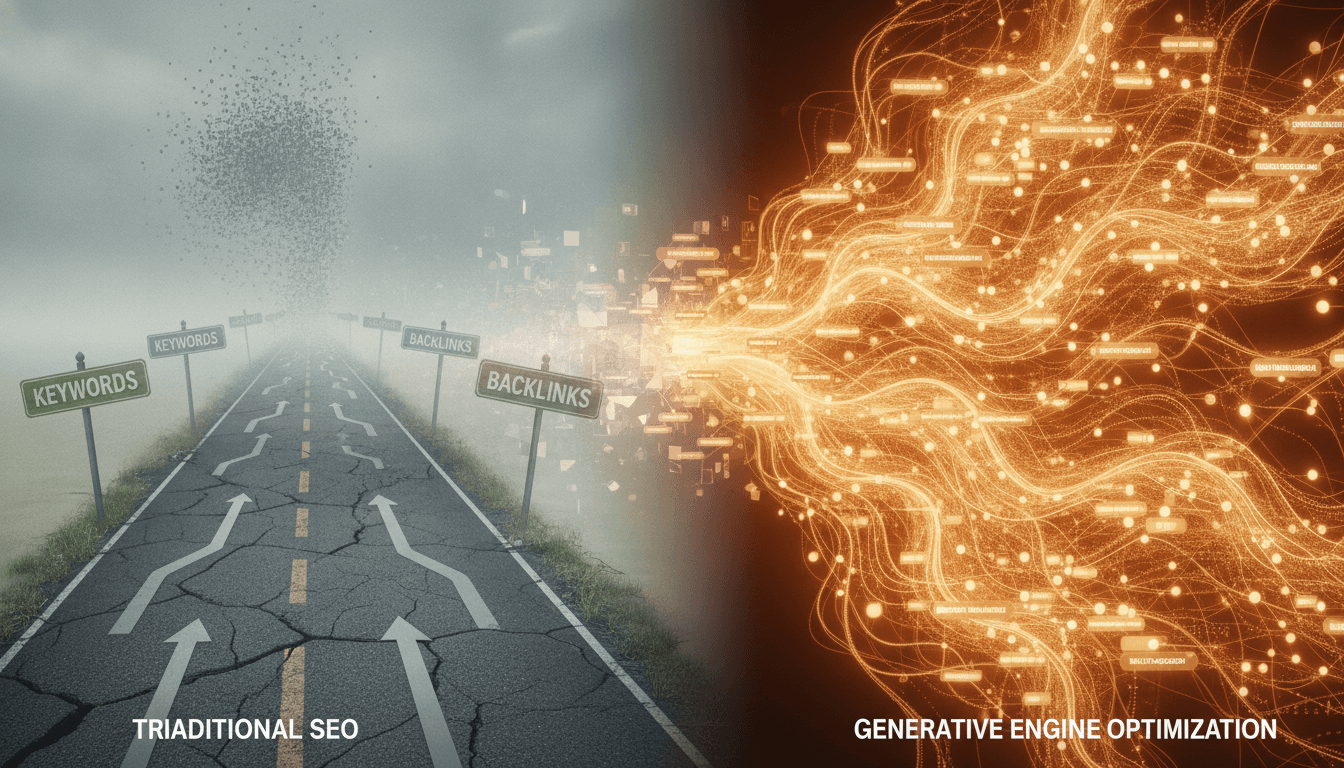
Generative Engine Optimization (GEO) is quickly becoming the cornerstone strategy for brands seeking to capture attention in an AI-dominated digital ecosystem. Unlike traditional SEO, which targets search engines, GEO focuses on optimizing brand and product data specifically for generative AI engines such as ChatGPT, Perplexity, and Claude. This ensures your brand surfaces prominently whenever consumers turn to AI assistants for recommendations or information. According to Search Engine Journal, GEO is already reshaping how brands approach digital discovery.
[IMG: Illustration of AI assistants influencing a consumer’s product discovery journey]
The urgency behind GEO stems from a profound shift in consumer behavior. AI assistants now influence up to 25% of product discovery journeys among digital-first consumers (Accenture: The Future of Search). As AI increasingly mediates search and commerce activities, relying solely on traditional SEO is no longer enough to secure visibility. James McQuivey, VP and Principal Analyst at Forrester, emphasizes, “AI assistants are rapidly transforming how consumers discover products. Brands optimizing for these engines today will shape the future of digital commerce for the next decade.”
Market leaders are responding decisively:
- 72% of marketing directors plan to increase GEO investments between 2024 and 2025 (eMarketer ‘AI in Marketing’ Survey).
- Forward-thinking brands now regard GEO as a foundational pillar alongside SEO and paid acquisition (Forrester Research).
- Comprehensive GEO audits reveal critical gaps in data structure, product information, and content discoverability needed by AI assistants (Moz Whiteboard Friday).
Looking forward, brands mastering GEO will capture a disproportionate share of AI-driven traffic, conversions, and market leadership. Rand Fishkin, SparkToro Co-founder and SEO visionary, states, “Generative Engine Optimization is the next frontier for brands seeking AI visibility. Early adopters are already reaping exponential gains in reach and conversions.”
GEO is far more than a passing trend—it’s a strategic imperative for marketers aiming to future-proof their digital presence.
The 90-Day GEO Implementation Timeline: Phases, Milestones, and Deliverables
Implementing GEO to achieve measurable AI visibility requires a structured, phase-driven approach. This 90-day roadmap breaks down into three core phases: Preparation, Execution, and Optimization. Each phase features clear weekly or biweekly milestones designed to keep your initiative on track and deliver results efficiently.
[IMG: Timeline graphic showing the 3 phases of GEO implementation over 90 days]
Phase 1: Preparation (Weeks 1–3)
Laying a strong foundation is vital for GEO success. This phase centers on auditing, strategizing, and aligning cross-functional teams:
-
Conduct a Comprehensive GEO Audit
- Inventory all existing digital assets, structured data, and content for AI-readiness.
- Identify gaps in schema markup, product information, and data feeds.
- Evaluate current visibility across AI assistants such as ChatGPT, Perplexity, and Claude.
-
Cross-Functional Alignment
- Assemble marketing, SEO, content, data science, and product teams.
- Define clear roles, responsibilities, and communication protocols.
- Secure executive sponsorship to ensure resource allocation and stakeholder buy-in.
-
Set KPIs and Benchmarks
- Establish baseline metrics for AI visibility, impressions, and engagement.
- Define both short-term and long-term GEO success metrics.
Phase 2: Execution (Weeks 4–8)
With a solid plan in place, this phase focuses on implementing technical and content optimizations tailored specifically for generative engines:
-
Technical SEO for AI
- Enhance structured data using schema markup, product feeds, and knowledge graphs.
- Ensure your technical infrastructure allows AI engines to crawl and extract relevant data efficiently.
- Address any data quality and consistency issues discovered during the audit.
-
Content Alignment for AI
- Update or create content optimized for natural language processing and AI summarization.
- Emphasize clear, factual, and authoritative product information.
- Format content to suit AI assistant consumption—such as FAQs, concise snippets, and conversational answers.
-
Testing and Early Measurement
- Submit updated data and content to relevant AI engines where possible.
- Monitor initial AI assistant mentions and search impressions closely.
Phase 3: Optimization (Weeks 9–12)
The final phase focuses on refining strategies, measuring outcomes, and establishing a framework for continuous improvement:
-
Performance Measurement
- Analyze increases in AI-driven impressions, mentions, and user engagement.
- Compare results against baseline KPIs and industry benchmarks.
-
Iterative Optimization
- Identify underperforming areas and adjust technical or content elements accordingly.
- Incorporate insights from AI assistant analytics and user interactions.
-
Scaling and Documentation
- Document all processes and outcomes to facilitate future GEO scaling.
- Train teams on best practices to maintain and improve GEO efforts.
90-Day GEO Roadmap Overview
| Phase | Weeks | Key Activities | Deliverables |
|---|---|---|---|
| Preparation | 1–3 | Audit, alignment, KPI setup | Audit report, project plan, KPIs |
| Execution | 4–8 | Technical/content enhancements, testing | Enhanced assets, initial impressions |
| Optimization | 9–12 | Measurement, iteration, scaling | Performance report, playbook |
This structured, methodical approach ensures GEO implementation is cross-functional, focused, and results-driven.
How Long Does GEO Take? Typical Results Timeline and Expectations
One of the most common questions brands ask is: how soon can GEO deliver measurable impact? Setting realistic expectations is crucial to maintaining momentum and alignment across teams.
Here’s a typical GEO timeline:
-
4–6 Weeks to Initial Visibility Gains: Brands adopting GEO best practices typically see measurable increases in AI-driven visibility within 4 to 6 weeks post-rollout (BrightEdge GEO Pilot Study). Early indicators include more frequent product mentions by AI assistants and higher search impressions from generative engines.
-
90–120 Days to Significant ROI: By the 90-day mark, most organizations experience substantial gains, with a 287–415% ROI reported in structured GEO implementations (Gartner Emerging Technologies Report). These returns often surpass traditional SEO, especially in sectors where AI-driven discovery is rapidly accelerating.
-
Iterative, Ongoing Growth: GEO is not a “set it and forget it” tactic. Continuous monitoring and optimization are essential to sustain and expand AI visibility. Brands that actively refine their data, content, and technical infrastructure enjoy compounding benefits over time.
[IMG: Line graph showing AI-driven visibility growth over a 90-day period]
Lisa Martinez, VP of Growth Strategy at Hexagon, shares, “Within 90 days of a focused GEO strategy, our clients have achieved ROI levels previously unattainable through traditional SEO alone.”
Typical GEO Results Timeline:
- Weeks 1–3: Audit, team alignment, baseline KPI establishment.
- Weeks 4–6: Technical and content updates; initial AI-driven product mentions and impressions.
- Weeks 7–12: Noticeable increases in AI assistant-driven traffic, engagement, and conversions.
- Beyond 90 Days: Ongoing optimization fuels sustained visibility and growing ROI.
Looking forward, the iterative nature of GEO means brands committed to continuous improvement will outpace competitors as AI search and discovery mature.
Cross-Functional Collaboration: The Key to GEO Success
GEO thrives on collaboration among diverse teams. The most successful implementations unite marketing, SEO, content, data science, and product teams from the outset.
Here’s how each team contributes:
- Marketing: Owns overall GEO strategy, messaging, and alignment with brand objectives. Drives collaboration and communication.
- SEO: Leads technical implementation, structured data enhancements, and ensures compatibility with AI engines.
- Content: Crafts and optimizes content for AI summarization, conversational formats, and factual accuracy.
- Data Science: Analyzes performance metrics, uncovers AI-driven trends, and supports structured data initiatives.
- Product: Integrates GEO requirements into product data, feeds, and digital experiences.
[IMG: Diagram of cross-functional teams collaborating on a GEO project]
Best practices for effective collaboration include:
- Establish a GEO Task Force: Designate representatives from each function to form a dedicated GEO working group.
- Define Clear Roles and Responsibilities: Prevent overlap or silos by clearly assigning ownership of milestones and deliverables.
- Maintain Regular Communication: Hold weekly or biweekly stand-ups to review progress, address blockers, and share insights.
- Secure Executive Sponsorship: Ensure senior leadership backing to maintain focus, allocate resources, and resolve cross-team conflicts.
Anna Kim, Senior Partner at McKinsey & Company, notes, “A collaborative, cross-functional approach is essential for GEO success. Brands moving fastest are those that bring marketing, data, and product teams together seamlessly.”
Leading brands attribute their accelerated GEO outcomes to tight collaboration and shared accountability across all digital functions.
Measuring AI Visibility: KPIs, Reporting Tools, and Interpreting Results
Tracking the right metrics is fundamental to gauging GEO success and refining your strategy. GEO-specific KPIs extend beyond traditional SEO metrics to focus on how effectively your brand is surfaced by AI assistants and generative engines.
Key AI Visibility KPIs:
- AI Assistant Mentions: Frequency of brand or product name appearances in AI assistant responses.
- Generative Search Impressions: Number of times your content is referenced or summarized by AI engines.
- Engagement from AI-Driven Traffic: Click-through rates, conversions, and time-on-site from visitors referred by AI assistants.
- Content Inclusion Rate: Percentage of core product or brand content indexed and utilized by AI engines.
[IMG: Dashboard screenshot of AI visibility KPIs and analytics]
Recommended Tools and Platforms:
- BrightEdge GEO Suite: Tracks AI-driven search rankings, assistant mentions, and traffic sources.
- Hexagon’s GEO Analytics Platform: Monitors generative engine visibility and user engagement.
- Google Search Console (with AI visibility enhancements): Provides insights into AI-related search queries and impressions.
- Custom Data Science Dashboards: Aggregate data from multiple AI engines for comprehensive reporting.
Brands following a structured GEO implementation often see a 3x increase in AI assistant-driven product mentions within the first 90 days (Hexagon Internal Analysis).
Interpreting Data and Adjusting Strategy:
- Benchmark Against Industry Standards: Compare your AI visibility metrics with sector benchmarks to pinpoint strengths and opportunities.
- Analyze User Behavior: Segment engagement data from AI-driven sources to identify high-performing content and conversion pathways.
- Iterate Based on Insights: Leverage findings to refine content, structured data, and technical optimizations for greater visibility.
Consistent performance measurement and agile adjustments will keep your GEO strategy ahead of evolving AI discovery trends.
The ROI Case for GEO: Statistics, Benchmarks, and Real-World Outcomes
The business case for GEO is compelling and supported by robust data. Brands that adopt a disciplined GEO strategy reap rapid, significant financial returns alongside enhanced market positioning and brand equity.
Compelling ROI Statistics
- 287–415% ROI within 90–120 days is typical for brands executing structured GEO initiatives (Gartner Emerging Technologies Report).
- 3x increase in AI assistant-driven mentions leads to outsized gains in product discovery and conversions (Hexagon Internal Analysis).
Real-World Outcomes
Consider a leading consumer electronics brand that implemented a 90-day GEO plan focused on optimizing product feeds and conversational content. The results included:
- A 4.2x increase in AI assistant product mentions
- A 325% lift in AI-driven conversions
- A 22% reduction in cost-per-acquisition compared to traditional SEO channels
[IMG: Case study highlight of a brand’s GEO performance before and after implementation]
These outcomes are not unique. Across industries, early GEO adopters consistently outperform competitors in digital reach and bottom-line impact.
Financial and Brand Equity Benefits
- Financial: Accelerated conversions, reduced acquisition costs, and new AI-driven revenue streams.
- Brand Equity: Enhanced topical authority, a future-proof digital presence, and leadership in emerging search channels.
Lisa Martinez of Hexagon observes, “Within 90 days of executing a focused GEO strategy, our clients have achieved ROI levels that traditional SEO alone could not deliver.”
Investing in GEO today is about more than short-term gains—it’s about establishing your brand as a leader in the next wave of digital commerce.
Common Pitfalls and How to Avoid Them During GEO Rollout
While GEO offers tremendous upside, several common pitfalls can delay or derail your rollout. Recognizing and proactively addressing these challenges is essential.
Frequent Challenges:
- Insufficient Data Alignment: Failing to standardize and enrich structured data impedes AI engine understanding.
- Poor Cross-Functional Collaboration: Siloed teams lead to inconsistent execution and missed opportunities.
- Neglecting AI-Specific Content Strategies: Relying solely on traditional SEO content formats reduces AI assistant visibility.
- Over-Reliance on Traditional SEO Tactics: Ignoring AI-specific requirements limits impact.
Actionable Tips to Mitigate Risks:
- Prioritize continuous data hygiene and enrichment to support AI consumption.
- Formalize cross-team communication channels and shared objectives.
- Invest in content formats optimized for conversational AI and natural language queries.
- Stay informed about evolving AI engine requirements and update tactics accordingly.
Because GEO is rapidly evolving, ongoing monitoring and agility are critical. The ability to adapt quickly will distinguish leaders from laggards.
Maintaining and Scaling AI Visibility Post-Implementation
Achieving AI visibility within 90 days marks a significant milestone, but sustaining and scaling those gains is where long-term value lies.
Strategies for Ongoing Success:
- Regularly Update Structured Data and Content: As AI models evolve, your data and content must evolve accordingly.
- Expand to New AI Engines: Monitor emerging generative platforms and tailor GEO tactics for each.
- Continuous Learning: Stay abreast of AI assistant updates, algorithm changes, and best practices.
- Foster Innovation and Experimentation: Pilot new content types and data structures to maintain a competitive edge.
[IMG: Flowchart showing ongoing GEO maintenance and scaling strategies]
Leading brands approach post-implementation GEO by:
- Scheduling quarterly GEO audits to uncover new opportunities and risks.
- Scaling successful optimizations across additional product lines or markets.
- Encouraging team experimentation to discover untapped AI visibility channels.
Looking ahead, brands that cultivate a culture of GEO innovation and agility will dominate AI-driven discovery as the landscape evolves.
Conclusion: Position Your Brand for AI-Driven Growth
The era of AI-first discovery is here. Brands that act now to implement GEO will secure a commanding lead in visibility, engagement, and growth as generative engines redefine the digital landscape.
A 90-day GEO roadmap offers a practical, results-oriented framework to achieve measurable AI visibility and exponential ROI. By following this guide—built on proven phases, rigorous measurement, and cross-functional collaboration—your organization can transition from reactive to proactive, unlocking the full potential of AI-driven marketing.
Download Hexagon’s Free 90-Day GEO Implementation Checklist to Start Your AI Visibility Journey Today!
Ready to accelerate your AI visibility?
Begin your GEO journey with Hexagon’s actionable checklist and position your brand for leadership in 2025 and beyond.
[IMG: Call-to-action banner: “Start Your 90-Day GEO Implementation—Download the Checklist Now!”]
Hexagon Team
Published January 31, 2026